SEO for Service Businesses: An Industry by Industry Guide
A service is a promise, and before anyone books a physiotherapist, calls a plumber or hires a solicitor, they look for proof that the promise will be kept. For most people that proof starts on Google: the map results, the star ratings and the first website that explains the job in plain words. SEO for service businesses is the work of making that first impression yours, and it rests on the same foundations in every trade. What changes from sector to sector is the order of the work, because a patient, a homeowner with a leaking ceiling and a company choosing an accountant search in very different ways. You will find the shared foundations first, each with steps and examples, and then how healthcare, home services, professional services, hospitality and personal services should weight them. The last sections show how to measure the calls, bookings and enquiries that matter, and give you a plan for your first week. It all starts with our ai website generator.
Your website as a network: every part of its SEO checked while you watch, your score, the traffic within reach and the fix for each problem.
Check your website with AI Website SEO Tools →What SEO for service businesses covers
A service business can appear in three places when someone searches. The first is the local map results, the block of businesses with a map that Google shows for searches such as "electrician Manchester" or "physio near me". The second is the ordinary list of web pages below it, where your service pages and articles compete. The third is your own profile panel, which appears when someone searches your name. Google explains that local results depend mainly on relevance, distance and prominence: how well you match the search, how near you are, and how well known and well reviewed you are. Your website feeds all three, because Google reads it to learn what you do, where you work and whether others trust you.
It helps to see the work as layers, each resting on the one below. Nothing works if Google cannot load and read your pages, and nothing can be improved if enquiries are not counted. Most owners start in the middle, with the profile and the reviews, because that is the part they can see. That is a fair start, but a strong listing that leads to a slow page with vague services wastes the visits it earns. The figure maps the whole job, and the sections that follow take it in a sensible order.
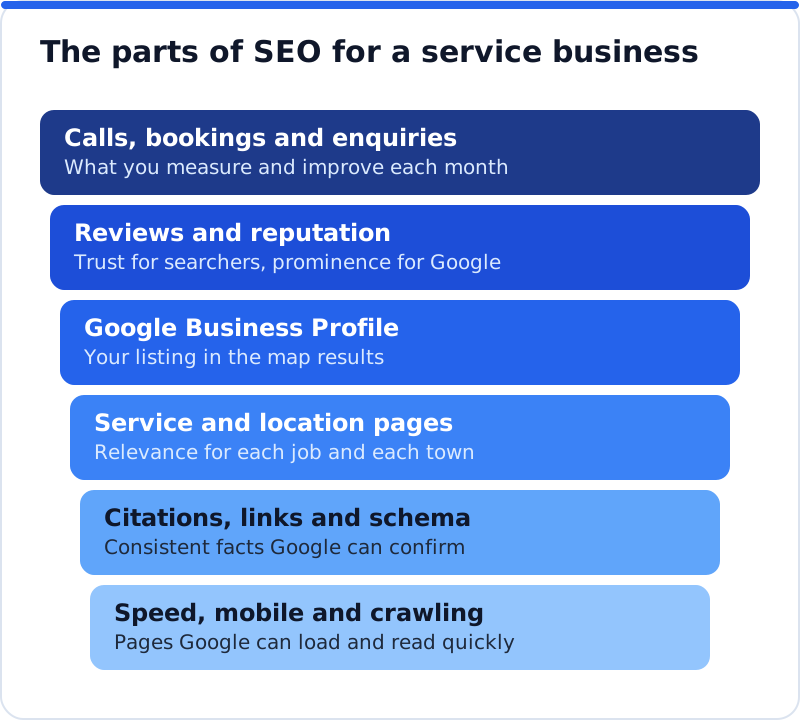
How customers search for a service
Service searches fall into three broad kinds, and each needs a different answer. Urgent searches come from people with a problem now, such as "emergency dentist open Sunday", and they reward a visible phone number, clear hours and a fast page. Planned searches come from people comparing options for a job weeks away, such as "kitchen extension builders", and they reward detail, photos of real work and honest guidance on cost. Research searches are questions, such as "what does a probate solicitor do", and they reward clear articles that show expertise. Most businesses get all three kinds, and a website that answers only one leaves visits for competitors.
The words people type also carry place and qualifiers. Some name a town, some say "near me", and many say nothing about place because Google already knows roughly where they are. Qualifiers such as "same day", "private", "for landlords" or "with parking" tell you what matters to the searcher. A roofing company in Denver sees searches about hail damage that a roofer in Cornwall rarely gets. Search Console's Performance report shows the searches that bring impressions to your website, and your Google Business Profile shows the searches that found your listing. Read both before writing new pages, because they show how your own customers describe the job.
Google Business Profile comes first
For most service businesses, the Google Business Profile is the most visible thing you control. Start with the primary category, because it tells Google what you are more strongly than any other field, and choose the most specific one that truly fits. Add secondary categories only for services you really offer. Fill in hours, including holiday hours, since an emergency search that ends at a closed door produces exactly the review you do not want. Add your services with short descriptions, a booking or quote link if you use one, and photos of your premises or real jobs.
The address setting depends on how you work. A business that welcomes customers, such as a salon, a clinic or a restaurant, shows its address. A service-area business that visits customers, such as a plumber working from home, should hide its address and list the areas it serves, as Google's guidelines state. The business name must be your real name as it appears on signs and paperwork, since keywords or taglines in the name break Google's guidelines. Individual practitioners such as doctors, dentists and lawyers may have their own profiles if they are public-facing, and Google recommends that a solo practitioner at a branded practice shares one profile named in the form "Practice: Practitioner name". Keep the profile alive with fresh photos, because a stale listing looks like a closed business.
Service pages that answer one job each
A single "Services" page that lists everything you do is the most common reason service websites fail to rank. Google needs a page it can match to each search, and a customer needs to land on a page about their job. A heating engineer needs separate pages for boiler installation, repair and servicing, while an employment solicitor needs separate pages for unfair dismissal and settlement agreements. Each page should say what the service is, who it is for, what happens step by step, what affects the price and how to book. Photos of real work, a short case example and two or three questions customers actually ask make the page far more useful than general claims.
Write the page title and main heading around the words people search, then write the rest for the reader. A good page for a cleaning company in Rotterdam might be titled "End of Tenancy Cleaning in Rotterdam: Deposit-Back Checklist", while a weak one says "Our Services". Link each service page from the main menu, so people and Google can reach it in one or two clicks. Link related services to each other too, which helps a customer who is unsure which one they need. Above all, keep each page about one job, since a page that tries to rank for six services usually ranks for none.
Location pages without copy and paste
If you serve several towns, a page per main town can help, but only if each page is genuinely about that place. Google's spam policies describe doorway pages, near-identical pages made only to rank for different places, and treat them as a violation. A location page earns its place with local detail: jobs done there, local building types, travel times, parking for clients, staff based there and reviews from that area. An electrician covering Leeds, Bradford and Wakefield can show different projects and response times for each. If you have nothing specific to say about a town, list it on one areas-covered page instead.
Businesses with premises in several places have an easier task, because each branch has its own address, phone number, team and profile. Give each branch its own page and link it from that branch's Google Business Profile, rather than sending every profile to the home page. Include directions, landmarks and photos of the actual building. Keep the hours on each page identical to those on its profile, because mismatches confuse customers. Link each branch page to the services offered there, so the visit flows towards an enquiry.
Reviews and the rules for asking
Reviews influence both where you appear and whether people choose you, and the best way to earn them is to ask every customer at the right moment. For a tradesperson that is the day the job is finished, for a clinic it is after a good visit, and for a firm it is when a matter closes. Send a short message with a direct link to your review form that works on a phone. Reply to reviews with short, specific and calm answers, because future customers read the replies too. A reply to a complaint should acknowledge it, avoid arguing in public and offer a private way to continue.
The rules on asking are stricter than many owners realise. Google's review policies prohibit offering incentives for reviews and asking only happy customers, a practice often called review gating. In the USA, a Federal Trade Commission rule that took effect in October 2024 bans fake reviews, bought reviews and the suppression of negative ones, and UK consumer law now explicitly bans fake reviews too. Regulated professions carry extra duties: a healthcare practice must never confirm in a reply that a reviewer is a patient, and bodies for lawyers, financial advisers and therapists have their own rules on testimonials. Ask everyone honestly, and check your regulator's guidance before publishing testimonials.
Citations, directories and local links
A citation is any mention of your business name, address and phone number on another website, and the aim is that these details, often called NAP, match everywhere. When a business moves or changes its number, old listings keep the old details and Google sees conflicting facts. Search your business name and your old phone number to find existing listings, then correct the ones you control. Use the same format every time, down to the street abbreviation. General platforms such as Bing Places, Apple Business Connect and Yelp matter for most sectors, and a member listing from your trade or professional body carries real trust.
The directories that matter most are the ones your customers use, and they differ by sector and country. A UK tradesperson will often see Checkatrade or Trustpilot pages ranking for their services, and the Gas Safe Register is where homeowners confirm a gas engineer. A US doctor will see physician directories ranking for their own name, and diners everywhere check TripAdvisor. Solicitors in England and Wales appear in the Law Society's Find a Solicitor, and many UK financial advisers use VouchedFor. Choose a few relevant, well-used directories over hundreds of weak ones, because a few accurate listings beat many abandoned ones.
Links from other websites are one way Google judges prominence, and for a service business the best links are local and come from real relationships. Think of the suppliers you buy from, the associations you belong to, the teams you sponsor and the venues you work with. A yoga studio in Austin might earn links from a running club it partners with and a city guide that lists studios. Offer expert comment to local journalists too, since a vet explaining a seasonal risk to pets is exactly the source they need. Avoid paid link schemes, because Google treats links bought to manipulate rankings as spam.
Schema markup for your business type
Schema markup is structured data in your page code that states facts about your business in a form machines read reliably: name, type, address, phone, hours and area served. It does not guarantee a special result, but it helps Google confirm what the rest of your website says. Use the most specific schema.org type that fits, because "Plumber" says more than "LocalBusiness", and keep every detail identical to your Google Business Profile. Healthcare has a family of medical types, trades sit under HomeAndConstructionBusiness, and law, accounting, hospitality and beauty have their own. The table lists common choices, each checked against schema.org.
| Business | schema.org type | Sits under |
|---|---|---|
| Medical practice or clinic | MedicalClinic | MedicalBusiness |
| Dental practice | Dentist | MedicalBusiness |
| Plumber | Plumber | HomeAndConstructionBusiness |
| Heating and cooling company | HVACBusiness | HomeAndConstructionBusiness |
| Roofer | RoofingContractor | HomeAndConstructionBusiness |
| Law firm | LegalService (Attorney for a lawyer) | LocalBusiness |
| Accountant | AccountingService | FinancialService |
| Restaurant | Restaurant | FoodEstablishment |
| Hotel | Hotel | LodgingBusiness |
| Hair salon | HairSalon | HealthAndBeautyBusiness |
| Gym | ExerciseGym | SportsActivityLocation |
One type needs a warning. Schema.org notes that its general ProfessionalService type was deprecated because it was confused with Service, so coaches and consultants are usually better described as a LocalBusiness or Organization. After adding markup, test the page with Google's Rich Results Test, which shows the structured data Google can read for the features it supports. The Schema Markup Validator gives a general check of any schema.org type. If you change your hours or phone number, update the markup, the page and the profile on the same day.
Speed, mobile and the call button
Most service searches happen on phones, often in a hurry, so the mobile version of your website is the real one. A visitor should see what you do, where you work and how to reach you without scrolling. The phone number should be a tap-to-call link, and forms should ask only for a name, a way to reply and a description of the job. Pop-ups, chat widgets that hide the call button and slow image sliders all cost enquiries from people ready to act. Test your website on your own phone, on mobile data, as if you were a customer with a problem.
PageSpeed Insights shows how real visitors experience your pages through the Core Web Vitals. These measure how quickly the main content appears, how quickly the page responds to a tap and how much the layout jumps while loading. The usual culprits on service websites are oversized photos, unused plugins and heavy page builder themes. Resize images before uploading, remove tools you no longer use, and ask your host about caching. Search Console's Core Web Vitals report then shows which groups of pages need attention.
Measuring calls, bookings and enquiries
Rankings are a means, so measure the actions that bring revenue: phone calls, quote forms, online bookings and direction requests. Google Business Profile's performance view shows calls, website clicks, direction requests and, where set up, bookings from your listing. Google Analytics can record a form submission or a tap on your phone link as a key event. Search Console shows which searches and pages bring visits. Call tracking numbers can show which source produced each call, but keep your main number consistent across directories so your citations stay clean.
The point of measuring is to find the weakest step and fix it. A page with many impressions and few clicks needs a better title and description. A page with many visits and no enquiries needs a clearer offer or a more visible phone number. A listing with many views and few calls may need better photos, more reviews or accurate hours. Change one thing at a time, wait about a month and compare, using the loop below.
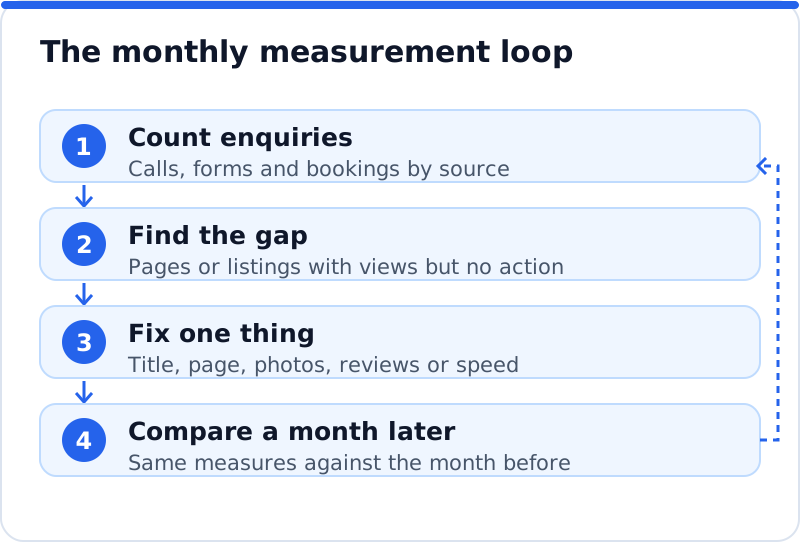
How SEO for service businesses differs by sector
The foundations apply to everyone, but each sector should weight them differently. The differences come from how urgent the need is, how much trust the customer needs, which rules govern advertising and reviews, and whether the customer comes to you or you go to them. The table shows the contrast, and the notes below explain each sector. Use it to decide where your first month of effort goes. A business that straddles two sectors, such as a gym with a physiotherapy room, should follow the stricter rules of the two.
| Sector | Typical searches | What matters most | Main measure |
|---|---|---|---|
| Healthcare | Treatments, symptoms, near me, NHS or private, insurance | Accurate treatment pages, credentials, practitioner profiles, privacy in reviews | Booked appointments |
| Home services | Emergency jobs, repairs, installs by town | Service areas, one page per service, job photos, a fast call button | Calls and quote requests |
| Professional services | Problems and specialisms, fees, local firm | Practice area pages, author bios, answers to questions, rules on testimonials | Consultation requests |
| Hospitality | Cuisine or stay type near a place, with features | Menus or rooms in HTML, photos, hours, booking links, reviews | Table and room bookings |
| Personal services | Treatments or classes near me, prices | Treatment and class pages, prices, team pages, booking buttons | Online bookings and first visits |
Healthcare
Health is a topic where mistakes can harm people, and Google's quality guidance looks for evidence of real expertise and trust on such pages. A physiotherapy clinic in Bristol should name the clinicians behind each treatment page and show their registration. Treatment pages matter more than general articles, because patients search by treatment and condition. Replies to reviews must never confirm that someone is a patient. Marketing tracking should also stay away from booking and patient pages, where it could expose health information.
Home services
Home services are driven by urgency and area, so a profile with accurate service areas often brings more calls than the website. A plumbing company in Columbus should make the phone number impossible to miss and claim 24-hour cover only if it is true. Photos of real jobs, with the area named, prove both the work and the coverage. Registration matters here: gas work in the UK requires Gas Safe registration, and many US states license trades, so show your number. Measure calls first, then quote requests.
Professional services
Clients of law firms, accountants and advisers search by problem and specialism, and want to know who will handle their matter. An accountant in Dublin will do better with a page for each client type, such as contractors and landlords, than with one page of services. Team bios with real qualifications, and articles that answer clients' actual questions, show the expertise they look for. Solicitors in England and Wales must display the SRA's digital badge on their websites, and US bar rules on advertising vary by state. Measure consultation requests, since one good client can be worth a year of visits.
Hospitality
Restaurants, hotels and venues are chosen visually and quickly, often from the map, so photos, hours and the menu do much of the selling. A bistro in Lyon should publish its menu as text on a web page, not only as a PDF or a photo. Hotels compete with large booking websites for their own name, so a clear direct booking page is essential. Reviews are spread across Google and travel platforms, and replying to them is part of the job. Measure table and room bookings, and watch direction requests.
Personal services
Salons, gyms and studios depend on repeat visits, so the first booking matters most. A hair salon in Brooklyn should have a page per main treatment with a starting price, the stylists who offer it and a booking button that works on a phone. Booking platforms can bring new clients, but booking directly should be just as easy. Before and after photos are powerful but need the client's consent. Measure online bookings and how many first-time clients return.
Using AI WebMaker to find the gaps
All of this starts with knowing where you stand, and that is the step most owners skip. Our AI Website SEO Tools check any website the way Google does, whether it runs on WordPress, Wix, Squarespace, Shopify or anything else. You get a score out of 100, with on-site checks counting for 60% and backlink trust for 40%, across six areas from Found by Google to Keywords and traffic. You also see the pages the check read (up to 12), each page's problems, the keyword each main page should win, and the visits a month now and within reach. Each problem is joined to the tool that fixes it, so you can analyse every main page of your service website and go straight from a finding to its fix.
Fixes come with steps and the code to paste, so a missing schema block or a weak title can be corrected in any website builder. On WordPress, our plugin can apply approved fixes directly into the fields of your SEO plugin. A monthly re-check emails you what changed, which fits the measurement loop above. It cannot ask customers for reviews or photograph your jobs for you. It does show you, in order, where effort will bring the most visits, and it sits alongside keyword research and backlink checks among the AI SEO tools for business websites.
Questions business owners ask
How long does SEO take for a service business?
Changes to your Google Business Profile, such as categories and hours, can affect how you appear within weeks. New service pages usually need a few months to settle into their positions. Reviews and links build steadily, so their effect grows over months. A solicitor in central London faces a harder task than a dog groomer in a market town. Measure monthly, expect clear movement after two or three months, and judge the work by enquiries rather than one ranking.
Do I need a website if my profile works well?
A strong profile can bring calls on its own, but it is a thin foundation. Your website is what Google reads to understand your services in depth, and what most people check before calling about anything but an emergency. It also ranks for questions and comparisons where the map does not appear. Without it you have no place to explain prices, show your work or take bookings on your own terms. The profile and the website work best as a pair, each linking to the other.
Should I create a page for every town I serve?
Only for towns where you have something specific to say. Pages that repeat the same text with the place name changed are the doorway pages Google's spam policies describe. Start with the towns that bring the most work and include local projects and reviews. List the remaining towns on one areas-covered page and in your profile's service areas. Add a dedicated page later, once you have real work from that place to show.
Can I copy what my top competitor does?
You can learn a lot from the businesses that rank above you, and you should. Look at which pages they have, how they structure them and where they are listed. Then do it better in your own words, because copied text helps no one and rarely ranks. Their position may also come from things you cannot see, such as years of reviews or strong local links. Use what you learn to set priorities, not as a template.
Your first week of service business SEO
A week is enough to put the main foundations in place if you work in order. The plan assumes about an hour a day and suits any sector. Write down your starting numbers first, because you will want to compare them after a month. Leave new location pages and articles until later, since they depend on everything below them. By the end of the week you should have a clean listing, clear service pages, a review habit and the measures that show whether it works.
- On day one, run a check of your website and note the score, main problems and visits within reach, then record calls, clicks and searches from Search Console and your profile.
- On day two, complete your Google Business Profile with the right primary category, hours including holidays, services, photos and the correct address or service areas.
- On day three, make sure each main service has its own page with a clear title, the steps of the job, price guidance and a way to book.
- On day four, add tap-to-call links, shorten your contact form and test the website on your phone over mobile data.
- On day five, add schema markup with the most specific type for your business and test it.
- On day six, correct your details in the directories that matter in your sector and ask last month's customers for a review.
- On day seven, set up key events for calls and forms, and book an hour a month from now to compare the numbers.
When that month is up, the measurement loop will tell you which layer needs work next. It might be more reviews, better pages or a few local links. Keep the work steady rather than heroic. A service business that improves one thing every month usually overtakes one that does everything once and stops. Start with day one this week, and let the check of your website decide where your second hour goes.
AI SEO Tools for your business
- AI Website GeneratorTell us your business name and what you do: your website is built with its pages, images and SEO in place, ready to preview in minutes and yours to change.
- AI Website SEO CheckerYour website's SEO score out of 100, every public page checked and the keywords you can win.
- AI Website SEO ToolsYour website as a network: every part of its SEO checked while you watch, your score, the traffic within reach, and the AI tool that fixes each problem.
- AI Backlink CheckerEvery site that links to yours, its authority and relevance, the trust your backlinks earn, the links your competitors have, and quality links built three ways: directories, press releases, guest posts.
- AI Website SEO PluginFor WordPress websites: the fixes you approve (search titles, descriptions, keywords, schema, alt text, redirects, articles) applied inside WordPress, next to Yoast SEO, Rank Math, All in One SEO or SEOPress, each with undo.
- AI Domain Name FinderName ideas for your business whose domain is available, and how many people search their words.
- AI Website LauncherHave a domain or a website that was never finished? We keep what is good, fill in what is missing and build it, ready to go live.
- AI Company Profile GeneratorA complete company profile: about us, mission, values, services, why choose us and contacts.
- Keyword Difficulty CheckerHow many people search a keyword each month, how hard it is to reach page 1 and the related searches people type, in 40 countries.
- AI Online Marketing Strategy GeneratorA 90-day marketing plan built on what your customers search: your channels in order, content ideas, budget and the numbers to watch.
- AI Social Media Marketing Strategy MakerYour social media score out of 100 and a strategy with a 4-week posting calendar, captions and hashtags.
- Free On-page SEO Tools10 checks, one job each, in seconds: titles and descriptions, headings, image descriptions, structured data, sharing previews, links, redirects, the sitemap, robots.txt and server speed.
All SEO for Businesses guides
- Medical SEO: Getting a Practice Found by Patients
- Dental SEO: How a Dental Practice Wins Local Patients
- SEO for Chiropractors: Pages and Signals That Bring Patients
- SEO for Therapists and Counsellors: Being Found With Care
- SEO for Veterinarians: How Pet Owners Find a Vet
- Home Services SEO: Winning the Jobs People Search For
- Plumber SEO: Getting Called First for Emergencies and Installs
- HVAC SEO: Heating and Cooling Searches Through the Seasons
- Roofing SEO: How Roofers Win High Value Jobs Online
- SEO for Electricians: From Emergency Calls to Rewires
- SEO for Landscapers: Showing Your Work to the Right Gardens
- SEO for Cleaning Companies: Domestic and Commercial Clients
- SEO for Professional Services: Firms That Sell Expertise
- Law Firm SEO: Practice Area Pages That Bring Clients
- SEO for Accountants: Being Found Before Tax Season
- SEO for Financial Advisors: Trust, Compliance and Visibility
- SEO for Coaches and Consultants: Ranking for Your Niche
- Restaurant SEO: Filling Tables From Google Searches
- SEO for Hotels: More Direct Bookings, Fewer Commissions
- SEO for Gyms and Fitness Studios: Members From Search
- SEO for Salons and Spas: Bookings From Local Searches
- SEO for Photographers: Turning a Portfolio Into Bookings