Law Firm SEO: Practice Area Pages That Bring Clients
How a law firm earns enquiries from Google with practice area pages, lawyer bios, directories and reviews, while staying inside bar rules in the US and SRA rules in the UK.
- Any website
- Visits within reach
- Each problem joined to its fix
A legal problem usually reaches Google before it reaches a lawyer, typed late at night by someone who has just been served papers, lost a job or been hurt on the road. What that person finds in the next few minutes decides which firm gets the call, and it is rarely the firm with the grandest home page. Law firm SEO is the work of making sure the page they land on describes their exact situation, names the lawyer who handles it and explains the first step clearly. It rests on practice area pages, location pages, lawyer bios, directories and reviews, all written within advertising rules that most businesses never meet. You will see how each of those parts works for attorneys in the USA and solicitors in the UK, with examples of strong and weak pages. You will also see which schema to use, how to answer client questions without giving advice, and how to measure the calls that matter.
This article is part of our complete guide: SEO for Service Businesses.
Check your law firm website with AI website SEO tools and find the practice pages losing clients
What law firm SEO has to win
Legal searches split into two moods, and a firm needs to serve both. Urgent searches, such as "arrested for DUI what to do" or "car accident lawyer near me", come from people who want to speak to someone today and will call the first credible firm they find. Research searches, such as "how to contest a will in England" or "can my landlord keep my deposit", come from people who are weighing whether they need a lawyer at all. Urgent searches are mostly decided in the map results and on practice area pages with a phone number in plain view. Research searches are won by clear answer pages that explain the law and then show when it is worth getting advice. Most of what follows applies the wider principles of SEO for professional services to the particular rules and habits of legal clients.
Practice area pages built around the case
The practice area page is the heart of law firm SEO, because it is the page that ranks for "employment lawyer Houston" or "divorce solicitor Leeds". A strong page is written for one kind of matter and one kind of client, not for "Litigation" in general. A personal injury firm in Atlanta should have separate pages for car accidents, truck accidents and slip and fall claims, because each has different evidence, deadlines and questions. The page should describe the situations it covers, the process from first call to resolution, the documents to gather, the usual timescales and how fees work, such as contingency fees in US injury cases or fixed fees for UK conveyancing. It should name the lawyers who handle the work and end with a clear way to book a consultation.
| Part of the page | Weak version | Strong version |
|---|---|---|
| Heading | Our Practice Areas | Unfair Dismissal Claims for Employees in Cardiff |
| Opening | "We are a leading firm with decades of experience." | Who the page helps, the situations covered and the first step |
| Process | Not explained | Stages from first call to tribunal, with usual timescales |
| People | No names | The solicitors who handle claims, linked to their bios |
| Fees | "Contact us for a quote" | How fees work, and price information where SRA rules require it |
| Next step | A form at the foot of the page | Phone number near the top, booking link and what happens next |
Sub-pages beat one long page once a practice covers clearly different matters. A family law firm in Leeds might keep an overview page for family law, then focused pages for divorce, financial settlements, child arrangements and prenuptial agreements, each linked from the overview. That structure lets each page target the words people actually type and stops two pages competing for the same search. Avoid the opposite mistake of building dozens of near-identical pages for every small variation, such as one page per type of vehicle in an accident. If two pages would say almost the same thing, they belong together on one page with a section for each case.
Location pages and jurisdiction
Location matters more in law than in most professions, because lawyers are licensed by jurisdiction and courts are local. A US firm should make clear which states its attorneys are admitted in, and a UK firm should be clear about whether it advises on the law of England and Wales, Scotland or Northern Ireland, since Scotland has its own legal system. Each real office deserves its own page with the address, the lawyers based there, the courts the team regularly appears in and the practice areas handled from that office. An immigration lawyer in Chicago who also serves clients across Illinois by video can say so on the page without inventing a second office. Google's Business Profile guidelines do not accept virtual offices or mail drops, so the map listing should only ever point to an office where clients can actually meet the team.
Attorney and solicitor bio pages
Bio pages are among the most visited pages on a law firm website, because clients want to know who they will deal with before they call. Each lawyer needs a page with a professional photograph, their role, the practice areas they handle, where and when they were admitted or qualified, and any accreditations they hold. Add the kind of matters they work on, in general terms, along with articles they have written and talks they have given. In the UK, it helps to state that the person is a solicitor, a chartered legal executive or a barrister, because the titles mean different things and "solicitor" is a protected title. Link every practice area page to the bios of the people who do that work, and link each bio back, so readers and Google can see the expertise behind each service.
Advertising rules for lawyers in the US and UK
Lawyer advertising is regulated, and every page on a law firm website is advertising. In the US, each state adopts its own rules of professional conduct, most of them based on the American Bar Association's Model Rules. Model Rule 7.1 prohibits false or misleading communications about a lawyer's services, and its commentary warns that statements about past results can mislead if they create unjustified expectations. Model Rule 7.2 limits claims to be a certified specialist unless the lawyer has been certified by an approved body. Some states add their own requirements, such as New York's rule that certain communications carry the label "Attorney Advertising", so the rules in your own state are the ones that count.
In England and Wales, the Solicitors Regulation Authority sets the rules. Its Code of Conduct requires publicity to be accurate and not misleading, including information about charges. Under the SRA Transparency Rules, firms must display the SRA digital badge on their website and publish details of their complaints procedure. Firms that offer certain services, including residential conveyancing, uncontested probate, some immigration applications and unfair dismissal claims at the employment tribunal, must publish price and service information in a prominent place. Nothing here is legal advice on your own obligations, so check the current rules with your bar, your regulator or your compliance officer before you publish.
Legal directories and client reviews
Legal directories carry more weight than general business listings, because clients use them to compare lawyers and Google treats them as signs that a firm is real. In the US, the main ones include Avvo, Justia, FindLaw, Martindale-Hubbell and Super Lawyers, each with lawyer profiles that can link back to the firm. In the UK, the Law Society's Find a Solicitor lists firms and solicitors, ReviewSolicitors collects client reviews, and commercial firms often seek rankings in Chambers and Partners or the Legal 500. Complete each profile with the same firm name, address and phone number as your website, the practice areas you actually handle and a link to the matching page. A few complete profiles in the directories legal clients use will do more than a long list of thin ones.
Reviews on Google and legal directories strongly influence which firm gets the call, so ask for them consistently. The right moment is usually when a matter closes well, by a short email from the lawyer with a direct link. Never offer anything in return and never ask only happy clients, because Google's policies forbid both and consumer law in the US and UK now targets fake or incentivised reviews. Replies need special care, since the American Bar Association's Formal Opinion 496 says lawyers generally may not reveal client information when responding to criticism online. A safe reply to a negative review thanks the person, does not confirm they were a client and invites them to contact the firm directly.
Schema for law firm SEO
Structured data tells Google in a standard format what the firm is, where it is and who works there. On schema.org, the type for a law firm is LegalService, a kind of LocalBusiness, and schema.org notes that the older Attorney type is deprecated in favour of LegalService. Put LegalService on the home page or each office page with the firm's name, address, phone number, opening hours, website and the areas it serves. Each lawyer can be described with the Person type on their bio page, with their job title and the firm they work for. Google no longer shows FAQ rich results for most websites, so add FAQ markup only if it is easy, and never mark up reviews you collected yourself in the hope of stars, because Google does not show those for local businesses.
FAQs built from real client questions
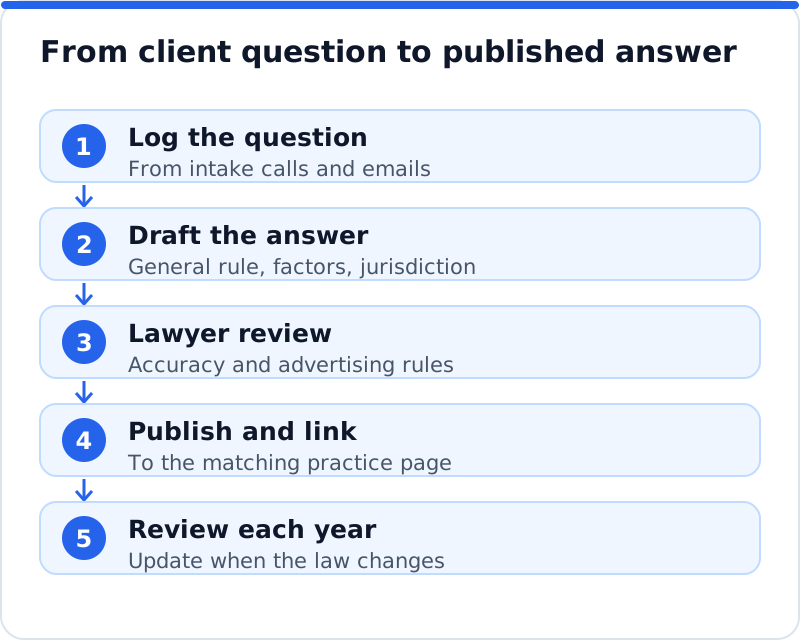
The best legal content answers the questions clients ask in the first ten minutes of a consultation. Keep a list from intake calls and emails, and group the questions by practice area so each answer can sit on, or link from, the right page. A conveyancing firm in Brighton might answer "how long does it take to buy a house in England", while an estate planning attorney in Portland explains the difference between a will and a living trust in Oregon. Each answer should state the jurisdiction, give the general rule and the factors that change it, and show when it was last reviewed. Close with a sentence that the page is general information rather than advice, and a link to book a consultation for anyone whose situation needs one.
Measuring calls and consultations
A law firm's success in search shows up as calls, enquiry forms and booked consultations, so measure those rather than visits alone. Set up key events in Google Analytics for form submissions, clicks on phone numbers and bookings, and check which practice pages lead to each. Google Business Profile reports calls and website clicks from the map results, which often bring a firm's most urgent enquiries. Ask every new client how they found the firm and record the answer against the matter type, so you can see which practice areas search is feeding. Judge the results over a quarter, because legal enquiries rise and fall with seasons, news and court calendars.
Checking a law firm website by hand takes hours, which is where AI Website SEO Tools help. It checks the website the way Google does, gives it a score out of 100, reads up to 12 pages and lists each page's problems, from missing titles to weak structure. It shows the keyword each main practice page should win, the visits a month now and the visits within reach, and joins every problem to the tool that fixes it. Fixes come as steps and code to paste, so a partner or compliance officer can approve the wording before anything changes, and a monthly re-check emails what has moved. The same account opens the wider AI SEO tools for business websites when the firm is ready for keyword research or articles.
Questions business owners ask
Should each lawyer have a Google Business Profile?
Google allows individual practitioners, such as lawyers who are public-facing and can be reached at the office during its hours, to have their own profile. Partners with a strong personal following often benefit, because clients search for them by name. Support staff should not have profiles, and no lawyer should have one profile per practice area. If a lawyer is the only public-facing professional at a branded firm, Google recommends one shared profile named with the firm and the lawyer's name. Keep every profile's details consistent with the website and the directories, or the extra profiles will cause confusion rather than calls.
Can we mention case results on our website?
In many US states you can, but the rules are strict and vary from state to state. Model Rule 7.1 treats statements that create unjustified expectations as misleading, and many states expect a clear note that past results do not guarantee a similar outcome. In England and Wales, the SRA requires publicity to be accurate and not misleading, and client confidentiality applies everywhere. Never publish details that could identify a client without their written consent. When in doubt, describe the type of matter and the approach rather than the sum recovered, and ask your compliance contact to approve the wording.
How many practice area pages does a firm need?
As many as the firm has distinct services that clients search for, and no more. A boutique firm might need six well-written pages, while a full-service firm could need forty across several offices. The test is whether each page answers a different set of questions for a different kind of client. If two pages would share most of their wording, combine them into one stronger page. Start with the areas that bring the most fee income and build outwards from there.
Your first practice area page this month
Choose the practice area that brings the firm its most valuable work and rebuild that one page first. Rewrite the heading and title in the words clients use, explain the process and the fees, name the lawyers and link their bios, and put the phone number near the top. Check the page against your bar or SRA rules, add the jurisdiction and a review date, and publish it. Then update the matching profiles on Google and in the legal directories so they link to the new page. Once that page is live, run a check of the whole website and work through the next practice areas in order of value.
Your website as a network: every part of its SEO checked while you watch, your score, the traffic within reach and the fix for each problem.
Check your website with AI Website SEO Tools →