SEO for Electricians: From Emergency Calls to Rewires
Which pages an electrician's website needs, how to show licences and registration, and how to turn emergency and planned searches into booked jobs.
- Any website
- Visits within reach
- Each problem joined to its fix

When the lights go out in half a house, nobody browses: they grab a phone, type "emergency electrician" and call the first business that looks local, qualified and awake. SEO for electricians is about being that business, and also about being found weeks later by the homeowner planning a rewire, a new consumer unit or a charger for their first electric car. These two kinds of customer search in different words, judge you on different proof and need different pages. Electricians also carry a trust burden few trades share, because the work is dangerous, often regulated and invisible once the walls are plastered. You will learn which searches matter, how to build a page for each service, how to show registration and licensing honestly, how to cover the towns you work in, and how to set up your Google Business Profile, reviews and schema. You will also see how to measure the calls and quote requests that prove the work is paying off.
This article is part of our complete guide: SEO for Service Businesses.
Check your electrician website with AI website SEO tools and find the pages that lose calls
How people search for an electrician
Electrical searches split cleanly into urgent and planned. Urgent searches describe a fault in the customer's own words: "power out in half the house", "breaker keeps tripping", "RCD keeps tripping" in the UK, "burning smell from socket" or simply "electrician near me". Planned searches name a project: "rewire a three bed house", "EV charger installation", "consumer unit replacement", "panel upgrade to 200 amps" in the USA, "EICR for landlords" or "solar panel installers". The urgent family arrives at all hours, mostly on phones, and rewards whoever answers fastest with a clear number and a local presence. The planned family compares several electricians, reads reviews and looks for proof of registration, often over days or weeks. A sound base of home services SEO gets your business onto the map, but an electrician's website must then answer both families with pages written for each.
| What the customer types | What they need | Page that should answer it |
|---|---|---|
| breaker keeps tripping | A safe explanation and someone today | Emergency electrician page with fault guide |
| full house rewire cost | Price factors and disruption | Rewiring page with timings and stages |
| EV charger installation | Charger choice, wiring and approval | EV charger page with home checks |
| consumer unit or panel upgrade | Safety, capacity and paperwork | Consumer unit or panel page |
| EICR for landlords | A certificate on time | Inspection and testing page |
Emergency pages that earn the call
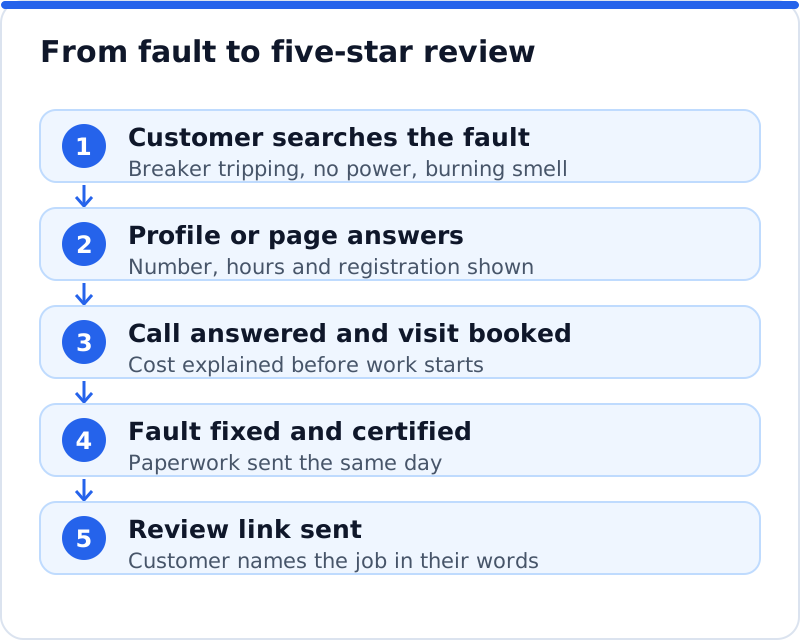
An emergency electrician page should put the phone number and the hours you genuinely cover at the very top, before any text. Below that, describe the faults you handle in the words customers use, such as tripping breakers, dead circuits, scorched sockets, flickering lights and water near electrics. Add a short safety section that tells people what they can safely check first, for example whether neighbours have also lost power, in which case the fault is with the network rather than the house. In Great Britain the number 105 reaches the local electricity network operator for power cuts, and in the USA the utility's outage line does the same job, so mentioning this builds trust because you are not chasing call-outs you do not need. Say plainly what an out-of-hours visit involves and that you will explain the cost before starting work. Never claim round-the-clock cover unless someone really answers at three in the morning, because one unanswered call can turn into a damaging review.
One page for every service you sell
A single "Services" page listing everything from doorbells to three-phase supplies cannot rank for any of them. Give each main service its own page: rewiring, consumer unit or panel upgrades, EV charger installation, inspection and testing, lighting, extra sockets and circuits, and solar or battery work if you do it. Each page should explain what the job involves, how long it takes, how much disruption to expect, what affects the price and what paperwork the customer receives at the end. A rewiring page, for example, should describe first fix and second fix, whether the family can stay in the house, how floors and plaster are handled, and what certificate is issued. An electrical contractor in Phoenix might add a page on panel upgrades for homes adding air conditioning, heat pumps or EV chargers, because those are the projects driving local searches. Specific pages like these match the long searches people type and give Google a clear reason to show each one.
EV charger and solar pages deserve particular care because the rules and incentives change. Explain the checks you carry out before installing a charger, such as the capacity of the supply, the earthing arrangement and where the cable will run, and say whether the network operator needs to be notified. An installer in Utrecht, where many homes have no driveway, might add a section on chargers for apartment car parks and shared driveways, because that is what local owners ask about. For solar, explain the survey, the panels and inverter, battery options and how the system connects to the grid. In the UK, installers registered with MCS can certify solar systems in a way that lets owners sell exported electricity under the Smart Export Guarantee, and in the USA NABCEP certification is a recognised mark for solar professionals. Avoid quoting grant amounts or rebate figures on the page unless you update them often, because a stale number damages trust more than no number. Point readers to the official government source for current schemes instead.
Licences, registration and certificates
Electrical work is regulated almost everywhere, and showing your standing clearly is part of SEO for electricians because it affects whether people call. In England and Wales, much domestic electrical work falls under Part P of the Building Regulations, and electricians usually register with a competent person scheme such as NICEIC or NAPIT so they can self-certify notifiable work. Customers should receive a building regulations compliance certificate for that work, and saying so on your service pages answers a question many people do not know to ask. In the USA, electricians are generally licensed by the state, and sometimes by a city or county, with grades such as journeyman and master, and many jobs need a permit and inspection. Put your registration or licence number on the website, link to the public register where one exists, and explain in one plain sentence what it means for the customer. A firm in Manchester that writes "we are NICEIC registered, so your new consumer unit is certified and notified to building control" sells its credentials far better than a row of unexplained logos.
Inspection and testing pages are a strong source of planned work, especially from landlords and letting agents. In England, private landlords must have the electrical installation in their rented homes inspected and tested at least every five years, and they need an Electrical Installation Condition Report to show it. A page that explains what an EICR involves, how long it takes, what the codes in the report mean and how remedial work is handled will attract landlords searching ahead of a deadline. In the USA the equivalent searches are more often about home inspections before a sale or about insurance requirements for older wiring. In both cases, explain the process and the paperwork without frightening people, and make it easy to book. Landlords and agents who find a clear page often become repeat customers with whole portfolios of properties.
Towns and areas you cover
Most electricians work across a cluster of towns, and a page for each main one helps you appear in searches like "electrician in" followed by the town. The trap is writing the same text with a different place name, which Google treats as thin and which customers see through. A useful town page names the districts you cover, mentions jobs you have done there, notes local housing such as Victorian terraces with old wiring or newer estates with EV demand, and states how quickly you can usually attend. Link each town page to the service pages most requested there and to a few relevant completed jobs. A firm in Brighton might write differently about Hove's period flats than about new builds on the edge of the city, and that difference is exactly what makes each page worth ranking. Start with the four or five towns that bring the most profitable work, then add others as you collect real local examples.
Google Business Profile for electricians
Your Google Business Profile is often the first thing an urgent customer sees, so treat it as a second home page. Choose "Electrician" as the primary category, and add secondary categories only where they describe real work you want to be found for. If customers do not visit your premises, set the profile up as a service area business, hide the address and list the towns you cover. Set hours that match when you really answer, add your registration details in the description, and upload photos of real installations, tidy consumer units, chargers on driveways and your branded van. Use posts to share completed projects or seasonal reminders, such as landlord inspection deadlines or outdoor lighting before winter. Keep the name, phone number and website identical to your website and every directory, because mismatched details weaken your local ranking.
Reviews and directories that matter
Reviews decide many electrician enquiries, because customers cannot judge technical skill and instead judge how other people felt. Ask every customer for a review when the job is finished and the paperwork is sent, using a direct link so it takes a minute. Encourage them to describe the job in their own words, because a review that mentions "rewired our 1930s semi in a week" helps both trust and search far more than "great service". Google's policies forbid incentives for reviews and selective asking, and consumer protection rules in the USA and the UK treat fake or bought reviews as a serious offence. Reply to every review, and answer complaints calmly with facts and an offer to resolve the problem. Over time, a body of specific reviews becomes the strongest proof your website and profile can show.
Directories add leads and help Google confirm your details. In the USA, electricians commonly appear on Angi, HomeAdvisor, Thumbtack, Yelp, Nextdoor and the Better Business Bureau, and some state licensing boards offer public lookups that customers use to verify a licence. In the UK, Checkatrade, TrustATrader, Rated People, MyBuilder and Trustpilot are common, while NICEIC and NAPIT each run a public search for registered contractors that many customers check before booking. Read each platform's current terms before paying, and prefer the few your customers really use over a long list you cannot maintain. Make sure your listing on each one matches your Google Business Profile exactly, from the business name to the phone number. One clean, consistent set of listings beats dozens of half-finished ones.
Electrician schema and the technical basics
Schema.org includes a specific type, Electrician, which sits under HomeAndConstructionBusiness and LocalBusiness, so you can describe your firm precisely in structured data. Add it to your home page with your business name, phone number, website, logo, opening hours, the areas you serve and links to your main profiles. You can describe your main services with the Service type and its serviceType property, which helps tie your service pages to the business. Keep the markup consistent with what visitors can see, and test it with Google's Rich Results Test or the Schema Markup Validator. Check what your SEO plugin already outputs before adding more, so the page does not describe your company twice. Beyond schema, make sure your pages load quickly on a phone and that the call button works with one tap, because urgent customers will not wait.
Measuring calls and quote requests
The test of SEO for electricians is the number of good jobs it brings, not where you rank on one search. Track calls from the website and from your Google Business Profile, contact form submissions and booking requests, and mark forms as key events in Google Analytics 4. Use Search Console to see which searches bring impressions and clicks, and watch whether your emergency, rewiring and EV pages are reaching the people they were written for. Note in your own job book how each new customer found you, because that fills the gaps analytics cannot see. Compare month with month and season with season, since electrical work has its own rhythm of winter faults and spring projects. When a page brings visits but no calls, improve its call to action and its proof before writing anything new.
A full check of the website speeds up this work. Our AI website SEO tools read your website the way Google does, give it a score out of 100 and list the problems on each of up to 12 pages, such as a rewiring page with no description or a town page that repeats another. They show the keyword each main page should win and the visits a month you get now against the visits within reach, so you can see whether emergency or planned work offers more. Each problem is joined to the tool that fixes it, with steps and code to paste, or applied by the plugin on a WordPress website. A monthly re-check emails what changed, and the wider AI SEO tools for business websites add keyword research, backlinks and fixes in one account.
Questions business owners ask
Should I show prices on my electrician website?
Fixed prices work well for standard jobs such as an EICR, a consumer unit swap in a typical house or a standard EV charger installation. For rewires and larger projects, explain the factors that change the price and invite a survey instead. Pages that discuss cost honestly tend to rank for the many searches that include the word "cost" or "price". They also filter out enquiries that would never have suited your business. If you publish prices, date them and review them every few months so they stay accurate.
Is it worth writing about electrical safety?
Short, careful articles on safety questions people search, such as why an RCD trips or when old wiring needs checking, can bring steady visits. Keep them focused on recognising problems and knowing when to call a professional, never on how to do risky work yourself. Link each article to the matching service page so readers can book. A few well-written pieces will serve you better than frequent thin posts. They also show customers that you explain things clearly, which is half of what they are looking for.
How long before SEO brings calls?
Improvements to your Google Business Profile and to obvious website problems can lift calls within weeks. New service pages usually take a few months to settle, depending on how many electricians compete in your area. Reviews build steadily, and each one makes the next enquiry more likely. Judge progress over a full season rather than a fortnight. Keep notes of what you changed and when, so you can link improvements to results.
A plan for your next four weeks
In the first week, check your Google Business Profile category, service areas, hours and photos, and add your registration or licence details. In the second, split your services into separate pages, starting with emergency work and the planned job that earns you the most. In the third, add a clear page on inspection and testing or EV chargers, depending on which brings better customers in your area, and ask your recent customers for detailed reviews. In the fourth, add Electrician schema to the home page, test it, and set up tracking for calls and forms. Then look at the first month's numbers and pick the next page to write from what customers actually asked for.
Your website as a network: every part of its SEO checked while you watch, your score, the traffic within reach and the fix for each problem.
Check your website with AI Website SEO Tools →