SEO for Cleaning Companies: Domestic and Commercial Clients
How a cleaning company wins both household and office clients from search, with the pages, trust signals and reviews each audience looks for.
- Any website
- Visits within reach
- Each problem joined to its fix
A clean home or office is noticed only when it is missing, which is why people search for cleaners at moments of pressure: a tenancy ending on Friday, guests arriving on Saturday, or an office manager tired of complaints about the kitchen. SEO for cleaning companies means being the business those people find and trust enough to let through the door, often with a key and an alarm code. Cleaning firms serve two audiences that rarely overlap: households booking regular, deep or move-out cleans, and businesses buying contracts for offices, shops and shared buildings. Each audience types different searches, reads different pages and needs different reassurance before it books. You will learn how to build service pages for both, which trust signals matter most, how to handle pricing and recurring bookings, how to cover the towns you serve, and how to use Google Business Profile, reviews and schema. You will also see how to measure the bookings and quote requests that show the work is paying off.
This article is part of our complete guide: SEO for Service Businesses.
Let AI website SEO tools check your cleaning company website and show where bookings slip away
Two audiences and two kinds of search
Household and business clients search in noticeably different ways. Households type short, local and often urgent searches: "cleaner near me", "end of tenancy cleaning" in the UK, "move out cleaning" in the USA, "deep clean before Christmas" or "oven cleaning". They decide quickly, usually on price, availability and reviews, and they often book online the same day. Business clients search for "office cleaning company", "commercial cleaning contract" or "cleaning for dental surgery", then compare several firms over weeks and ask for site visits and written quotes. The broad foundations of home services SEO, such as a complete Google Business Profile and one page per service, apply to both, but a cleaning company must then build two clear paths through its website. If the home page tries to speak to a busy tenant and a facilities manager in the same paragraph, it persuades neither.
| Search | Who is typing | What the page must show |
|---|---|---|
| end of tenancy cleaning | A tenant or landlord with a deadline | Checklist, deposit focus, next available dates |
| regular house cleaner | A household wanting weekly help | Visit length, same cleaner, booking options |
| deep clean after builders | A homeowner after renovation | Dust, paint and fittings covered, team size |
| office cleaning contract | An office or facilities manager | Schedules, out of hours, insurance, reporting |
| cleaning for medical clinic | A practice manager | Infection control training, products, records |
Service pages for homes
Each main household service needs its own page, written for the moment the customer is in. A regular cleaning page should explain how long visits last, what is covered each time, whether the same cleaner comes every week, whether clients supply products and how to pause or cancel. A deep cleaning page should list the extra work, such as inside cupboards, skirting boards, limescale and behind appliances, and say how many cleaners attend and for how long. An end of tenancy or move-out page should speak directly to the deposit, explaining that you clean to the standard landlords and agents check against, and offering a re-clean if something is missed within an agreed time. A cleaning company in Nottingham that explains how its end of tenancy checklist matches typical inventory reports will win more bookings than one that writes "we do all types of cleaning". Add pages for oven, carpet or after builders cleaning if you do them regularly, since each is searched by name.
End of tenancy pages deserve extra care in the UK. Tenancy deposits in England and Wales must be protected in a government-approved deposit protection scheme, and disputes about cleaning are among the most common reasons for deductions. You can explain this context in plain words and say what your clean covers, but avoid promising that a tenant will get the full deposit back, because the landlord and the scheme decide. In the USA, move-out cleaning has a similar role in getting a security deposit back, and the same honesty applies. Offer a printable checklist of what you clean in each room, because people search for those checklists and often share them with landlords. That single useful page can attract steady visits from tenants planning ahead.
Service pages for offices and businesses
Commercial clients want evidence that you can run a reliable contract, not just clean well once. Your office cleaning page should explain how you agree a cleaning schedule, whether you clean early morning, evening or during the day, how keys and alarm codes are handled, and how quality is checked and reported. Mention the kinds of premises you look after, such as offices, shops, gyms, schools or medical practices, and give each specialised sector its own page if it brings regular work. A page for clinics should describe staff training in infection control and the products you use, without making claims about standards you do not formally meet. A contract cleaner in Brussels might add a page for shared office buildings that explains how it coordinates with several tenants and a building manager, because that is how local work is bought. Close every commercial page with a clear way to book a site visit and quote, rather than an online checkout.
Trust signals cleaners must show
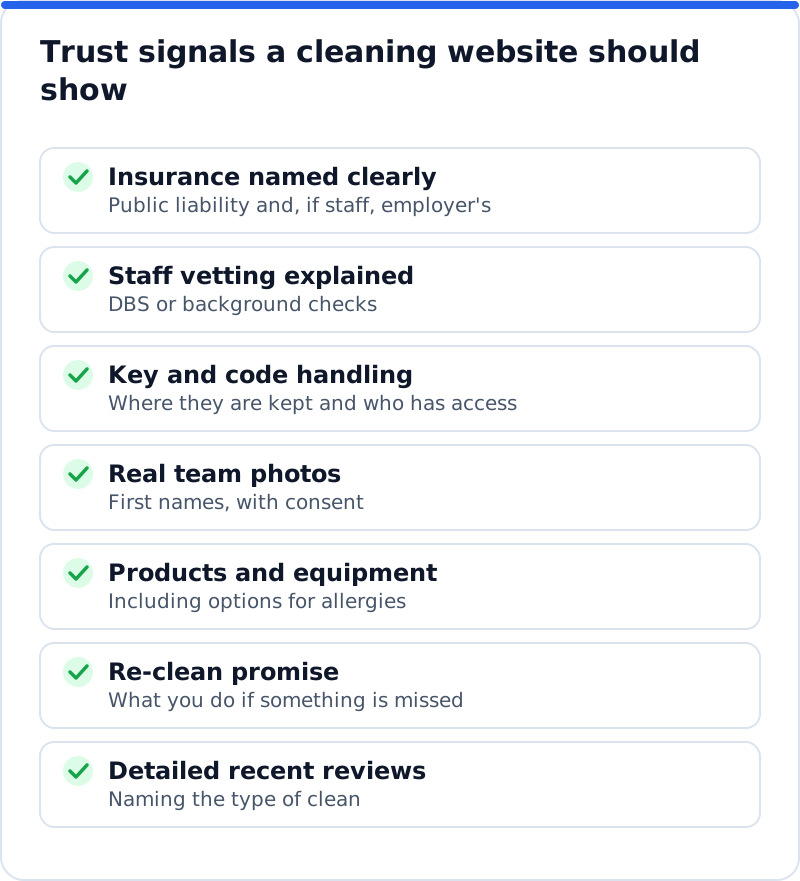
Trust is the deciding factor in cleaning, because customers are letting strangers into their homes and workplaces. Show your insurance clearly, naming the cover you hold, such as public liability insurance and, where you employ staff, employer's liability insurance, which is generally a legal requirement for UK employers. Explain how you vet staff: in the UK many cleaning firms use DBS checks, and in the USA background checks are common, with many firms describing themselves as bonded and insured. Say how keys and codes are stored and who has access to them. Introduce your team with first names and photos if they agree, because seeing a real face makes booking far easier. A firm in Vienna that explains its vetting, insurance and key policy on one clear page will turn more visitors into customers than one with a single "fully insured" line in the footer.
Pricing pages that help people decide
Cleaning is one of the few home services where customers expect to see prices before they call, and a clear pricing page often ranks well for searches that include "cost" or "prices". For regular cleaning, an hourly rate or a price per visit by home size works well, with a note on minimum visit length. For deep and end of tenancy cleans, prices by number of bedrooms are easy to understand, with clear extras for ovens, carpets or windows. For commercial work, explain the factors that set the price, such as floor area, frequency, hours and specialist tasks, and invite a site visit instead of listing a figure. Date your prices and review them regularly, because an out-of-date price causes awkward calls and poor reviews. A household cleaner in Atlanta who publishes honest prices by home size will attract customers who are ready to book, rather than ones shopping only for the lowest figure.
Recurring booking pages
Recurring clients are the foundation of a cleaning business, so make it easy to sign up for weekly or fortnightly cleans from the website. A recurring booking page should show the options, such as weekly, fortnightly or monthly, what each visit includes, how the first visit differs and how payment works. If you use an online booking system, embed it on the page so people can choose a day and time without calling, and make sure it works smoothly on a phone. Explain your policies on holidays, cancellations and changing cleaners in plain words, because these are the questions people worry about before committing. Give the page its own search title and description built around the searches it serves, such as "weekly house cleaning" and the town. Link to it from every household service page, since one-off clients who are happy often become regular ones.
Towns and service areas
Most cleaning companies serve a city and its surrounding towns, and a page for each main area helps you appear in searches like "cleaners in" followed by the place. A town page needs real content to rank: the districts you cover, the kinds of homes or businesses you clean there, how far ahead bookings are needed and a few reviews from local clients. A page that only swaps the town name is thin and rarely holds its position for long. If you clean offices, a page for a business district or business park can work well alongside the residential town pages. A firm in Glasgow might write one page for the West End's tenement flats and another for offices in the city centre, because those clients search and buy differently. Start with the areas that bring your best clients, then add more once you have local reviews to show.
Google Business Profile and reviews for cleaners
Your Google Business Profile is often where local households choose between cleaners, so complete it carefully. Pick the primary category that fits your main work, such as "House cleaning service" or "Commercial cleaning service", and add secondary categories only for work you genuinely offer, such as carpet cleaning. If clients never visit your office, set the profile as a service area business, hide the address and list the towns and districts you cover. Add hours that match when you answer enquiries, a description that mentions insurance and vetting, and photos of your team, your equipment and spotless kitchens and offices, with clients' permission. Never show anything inside a client's home that could identify them or their belongings. Keep the business name, phone number and website identical to your website and directory listings.
Reviews carry heavy weight in cleaning, because the quality is personal and hard to judge in advance. Ask for a review after the first visit for one-off cleans, and after the first month for regular clients, with a direct link by text or email. Encourage clients to mention the type of clean and the area, such as "end of tenancy clean in a two bed flat", because detailed reviews help trust and search. Google's policies forbid incentives for reviews and selective asking, and consumer protection rules in the USA and the UK treat fake or bought reviews as a serious offence. Reply to every review, and handle complaints calmly with an offer to re-clean or put things right. Directories add further leads and confirm your details: in the USA, Angi, Thumbtack, Yelp and Nextdoor are common, and in the UK, Checkatrade, Bark, Yell and Trustpilot, so choose the few your clients use and keep them consistent.
Schema for a cleaning company
Schema.org has no specific type for cleaning businesses, so choose the most accurate general type. LocalBusiness fits every cleaning company, and HomeAndConstructionBusiness, which schema.org describes as a business providing services around homes and buildings, is a reasonable choice for firms focused on homes and premises. Avoid ProfessionalService, which schema.org now marks as deprecated for local businesses. Add the markup to your home page with the business name, phone number, website, logo, opening hours, the areas you serve and links to your main profiles. Describe each main offer with the Service type and its serviceType property, such as "End of tenancy cleaning" or "Office cleaning", with your business as the provider. Keep the markup consistent with what visitors see, test it with Google's Rich Results Test or the Schema Markup Validator, and check what your SEO plugin already outputs so the business is not described twice.
Measuring bookings and quote requests
The real measure of SEO for cleaning companies is bookings, recurring sign-ups and commercial quote requests. Track online bookings, calls from the website and your Google Business Profile, and form submissions, and mark bookings and forms as key events in Google Analytics 4. Keep household and commercial enquiries apart in your reports, since a single office contract can be worth more than dozens of one-off cleans. Search Console shows which searches bring impressions and clicks, so you can see whether your end of tenancy or office pages are reaching the people they were written for. Ask each new client how they found you and note it, because recommendations and directories often play a role analytics cannot see. When a page brings visits but few bookings, improve its prices, trust signals and booking button before writing anything new.
A full check of the website shows where to start. Our AI website SEO tools read your website the way Google does, give it a score out of 100 and list the problems on each of up to 12 pages, such as a pricing page with no description or town pages that repeat each other. They show the keyword each main page should win and the visits a month you get now against the visits within reach, so you can choose between household and commercial pages with evidence. Each problem is joined to the tool that fixes it, with steps and code to paste, or applied by the plugin on WordPress, and a monthly re-check emails what changed. The wider AI SEO tools for business websites add keyword research, backlinks and fixes in one account.
Questions business owners ask
Should one website serve both homes and offices?
One website usually works well, as long as it has two clear paths. Put a simple choice near the top of the home page, such as "Cleaning for homes" and "Cleaning for businesses", and build separate service pages for each. This keeps each page focused on one audience and one set of searches. If commercial work grows into the larger part of your business, a dedicated section with its own case studies becomes more important. A separate website is rarely needed and splits your reviews and links in two.
How do I stand out when every cleaner says the same things?
Specific detail beats general claims every time. Instead of "reliable and trusted", say how long your team has worked together, how you vet staff, what your re-clean promise covers and how many regular clients you serve in each area. Show real photos and name the types of homes or premises you clean. Collect reviews that mention specific jobs, and quote the clean they describe on the matching service page. These details are what make customers choose you and what make your pages different enough to rank.
Can I rank for towns where I have no office?
Yes, a cleaning company can rank in towns it serves without an office there, provided it genuinely works in those areas. Set your Google Business Profile as a service area business and list those towns. Build town pages with real local content and reviews, rather than copies with the name changed. The Google Business Profile listing itself tends to rank most strongly near the address you registered, so town pages on your website help you reach further. Over time, local reviews and directory listings in each area strengthen those pages.
Your first month of cleaning company SEO
In the first week, check your Google Business Profile category, service areas, description and photos, and ask your best regular clients for detailed reviews. In the second, split household and commercial services into separate pages, starting with your most profitable service in each. In the third, publish a clear pricing page and a trust page covering insurance, vetting and key handling. In the fourth, add business schema to the home page, test it, and set up tracking for bookings, calls and quote forms. Then look at the first month's numbers and let the services clients actually booked decide which page you improve next.
Your website as a network: every part of its SEO checked while you watch, your score, the traffic within reach and the fix for each problem.
Check your website with AI Website SEO Tools →