SEO for Hotels: More Direct Bookings, Fewer Commissions
How a hotel wins more guests who book direct: the pages, Google listings, reviews, schema and measurements that move bookings away from commission.
- Any website
- Visits within reach
- Each problem joined to its fix

Every room booked through a travel agency arrives with a commission attached, and every room booked on your own website arrives without one. SEO for hotels is about shifting that balance, so that guests who have already found you, and guests still deciding where to stay, end up on your website with a clear reason to book there. Travel agencies are not the enemy: they bring guests you might never reach, and many of those guests return directly next time if your website makes it easy. The work covers room and amenity pages that answer real questions, local guides that catch travellers early, your Google listings, reviews, Hotel schema and a booking engine that does not lose people at the last step. Done well, it turns your own website into the most convincing place to book your own rooms.
This article is part of our complete guide: SEO for Service Businesses.
Test your hotel website with AI website SEO tools and find what sends guests elsewhere
Where SEO for hotels starts: how travellers search
Hotel searches begin long before a guest picks a room. Early searches are about the destination and the trip, such as "things to do in Porto in November" or "where to stay near Edinburgh Castle". Later searches narrow down to type and feature, like "boutique hotel with parking Bath", "dog friendly inn Vermont" or "hotel with spa near Lake Como". Close to booking, people search your hotel's name, often alongside words like "reviews", "parking" or "breakfast". The last group is the most valuable and the most contested, because travel agencies bid on and rank for hotel names too.
That last point explains why SEO for hotels matters even for well known properties. When someone searches your name, the results often show several agencies offering your rooms, Google's own hotel module with prices, review sites and, somewhere among them, your website. If your page has a weak title, slow loading and no visible offer, the agency listing looks easier, and the guest books there. Strengthening the search title, the description and the reasons to book direct on your home page is the cheapest win most hotels have. A small hotel in Salzburg that names its direct booking perks in its search description gives brand searchers a clear reason to click through to it.
Room and amenity pages that answer questions
Travellers compare rooms carefully, and agencies present them in tidy, consistent formats. Your website needs to do at least as well, with one page or one clear section for each room type. Each should show the bed size, room size, view, maximum occupancy, bathroom details, accessibility features and several honest photos, with a booking button that opens that room in your booking engine. Write the description in plain words a guest would use, such as "quiet courtyard room with a walk-in shower", not just "Superior Double". Pages like this rank for searches such as "family room with two bathrooms Lisbon" and convince people who arrived from your name search.
Amenity pages work the same way for features people search for directly. Parking, pets, breakfast, the restaurant, the spa, meeting rooms, weddings and accessibility each deserve real detail, because each one is a reason someone books or does not. A page about parking that states the number of spaces, height limits, the cost policy and electric charging is far more useful than one line in an FAQ. A guesthouse in the Lake District that publishes a proper page on its dog friendly rooms, walks from the door and nearby pubs that welcome dogs will catch searches its competitors ignore. These pages also give Google firm evidence for the features it shows in hotel results.
| Page | Searches it can catch | What it must include |
|---|---|---|
| Room type page | Room features, family rooms, accessible rooms | Size, beds, occupancy, photos, direct booking button |
| Parking and arrival | "hotel with parking", "how to get to" | Spaces, limits, charging, directions from stations |
| Pets page | "dog friendly hotel" plus the town | Rules, which rooms, nearby walks |
| Weddings or meetings | Event and venue searches | Capacity, menus, photos, an enquiry form |
| Local guide | Things to do, where to stay near | Real recommendations with distances |
Location content that catches travellers early
Guests search for the place before they search for the hotel, so content about your area reaches them at the start of the trip. Write guides from your own knowledge: what to see within walking distance, where staff actually eat, how to get there from the airport or station, and what the area is like in each season. Specific distances and times make these guides useful, such as "twelve minutes on foot to the cathedral" rather than "close to the centre". Guides like "a weekend in Bruges without a car" or "the best rainy day plans near our hotel" are exactly what travellers read while choosing where to stay. Each guide should end by connecting the plan to your rooms, so a reader who likes the plan knows where to sleep.
Keep these guides honest and current, because a recommended café that closed two years ago undermines trust in everything else. Update seasonal pages before the season begins, so Google has time to find them, rather than in the week the visitors arrive. A beach hotel in Cornwall might refresh its summer activity guide each spring and its storm watching guide each autumn. Avoid writing thin pages for every attraction within fifty miles, which add little value and stretch your effort too thin. A few thorough guides tied to why people visit your area will serve you better than dozens of short ones.
Your Google listings and hotel results
Hotels appear on Google in two connected places: the Google Business Profile, which shows your details, photos and reviews on Maps and in search, and Google's hotel results, which show prices and availability from different booking sites. On the profile, make sure your name, address, phone number, website and check-in and check-out times are correct, and review the amenities Google lists, since some are drawn from other sources and may be out of date. Upload good photos of rooms, the exterior, common areas and the view, and replace old ones when you refurbish. Answer questions people ask on the profile, because those answers are public and stay visible to every later guest. A hotel in Copenhagen that keeps its listed amenities accurate avoids disappointed guests who booked expecting a pool that closed years ago.
Google's hotel results can show your own website's rate next to the agencies' rates, which is one of the most direct ways to win bookings back from them. This usually works through Google's Hotel Center, connected by your booking engine or a connectivity partner that sends your rates and availability to Google. Ask your booking engine provider whether they offer this connection and what it involves, because setups differ between providers. Once connected, your direct rate appears where guests are already comparing prices, which gives brand and destination searchers a clear path to your website. Check that the rate shown matches what guests see when they arrive at your booking page, because any mismatch costs trust.
Reviews and replies across platforms
Hotel guests read reviews more closely than almost any other buyers, because a bad night away is hard to undo. Reviews appear on Google, TripAdvisor and every agency where you sell rooms, and each platform has its own rules. Ask every guest for a review in the same way, for example in the post-stay email, and never offer discounts or upgrades in return, since Google and TripAdvisor both prohibit incentives. In the US, the Federal Trade Commission's rule on consumer reviews bans fake and bought reviews, and in the UK, the Digital Markets, Competition and Consumers Act banned fake reviews from April 2025. Building reviews on Google matters for search in particular, because they feed directly into your profile.
Replies are where hotels can show their character. Thank guests for specific details they mention, such as a breakfast dish or a member of staff, and pass compliments to the team. When a review raises a problem, acknowledge it, explain what has been done and invite the guest to contact you directly. Never reveal booking details, room numbers or anything personal about a guest in a public reply, because privacy rules such as GDPR apply to what you publish. Future guests read the replies to judge how you handle problems, which can matter more to them than a single low score.
Hotel schema and technical basics
Schema.org has a Hotel type, which sits under LodgingBusiness and LocalBusiness, with related types such as BedAndBreakfast, Hostel, Motel and Resort for other kinds of property. Mark up your name, address, phone number, geographic coordinates and star rating where you have one, plus lodging properties such as checkinTime, checkoutTime, numberOfRooms, petsAllowed and amenityFeature for things like parking or a pool. Schema.org also has a HotelRoom type for describing room types on room pages. Test the markup with Google's Rich Results Test and the Schema Markup Validator before publishing. Make sure every value matches the visible page, because markup that disagrees with the content is ignored at best.
International guests need pages in their own language, and how you build them matters. Give each language its own address, such as a folder for each language, and connect the versions with hreflang tags so Google shows the right one in each country. Translate properly rather than relying on an automatic widget that changes the text in the browser, since those translations are often not seen by search engines as separate pages. Do not force visitors into a language based on their location; Google advises letting people choose, with a visible language switcher. A family hotel in the Dolomites that receives German, Italian and English speaking guests should treat each language as a real version of the website.
The booking engine speed problem
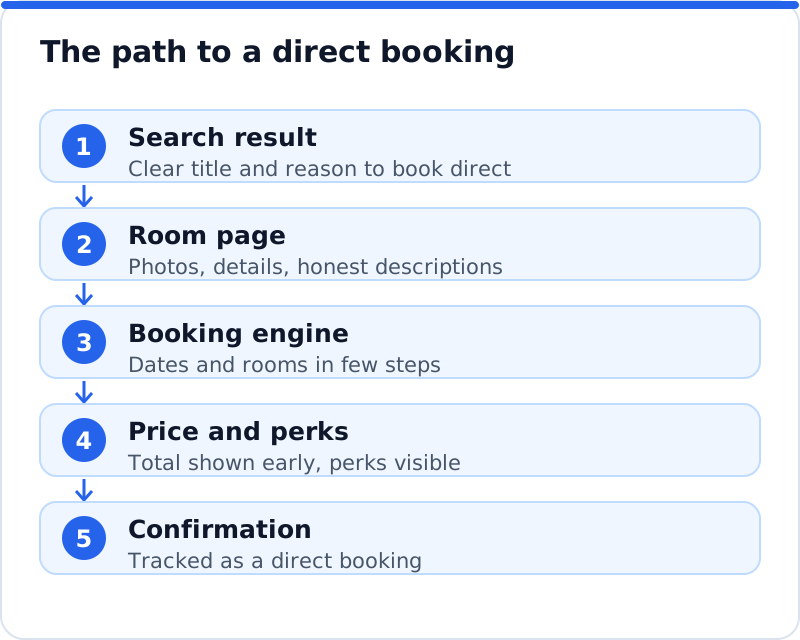
Many hotel websites are fast until the guest presses "Book", then hand over to a slow booking engine on another domain. That handover is where many direct bookings are lost, especially on phones, because guests compare against agency apps that load in a second. Test your own booking path on a mid-range phone over mobile data: search dates, choose a room, add extras and reach the payment step. Count the steps and note anything that loads slowly, asks for information twice or hides the total price until the end. Share what you find with your booking engine provider, because many have settings for fewer steps or a lighter mobile layout.
The website itself should also load quickly, which often means compressing large hero images and videos and removing plugins you no longer use. PageSpeed Insights reports how your pages perform for real visitors where enough data exists, plus lab tests for each page. Keep the booking button visible on every page, ideally with the dates fields already on screen. Show your best direct rate and any direct perks, such as breakfast included or late checkout, near the button. Before advertising lower prices on your own website than on agencies, check your agreements with them, since contracts and rules vary by country.
Measuring direct bookings
Direct booking share is the measure that matters most, and your property management system or booking engine can usually report it. Compare the number and value of direct bookings each month with agency bookings, so you can see whether the balance is moving. In your analytics, set up cross-domain tracking between your website and the booking engine, otherwise every booking appears to come from your own website rather than from search. Search Console shows which searches bring visitors to each page, including your name searches and destination guides. Your Google Business Profile performance view adds calls, direction requests and website clicks from Maps.
A website check gives you a starting list before you spend time or money. The AI website SEO tools read your pages as Google does, give a score out of 100, show the visits within reach and join each problem to the tool that fixes it, so a slow room page or a missing description stands out. Restaurants and hotels share many local signals, which is why the same approach that works in restaurant SEO applies to your profile, reviews and schema too. For other parts of the work, such as keywords and backlinks, the AI SEO tools for business websites cover each area. A monthly re-check emails you what changed, which helps you see whether a new room page or guide is being picked up.
Questions business owners ask
Should a hotel stop using travel agencies?
For most hotels, no, because agencies bring guests from markets you cannot reach alone. The aim is a healthier balance, where guests who already know you, and guests who find you through search, book with you directly. Many guests discover a hotel on an agency and then search its name before booking, which is the moment your website must win. Repeat guests are the easiest to move, so make sure your confirmation emails and website invite them back directly. Over time, a stronger website lets you choose how much to rely on agencies rather than depending on them.
Do small hotels need a blog?
They need useful local guides, which is not quite the same as a blog. A few thorough pages about your area, seasons and travel routes will serve guests better than frequent short posts. Each guide should answer a question travellers actually ask and link naturally to your rooms or booking page. Update them when things change, rather than writing new ones for the sake of it. If you enjoy writing and have local knowledge, more guides can help, but quality matters more than frequency.
How important are photos for hotel SEO?
Photos affect choices more than rankings, but choices are what turn visits into bookings. Guests want to see the exact room type they are booking, the bathroom, the view and the breakfast. Use descriptive file names and alt text, such as "sea view double room with balcony", so the images can appear in image searches too. Compress them so they load quickly on phones without losing detail. Replace photos after any refurbishment, because outdated images lead to disappointed guests and poor reviews.
A first month of SEO for hotels
Start with the search for your own hotel name and look at what a guest sees: the agencies, Google's hotel prices, your profile and your website's title and description. Rewrite your home page title and description to name your reasons to book direct, and check your Google Business Profile details and amenities against reality. Then build or improve one page per room type and one thorough local guide, and test your booking path on a phone. Ask your booking engine provider about showing your direct rate in Google's hotel results. Once those are done, test your hotel website to see which pages and signals still send guests to the agencies, and work through them in order.
Your website as a network: every part of its SEO checked while you watch, your score, the traffic within reach and the fix for each problem.
Check your website with AI Website SEO Tools →