SEO for Salons and Spas: Bookings From Local Searches
How hair salons, nail bars, beauty salons and day spas turn local treatment searches into booked appointments, page by page and review by review.
- Any website
- Visits within reach
- Each problem joined to its fix

A salon chair or a treatment room earns nothing while it sits empty, and many of the people who could fill it are searching for a specific treatment a few streets away right now. SEO for salons and spas is the work of making sure those searches find your business, with the treatment, the price and a booking button on the same screen. People rarely search for "salon" alone; they type "balayage near me", "gel nails open Sunday", "hot stone massage Bath" or "brow lamination Atlanta", and they book with whoever answers most clearly. Winning those searches takes treatment pages, visible prices, stylist and therapist profiles, photos shared with consent, a well kept Google Business Profile, steady reviews and the right schema.org type. Each of these is something a salon owner can do without technical help, and together they turn searches into appointments.
This article is part of our complete guide: SEO for Service Businesses.
Try AI website SEO tools on your salon or spa website and see which treatments go unfound
How clients search for salons and spas
Beauty searches are unusually specific, which is good news for salons willing to describe what they do. Clients search by treatment ("keratin smoothing", "acrylic infills", "deep tissue massage"), by need ("curly hair specialist", "wedding hair trial", "facial for sensitive skin") and by time ("nail salon open late", "same day massage"). Many add a place or "near me", and many search on a phone between other errands, ready to book within minutes. Some search for a person, such as a stylist they followed from another salon, or for a brand of product the salon uses. Each of these searches needs a page or profile that answers it directly.
The practical consequence is that a single "Services" page listing forty treatments in a table will struggle. Google needs a clear signal that you offer balayage, and the client needs to see what it involves, how long it takes and what it costs. Good SEO for salons and spas therefore starts by grouping treatments into the ones that bring in the most bookings and the most value. Those deserve their own pages, while smaller add-ons can sit on a broader category page. A hair salon in Manchester might give colour correction, balayage and curly cuts their own pages, while fringe trims stay on the general haircuts page.
Treatment pages that sell the appointment
A good treatment page reads like the consultation a skilled stylist or therapist would give. Explain what the treatment is, who it suits, how long it takes, what the client should expect during and after, and how long the results usually last. Include aftercare advice, any preparation needed and any reasons someone should not book it, because honesty builds trust and reduces disappointed clients. Add real photos of your own work, a clear price or starting price, and a booking button linked straight to that treatment in your booking system. Name the page in the words clients use, such as "Balayage in Manchester" rather than "Colour Service B".
Some treatments need extra care in how they are described. Hair colour usually requires a skin allergy test before the appointment, and many colour manufacturers instruct salons to carry it out 48 hours ahead, so explain the patch test and how to book it on every colour page. Massage and spa pages should mention any health conditions where clients should check with a doctor first, without making medical claims about what the treatment cures. If you offer injectable aesthetic treatments, the rules are stricter: in the UK, prescription-only medicines such as botulinum toxin cannot be advertised to the public, so check the advertising guidance before writing those pages. Keep claims about results modest and specific, such as "smoother hair for around three months", rather than promises you cannot guarantee.
| Treatment | Weak page | Stronger page |
|---|---|---|
| Balayage | One line in a long price list | Own page with process, timing, photos, patch test, price from |
| Gel manicure | "Nails: various" | Page covering gel versus regular polish, removal, how long it lasts |
| Hot stone massage | Spa menu PDF | Page with what happens, duration, who should check with a doctor |
| Lash lift | Instagram link only | Page with aftercare, results timeline, photos with consent |
Prices and online booking links
Clients want to know the price before they book, and a salon that hides its prices often loses them to one that shows them. Show a price or a "from" price for every treatment, and explain what changes it, such as hair length, thickness or the time needed. If a consultation is required, say so and explain whether it is charged. Prices also help Google and clients understand the level of your salon, and they reduce awkward conversations at the till. A beauty salon in Madrid that publishes its full price list on its website, with clear notes on what each price includes, will convert more visitors than one that asks them to phone.
Most salons use booking software, and many of those platforms also run marketplaces where clients discover salons and book directly. Marketplaces can bring new clients, but they also rank for your salon's name and may charge for bookings made through them, so make sure your own website is the obvious place to book. Put your booking button at the top of every treatment page and on your Google Business Profile. Where your booking provider supports it, connect booking to your profile, so clients can book straight from Google. Check the whole path on a phone: from search to treatment to time slot to confirmation, without asking for the same information twice.
Stylists, therapists and photos with consent
Clients often choose a person rather than a salon, and stylist or therapist profiles answer searches for specialists. Give each team member a profile with a photo, their specialisms, their training, the treatments they offer, the days they work and a link to book with them. Mention genuine specialisms, such as curly hair, colour correction, bridal makeup or pregnancy massage, because clients search for exactly those. Keep the profiles current, and remove or redirect them when someone leaves, so clients are not booking someone who no longer works there. A nail bar in Brooklyn whose artists each have a profile showing their style will attract clients who want that particular look.
Before and after photos are among the most persuasive things on a salon website, but they must be used with consent. Under GDPR in the UK and the EU, a photo of an identifiable person is personal data, so ask for clear consent before photographing a client for your website or social media. Explain where the photo will appear, keep a record of the consent and remove the photo if the client later asks. Many salons use a short consent form at the end of an appointment, which takes a minute and avoids problems later. Crop photos to focus on the work when the client prefers not to show their face, and never use a client's image without permission, even if they posted it themselves.
Your Google Business Profile for a salon or spa
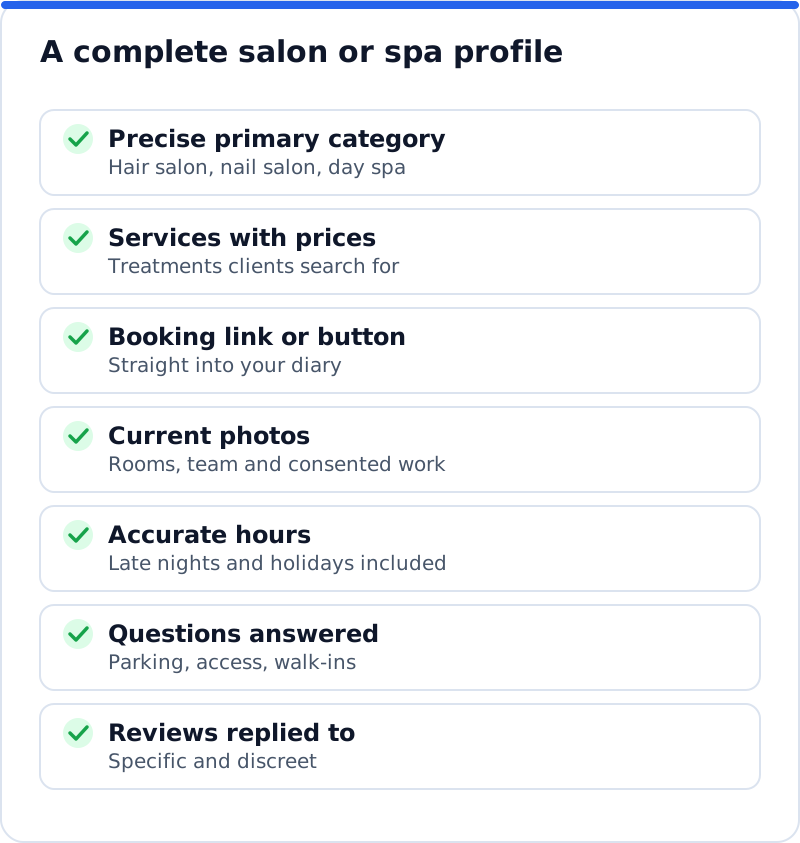
The profile is often the first thing a client sees, so complete every part of it. Choose the primary category that best describes you, such as "Hair salon", "Nail salon", "Beauty salon", "Day spa" or "Massage spa", and add secondary categories only where they are true. Add your services with descriptions and prices if your profile supports it, so clients can see what you offer without leaving Google. Upload photos of the salon, the treatment rooms, your team and your work, and update them regularly. Set accurate hours, including late evenings and holiday hours, because many clients search for appointments outside office hours.
Use profile posts for seasonal treatments, new team members and availability, especially before busy periods such as weddings, holidays and the end of the year. Answer questions on your profile, which often cover parking, accessibility and whether you take walk-ins. Keep your name, address and phone number identical on your website, your profile, Apple Maps, Bing Places and every booking platform. A day spa in Scottsdale that posts its seasonal packages and answers questions about couples' treatments gives searchers a reason to book before they reach a competitor. If you have several branches, each needs its own profile and its own page on your website.
Reviews, discretion and local links
Reviews influence salon and spa bookings heavily, because clients are trusting someone with their appearance or their body. Ask every client in the same way, for example in the follow-up message your booking system sends after an appointment, and never offer discounts or products for a review. Google's policies forbid incentives and selectively asking only happy clients, and in the US the Federal Trade Commission's rule on consumer reviews bans fake and bought reviews, while in the UK fake reviews are banned under the Digital Markets, Competition and Consumers Act. Reply to reviews with specifics, thanking clients for mentioning a stylist or treatment by name. Be discreet in public replies: never mention treatments such as waxing, hair loss or skin conditions unless the client already raised them, and even then keep it general.
Local links help salons rank across their area, not only next door. Wedding venues, photographers, bridal shops, gyms and hotels often recommend beauty businesses, and a mention on their websites tells Google you are known locally. Write about the partnerships on your own website too, such as a page about bridal hair at a nearby venue. Local press coverage, charity events and awards can also bring links when they are covered online. A massage clinic in Bath that works with a local running club might earn a link from the club's website and a mention in race-day articles.
Salon schema and site speed
Schema.org has several types for this sector under HealthAndBeautyBusiness, which itself sits under LocalBusiness: BeautySalon, HairSalon, NailSalon and DaySpa. Choose the one that best fits your main business, and use it on your home page or each location page. Mark up your name, address, phone number, opening hours, geographic coordinates and price range, and make sure everything matches the visible page. Test the markup with Google's Rich Results Test and the Schema Markup Validator before you publish. If your website runs on WordPress, check whether your SEO plugin already outputs business markup, so there are not two conflicting copies.
Speed matters because most salon searches happen on phones. Large gallery images are the usual culprit, so compress them, use modern image formats and give each a short descriptive file name and alt text, such as "balayage on dark brown hair". Booking widgets and Instagram feeds add extra scripts, so keep only the ones that help clients book. PageSpeed Insights shows how quickly your pages load and what slows them down. A treatment page that loads in a moment with a visible booking button will usually win more bookings than a slower page with a bigger gallery.
Measuring SEO for salons and spas by bookings
Bookings are the real measure, so connect your website to your booking data where you can. Set up conversions in your analytics for booking button clicks, completed bookings and calls, and if your booking system runs on another domain, connect the tracking so the source is not lost. Your Google Business Profile performance view shows calls, website clicks, direction requests and, where connected, bookings from Google. Search Console shows which treatment searches bring people to each page. Ask new clients how they found you, either at booking or at their first visit, and record the answer.
Before rewriting pages, check where your website stands. The AI website SEO tools read your salon's website the way Google does, give a score out of 100, show the visits within reach and join each problem to the tool that fixes it, such as a treatment page with no description or images missing alt text. Salons share much with other places people visit, so the same groundwork that powers restaurant SEO, from an accurate profile to steady reviews, applies here too. The wider AI SEO tools for business websites also cover keywords and backlinks. A monthly re-check emails you what changed, which helps you see whether new treatment pages are being found.
Questions business owners ask
Should we rely on booking marketplaces?
Marketplaces can bring new clients, especially when you are just starting, but they should not be your only source. They often rank for your salon's name, which can send clients who already know you through a marketplace rather than straight to you. Make your own website the obvious place to book, with clear prices and a booking button on every page. Encourage repeat clients to book through your own channels. Treat marketplaces as one source among several, and measure what each one brings.
How many treatment pages do we need?
Start with the treatments that bring in the most bookings and revenue, usually between five and ten. Each should have its own page with real detail, photos and a booking button. Smaller treatments and add-ons can sit on category pages, such as "Nail treatments" or "Massages". Add new pages when you introduce a treatment you want to grow. Quality matters more than quantity, so one thorough page beats three thin ones.
Can we use clients' Instagram posts on our website?
Only with their permission, even if they tagged your salon. A photo of a client is personal data, and using it on your website without consent can cause problems under GDPR in the UK and the EU. Ask the client directly, explain where the photo will appear and keep a record of their agreement. Credit them if they would like that. If they later ask you to remove it, do so promptly.
Your first month of salon and spa SEO
Start with your Google Business Profile: check categories, hours, services, photos and the booking link. Then write pages for your three most booked treatments, each with a description, timing, aftercare, photos with consent, a price and a booking button. Add or update team profiles with specialisms and working days. Set up conversions for bookings and calls, and ask new clients how they found you. When those basics are in place, try a website check to see which pages and signals are holding your salon or spa back, and work through them one by one.
Your website as a network: every part of its SEO checked while you watch, your score, the traffic within reach and the fix for each problem.
Check your website with AI Website SEO Tools →