Roofing SEO: How Roofers Win High Value Jobs Online
How a roofing company gets found for leak, storm and replacement searches, which pages it needs, and how to measure the quote requests that follow.
- Any website
- Visits within reach
- Each problem joined to its fix

A roof is the one part of a house nobody thinks about until water drips onto the landing or a storm leaves tiles on the lawn, and that is exactly when the homeowner picks up a phone and searches. Roofing SEO is the work of making sure your company is the one they find at that moment, and also months later when the same household plans a full replacement worth many thousands. The two moments need different pages, different words and different proof, and most roofing websites blur them into one "Services" page that wins neither. You will see the searches homeowners really type, why repair and replacement deserve separate pages, how to write about materials, storm damage and insurance without overpromising, and how project galleries and reviews turn a visitor into a quote request. You will also learn which schema type describes a roofer, which directories matter in the USA and the UK, and how to measure success in booked inspections rather than in rankings alone.
This article is part of our complete guide: SEO for Service Businesses.
Test your roofing website with AI website SEO tools and see which jobs it is missing
Why roofing SEO is its own discipline
Roofing sits in an unusual corner of the trades because the jobs are rare, urgent or expensive, and often all three at once. A household might call a plumber several times in ten years, but it may only replace its roof once in twenty, so every lead is worth far more and every searcher is far more cautious. Homeowners also know that the trade attracts doorstep sellers and out-of-town crews after big storms, which makes trust signals carry more weight than in almost any other home service. That caution shows up in search behaviour: people compare several roofers, read reviews closely, look at photos of finished work and check whether the company is local. The general groundwork of home services SEO, such as a solid Google Business Profile and one page per service, still applies, but roofing adds storm surges, insurance questions and material choices that a generic trade website never covers.
The searches homeowners actually type
Roofing searches fall into two families that behave very differently. Urgent searches come from people with a problem right now: "roof leaking in heavy rain", "emergency roof repair near me", "storm damage roof repair", "missing shingles after wind" or, in the UK, "slipped roof tiles" and "flat roof leaking". Planned searches come from people with time to research: "roof replacement cost", "slate or tile roof", "best flat roof material", "how long does a shingle roof last" and "roofers in" followed by a town. A roofing company in Oklahoma City will see urgent searches spike in the days after a hailstorm, while a roofer in Bristol will see them climb with the first autumn gales. Your website needs a clear landing place for each family, because a single page cannot comfort a homeowner with a bucket under the leak and also walk a careful buyer through the cost of a new roof.
| Search a homeowner types | What they want right now | Page that should answer it |
|---|---|---|
| roof leaking in heavy rain | Someone to stop the water today | Emergency roof repair page with phone number first |
| hail damage roof inspection | To know whether there is damage | Storm damage page with inspection booking |
| roof replacement cost | A rough idea before calling anyone | Replacement page with honest price factors |
| slate roof repair in a named town | A specialist nearby | Slate roofing page linked to the town page |
| flat roof replacement options | To compare EPDM, GRP and felt | Flat roofing page with a material comparison |
Repair and replacement need separate pages
The most valuable change most roofers can make is splitting repair and replacement into their own pages. A repair page should open with the problems people describe in their own words, such as leaks, missing shingles, cracked tiles, failed flashing around chimneys and blocked valleys, and it should say how fast you respond. A replacement page has a different job: it explains when replacing beats patching, what affects the price, how long the work takes, what happens to the old roof and what warranty the homeowner gets. Mixing the two forces Google to guess which search the page is for, and it forces the reader to scroll past content meant for someone else. Each page also deserves its own search title and meta description, such as "Emergency Roof Repair in Charlotte: Leaks Fixed Fast" for one and "Roof Replacement in Charlotte: Materials, Timings and Warranty" for the other.
A good replacement page answers price questions without publishing a price list you cannot honour. Explain the factors that move the figure: the size and pitch of the roof, the material, how many layers must come off, access and scaffolding, and repairs to the decking or battens underneath. Give a realistic range only if you are confident it holds for most jobs in your area, and say clearly that a site inspection sets the final quote. This honesty does two things for search: it helps the page rank for the many "roof replacement cost" searches, and it filters out enquiries that were never going to fit your work. A slate specialist in Edinburgh, for example, will attract better leads by explaining why reclaimed Scottish slate costs more than imported slate than by hiding all pricing behind a contact form.
Material pages for shingle, slate, tile and flat roofs
Materials are how careful buyers research, so each main material you install deserves a page. In the USA that usually means asphalt shingles, metal roofing and sometimes tile or cedar shake, while UK roofers more often need pages for natural slate, concrete and clay tiles, lead work and flat roofs. Flat roofing is a search category of its own in both countries, with people comparing EPDM rubber, GRP fibreglass, torch-on felt and liquid systems for extensions, garages and commercial buildings. A material page should explain how long the material typically lasts, how it looks, how it handles local weather, what it needs in maintenance and which homes it suits. Photos from your own jobs beat stock images every time, because they prove you actually work with that material. If you hold a manufacturer certification, for example from a shingle maker such as GAF or Owens Corning in the USA, say so on the relevant page and explain in plain words what it means for the homeowner's warranty.
Storm damage and insurance pages, written carefully
Storm damage pages can bring a flood of enquiries, and they are also where roofing websites most often say things they should not. A good storm page explains what wind and hail damage look like, why some damage is not visible from the ground, why homeowners should not climb onto the roof themselves, and how to book an inspection. It can describe the documents and photos that help an insurance claim and explain what a roofer can provide, such as an inspection report with dated photos and a written quote. It should never promise that a claim will be paid, and it should never offer to cover or waive the homeowner's excess or deductible. Several US states, Texas and Colorado among them, have laws against contractors absorbing a deductible, and many states only allow a licensed public adjuster or attorney to negotiate a claim on the homeowner's behalf. Check the rules where you work and write the page to match them, because a careless promise can cost far more than the job.
In the UK the picture is different but the same care applies. Home insurers decide what counts as storm damage, and many policies exclude wear and tear, so a page that implies every leak after a windy night will be covered sets the customer up for disappointment. Explain instead that you will report what you find honestly, with photos, and that the homeowner's insurer makes the decision. Update the page when a named storm passes through your region, adding a short dated note about response times, because people search with the storm's name in the days afterwards. That steady, honest page will outrank the hastily built landing pages that appear after every big weather event and vanish weeks later.
Project galleries that prove local work
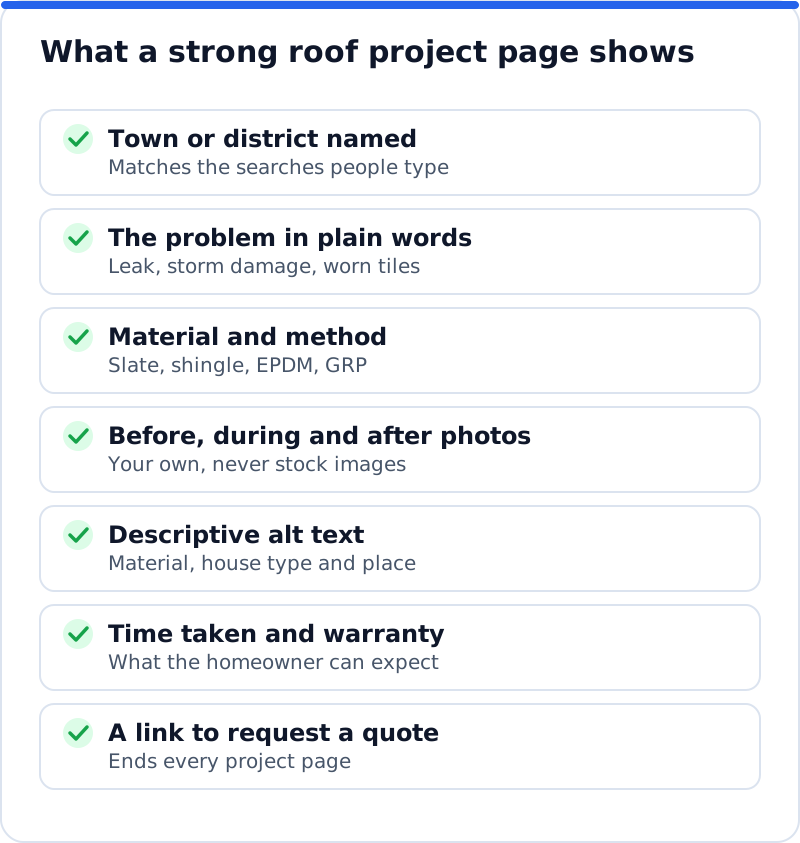
Photos of finished roofs are the strongest content a roofing website can publish, provided each project is described properly. A gallery of fifty unlabelled images helps nobody, while ten project pages that each name the town, the problem, the material and the outcome give Google and homeowners exactly what they want. Write two or three short paragraphs per project: what the homeowner noticed, what you found on inspection, what you did and how long it took. Include before, during and after photos, and give every image descriptive alt text such as "new natural slate roof on a Victorian terrace in Clifton". Never show a client's house number or anything that identifies the household without written permission, and ask for that permission as part of your job sign-off.
Google Business Profile and reviews for roofers
Your Google Business Profile is often seen before your website, so set it up with roofing in mind. Choose "Roofing contractor" as the primary category, and add secondary categories only for work you genuinely do and want to be found for. Most roofers visit homes rather than receiving customers at an office, so set the profile as a service area business, hide the street address if customers do not visit it, and list the towns and districts you actually cover. Add opening hours that match how you answer the phone, and only show emergency availability if someone really picks up out of hours. Upload photos of real roofs, crews and vehicles every month, and use posts to share storm response updates or finished projects.
Reviews carry extra weight in roofing because buyers fear choosing badly on a large job. Ask every satisfied customer for a review at the moment the job is signed off, and send a direct link by text or email so it takes them a minute. Google's policies forbid offering incentives for reviews and asking only happy customers while steering unhappy ones elsewhere, and in the USA the FTC's rule on consumer reviews and in the UK the rules on fake reviews under consumer protection law make fake or bought reviews a serious legal risk. Reply to every review, thanking people by first name and mentioning the type of work, and answer negative reviews calmly with an offer to talk offline. A roofer with forty detailed reviews that mention leaks fixed, slates replaced and tidy crews will win the click over a competitor with a higher star average and three vague comments.
Directories and RoofingContractor schema
Directories still matter for roofers, both as sources of leads and as places Google checks that your name, address and phone number agree. In the USA the usual list includes Angi, HomeAdvisor, Yelp, Nextdoor and the Better Business Bureau, along with manufacturer contractor finders if you hold a certification. In the UK, roofers commonly appear on Checkatrade, TrustATrader, Rated People, MyBuilder and Trustpilot, and trade bodies such as the National Federation of Roofing Contractors and the TrustMark scheme list their members. Whatever you join, make sure the business name, phone number and website match your Google Business Profile exactly. Inconsistent details across directories are one of the quiet reasons a listing ranks lower than it should.
On your own website, structured data tells search engines plainly what kind of business you are. Schema.org has a specific type for this, RoofingContractor, which sits under HomeAndConstructionBusiness and LocalBusiness, so a roofer does not need to fall back on a generic business type. Add it to the home page with your business name, phone number, website, logo, opening hours, the areas you serve and links to your main profiles. Keep everything in the markup identical to what visitors can see on the page, because Google ignores or distrusts structured data that describes things the page does not show. Test the result with Google's Rich Results Test or the Schema Markup Validator, and fix any errors before you move on. If your SEO plugin already outputs business schema, check what it produces before adding a second block, so the page does not describe your company twice.
Measuring roofing SEO in quote requests
Rankings are a means to an end, and the end for a roofer is booked inspections and signed quotes. Set up tracking for every way a homeowner can reach you: phone calls from the website, calls from the Google Business Profile, contact form submissions and inspection bookings. In Google Analytics 4, mark form submissions and booking confirmations as key events, so you can see which pages lead to enquiries. Google Business Profile's performance view shows calls, website clicks and direction requests from your listing, and Google's guidelines allow a call tracking number as the primary number if your main number is listed as an additional one. Search Console shows which searches bring impressions and clicks, which tells you whether your storm, repair and replacement pages are reaching the right people.
This is also where a clear check of the whole website saves time. Our AI website SEO tools read your website the way Google does, give it a score out of 100 and show the problems on each page they read, up to 12, so you can see at once whether your repair page has a weak title or your project pages lack alt text. The check also shows the keyword each main page should win and the visits a month the website gets now compared with the visits within reach, which helps you decide whether storm pages or material pages deserve attention first. Each problem is joined to the tool that fixes it, with steps and code to paste, or applied by the plugin if the website runs on WordPress. A monthly re-check emails you what changed, which suits a trade where storm seasons come and go. If you look after more than one trade website, the wider AI SEO tools for business websites cover keywords, backlinks and fixes in one place.
Questions business owners ask
Should I create a page for every town I cover?
Create pages for the main towns where you want more work and can show real projects, rather than for every postcode on the map. A town page earns its place when it mentions jobs you have done there, the roof types common in the area and how quickly you can reach it. A page that only swaps the town name rarely ranks for long. Start with five or six towns, link each one to relevant project pages, and add more as your gallery grows. Your Google Business Profile service areas can cover the wider region while the town pages focus on the places that matter most.
How quickly will roofing SEO bring enquiries?
Fixes to your Google Business Profile and to obvious website problems can show results within weeks, because Google recrawls active local pages fairly often. New service and material pages usually take a few months to settle into stable positions, especially in competitive cities. Storm pages can bring visits quickly if they already exist and have built some strength before the weather arrives. That is why it pays to publish them in a calm season rather than in the rush after a storm. Track enquiries monthly and judge the work over two or three seasons, not a single week.
Your first month of roofing SEO
Start by splitting repair and replacement into separate pages if they are combined, and give each one its own search title, description and clear call button. Next, tidy your Google Business Profile: check the primary category, the service areas, the hours and the photos, and ask your last ten customers for reviews. Then write one storm damage page that explains inspections honestly and stays within the rules on insurance where you work. Add three project pages from recent jobs, each naming the town, the material and the outcome, and link them to the matching service pages. Finally, set up tracking for calls and form submissions so that next month you can see which pages produced quote requests, and use those numbers to choose the next pages to build.
Your website as a network: every part of its SEO checked while you watch, your score, the traffic within reach and the fix for each problem.
Check your website with AI Website SEO Tools →