SEO for Financial Advisors: Trust, Compliance and Visibility
How financial advice firms in the US and UK earn trust and visits from Google with life event pages, visible credentials and careful reviews, while keeping every page inside their regulator's rules.
- Any website
- Visits within reach
- Each problem joined to its fix

Money decisions tend to follow life events, and the search that leads someone to a financial adviser usually starts with the event rather than the adviser: a retirement date, an inheritance, a business sale or a pension statement that suddenly matters. Firms that are found at that moment have pages written for the event, a clear explanation of how they work and the credentials to back it up. SEO for financial advisors adds a constraint that most businesses never face, because every page that promotes the firm is a regulated communication. In the US that can mean the SEC's Marketing Rule or FINRA's communications rules, and in the UK it means the FCA's rules on financial promotions. You will see how people search for advice, which pages an advice firm needs, how to build compliance review into publishing, and how to show credentials and reviews properly. The later sections cover schema, educational content and how to measure the meetings that search brings in.
This article is part of our complete guide: SEO for Service Businesses.
Run AI website SEO tools on your financial advice website and see the visits within reach
How people search for financial advice
People rarely search for "financial advisor" in the abstract. They search for the situation they are in, such as "how much do I need to retire at 60", "should I consolidate my pensions", "inheritance tax on parents' house" or "what to do with money from selling my business". Those searches come before the decision to hire anyone, so the firm that answers them well earns attention early. Closer to choosing, people search with a place or a type of adviser, such as "IFA Edinburgh", "fee-only financial planner near me" or "pension transfer specialist". A firm needs pages for both stages, and the principles of SEO for professional services apply with an extra layer of regulation on top.
Life event and niche pages
The most effective pages on an advice firm's website are organised around life events and client groups rather than products. A page on retirement planning should explain the questions people face, how the firm approaches them and what a first meeting involves, without promising returns. Niche pages work even better, because they speak to a group with shared circumstances, such as doctors, teachers with defined benefit pensions, business owners planning an exit or people moving between the UK and the US. An advisory firm in Charlotte that focuses on physicians can write about student loan repayment and practice ownership, while a pension specialist in Bristol can explain how defined benefit transfers are assessed and why the regulator treats them with caution. Each page should name the advisers who handle that work and offer a clear next step, such as booking an introductory call.
| Life event or client group | Typical search | What the page should cover |
|---|---|---|
| Approaching retirement | "how much do I need to retire" | Planning steps, income options and what a review involves |
| Inheritance | "inheritance tax on parents' estate" | General rules for the country covered and when advice helps |
| Selling a business | "what to do after selling my business" | Planning questions, timing and working with the client's accountant |
| Workplace pensions | "should I combine my old pensions" | Factors to weigh, risks and why advice may be needed |
| Professionals with complex pay | "financial advisor for doctors" | Issues specific to that group and how the firm helps |
Compliance review in SEO for financial advisors
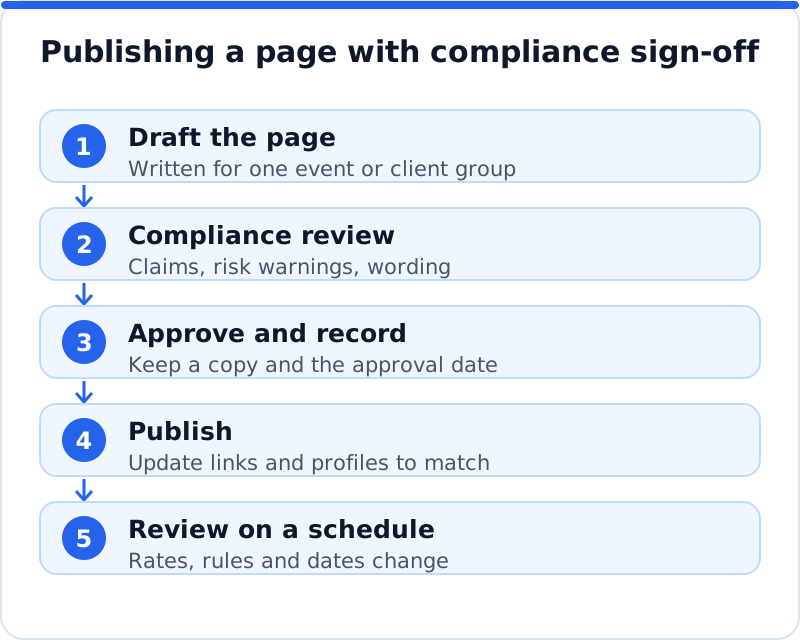
Every page that promotes an advice firm can count as a regulated communication, so compliance review has to be part of publishing rather than an afterthought. In the US, investment advisers registered with the SEC fall under its Marketing Rule, which sets general prohibitions on misleading statements and conditions on testimonials, endorsements, third-party ratings and performance information. Broker-dealers and their registered representatives fall under FINRA Rule 2210, which generally requires a registered principal to approve retail communications, including most website content, before they are used. Both regimes expect firms to keep records of their communications, which means keeping a copy of what each page said and when. Dual-registered firms may need to meet both sets of rules, so the compliance contact should decide which apply to each page.
In the UK, the FCA requires financial promotions to be fair, clear and not misleading, and the Consumer Duty expects firms to communicate in a way that supports customers' understanding. Specific terms carry specific meanings, such as "independent" advice, which a firm may only claim if it meets the FCA's standard for independent advice, so words chosen for search must still be accurate. Risk warnings, past performance and claims about tax treatment all need care, and the FCA has published guidance on promotions made through social media as well. Firms in Ireland are regulated by the Central Bank of Ireland, which has its own rules on advertising. None of this is legal or compliance advice, so build a sign-off step into your process and ask your compliance team before publishing anything new.
Credentials and the regulator's register
Credentials matter more in financial advice than in almost any other field, because clients are trusting the firm with their future. In the US, common designations include the CFP certification, the ChFC and the CFA charter, and clients can look up advisers on the SEC's Investment Adviser Public Disclosure website and on FINRA BrokerCheck. SEC-registered advisers and broker-dealers that serve retail investors and have a public website must post their client relationship summary, known as Form CRS, prominently on it. In the UK, qualifications such as Chartered Financial Planner and the CFP certification are widely recognised, and every authorised firm appears on the FCA Register with a firm reference number. Show each adviser's qualifications on their bio page, state the firm's regulatory status and reference number in the footer, and link to the regulator's register so clients can check it for themselves.
Reviews and testimonials where rules allow
Reviews help a client choose an adviser, but the rules on using them vary by regulator. The SEC's Marketing Rule permits testimonials and endorsements in advertising only with clear disclosures, such as whether the person is a client and whether they were paid, and only with oversight by the firm. How a firm uses reviews from sites such as Google, for example by sharing or highlighting them, can affect whether they count as testimonials, which is why many compliance teams set a written policy for review sites. In the UK, review platforms such as VouchedFor and Unbiased are widely used by advisers, and any use of reviews in promotions must still be fair, clear and not misleading. Replies to reviews should never mention a client's circumstances, holdings or fees, because confidentiality and data protection rules apply to every response.
Google Business Profile for advisory firms
Google Business Profile puts an advice firm in the map results for searches such as "financial adviser near me", where many people make a shortlist. Choose the most specific primary category that fits, list the services the firm offers and use real photographs of the office and team. Google's guidelines treat professionals such as financial planners as individual practitioners, who may have their own profile if they are public-facing and can be reached at the verified location during its hours. When a sole adviser is the only public-facing professional at a branded firm, Google recommends one shared profile named with the firm and the adviser's name. Agree with your compliance team how posts and review replies on the profile will be checked, because they are communications too.
Educational content that stays general
Articles that explain financial topics clearly are among the best ways to earn search visits and show expertise. Good topics come from questions clients ask in first meetings, such as how pension drawdown works, what an annuity is or how tax-advantaged accounts differ between the US and the UK. A planning firm in Dublin should write for Irish readers and say so, because pension and tax rules differ even between neighbouring countries. Each article should state the country and tax year it covers, name the qualified person who wrote or reviewed it and avoid any suggestion of a personal recommendation. Keep forecasts and performance figures out of general articles unless compliance has approved them, and close with a link to the relevant planning page for readers who want advice on their own situation.
Schema and technical trust
Structured data helps Google understand who the firm is and where it works. On schema.org, the type for this kind of business is FinancialService, a kind of LocalBusiness, which can carry the firm's name, address, phone number, opening hours, website and areas served. Advisers can be described with the Person type on their bio pages, including their job title, the firm they work for and their credentials through the hasCredential property. Test the markup with Google's Rich Results Test and the Schema Markup Validator, and do not mark up reviews you collected yourself, because Google does not show review stars for a business describing itself. A secure website, fast pages and clear contact details matter for every business, but for an advice firm they also signal the care clients expect.
Measuring SEO for financial advisors by meetings
An advice firm's measure of success is the number of introductory meetings booked and the clients who sign, not the number of visits. Set up key events in Google Analytics for booking forms, calls and contact requests, and see which life event and niche pages lead to them. Google Business Profile shows calls and website clicks from the map results. Because the path from first search to signed client can take months, record how each prospect found the firm in your client management system and review the figures by quarter. A page that brings a few well-matched enquiries a month can be worth far more than one that brings many readers who never book.
AI Website SEO Tools gives a firm a clear view of where its website stands. A retirement planner in Tampa or a wealth planning firm in Cardiff can run a check that reads the website the way Google does, gives a score out of 100 and lists each page's problems across six areas. It shows the keyword each main page should win, the visits a month now and within reach, and joins every problem to the tool that fixes it. Fixes come as steps and code to paste, which lets compliance approve the wording before anything changes, and a monthly re-check emails what moved. The wider AI SEO tools for business websites help with keyword research and articles once the core pages are in order.
Questions business owners ask
Does every page on our website need compliance approval?
In most regulated advice firms, any page that promotes the firm or its services is treated as a communication that needs review under the firm's procedures. That usually includes service pages, bios, articles and the home page, and often profile posts and review replies too. The exact requirement depends on your registration and your regulator, so your compliance team should set the policy. Building review into the publishing process avoids delays and stops pages going live with risky wording. Keep a record of each approved version, because regulators may ask to see what a page said at a given time.
Can we use the word "independent" on our website?
In the UK, a firm may describe its advice as independent only if it meets the FCA's standard for independent advice, which covers a sufficiently wide range of products and providers. Firms that offer restricted advice must make that clear instead. In the US, words such as "fiduciary" and "fee-only" should only be used if they accurately describe how the firm works and is paid. Search terms do not change these obligations, so a page cannot target "independent financial adviser" unless the description is true. Ask your compliance team to confirm the wording before you publish.
How long does it take for an advice firm to rank?
New pages usually take a few months to settle, and competitive searches in large cities take longer. Firms that publish steadily, keep pages accurate and earn mentions from reputable sources tend to see gains build over a year. Location pages and a well-kept Google Business Profile often show results sooner than articles. Judge progress by meetings booked each quarter rather than weekly rankings. Patience pays, because a page that ranks well for a life event can bring enquiries for years.
Your next step toward more booked meetings
Choose the life event or client group that brings your best clients and make sure it has a dedicated page that explains the firm's approach clearly. Add the adviser's credentials, the firm's regulatory status and a simple way to book a first meeting. Send the page through compliance review, record the approved version and publish it. Then update your Google Business Profile and directory listings so they point to the same page. When that page is live, run a check of the whole website and fix the problems that cost the most visits first.
Your website as a network: every part of its SEO checked while you watch, your score, the traffic within reach and the fix for each problem.
Check your website with AI Website SEO Tools →