SEO for Therapists and Counsellors: Being Found With Care
How a private practice therapist or counsellor gets found by the right clients while protecting confidentiality at every step.
- Any website
- Visits within reach
- Each problem joined to its fix
Reaching out to a therapist is one of the hardest searches a person ever makes, and it often happens late at night, typed slowly and deleted more than once. The words are personal: "anxiety counsellor near me", "couples therapy for constant arguing", "CBT online", and the person reading the results is deciding whether anyone will understand them. SEO for therapists is about being found by that person and giving them enough calm, clear information to take the next step. It works differently from SEO for other practices, because confidentiality limits what you can do with reviews and testimonials, professional codes shape your wording, and many clients first meet you on a directory rather than on your own website. You will learn how clients search by issue and by approach, which pages a private practice needs, how to use directories and Google Business Profile from a home or shared office, how to present online sessions, and how to measure enquiries without compromising anyone's privacy. Everything here suits a solo counsellor as well as a small group practice.
This article is part of our complete guide: SEO for Service Businesses.
Use AI website SEO tools to analyse your therapy practice website and see how clients find it
What makes SEO for therapists different
Therapy sits within health care, so the trust standards that apply to any clinical website apply here too. Google expects health and wellbeing pages to show who wrote them, what qualifies that person and whether the information is accurate, and therapists have an easy advantage because their whole practice rests on qualifications and registration. The wider principles for practices are covered in the guide to medical SEO, including how patients search and how privacy rules shape marketing. What changes for therapists is the emotional weight of every search and the confidentiality that surrounds every client. A plumber can publish a hundred glowing reviews, while a counsellor in Bath may be bound by a code that discourages asking clients for testimonials at all. Good SEO for therapists accepts these limits and builds visibility through useful pages, accurate listings and a website that feels safe to contact.
How clients search: issues, approaches and formats
People look for therapy in three main ways, and each needs a different kind of page. Most search by issue, such as anxiety, depression, grief, trauma, panic attacks or relationship problems, often with a town name or "near me". Some search by approach, because a GP or a friend mentioned CBT, EMDR or person-centred counselling, or because they have read about it. Many now search by format, such as "online therapy", "therapy by phone" or "evening counselling", and in the USA a large share include an insurance plan or the words "sliding scale". The table shows how these searches map to pages.
| Search type | Examples | What helps the reader decide |
|---|---|---|
| By issue | anxiety therapist (town), grief counselling | Signs, how therapy helps, what a first session is like |
| By approach | CBT therapist, EMDR near me | What the approach involves, who it suits, your training |
| By format | online therapy, evening counselling | How sessions work, where you are licensed or insured |
| By client group | couples therapy, therapist for teenagers | Your experience with that group, consent, fees |
| By cost | sliding scale therapist, therapist that takes insurance | Fees, plans accepted, cancellation policy |
Pages a private practice needs
Each issue you work with regularly deserves its own page, written in plain, warm language for someone who may be struggling. Describe how the issue can feel, how therapy might help, what the first session involves and how many sessions people often have, without promising outcomes. Approach pages should explain what CBT or EMDR actually involves in a session, who it tends to suit and where you trained, since that is the question behind the search. An about page with your photo, qualifications, registration or licence and a few sentences about how you work is often the most visited page on a therapist's website. A fees page that states session prices, any sliding scale, the insurance plans you accept in the USA and your cancellation policy saves anxious people from having to ask.
Be precise about titles and qualifications, because they are regulated in different ways. In the UK, "counsellor" and "psychotherapist" are not protected titles, so registration with a professional body that holds an accredited register is the main signal of standards, while titles such as "clinical psychologist" and "counselling psychologist" are protected and require registration with the Health and Care Professions Council. In the USA, therapists practise under state licences such as LPC, LMFT, LCSW or psychologist, and the licence type and state should appear on the about page. Write each page in your own voice and have it reflect how you really work. A couples therapist in Portland, Oregon, whose page explains the structure of a first joint session will feel more approachable than one who lists twenty modalities.
Directory profiles and your own website
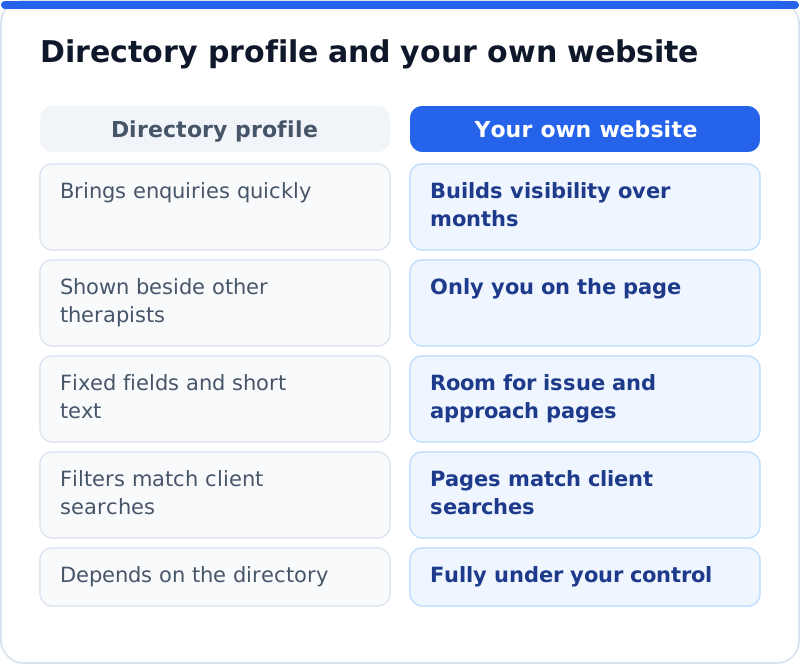
For many therapists, directories bring the first enquiries. In the USA, Psychology Today's therapist directory is widely used, and insurance company directories matter for practices that accept plans, while in the UK, Counselling Directory and the registers of professional bodies are common places to look. A directory profile ranks quickly because the directory already has strong authority, and its filters match how people search, by issue, approach, price and location. Your own website builds more slowly, but it is yours, it can answer far more questions, and it does not compete with other therapists on the same page. The strongest approach uses both, with every directory profile linking to your website and matching its details exactly.
Google Business Profile for a home or shared office
A Google Business Profile puts you on the map for "therapist near me" searches, but eligibility depends on how you see clients. Google expects a business to make in-person contact with customers during its stated hours, so a practice that works only online is not eligible for a profile. If you see clients at a rented room in a shared clinic, you can usually list that address, as long as clients really meet you there and it is not a virtual office or mailbox. If you see clients at home, think carefully, because a profile shows your address to anyone and the map pin points at your house. Many therapists in that position rent a room for some sessions and list that address instead, which protects their privacy and their family's.
Choose the primary category that matches your registration, such as Psychotherapist, Counselor or Psychologist, and add secondary categories only when they describe real services, such as family or marriage counselling. Write the description in the same careful language as your website, set the hours you are really available, and link to your contact or booking page. Add photos of the therapy room and the waiting area, since many clients want to picture the space before they arrive. Remember that you cannot switch off reviews on a profile, so decide in advance how you will respond to them. Keep the name, address and phone number identical to your website and directory profiles.
Online sessions and location pages
Online therapy widens your reach, but it does not remove geography. In the USA, a therapist generally needs to be licensed in the state where the client is located during the session, so an online therapy page should list the states you can serve. In the UK and Europe, check what your professional body and insurer say about clients in other countries before offering sessions abroad. A psychotherapist in Amsterdam who offers sessions in English can reach expatriates across the Netherlands, and a page that says so clearly will rank for searches such as "English speaking therapist Netherlands". Explain how online sessions work, which platform you use, how privacy is protected and what clients need, such as a quiet room and a stable connection.
Location pages make sense when you see clients in more than one place, such as two rooms in different towns. Each page should describe that room, how to get there, parking, accessibility, the days you are there and the issues you see most in that setting. Avoid creating pages for towns where you have no room and no clients, because thin pages with swapped town names rarely rank and can make a practice look less trustworthy. If you only work online, one strong online therapy page will do more than twenty town pages. Link each location page from your contact page so that visitors can find the nearest room quickly.
Reviews, testimonials and confidentiality
Reviews and testimonials are where therapy differs most from other businesses. The American Psychological Association's ethics code says psychologists do not solicit testimonials from current therapy clients or others vulnerable to undue influence, and many other professional codes in the USA and the UK discourage or restrict testimonials too. Clients may still choose to leave reviews on Google or directories, and you cannot stop that. When you reply, never confirm or deny that the person is a client, and never mention anything they shared, even if their review describes it, because that would breach confidentiality and, in the USA, may breach HIPAA where it applies. A safe reply thanks people for their words and explains that your professional duties mean you cannot discuss whether anyone has been a client.
A calm, accessible website that respects privacy
The design of a therapy website is part of its SEO, because people who feel overwhelmed leave quickly, and Google notices pages that do not satisfy visitors. Use plain language, generous spacing, readable text sizes, good colour contrast and a clear route to contact on every page. Avoid autoplay video, pop-ups and countdown offers, which feel jarring to someone in distress. Add a short note on the contact page explaining that you are not an emergency service and pointing to crisis help, such as 988 in the USA or Samaritans on 116 123 in the UK and Ireland. A CBT therapist in Cardiff whose website loads quickly on a phone and asks for nothing more than a name, an email and a preferred time will receive more first messages than one with a long intake form.
Privacy also applies to the tools on your website. Keep contact forms short and ask people not to share clinical details until a first conversation, and make sure the form is sent securely. Be careful with advertising pixels and detailed tracking on pages about specific issues, because regulators in the USA have acted against health companies that shared visitors' health information with advertisers. Under GDPR in the UK and Europe, a page visit about trauma or addiction can reveal sensitive information, so keep analytics simple and set up consent properly. Choosing privacy over extra data rarely costs you rankings and protects the trust your practice depends on.
Measuring enquiries with care
The figure that matters is the number of enquiries that become first sessions. Count messages from the contact form, calls and emails each month, and ask each new client where they found you, recording directory, Google search, map, referral or other. The Google Business Profile performance view shows calls, website clicks and direction requests, and Search Console shows which issue and approach pages gain clicks. In Google Analytics, a key event for completed contact forms is usually enough, without tracking anything about who sent them. A therapist in Chicago might find that the grief page brings fewer visits than the anxiety page but more enquiries, which tells you where to write next.
How AI Website SEO Tools help
Our AI website SEO tools check a therapy website the way Google reads it and give a score out of 100, with on-site checks counting for 60% and backlink trust for 40%. The report covers six areas, reads up to 12 pages and lists each page's problems, such as an anxiety page with no search title or images that slow the website on a phone. It shows the keyword each main page should win, the visits a month now and those within reach, and it joins each problem to the tool that fixes it, with steps and code to paste or, on WordPress, applied by our plugin. A monthly re-check emails you what changed, so you can see progress without logging in every week. The wider AI SEO tools for business websites also include a backlink checker for confirming that your directory profiles link back to you.
Questions business owners ask
Should I ask clients for Google reviews?
For most therapists, the safer answer is no, or at least not current clients. Professional codes such as the APA's discourage soliciting testimonials from people who may feel unable to refuse, and asking a client for a review can change the therapeutic relationship. Check your own professional body's guidance, since rules differ between the USA, the UK and Europe. You can still build visibility through detailed pages, accurate listings and links from local organisations. Reviews that clients leave on their own initiative are welcome, as long as your replies protect confidentiality.
Do I need a website if a directory brings enough enquiries?
A directory can fill a practice, but it can also change its fees, its layout or its search rules without warning. Your own website gives you pages for every issue and approach, a place to explain how you work in your own voice, and visibility that does not depend on one company. Many clients read a directory profile and then search your name before getting in touch, and a professional website reassures them. A modest website with an about page, a fees page and a few issue pages is enough to start. Link it from every directory profile so the two support each other.
Can I rank for online therapy across a whole country?
National searches such as "online therapy" are dominated by large platforms, so a solo practice rarely wins them. More specific searches are realistic, such as online therapy for a particular issue, in a particular language or for a particular group. In the USA, keep within the states where you hold a licence and say so on the page. A narrow, honest page about online EMDR for trauma will usually do better than a broad page about online therapy in general. Measure enquiries from these pages for a few months before deciding whether to add more.
Next steps in SEO for therapists
Start by checking that your directory profiles and Google Business Profile, if you are eligible for one, show the same name, address, phone number and hours as your website. Then write or improve the about page and the fees page, because they answer the questions every new client has. Next, add one page for the issue you work with most and one for your main approach, written calmly and reviewed by you before publishing. Set up a simple count of enquiries and where they came from, and decide in advance how you will reply to reviews. When those basics are in place, run a full check of the website to see which pages and problems stand between you and the clients looking for help.
Your website as a network: every part of its SEO checked while you watch, your score, the traffic within reach and the fix for each problem.
Check your website with AI Website SEO Tools →