Plumber SEO: Getting Called First for Emergencies and Installs
How a plumbing business gets chosen first on Google, for the 2am leak and the planned bathroom, with the pages, profile details and reviews that make the phone ring.
- Any website
- Visits within reach
- Each problem joined to its fix

Water coming through a ceiling does not wait for office hours, and neither does the homeowner holding a bucket and a phone. Plumber SEO is about being the name they see and trust in those first few seconds, and also about being the company they choose weeks later for a new bathroom or water heater. Plumbing has an unusual mix of work: frantic emergency calls, routine repairs and large planned installs, each searched for in very different ways. A website that only says "we do all plumbing" misses most of those searches, while one with clear service pages, honest night-time signals and reviews that describe real jobs catches them. You will see what plumbing customers actually type, how to prove you answer at night, which pages to build, how to set up your Google Business Profile and schema, how to write a pricing guide without inventing figures, and how to measure the calls that follow.
This article is part of our complete guide: SEO for Service Businesses.
Run AI website SEO tools on your plumbing website and see which pages lose emergency calls
Plumber SEO starts with the searches
Plumbing searches split cleanly by urgency, and the words people use tell you which kind of customer is on the other end. Emergency searches are short and often include "near me", "emergency", "24 hour" or the problem itself, such as "burst pipe" or "toilet overflowing". Repair searches name a fault and are less frantic, like "dripping tap repair" or "water heater not heating", and the searcher may read two or three pages before calling. Install and renovation searches are longer and often include the word "cost", a brand or a town, and the person may compare quotes for weeks. Vocabulary also changes by country: Americans search for water heaters and garbage disposals, British homeowners for combi boilers and blocked drains, and in Ireland or France the same jobs carry their own local names. Good plumber SEO maps each of those searches to a page written for it, instead of hoping one general page catches them all.
| Search typed | Urgency | What the person needs to see first | Best page to answer it |
|---|---|---|---|
| emergency plumber near me | Very high | Phone number, "available now", area covered | Emergency plumbing page |
| burst pipe what to do | Very high | Steps to stop the water, then your number | Burst pipe guide with a call button |
| water heater not heating | Medium | Likely causes and a same-day repair offer | Water heater repair page |
| blocked drain Birmingham | Medium | Local proof, response time, typical price factors | Drain unblocking page linked to the town page |
| bathroom installation cost | Low | Price factors, project photos, how quotes work | Bathroom installation page with a pricing guide |
Proving you really answer at night
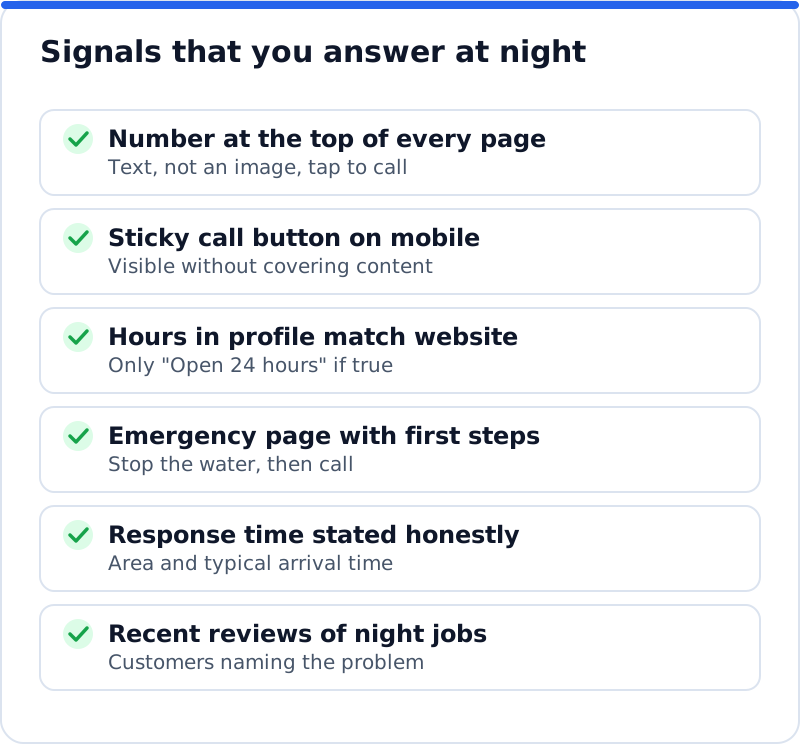
An emergency searcher does not read your history; they scan for signs that someone will pick up. The phone number should be at the top of every page, written as text and set as a tap-to-call link, because most emergency searches happen on phones. A call button that stays visible as the visitor scrolls is worth adding on mobile, as long as it does not cover content. If you genuinely offer a 24 hour service, say so in the page heading, the opening line of the emergency page and your Google Business Profile hours, which you can set to "Open 24 hours". If you only offer evening cover or a call-back service, say exactly that, because a customer who calls at 3am and reaches voicemail will leave a review nobody wants. A plumbing company in Columbus, for example, might state "Emergency calls answered 24 hours, engineer on site within 90 minutes across Franklin County" only if its rota really supports it.
The emergency page itself should help before it sells. Start with what to do right now: where the stop tap or main shutoff valve usually is, how to switch off the water heater or boiler, and how to protect electrics near a leak. Then explain what happens when someone calls, how quickly you usually arrive and how out-of-hours charges work, in plain terms. This kind of page earns trust because it is useful even to someone who never calls you, and for the same reason it can attract links from local community pages. It also gives Google clear content to match against problem searches such as "water leaking from ceiling". Keep it short enough to read on a phone in a stressful moment, with the call button visible at every point.
Service pages every plumbing website needs
Each main job deserves its own page, because people search for the job, not for "plumbing services". The core set for most plumbers covers leaks and burst pipes, drains and blockages, toilets and taps, water heaters or boilers, bathroom installation and, where relevant, gas work and heating. Each page should describe the problem in the customer's words, explain how you diagnose and fix it, list what affects the price, show photos of that kind of job and end with a clear way to call or request a quote. Mention qualifications where they matter: in the UK, anyone working on gas boilers must be on the Gas Safe Register, and many plumbers also belong to WaterSafe, while in the USA plumbing licences are issued at state or local level, so show yours with its number. A heating and plumbing firm in Glasgow would put its Gas Safe number on every boiler page, because customers can look it up on the register. Avoid splitting one job into five near-identical pages, such as separate pages for "sink blocked" and "sink clogged", which compete with each other instead of ranking.
The naming difference between countries matters more than many plumbers realise. A page called "Hot water cylinder replacement" will struggle in Texas, and "Water heater installation" sounds foreign in Surrey. Use the words your customers use, and add the other term naturally in the text if you serve customers who might use either. The same applies across Europe, where a plumber in Vienna or Lyon writes in the local language and uses local names for boilers and drains. Check Search Console for the exact phrases that already bring visitors, then use those in headings and titles. That small change often helps a service page appear for searches it was previously missing.
| Job | Common US search term | Common UK search term |
|---|---|---|
| Hot water supply | water heater repair | boiler repair or hot water cylinder |
| Blocked waste pipe | clogged drain | blocked drain |
| Kitchen waste unit | garbage disposal repair | waste disposal unit repair |
| Main water shutoff | main shutoff valve | stop tap or stopcock |
| Toilet fault | running toilet | toilet cistern not filling |
Town pages for the areas you cover
Most plumbers cover a ring of towns or suburbs, and many searches include a place name. A page for each main area can rank for those searches, but only when it says something true and specific about that place. Describe the jobs you do there most often, the type of housing and its typical plumbing problems, how long it usually takes you to arrive, and show a few photos and reviews from customers nearby. A family plumbing business in Tampa could explain that older homes in Seminole Heights often still have galvanised pipes, and show a recent repiping job there. Pages that simply swap the town name into the same text are treated by Google as doorway pages, which its spam policies warn against. Start with the four or five areas that already bring you the most work, then add others only when you have real jobs to describe.
Google Business Profile for plumbers
Your profile is often the first thing an emergency searcher sees, and many call straight from it without visiting the website. Choose "Plumber" as the primary category, then add secondary categories only for work you genuinely do, picking from the options Google shows for your country, such as ones for drainage or water heater work. Most plumbers do not receive customers at their premises, so Google's guidelines ask them to hide the address and list service areas instead, keeping within a realistic driving distance. Add your services with short descriptions, set hours that match reality, and upload photos of your van, your team and finished jobs every few weeks. Use the Updates feature for seasonal reminders, such as protecting pipes before a freeze, which also shows that the business is active. Make sure the business name is your real trading name, because adding keywords such as "Emergency 24hr Plumber" to the name breaks Google's guidelines and can lead to suspension.
Reviews that mention the job
A review that names the problem, the place and the speed of the fix does more work than a row of five stars with no words. "Came out at midnight to a burst pipe in our loft in Headingley and had it sorted in an hour" reassures the next emergency caller and matches the very searches you want to win. Ask every customer for a review by text right after the job, with a direct link, and suggest they mention what you fixed and where. Reply to each one with a thank you and a detail about the job, and never include the customer's address or private details. Google's policies forbid offering anything in return for reviews or asking only satisfied customers, and fake reviews are now banned by law in both the USA and the UK. Answer a negative review with facts and an offer to put things right, because other customers read the reply as much as the complaint.
Plumber schema on the home page
Schema.org has a specific type called Plumber, which sits under HomeAndConstructionBusiness and LocalBusiness, and it is the right type for most plumbing companies. Add it to the home page with your trading name, phone number, website, logo, opening hours and the areaServed property listing the towns or counties you cover. If you work 24 hours, the openingHoursSpecification can say so, but only when your profile and website say the same. Include your street address only if it is shown publicly; a service area business can leave it out. Most SEO plugins let you choose the business type in their settings, and you can test the result with Google's Rich Results Test or the Schema Markup Validator. Keep the details identical to your Google Business Profile, since mismatched phone numbers or hours create exactly the doubt schema is meant to remove.
Pricing guide pages
People searching "boiler replacement cost" or "how much to fix a leak" want a sense of the price before they call, and most plumbing websites refuse to give one. A pricing guide page answers that honestly without promising a fixed figure. Explain your call-out or diagnostic charge, how hourly and fixed-price jobs differ, what raises the price (access, parts, out-of-hours work, older pipework) and how your quotes work. Where you give ranges, base them on your own recent jobs, state when they were last updated and say clearly that a visit confirms the final price. A bathroom fitter in Cork, for instance, could show three recent projects with what was included and roughly what each cost the customer, with permission. These pages tend to attract planned customers early in their research, and they filter out callers whose budget will never match your work.
Measuring plumber SEO by calls
Rankings are pleasant to watch, but plumbers are paid for jobs, so measure the steps that lead to them. Your Google Business Profile performance view shows calls, direction requests and website clicks, which tells you how much work comes from the map. On the website, record taps on the phone number and quote form submissions as key events in Google Analytics, and look at Search Console to see which searches bring visitors to each service page. Note the time of day calls arrive, because a rise in night calls shows your emergency signals are working. Ask each new customer how they found you, and log calls, quotes and booked jobs by service and area in a monthly sheet. If you want the wider picture of profile setup, directories and town pages for every trade, the guide to home services SEO covers the groundwork this article builds on.
Finding which page to fix next is the slow part, and that is where our tools help. The AI Website SEO Tools read up to 12 of your pages the way Google does, give the website a score out of 100, and show the visits a month you get now and the visits within reach. They list each page's problems, suggest the keyword each main page should win, such as "emergency plumber" for the emergency page and "drain unblocking" for the drains page, and join every problem to the tool that fixes it. Fixes come with steps and the code to paste, and on WordPress the plugin can apply approved fixes for you, with each change logged and reversible. A monthly re-check emails you what changed, so you can see whether last month's work moved anything. You can also see how this fits a wider plan across the AI SEO tools for business websites.
Questions business owners ask
Should I say "24 hour plumber" if I only answer until midnight?
No, and the cost of getting this wrong is high. A customer who calls at 2am and gets no answer is likely to leave a poor review and choose a competitor next time. Google may also show your profile for "open now" searches based on the hours you set, so wrong hours send the wrong people to you. Describe what you actually offer, such as "emergency calls until midnight, seven days a week". Honest hours bring fewer but better calls, and they protect the reviews that win future jobs.
Is it worth writing blog posts as a plumber?
Yes, when they answer questions homeowners actually search, such as how to find a stop tap, why a boiler loses pressure or how to stop pipes freezing. Posts like these bring visitors before a problem becomes urgent, and some will remember your name when it does. They also give you something to share on your profile and social pages. Keep each post practical, add your own photos and link it to the matching service page. A handful of genuinely useful posts beats a weekly stream of thin ones.
How many service areas should a plumber list?
List the places you can reach in a reasonable time and actually want to work in. Google allows up to 20 service areas on a profile and advises keeping the overall area within about two hours' drive of your base. For an emergency service, the real limit is usually your promised arrival time, so a tighter area is often more honest. Listing far-off towns rarely helps you rank there and can bring calls you cannot serve. Start with your core area and widen it only when you have the engineers to cover it.
A plumber SEO plan for this month
Begin with the emergency signals: put your number at the top of every page as a tap-to-call link, make sure your profile hours match the website, and write an emergency page that tells people how to stop the water first. Next, check that each main job has its own service page in your customers' own words, with photos and your registration or licence number where it matters. Write proper pages for your three busiest areas, using real local jobs, and add Plumber schema to the home page with details that match your profile. Ask every customer this month for a review that names the job and the area, and start logging calls by service and time of day. Then look at which service pages get seen but not clicked, and make those the next ones you improve.
Your website as a network: every part of its SEO checked while you watch, your score, the traffic within reach and the fix for each problem.
Check your website with AI Website SEO Tools →