 AI Web Maker
Build a salon website with AI
Clients choose a salon well before they sit in the chair, usually by checking the prices, the photos and the people who will do the work. AI Web Maker drafts a salon website from a short description, with a service menu showing each treatment's length and price, pages for your stylists or therapists, and a booking page. Clients pick the treatment they want and a slot that suits them, and you confirm each request, shift it elsewhere or decline it. The same build writes your salon's story, your house rules and a gallery for your work, with photos you later swap for your own. Barbers, nail technicians, lash and brow artists, makeup artists, massage therapists and spas each get wording in the language their clients use. Building and previewing cost nothing, so you can try a test booking yourself before any payment. Read on for how services, stylists, patch tests, cancellations and photos are handled, then open the samples and check the price.
What should a salon website show before a client books?
A new client wants to see the services, the prices and how long each one takes before trusting you with their hair, nails or skin. The builder sets out a service menu in categories, such as cuts, colour and treatments for a hair salon or gel, acrylics and removals for a nail salon. Each service carries its own price and length, so a fringe trim and a full head of highlights sit side by side without confusion. A lash studio can separate full sets from infills, and a massage practice can list one treatment at thirty, sixty and ninety minutes. Clear prices and honest durations are the foundation of a salon website, because every appointment depends on the expectations they set.
Beyond the service menu, clients look for the people, the place and the rules of the house. A team page with a photo and a few lines about each stylist or therapist helps a nervous first timer pick someone who suits them. The contact page should carry the address, the opening hours and practical directions, such as parking or the stairs to a first floor studio. A policies page then gathers your rules on lateness, cancellations and children in the salon. Spas and med spas usually add a page on what happens during a first visit. Together these pages let a stranger feel at home before walking through the door.
Salon and beauty samples you can browse
Every website below belongs to an invented beauty business and is complete enough to explore the way a new client would. They run from a hair salon and a barbershop to a nail salon, a spa, a lash studio, a brow studio, a makeup artist, a med spa and a massage practice. Compare how each one lists its services, explains lengths and prices, and leads the visitor toward a booking. The brow studio sample, for example, gives its tints and its aftercare their own sections, which is the kind of detail clients look for. Names, prices and people are made up, so judge each sample by how it is built rather than by its details. Pick the one closest to your own chair and use it to sharpen the description you give the builder.
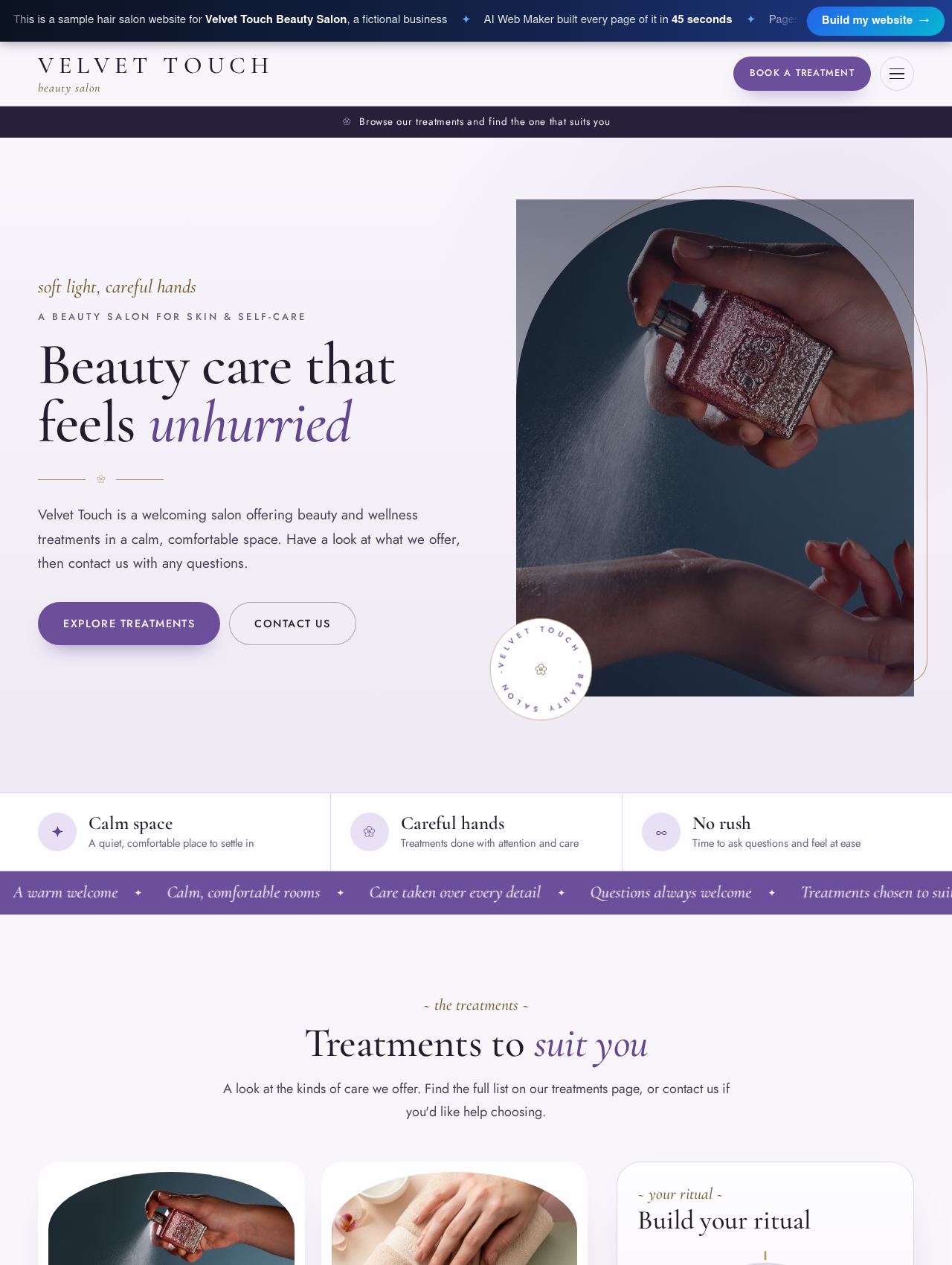 Hair Salon website example
Sample for Velvet Touch Beauty Salon, a fictional business
Browse as a client →
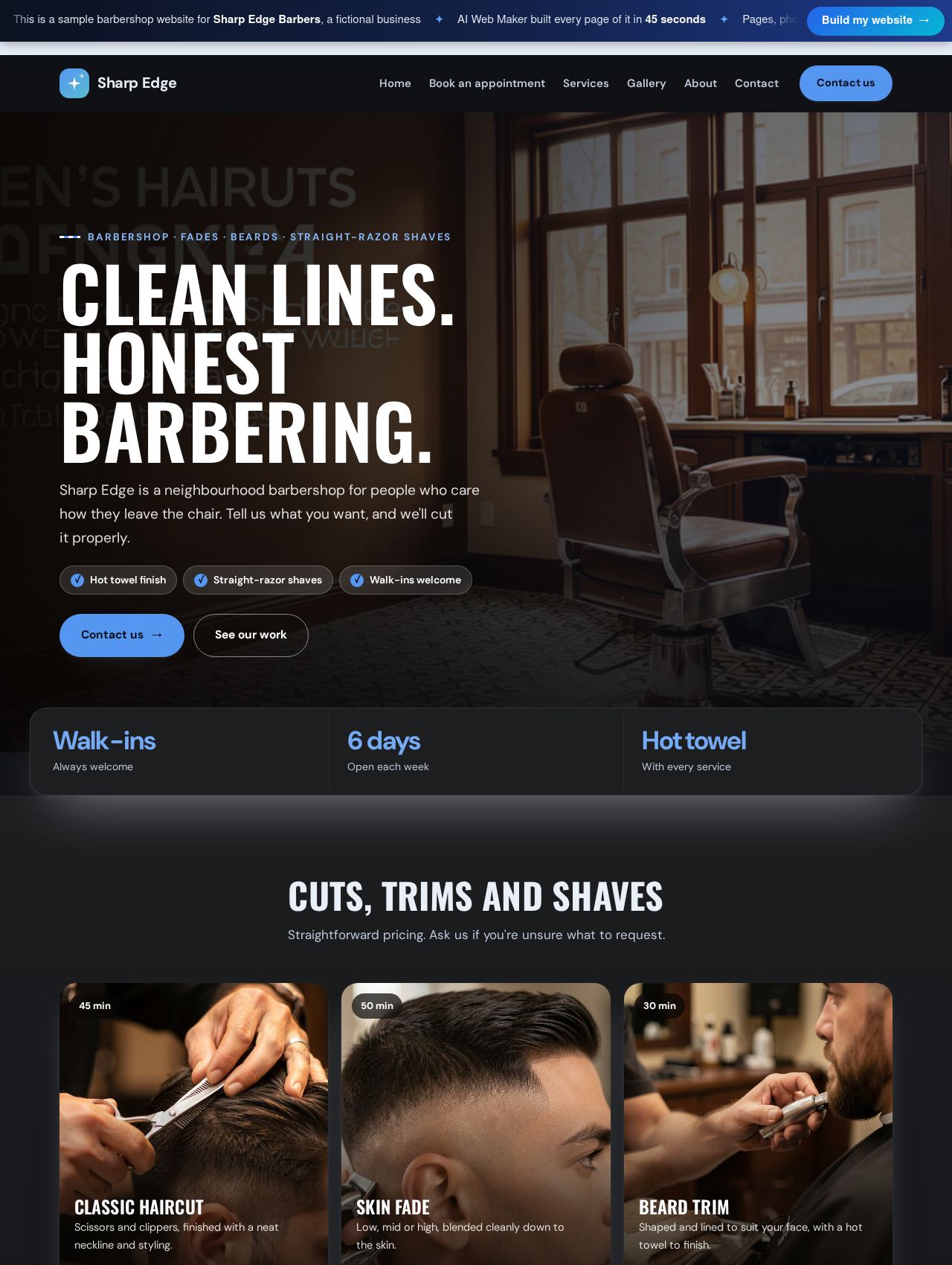 Barbershop website example
Sample for Sharp Edge Barbers, a fictional business
Browse as a client →
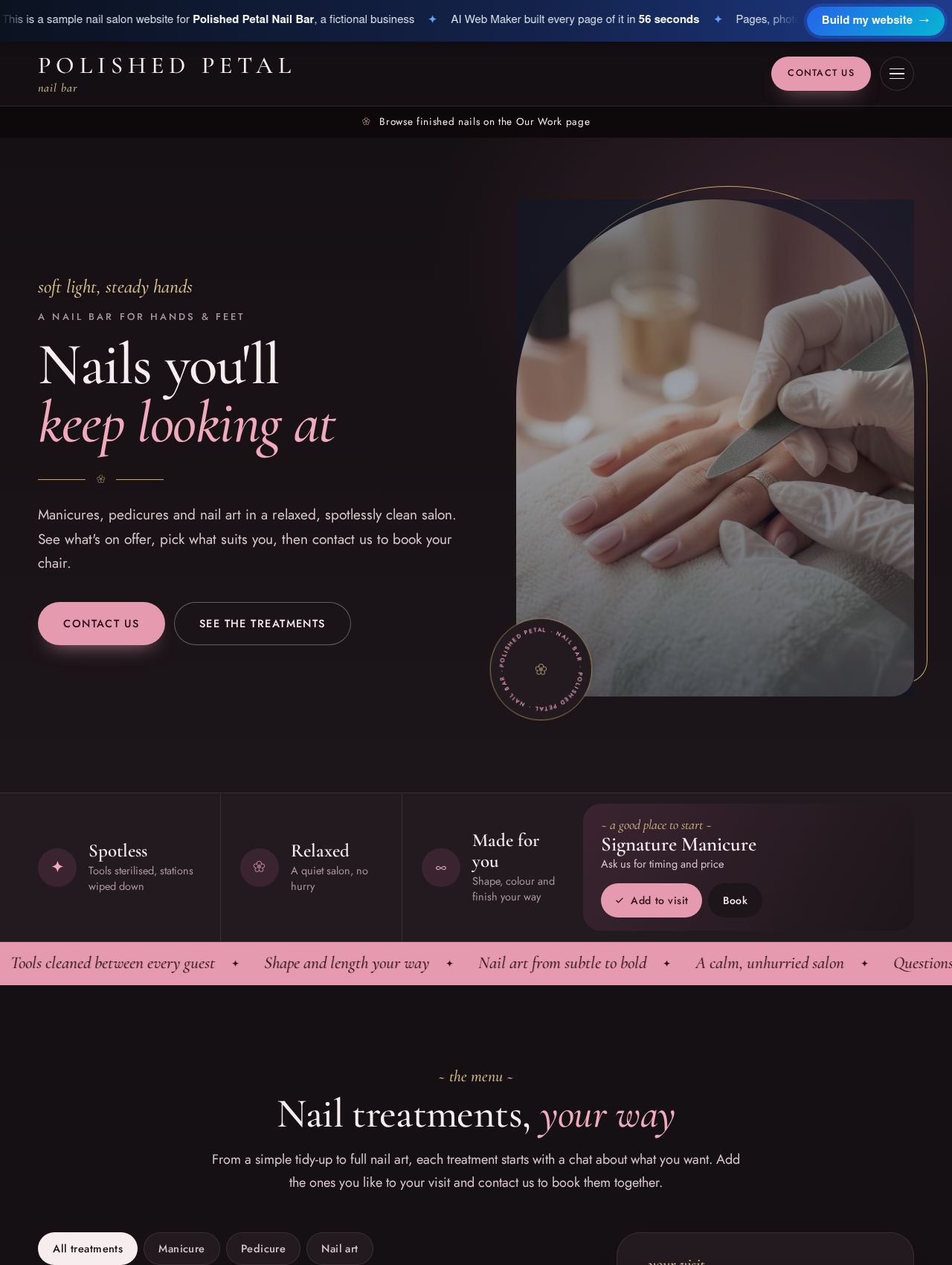 Nail Salon website example
Sample for Polished Petal Nail Bar, a fictional business
Browse as a client →
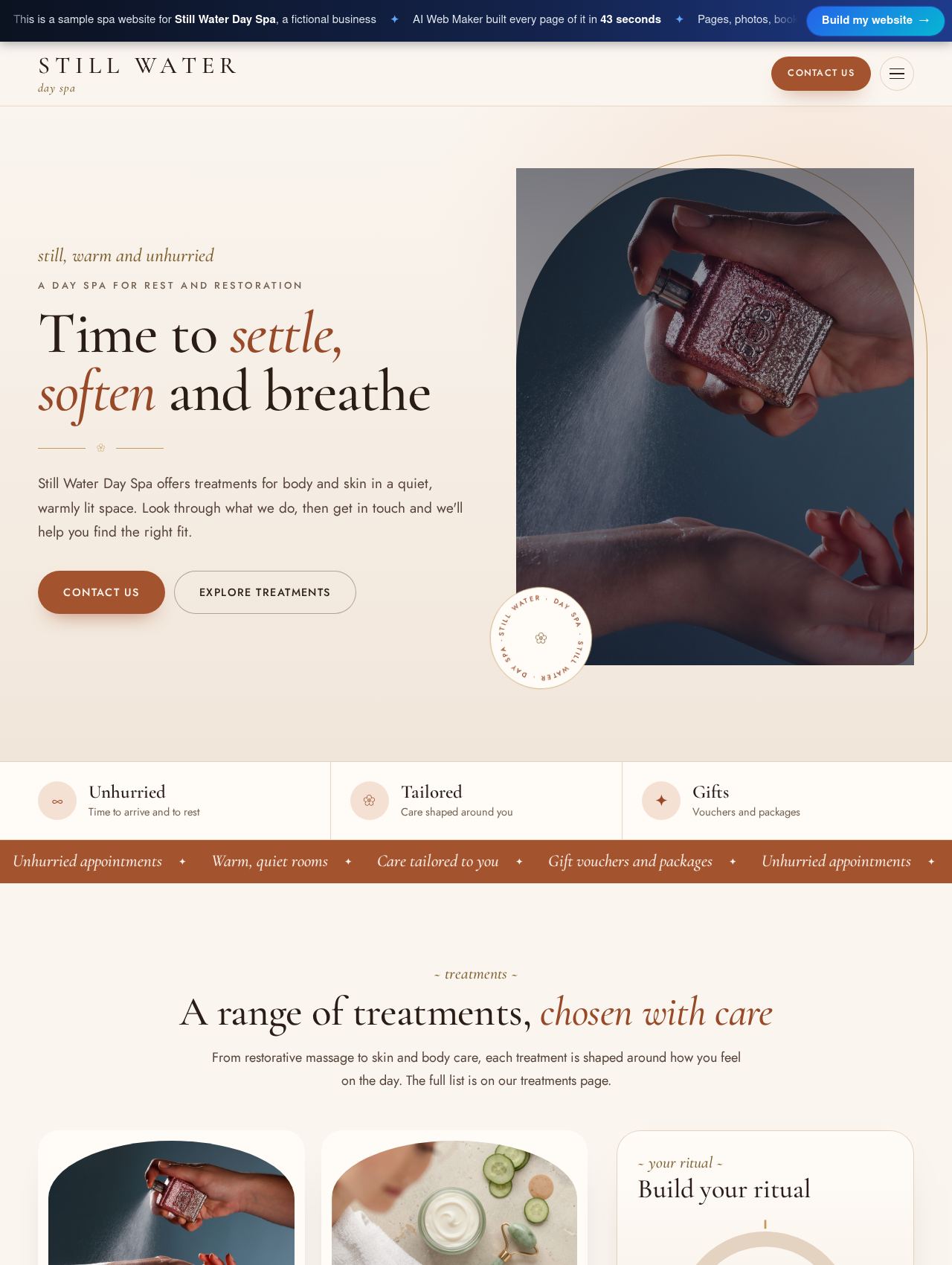 Spa website example
Sample for Still Water Day Spa, a fictional business
Browse as a client →
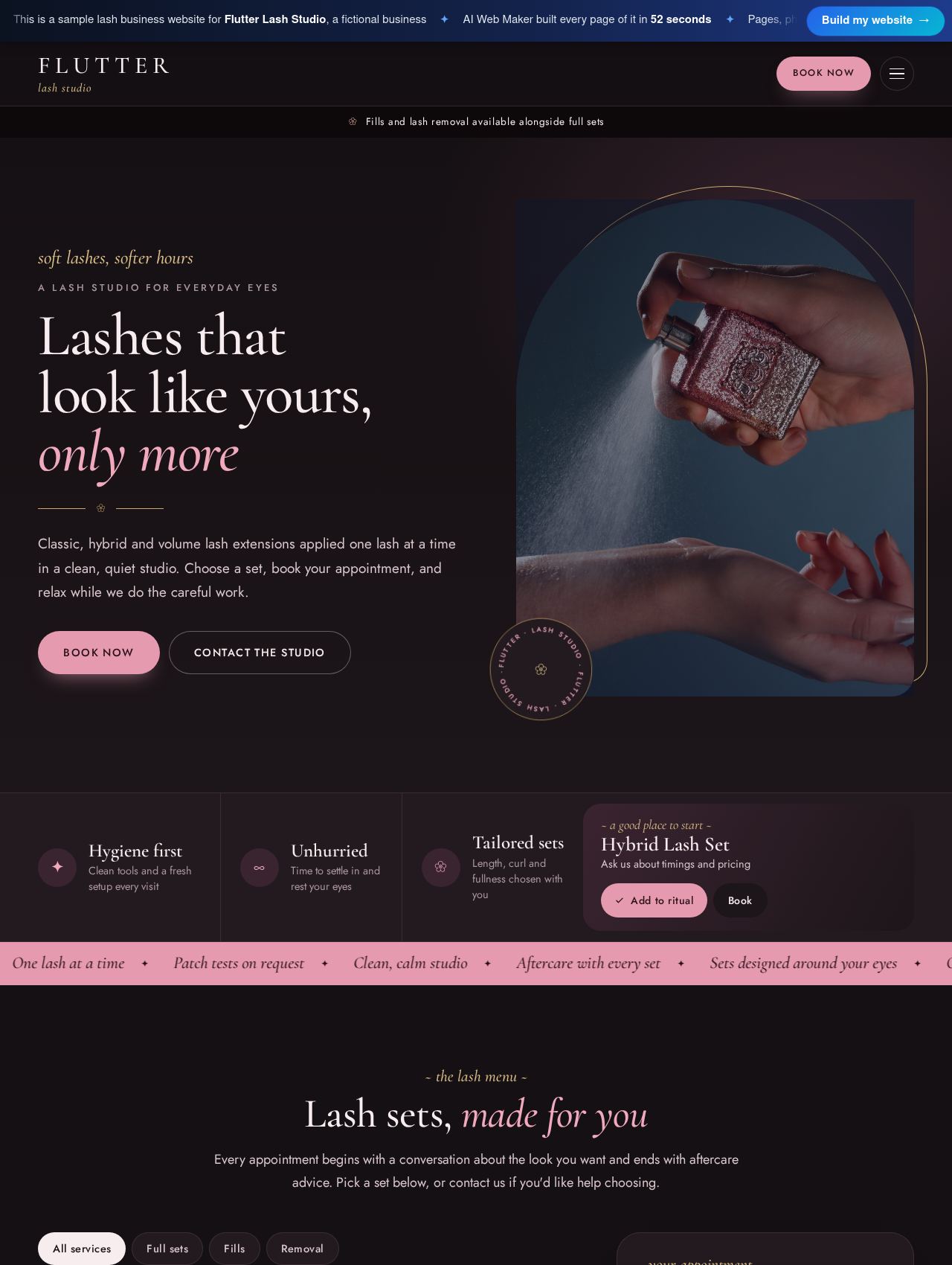 Lash Business website example
Sample for Flutter Lash Studio, a fictional business
Browse as a client →
 Brow Studio website example
Sample for Arch and Feather Brow Studio, a fictional business
Browse as a client →
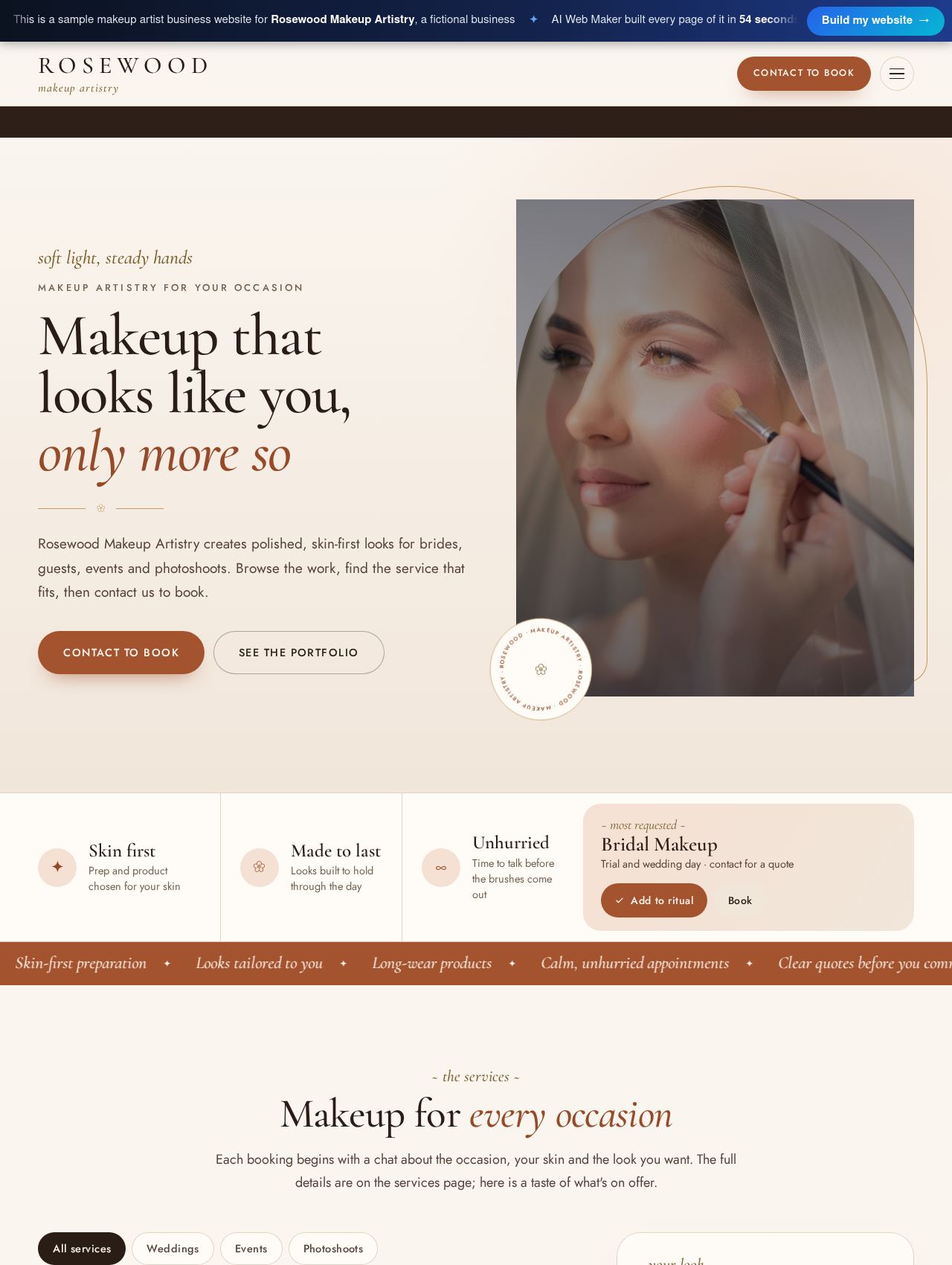 Makeup Artist Business website example
Sample for Rosewood Makeup Artistry, a fictional business
Browse as a client →
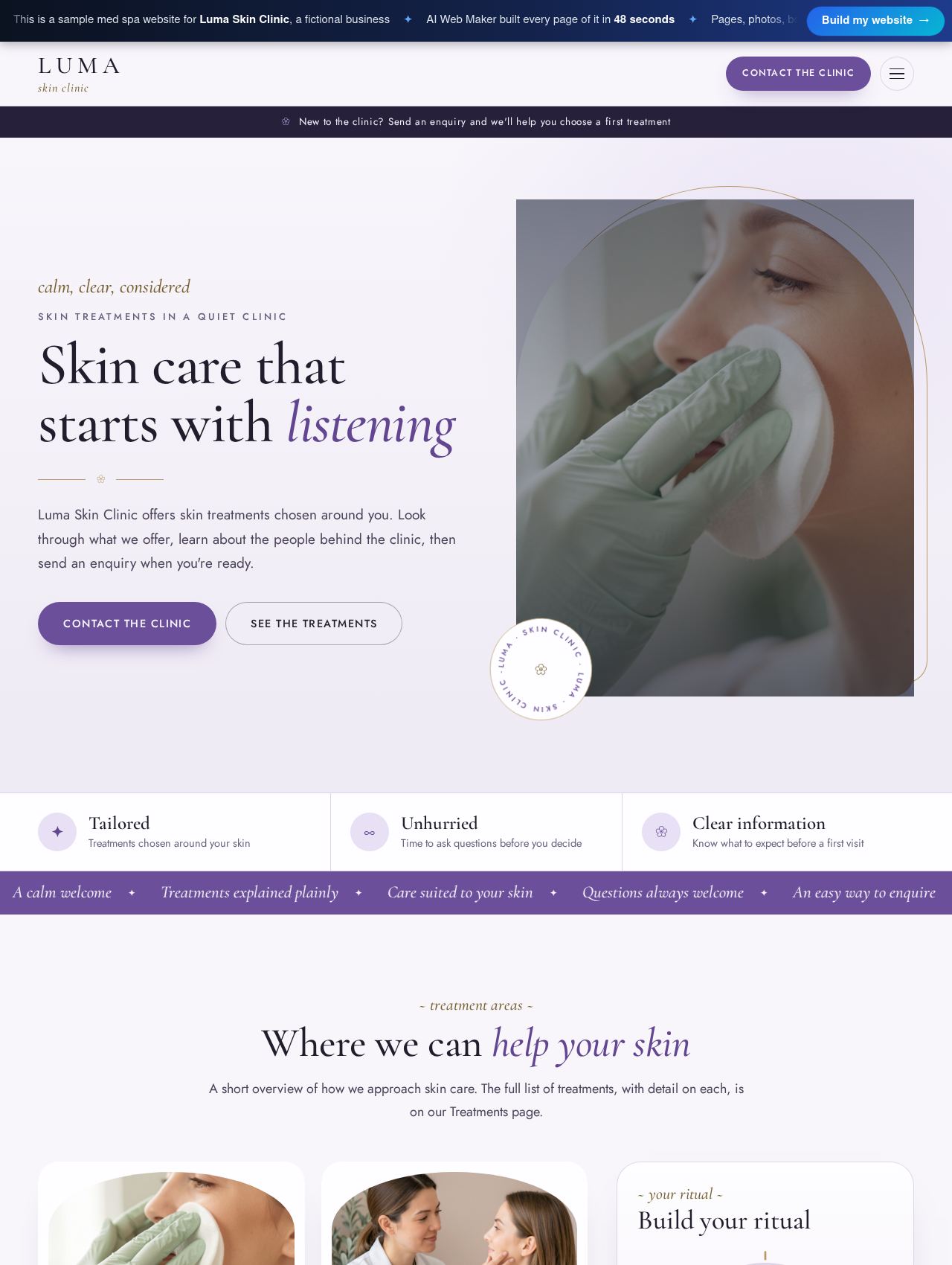 Med Spa website example
Sample for Luma Skin Clinic, a fictional business
Browse as a client →
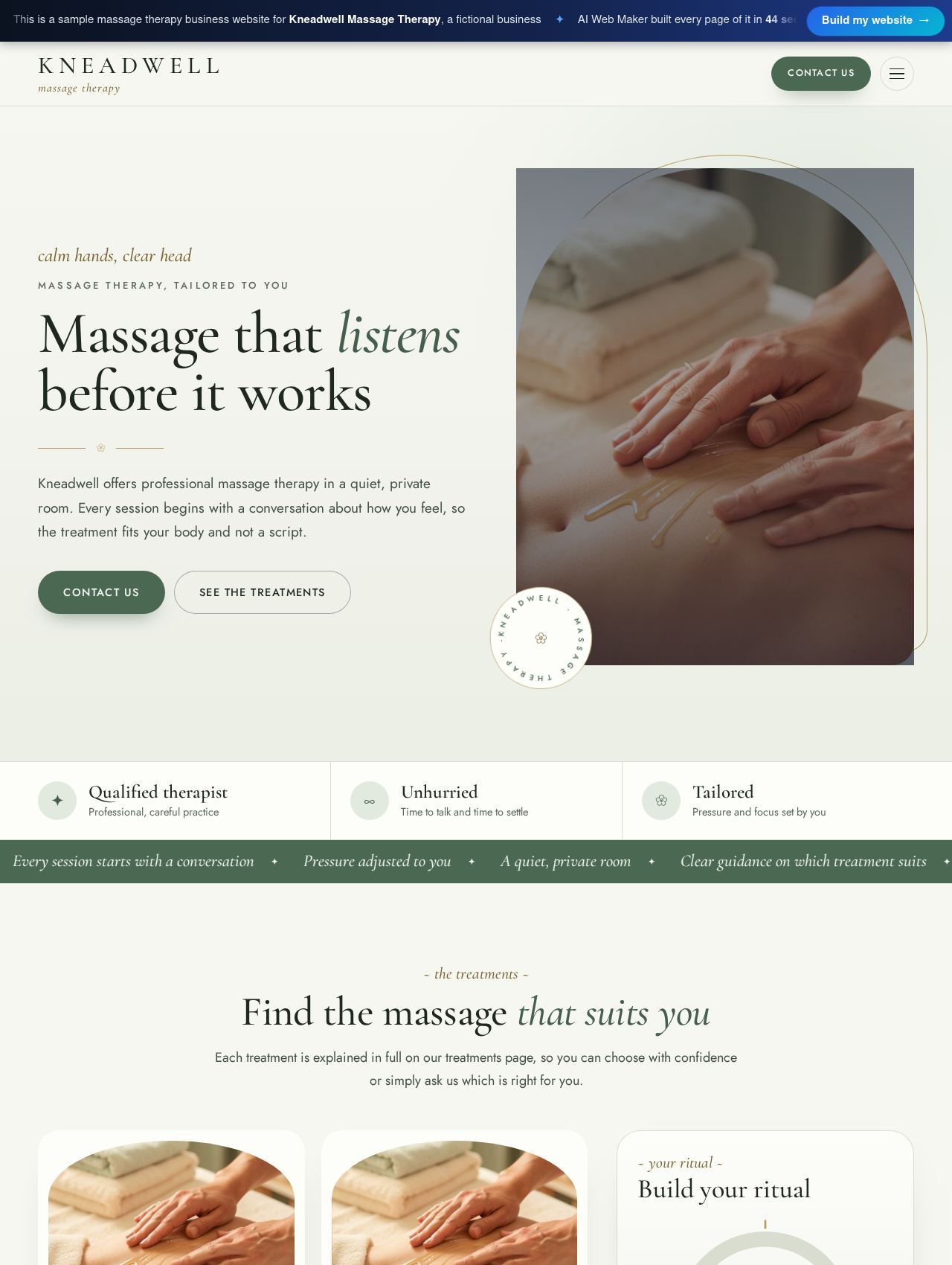 Massage Therapy Business website example
Sample for Kneadwell Massage Therapy, a fictional business
Browse as a client →
How do clients book the service and the stylist they want?
Clients book by choosing a service, then a day and an hour that work for them, and each request stays in your account until you act on it. Because each service has its own length, a long colour appointment and a quick beard trim can each show the time it really takes. If clients usually ask for a particular person, list the services under each stylist as a category, or price them by level, for example stylist, senior stylist and director. A barbershop with several barbers might list a cut with each one, while a lash artist working alone needs only one list. Any service can be renamed, repriced or removed when your menu changes, and the booking page follows once you publish. Set up this way, the booking page mirrors how your salon really shares out its chairs.
Confirming each request yourself keeps the appointment book under your control, which matters when a stylist is off sick or a colour runs over. You can move a request to a time that fits the chair better, or decline one that clashes with a training day or a holiday. A request sent late at night simply sits there until the salon opens. Some salons also keep a few slots for drop in clients and say so on the booking page, which suits busy barbershops in particular. Payment stays between you and the client, and AI Web Maker keeps no percentage of your appointments. In practice, the website does the asking while you keep the deciding.
How should patch tests, consultations and cancellations be handled?
Hair colour, lash tints and brow tints often call for a skin patch test before the first treatment, and the website should make that step hard to miss. Product makers usually say how far ahead the test should happen, and the rules and insurance terms around it vary by country, so follow the guidance that applies to you. A simple approach is to list the patch test as its own short bookable service, with a line explaining that it must come before the colour or tint. Mention it in the description of every service that needs one, so nobody books a full colour unaware. Med spas and tattoo studios have a similar need for a consultation first, which an enquiry form or a consultation service handles well. Making these steps visible protects both the client and the salon.
A cancellation policy only works when clients see it before they book, so it belongs on the booking page and the policies page in the same words. State how much notice you need, what happens after a late cancellation or a missed appointment, and whether long or costly services need a deposit. Any deposit or fee is arranged directly between you and the client, for example by sending instructions when you confirm. Keep the tone firm but kind, since a policy that sounds angry can put off the very clients you want. Review the wording once a year and update it when your practice changes. A fair policy stated clearly prevents more awkward conversations than a strict one hidden away.
How do you show before and after photos honestly?
Before and after photos sell beauty work better than any description, but only when they are real and shared with the client's permission. Ask for consent in writing before taking pictures, and explain where they will appear, since privacy rules on images of people vary by country. Many salons crop to the hair, nails or brows so the client cannot be recognised, which makes consent easier to give. Shoot both pictures in the same light and from the same angle, and avoid filters that change skin or colour, because clients judge the result in a mirror rather than on a screen. Med spas face stricter rules in many countries, for example on advertising prescription treatments or showing medical results, so check what your regulator allows. Honest images attract clients whose expectations match what you can deliver.
Galleries come with the build, and starter images hold each page in place until your own work takes over in the editor. A hair salon might group its gallery into colour, cuts and bridal styles, while a nail salon shows sets close up and a makeup artist shows complete looks. Short captions naming the service connect each photo to something a client can book. Spas and massage practices, whose results are harder to photograph, can show the rooms, the products and the calm of the space instead. Refreshing the gallery every few months shows returning visitors your recent work. A gallery kept current tells clients the salon is busy, skilled and proud of what it does.
What does a salon website cost each year?
Once your salon website is live, hosting costs $119 a year or $19 a month, and building and previewing cost nothing until then. The domain is extra, priced by whichever of about 400 endings you pick, so the address can match your salon's name and country. Salons wanting more can look at the $189 yearly plan, and the plans page explains what separates the two. Booking requests come straight to you, with no commission taken on any appointment. Extra AI writing, such as a new aftercare guide or a page for a seasonal treatment, is bought with credits at roughly $0.65 each. Put simply, the website is a fixed cost for the year rather than a slice of every service you sell.
Guides for salon and beauty owners
A guide for hair salons: the yearly website cost, how clients pick a salon, price lists by service and hair length, stylist levels, colour consultations and skin tests, b...
For barbershops: what the site costs a year, how a new client picks a chair, the pages to build, the price list, walk ins and booking requests, fade vocabulary, galleries...
Nail bars and salons get the year's hosting figure here, plus who books, gel, acrylic and classic finishes, appointment lengths, sterilisation and hygiene, allergies and...
For day spas: the cost of a year online, who books and who gives, the pages to build, writing a treatment menu, vouchers and packages, the first visit, health and safety,...
A lash studio guide to explaining classic, hybrid and volume sets, fill rules, patch tests and eye safety, hygiene, aftercare and booking policies, with the website's yea...
A practical guide for brow artists: what a studio website costs each year, how to structure the treatment menu, patch tests and aftercare, before and after photos, and bo...
Makeup artists earn most from weddings booked months ahead, so this guide covers bridal and party services, trials, morning timings, travel fees, hygiene, the portfolio a...
Med spas and skin clinics: a year of hosting priced, then who books, treatment categories and downtime, practitioners and oversight, advertising rules and photos, consult...
Describe your salon and see the preview
Give us your salon's name, the services you offer with their lengths and prices, and the names of the people who do them. The builder drafts the service menu, the booking page, the team page and the rest of the website from that, then shows a preview you can click through. Make a test booking, replace the photos with your own work and adjust any wording. Building and previewing are not billed. When everything feels like your salon, choose a domain and a plan and open the booking page to clients.
Frequently asked questions
Can the website sell gift vouchers?
The website has no voucher feature, but you can describe the vouchers you already sell and explain how clients buy them. A short section can set out the values, what they cover, how long they last and whether they are bought at reception or by phone. Vouchers matter most before holidays, so it helps to mention them on the home page in those weeks. Any payment for a voucher happens directly between you and the buyer, in the way your salon already works. That keeps the offer visible online while the selling stays in the salon.
How long should each service be listed for?
List each service for the time it really takes from greeting to goodbye, including consultation, processing and finishing. A colour that needs development time, or a lash set that needs careful preparation, should not be squeezed into a short slot. Many salons add a little time after longer services for cleaning down the station, and building that into the listed length keeps the day on track. If one stylist works faster than another, separate services or categories can carry different lengths. Accurate durations protect your timing just as accurate prices protect your income.
Can a mobile makeup artist or massage therapist use it?
Mobile professionals can use the same website, taking bookings for appointments at a base and enquiries for work at a client's home or venue. A makeup artist usually books trials directly and handles weddings through an enquiry, since the date, the size of the party and the travel all affect the price. A mobile massage therapist can list treatments with their lengths and explain the area covered and any travel charge in the descriptions. The gallery then shows finished looks or the setup you bring. One website can therefore cover both the fixed appointments and the jobs that need a conversation first.
Will a salon website help clients find you nearby?
A salon website helps local search when its pages name your services and your town in plain words, such as balayage in a named neighbourhood. Search engines read that text, so a service menu written out properly does far more than a price list pasted in as an image. Link the website from the map listing for your salon, and keep the name, address, phone and hours the same on both. Encourage happy clients to leave reviews on that listing, since new clients often read them before booking. Results in search build over time and cannot be promised, though a clear and consistent website gives you solid footing.
How do clients pay for their treatments?
Clients pay you directly, in whatever way your salon already takes payment, because the website handles booking requests rather than money. AI Web Maker takes nothing from your appointments or your takings. If you ask for deposits on longer services, you can send payment instructions when you confirm the booking. Say clearly on the booking page how and when payment is due, so nobody is surprised at the desk. This keeps the financial side of the salon exactly as you choose to run it.
More ways to build with AI Web Maker
Updated 4 November 2026 · by AI Web Maker. The sample businesses are fictional; their people, prices and reviews are invented to show what a real website holds.