Brow Studio Website Cost and a Treatment Menu Clients Return To
A brow studio's hosting comes to $119 across a whole year, or $19 a month, plus a domain for the studio name. This guide covers the treatment menu, appointment lengths and rebooking cycles, patch tests, aftercare, photo consent, cancellation terms and the first year budget.
- No coding required
- Live in minutes
- Blog, SEO and chatbot tools included
A brow studio's hosting comes to $119 across a whole year, or $19 a month for studios billed monthly, plus a separate domain for the studio name. Describe the studio in a sentence or two and AI Web Maker returns treatment pages, a booking form and an aftercare section, all of which can be reviewed in the preview before paying. Those pieces sit together on the brow studio website sample, a finished site for a fictional studio with its treatments and booking route, made by AI Web Maker. Brow work is a repeat business, which changes what the website must do. A new client may arrive for a single lamination, but the studio's income depends on that client returning every few weeks for shaping and tinting. The website therefore has two jobs: to win the first appointment with clear treatments and visible results, and to make rebooking effortless. This guide explains the menu, the safety pages, the proof and the booking setup that do both.
How do clients choose a brow studio?
Clients choose a brow studio by searching for a specific treatment, then judging the artist's results, the price and how easily they can book. Lamination, tinting and threading are searched by name, so a studio that lists them clearly appears in more searches than one that only says brows. Before and after photos carry enormous weight, because clients are choosing a look as much as a service. Price matters, but most clients will pay more for an artist whose work they trust. The final test is convenience, meaning an available slot at a time that suits them and a booking process that takes a minute. A site that answers all four questions turns a browser into a client.
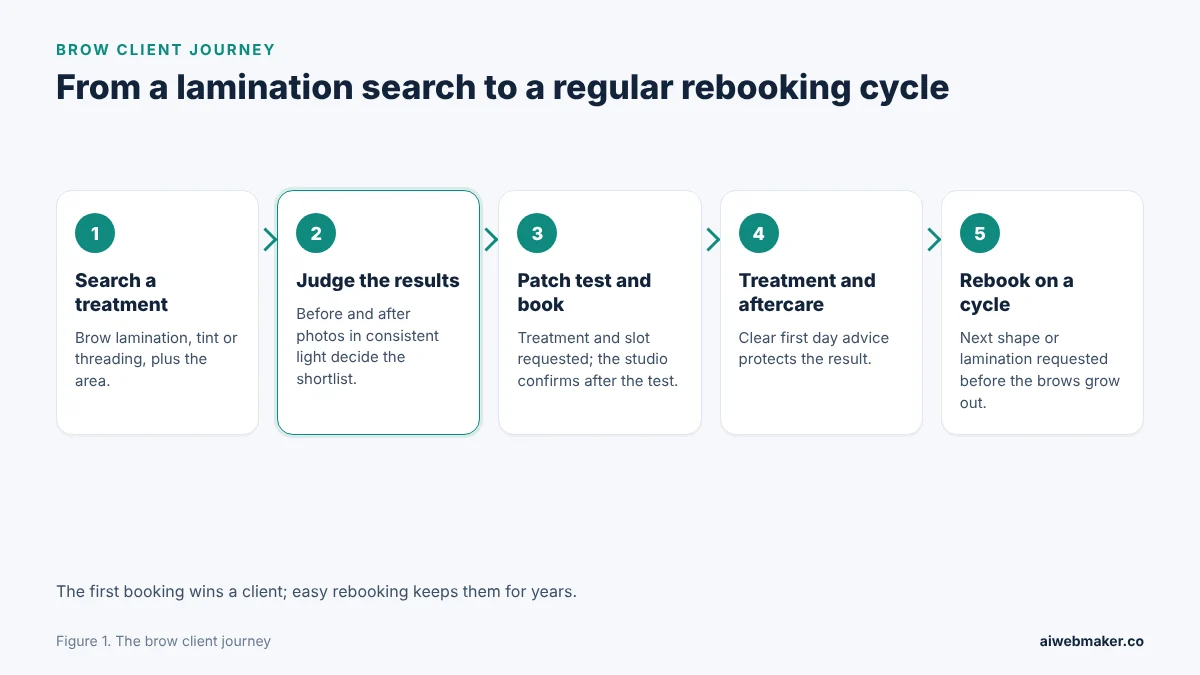
The journey shows that the first booking is only the start. The most valuable moment comes at the end of the first appointment, when a happy client can rebook before leaving. A website that shows recommended intervals for each treatment makes that conversation natural. Clients who drift away often do so because rebooking was awkward rather than because they were unhappy. Over a year, a client on a regular cycle may visit the studio many times. That repeat pattern is what makes a brow studio website such a good investment.
How should the treatment menu be structured?
The treatment menu should list each brow service separately, with its length, price and how often clients usually repeat it, because these three facts decide what a client books. Shaping by wax, thread or tweezers takes a short slot, while lamination with a tint needs considerably longer. A first visit brow mapping, where the artist plans the shape before any hair is removed, deserves its own line for new clients. Combination treatments, such as shape and tint together, simplify booking for regular clients. Clear lengths also protect the diary, because each appointment type reserves the right amount of time.
| Treatment | Typical appointment length | Usual rebooking cycle | What the menu line should explain |
|---|---|---|---|
| Brow mapping and shape | A longer first slot | Once, then regular shaping | Measuring, planning and the first shape |
| Brow shape by wax or thread | A short slot | Every few weeks | Method used and what to expect |
| Brow tint | A short slot | Every few weeks | Patch test requirement and shade choice |
| Brow lamination | A longer slot | Every couple of months | Results, aftercare and patch testing |
| Lamination with tint | The longest slot | Every couple of months | Combined aftercare and expected result |
| Shape and tint combination | A medium slot | Every few weeks | Saving against booking both separately |
Prices should sit beside each line, with a note if senior and junior artists charge differently. Many studios offer a lower rate with a newer artist, which helps price sensitive clients and builds that artist's diary. Add ons, such as a quick lip or chin wax, can be listed beneath the main menu. The studio can change any price or length inside the editor without extra cost. A complete, honest menu reduces messages asking what each service involves.
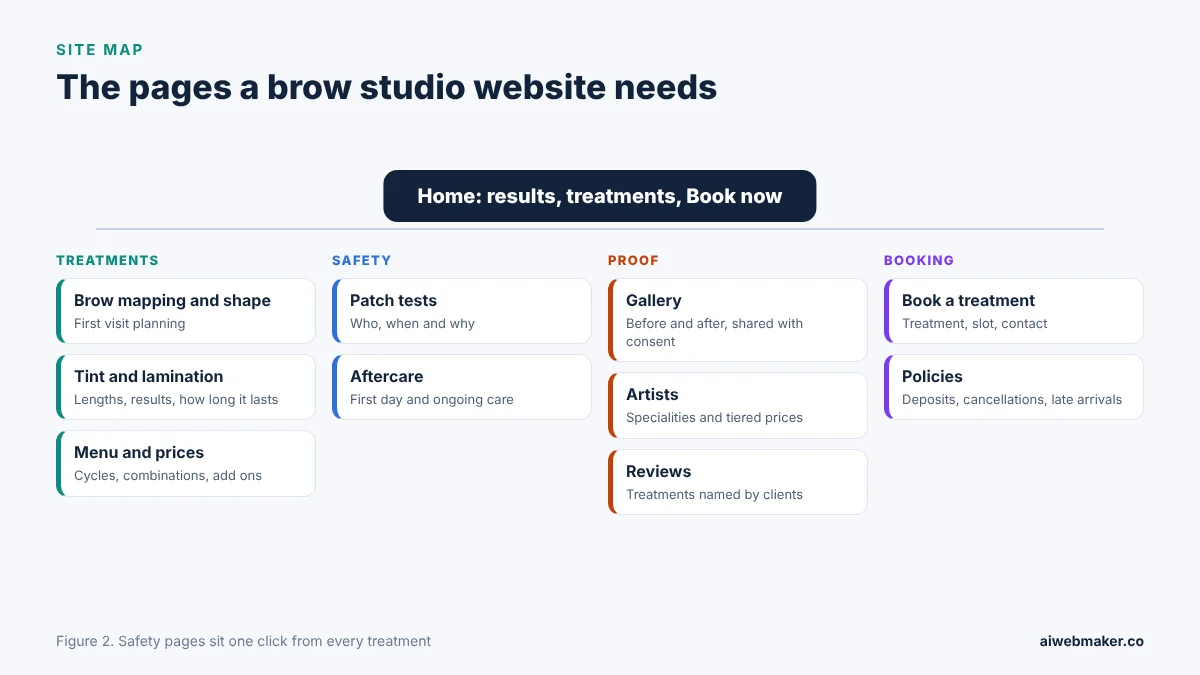
Most brow studio sites need only four groups of pages, and keeping them distinct makes the booking button easier to find. Treatment pages cover mapping, shaping, tinting and lamination, with the full menu and prices beside them. Safety pages hold the patch test rules and aftercare advice that careful clients read before committing. Proof comes from the gallery, the artist profiles and reviews, which together show the studio's style. Booking pages carry the appointment request and the policies on lateness and missed visits. A client on a phone should move from a gallery photo to a request without backtracking.
Why do patch tests and aftercare need their own pages?
Patch tests and aftercare need their own pages because tints and lamination solutions can cause reactions, and a responsible studio explains the safety steps before the client books. A patch test policy should say which treatments need one, how long before the appointment it must be done and whether it is required again after a gap. Clients with sensitive skin, allergies or recent skin treatments should be told to mention them in advance. The United States Food and Drug Administration notes on its eye cosmetic safety guidance that no colour additives are approved there for permanently dyeing eyebrows or eyelashes, which is one reason careful studios explain their products and testing. Rules differ between countries, so the studio should follow those that apply where it works. Clear safety information protects clients and the studio's reputation.
| Topic | What the page should say |
|---|---|
| Who needs a patch test | New tint or lamination clients, and returning clients after a long gap |
| When to do it | A set number of hours before the treatment, as the studio's products require |
| Who should wait | Clients with irritated skin, recent skin treatments or known reactions |
| First day aftercare | Keep brows dry, avoid heat, steam and heavy makeup for the stated time |
| Ongoing care | Brushing laminated brows into shape, gentle cleansing, nourishing oils if advised |
| When to get in touch | Any redness, itching or swelling after treatment |
Aftercare advice also shapes results. Laminated brows that get wet too soon can lose their set, and a client who did not know will blame the artist. Linking the aftercare page from every treatment line, and from the booking confirmation, keeps the advice in front of clients at the right moment. A short section on how long each result lasts sets honest expectations. Clients who understand their part in the result are happier and rebook sooner. Safety and care pages quietly reduce complaints and refunds.
What makes a brow gallery believable?
Before and after photos should be the centrepiece of the site, taken in consistent light and shared only with each client's permission. Natural daylight or a ring light from the same angle each time makes the change honest and easy to compare. Grouping photos by treatment helps visitors find examples of exactly what they want, such as soft laminated brows or a defined shape. Captions can name the treatment and the time since the appointment. Avoiding heavy editing or filters keeps the results believable and reduces mismatched expectations. A gallery that shows variety, across brow types and skin tones, tells clients that the artist can work with their brows too.
Consent should be gathered in writing or in a message before any photo is published. Some clients are happy to show their brows but not their full face, and cropping to the brow area respects that. A note on the gallery page explaining that photos are shared with consent builds further trust. Fresh photos each month show an active studio. Older photos can be retired as the artist's style evolves. A well kept gallery often does more selling than any paragraph on the site.
How does online booking keep the diary full?
Online booking keeps the diary full by letting clients pick a treatment and a slot at any hour, after which the studio accepts, reschedules or turns down the request. The booking website builder for brow artists and lash and brow studios turns a studio's treatment menu into bookable lines with that request step built in. Accepting each request lets the artist check that a patch test has been done before a tint or lamination. Payments and any deposits are arranged by the studio in its own way, and the booking tool itself keeps no commission. Regular clients can request their next appointment from their phone straight after leaving. The more effortless rebooking feels, the more clients stay on their cycle.
Cancellation and late arrival terms belong on the booking page, because short brow appointments leave little room to absorb a no show. A clear notice period for cancellations, and what happens if a client arrives late, prevents arguments. Studios that take deposits for longer treatments can explain how they are paid and refunded. Reminding clients of the patch test requirement on the same page avoids wasted appointments. Fair, visible terms protect the artist's time without putting clients off. Most clients respect rules they were told about in advance.
How should a brow studio price for new and returning clients?
A brow studio should price so that the first visit feels fair and the regular cycle feels like good value, because repeat visits drive the business. A brow mapping at a moderate price reassures new clients that they are getting a planned result rather than a quick tidy. Combination prices for shape and tint encourage the habit of booking both. Studios with several artists can show tiered prices by experience. A seasonal brow offer can go live or come down in the editor in minutes. Transparent pricing removes the hesitation that stops many people booking a new studio.
| Client situation | Pricing approach | Why it helps |
|---|---|---|
| First visit | Brow mapping at a moderate price | Signals a planned result, not a quick tidy |
| Regular shape | One clear price per visit | Easy to rebook on a set cycle |
| Shape with tint | A combination price | Encourages booking both together |
| Lamination | Its own line, with a tint option | Reserves the longer slot in the diary |
| Senior artist | A tiered price by experience | Lets clients choose by budget |
| Seasonal offer | A short term price | Fills quieter weeks |
How do clients find a brow studio in search?
Clients find a brow studio when its pages name treatments the way people search, such as brow lamination, brow tint, eyebrow threading and the area, in titles and opening lines. A section or page for each popular treatment captures those specific searches. The studio's Google Business Profile should share the same name, address and opening hours as the website, with gallery photos added regularly. Reviews mentioning a treatment by name help the studio appear for that treatment. Articles on questions clients ask, such as how long lamination lasts or how to grow brows out, bring steady readers who later book. A consistent, detailed site beats a beautiful but vague one.
What does a brow studio spend on its website in year one?
In year one a brow studio spends the hosting fee and the domain, plus a few dollars if it uses article credits. Yearly billing is cheaper for an established studio, while monthly billing lets a new artist start small. Price changes, new photos and treatment edits carry no extra charge. The table compares the two routes, with the higher yearly plan shown for reference. Either route costs less than a handful of appointments.
| Line | Yearly route | Monthly route |
|---|---|---|
| Hosting for the studio's site | $119 | $228 for twelve months |
| Domain for the studio name | Varies by ending | Varies by ending |
| Higher yearly plan, for comparison | $189 | Not needed to start |
| One brow care article a month, about $0.65 each | About $7.80 | About $7.80 |
| Menu, price and gallery updates | Included | Included |
| Year one before the domain | About $126.80 | About $235.80 |
What should a brow studio have ready before launch?
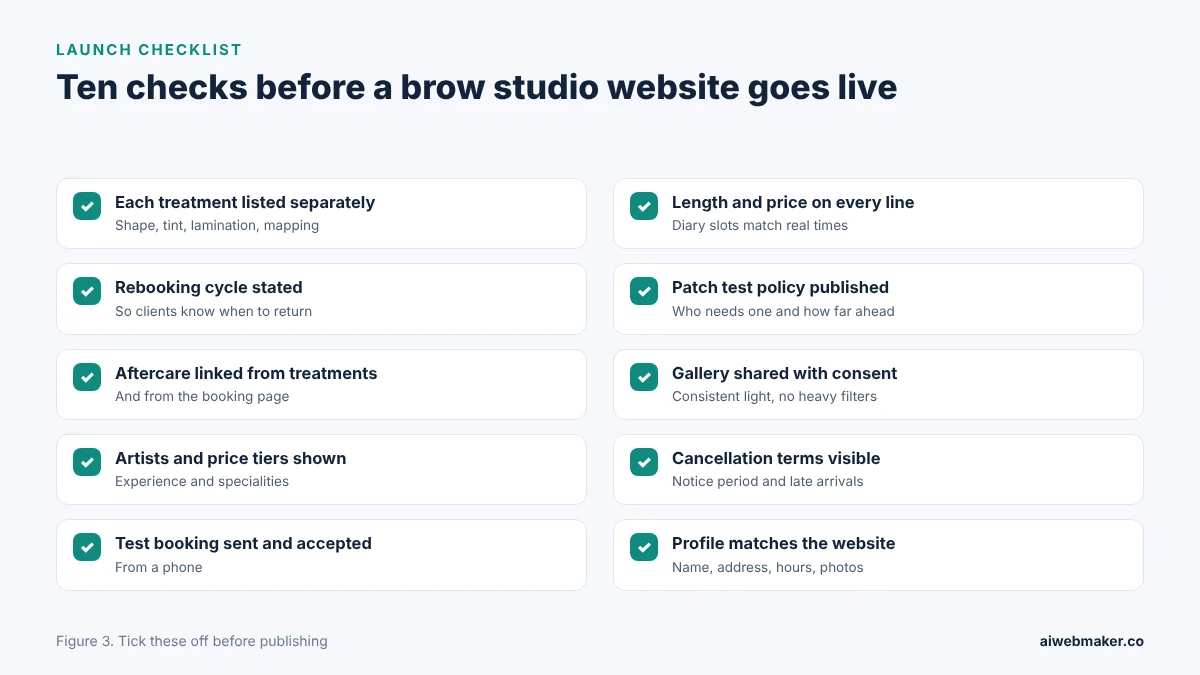
Before launch the studio should have its treatment menu with lengths and prices, a patch test policy, aftercare notes, consented photos and its cancellation terms. The menu needs the most care, because every appointment type reserves time in the diary. Photos can be gathered over a couple of weeks, with consent recorded for each. The patch test policy should match the products the studio actually uses. A short introduction to each artist, with their specialities, gives clients someone to choose. With these in hand, the drafted pages can be finished in an evening.
Frequently asked questions
Should a brow studio require a patch test before every tint?
Many studios require a patch test before a first tint or lamination, and again after a long gap, following product instructions and local rules. The website should state the studio's policy clearly so clients can plan an earlier visit. Clients with known sensitivities may need a test every time. Explaining the reason, which is safety rather than inconvenience, helps clients accept it. A consistent policy protects both the client and the artist.
What rebooking interval suits each brow treatment?
Most clients return every few weeks for shaping and tinting, and every couple of months for lamination, though hair growth varies from person to person. Publishing typical intervals on the treatment menu helps clients plan their next visit. Artists can adjust the advice for each client at the end of the appointment. Booking the next visit before leaving keeps brows at their best and the diary full. A steady cycle is good for the client and the studio alike.
Can a brow studio take deposits through the website?
Deposits for lamination and other long treatments are taken by the studio in its own way, so the policy page needs to spell them out. Many studios ask for deposits only from new clients or for lamination appointments. The page can state how the deposit is paid, whether it counts toward the treatment and when it is refunded. Clear deposit terms reduce no shows without discouraging new clients. Fairness and clarity are what clients look for.
Is a separate page for each treatment worth it?
A separate page or clear section for each main treatment helps clients and search engines alike, because people search for lamination, tinting and threading by name. Each page can explain the treatment, show matching photos, list aftercare and link to booking. Smaller add ons can stay on the main menu page. As the studio sees which treatments bring the most enquiries, it can expand those pages. Detailed treatment pages tend to attract better informed clients.
How many appointments pay for the website?
Two or three regular clients cover the studio's yearly hosting of $119 several times over, and a single shape and tint each month covers the $19 monthly fee. Every client who stays on a regular cycle after that is steady income the website helped create. Each new review and photo makes the next client quicker to book. The website builder for creative businesses, from brow bars to studios section shows how other beauty and design trades lay out their pages. The studios that gain most keep their gallery fresh, their menu clear and their rebooking effortless. A diary booked weeks ahead with returning faces is the result worth building toward.
Build your website in Minutes and get the AI Tools that work
Start Building Your Website →