Link Building for Business: Directories, Press and Guest Posts
A steady link-building programme for a business website: the three channels that work, the relationships you already have, a weekly time budget and a way to track each link.
- Who links to you
- A trust score
- The competitor gap
Links are built the way a reputation is built: slowly, in public and mostly by other people. Each one is a page on someone else's website that decided your business was worth pointing to, and search engines read those decisions as a signal of trust. Link building for business is the work of making those decisions easy and frequent, without trying to fake them. For most companies it comes down to three dependable channels (directory listings, press coverage and guest articles) plus the relationships you already have with suppliers, partners and associations. You will learn how each channel works, how much time to give it each week, which links to turn down, how to stay inside Google's spam policies and how to track every link from the first request until it is confirmed live.
To see who links to your own website, try our AI backlink checker, part of our AI SEO Tools.
This article is part of our complete guide: How to Get Backlinks.
Let the AI Backlink Checker show which links you have and plan the next ones to build
Why link building for business is steady work
Google uses links to discover pages and as one of many signals about which pages deserve to rank, which is why a website with no links from anywhere tends to struggle for competitive searches. The difficulty is that good links cannot be produced on demand, because each one depends on another person agreeing to publish it. That makes link building closer to sales than to engineering: you build a list of prospects, make a useful offer, follow up politely and accept that many will say no. Businesses that treat it as a one-week project usually collect a burst of directory entries and then stop. Businesses that give it a fixed hour or two every week keep adding a few relevant links a month, and those add up. The steady approach also looks natural to search engines, because real reputations rarely appear overnight.
A programme also protects you from the worst shortcut, which is buying links in bulk. Sellers promise hundreds of links for a single payment, and the result is almost always links from sites that exist only to sell them. Those links can be ignored by Google at best and treated as a link scheme at worst, and cleaning them up later takes far more time than the purchase saved. A landscaping firm in Portland that spends an hour a week asking suppliers, local groups and trade magazines for genuine mentions will end the year with a small set of links that customers can actually follow. That small set will keep working for years. The same hour spent chasing volume would leave nothing durable behind.
Directory listings and consistent details
Directories are the foundation because they exist to list businesses like yours, so the only effort is a complete and accurate entry. The ones that matter most are the major map and search listings, Google Business Profile, Bing Places for Business and Apple Business (where Apple Business Connect now lives), followed by well-known general directories, the directories of your industry and local ones such as a chamber of commerce. Many of these links carry nofollow or are counted lightly, but they still bring customers, help search engines confirm that the business is real and match your details to your website. A listing on a respected trade directory can also send enquiries from people who are ready to buy. The ones to avoid are directories that accept anyone for a fee, list thousands of unrelated businesses on one page and get no visitors.
The quiet rule behind every directory is consistency of name, address and phone number, often shortened to NAP. If your business appears as "Hart and Sons Architects" on one site, "Hart & Sons Ltd" on another and with an old phone number on a third, search engines have to guess which version is right. Write your details once in a listing kit, a simple document with the exact business name, address, phone, website address, opening hours, categories, a short and a long description, a logo and a few photos. An architecture practice in Edinburgh with that kit ready can complete a new listing in ten minutes instead of an hour, and every listing will match. Keep the kit up to date whenever anything changes, and update the listings in the same week.
Press coverage that links back
A press release on its own is not a link-building tactic, because the copies that wire services spread to partner sites often carry nofollow links or get filtered as duplicates. Google's spam policies also name links with optimised anchor text in press releases distributed on other sites as an example of link spam. The value of a release lies in what journalists do with it: a local paper, a trade magazine or a regional news website that writes its own story about your business will often link to you, and that link comes from a site with real readers. The work is finding a genuine news angle and sending it to the right person. A new service, a local hire, an anniversary, a charity project or a piece of useful local data can all be news if they matter to the outlet's readers.
Think about who would care before you write anything. A bike shop in Utrecht opening a repair workshop for cargo bikes has a story for the local paper, for cycling websites and perhaps for a city blog about family life, and each of those needs a slightly different pitch. Keep releases short, put the news in the first sentence, add a quote from a named person and include a contact who will answer the phone. Send each pitch to a named journalist rather than a general inbox, and follow up once after a few days. When coverage appears, check whether it links to you, and if it mentions you without a link, a polite note to the journalist asking for one is reasonable.
Guest articles for the right readers
A guest article is a piece you write for another website's audience, usually with a short author bio that names your business and may link to it. Done well, it puts your expertise in front of exactly the people you want to reach and earns a link from a page about your subject. Done badly, it becomes the mass-produced article marketing that Google has warned about for years, with keyword-stuffed links on any site that will take them. The difference is relevance and quality: one useful article a quarter on a respected industry site is worth more than dozens on blogs that publish anything. A family law firm in Manchester writing for a parenting website about how child arrangements work after separation is helping that site's readers, and the link in its bio is a natural result.
Finding hosts starts with the publications you already read, the blogs of suppliers and partners, and the websites of associations in your field. Judge each site by whether it has a real audience, publishes edited work and covers topics close to yours. Pitch with a short email that shows you know the site, offers three specific article ideas and explains briefly why you are qualified to write them. Write the article to the host's standards, not yours, and never send the same text to more than one site. Accept that the editor may add nofollow to your bio link; the readers and the reputation are still worth having.
Relationships you already have
The quickest links usually come from people who already know you. Suppliers often have a "where to buy" or "stockists" page, manufacturers list approved installers, partners mention each other on project pages, and trade associations list their members. A pet groomer in Nashville who uses a particular brand of shampoo, sponsors a local dog show and belongs to a professional groomers' association may have three link opportunities without writing a single article. The ask is simple, because the relationship already exists and the link helps their visitors find you. Make a list of every organisation you buy from, sell through, work with or belong to, then check whether each one has a page where you could reasonably appear.
Events and community work produce links too, as long as the activity is real. Sponsoring a youth sports team, speaking at a trade show, hosting a workshop or donating to a local cause often leads to a mention on the organiser's website. Do these things because they help the business and the community, not only for the link, and then make sure the organiser has your correct name and website address. Avoid arrangements that are simply payments for links dressed up as sponsorship, because paid links should carry the sponsored or nofollow attribute. A wine bar in Bordeaux hosting a tasting with a local vineyard can reasonably expect a mention on the vineyard's events page. That is a link that reflects something that really happened.
A weekly time budget
Link building fails most often because it has no fixed place in the week. A realistic budget for most businesses is one to three hours, split between preparing material, sending requests and checking results. The table below shows one way to divide two hours, which is enough to keep every channel moving without taking over the owner's week. Adjust the balance to the business: a restaurant may lean on directories and local press, while a consultancy may lean on guest articles. What matters is that every week includes some requests and some checking, so prospects do not go cold and finished work is not forgotten.
| Task | Time each week | What it produces |
|---|---|---|
| Directory listings and updates | 20 minutes | One or two new or corrected listings |
| Relationship requests | 20 minutes | Two or three emails to suppliers, partners or associations |
| Press angle or pitch | 30 minutes | One pitch drafted or sent to a named journalist |
| Guest article work | 40 minutes | One pitch sent, or part of an article written |
| Checking and tracking | 10 minutes | Live links confirmed, follow-ups scheduled |
Link building for business within Google's rules
Google's spam policies describe link spam as links created mainly to manipulate rankings, and the examples are worth knowing because some are sold as normal services. Buying or selling links that pass ranking credit, excessive link exchanges, automated link creation, low-quality directory or bookmark links, and advertorials or guest posts with optimised links are all listed. Paid placements are allowed when the link is marked with the sponsored or nofollow attribute, which tells Google not to count it. Sites that break these rules can lose rankings, and Google's systems may also simply ignore the links. Before you agree to any link, run it through a few quick filters.
- Would you want this link if search engines did not exist, because real customers might see it and click it?
- Does the linking site have a real audience and a clear subject that relates to your business or your area?
- Is the link placed because of something genuine, such as a listing, a story, an article or a relationship, rather than a payment?
- Is the anchor text natural, such as your business name or a plain description, rather than a keyword repeated exactly?
- Would you be comfortable explaining the link to a customer or a journalist who asked where it came from?
Tracking each link until it is live
Requests that are never checked are the biggest leak in most link-building work. An editor says yes and forgets, a directory listing waits for approval for weeks, or a supplier adds you to the wrong page. Keep a simple record for every prospect: the site, the contact, the date of the request, the status, the page where the link should appear and the date you confirmed it. Check pending items weekly and follow up once on anything that has gone quiet. Once a link is live, check it again every few months, because pages are redesigned and links quietly disappear.
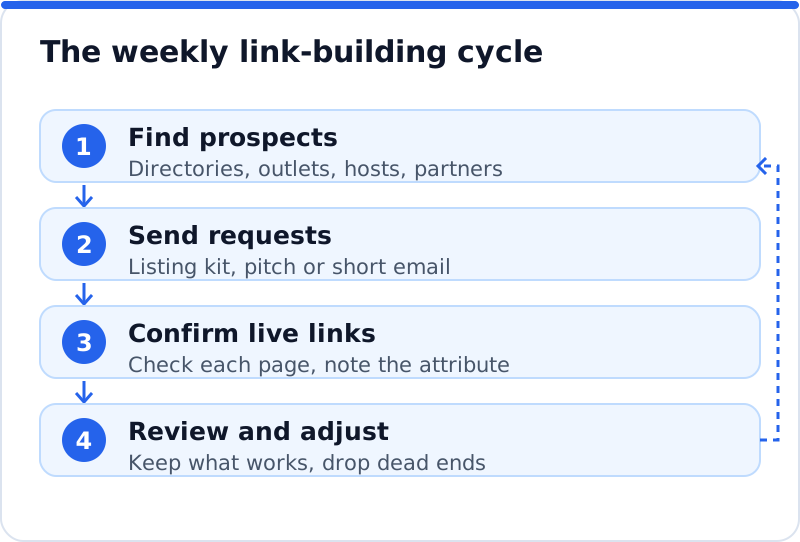
This is the part our tools are built to make lighter. The AI Backlink Checker for business websites finds the sites that already link to you, confirms each link on its page, shows each site's authority and whether the link is followed, and lists pages that mention your business without linking. It also helps you build links three ways: directory listings with a listing kit, a press release with suggested outlets and guest posts with pitches, and its link tracker checks that each promised link is actually live. If you want to see how links fit with the rest of your website's health, the AI SEO tools for business websites check titles, content and technical issues as well. None of this replaces the human part of the work, which is writing a good pitch and keeping your word.
What to expect and when
Each channel pays out on its own timetable, so judge them separately. Directory listings usually go live within days or weeks, relationship links often within a month or two, and press or guest articles whenever an editor says yes, which may take several pitches. Any effect on rankings comes later still, because search engines have to find and weigh each new link. Search Console's Links report updates slowly, so your own tracker is the faster record of what the programme has produced. Each month, count the relevant linking sites you added and note which channel each came from.
Some links bring results that rankings never show. A listing on a respected industry directory can send enquiries directly, a news story can bring calls the same day and a guest article can lead to a speaking invitation. Record those outcomes alongside the links themselves, because they are often the best argument for continuing. If a channel produces nothing after a few months of honest effort, change the approach rather than the volume. Fewer, better requests nearly always beat more of the same.
Questions business owners ask
Which channel should I start with?
Start with directories and existing relationships, because both are quick and depend on nothing but accurate details and a polite email. A complete set of map listings and a corrected trade association profile can be done in the first fortnight. Those early links confirm the business and its address, which gives later work a firm base. Press and guest articles take longer to land, so begin the first pitch in week three or four while the listings settle. If your business already has a good story or a writer on the team, bring those channels forward.
Should I pay an agency for link building?
Paying for someone's time to do outreach, write pitches and manage listings is normal and allowed. Paying for links themselves, where money changes hands for a followed link, is what Google's spam policies prohibit. Before hiring anyone, ask to see examples of links they have earned and the sites they came from. Be wary of guaranteed numbers of links per month, because genuine coverage cannot be guaranteed. Keep access to your own tracking record, so you can see every link and its source.
Should links point to my home page or to inner pages?
Both, depending on what the linking page is about. A directory listing or a sponsorship thank-you usually suits the home page, because it refers to the business as a whole. A guest article on heat pumps, or a news story about a new service, should link to the page that covers that subject. Many business websites end up with every link on the home page and none on the service pages that bring in work. When you ask for a link, suggest the page that best matches what the linking page says, and the balance will take care of itself.
Your first four weeks
In the first week, write your listing kit and check that your Google Business Profile, Bing Places and Apple Business listings are complete and identical. In the second week, list every supplier, partner and association you work with, and send the first three requests. In the third week, find one news angle and two possible guest article hosts, and send one pitch to each. In the fourth week, check every request, record the links that went live, follow up once on the rest and plan the next month. Keep the weekly hour in your calendar, and start by checking which links your website already has, so you know where your programme begins.
Every site that links to yours, its authority and relevance, the trust your backlinks earn and the links your competitors have.
Check your backlinks with the AI Backlink Checker →