Press Releases for SEO: Getting Coverage That Links Back
How to find a news angle, write a release journalists can use, reach the right outlets and turn the coverage into links that are worth having.
- Who links to you
- A trust score
- The competitor gap
News travels by being retold, and a press release is only the first telling. The links that matter come later, when an editor at a local paper or a trade magazine decides your story is worth their readers' time and writes it up in their own words. That is why so many businesses are disappointed by press release backlinks bought through distribution alone: the copies spread across partner sites rarely carry links that count, while one genuine article on a respected news website can bring visitors, trust and a link for years. The work is less about the release itself and more about the angle, the outlet and the person you send it to. You will learn why wire links add little, what makes a story newsworthy for a business, how to write a release in the structure newsrooms expect, how to find and pitch journalists, and how to turn coverage into links you can confirm.
To see who links to your own website, try our backlink checker with a trust score, part of our AI SEO Tools.
Get suggested press outlets and track your press release backlinks with the AI Backlink Checker
Why wire links alone add little
A paid wire service sends your release to newsrooms and also publishes copies on a network of partner websites. Those copies are where the promise of "hundreds of links" comes from, and it is mostly empty. The copies are usually identical, so search engines tend to treat them as duplicates and show few of them. The links in them are often marked nofollow, and Google's spam policies list links with optimised anchor text in press releases distributed on other sites as an example of link spam. Google has said for many years that links in releases should not be used to pass ranking credit, so even a followed link on a partner site is unlikely to help.
None of this makes a wire service worthless, but it changes what you are paying for. Distribution can put a release in front of journalists who monitor wire feeds, and listed companies sometimes use wires because of disclosure rules. For most businesses, though, the same news sent directly to five well-chosen journalists will do more than a release sent to thousands of sites nobody reads. A brewery in Galway launching a beer brewed with a local oyster farm is a story for the Galway papers, the food pages of national titles and the beer trade press. A wire release would reach far more sites, but none of them would be closer to the readers who care.
What makes press release backlinks worth having
The valuable links come from articles that journalists write themselves. When a local news website covers your new premises, a trade magazine quotes your managing director or a regional radio station's website runs a feature, the link sits inside original editorial content on a site with real readers. Those are the press release backlinks worth chasing, because they are editorial decisions rather than placements. They also bring things a ranking report never shows, such as phone calls the day the story runs and a line you can quote on your website. Not every article will link, and many outlets have their own rules about outbound links, but the coverage is worth having either way.
The release is simply the tool that makes the journalist's job easier. It gives them the facts, a quote, a contact and a reason to care, in a form they can turn into a story quickly. Local and trade outlets are the most realistic targets for most businesses, because they need a steady supply of stories about their area or their industry. National outlets are harder, and usually need a story with wider interest or useful data. Start where you are genuinely news, and work outward only when you have a bigger story.
Finding a genuine news angle
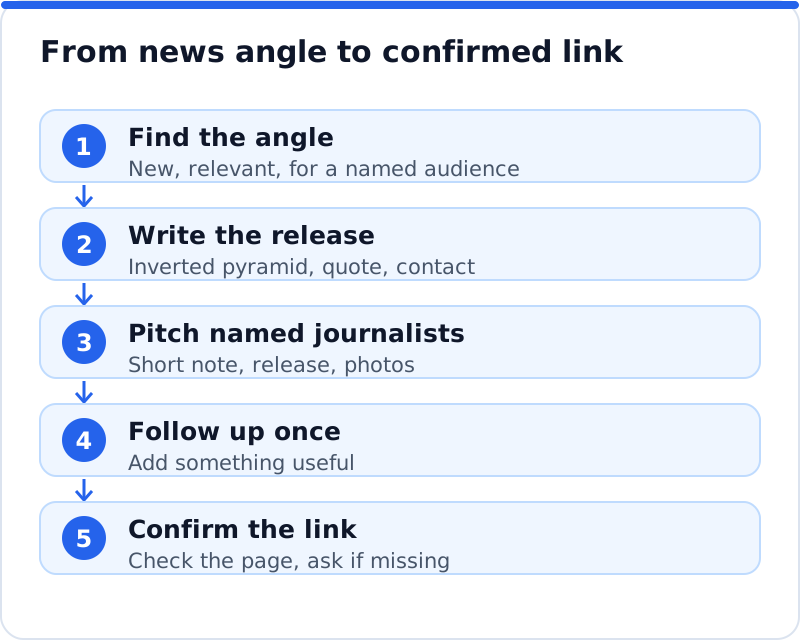
News is something new, relevant to a particular audience and ideally a little surprising. "We have a new website" is rarely news, while "a solar installer in Tucson is training ten local veterans as installers this year" might be, because it touches jobs, energy and the community. Ask what has changed, who it affects and why a reader would care this week rather than any other week. Anniversaries, openings, awards, hires, partnerships, charity work, local data from your own records and practical responses to current events can all work. The test is whether a journalist could write a headline about it without mentioning that you sent a press release.
| Angle | Example | Outlets that might care |
|---|---|---|
| Opening or expansion | A bookshop in Ghent opens a second branch with a children's reading room | Local news, family and culture websites |
| Local data | A recruitment agency in Newcastle reports which local roles drew most applicants this year | Regional business pages, trade press |
| Community project | A dental practice in Boston offers school screenings in two neighbourhoods | Local news, community newsletters |
| New product or service | A chocolatier in Turin launches a bar made with hazelnuts from one Piedmont farm | Food writers, regional press, trade magazines |
| Milestone or award | A firm marks 50 years in the same family | Local paper, trade association news |
Data stories deserve special mention because they travel further than most. A business often holds information nobody else has, such as which services customers asked for most, when demand peaks or how prices for materials have moved. Presented carefully and honestly, with the method explained and no exaggeration, that information gives journalists something to report and a reason to cite you. Keep the numbers real and modest, because a journalist who finds one inflated figure will not trust the rest. Offer to share how you counted, which makes the story easier to publish.
Writing the release in AP style structure
Newsrooms expect a familiar structure, and following it makes your release easier to use. Most follow the conventions of the AP Stylebook, which sets out how news copy handles names, numbers, titles and datelines. The core of the format is the inverted pyramid: the most important facts first, supporting details next and background last, so an editor can cut from the bottom without losing the story. Keep the whole release to one page, usually somewhere between 300 and 500 words. Write in plain sentences, use the third person and leave out adjectives that only you would use, such as "leading" or "innovative".
- Put "For immediate release" or an embargo time at the top, followed by a headline that states the news in plain words.
- Start the first paragraph with a dateline, the city where the news happens followed by the date, then answer who, what, where, when and why in one or two sentences.
- Add one or two paragraphs of supporting facts, figures and context that a reporter could use without calling you.
- Include a short quote from a named person that adds opinion or meaning, not a repeat of the facts.
- Finish with an "About" paragraph describing the business in three or four sentences, a media contact with a phone number and email, and the end mark "###".
Put your website address in the "About" paragraph as a plain link, and resist the urge to scatter keyword links through the text. Journalists remove promotional links anyway, and keyword anchors are exactly what Google's policies warn about. Attach two or three good photos with captions and credits, because a story with a usable image is more likely to run. Publish the release on a news page of your own website as well, so there is a permanent version that coverage can link to. Read it aloud before sending, since clumsy sentences are easier to hear than to see.
Finding outlets and the right journalist
A release sent to a general newsroom inbox often disappears, so build a short media list of named people. Start with the outlets your customers read: the local paper and its website, regional radio and television websites, community newsletters, and the trade magazines and websites of your industry. Read recent articles and note which reporter covers business, food, property or whatever your story touches. Their names usually appear in bylines, and many outlets list contact details on a staff or contact page. Keep the list in a spreadsheet with the outlet, the reporter, their beat, their email and the date you last contacted them.
Quality beats size in a media list. Ten journalists who cover your area or industry are worth more than a purchased list of thousands, many of whom will treat your email as spam. Look for freelancers who write for several relevant titles, and for editors of newsletters that local businesses and residents read. Note the deadlines of weekly and monthly titles, because a monthly trade magazine may plan its pages weeks ahead. Refresh the list every few months, since reporters move jobs often.
Sending and following up
Send the pitch as a short personal email, not a mass mailing. Use the headline or a clear version of it as the subject line, write two or three sentences explaining why the story matters to that outlet's readers, and paste the release into the body of the email below your note. Attach photos as reasonably sized files or offer a link to download them. If the news should not appear before a certain date, mark the release as embargoed until a stated time, and send it only to journalists you trust to respect it. Offering one outlet an exclusive for a day or two can raise the chance of coverage when the story matters most to a single title.
Follow up once, a few days later, with a brief note that adds something useful, such as an extra photo or a person available for interview. Do not chase repeatedly, and never ask whether they "received your email", which every reporter hears daily. Be ready to answer the phone quickly, because a journalist working to a deadline will move to the next story if you are slow. If a reporter says no, thank them and ask what kind of story they would find useful in future. That one question often leads to coverage months later.
Turning coverage into links
When a story runs, read it carefully and check whether it links to your website. If it mentions the business by name without a link, a short and polite note to the reporter saying thank you and offering the exact page address is reasonable, and many will add it. Ask for a link to the most relevant page, such as the product, the service or your own news page, rather than insisting on particular wording. Accept the outlet's decision if it does not link, since some publications have firm policies. Share the coverage on your own channels and add a "featured in" note on your website, because that helps the article attract readers and other links.
Our tools help at both ends of this process. The AI Backlink Checker suggests outlets for a press release, and its link tracker confirms when coverage is live and whether each link is followed. It also finds pages that mention your business without linking, which is often how coverage first shows up. Press work is one of three channels in a wider plan for link building for business, alongside directory listings and guest articles. Coverage sends readers to your website, so check the pages they will land on with the AI SEO tools for business websites.
Measuring the press release backlinks you earned
Measure a release by outcomes, not by distribution counts. Record each piece of coverage, the outlet, whether it linked, whether the link is followed and how many visits it sent in your analytics. Search Console's Links report will eventually list new linking sites, but it updates slowly, so keep your own record as the first source of truth. Note any calls, bookings or enquiries that mention the story, because those are the clearest sign that the coverage reached customers. Over a year, the record shows which angles and outlets work for your business, and the next release can start from there.
Questions business owners ask
Should I use a paid wire service?
Use one when you have a reason beyond links, such as reaching a national audience with major news, or meeting disclosure duties if the company is listed. For most businesses, direct pitches to a short list of local and trade journalists will produce more coverage. If you do use a wire, treat the partner copies as visibility, not as links. Keep the links in the release plain and limited to your website address. Measure the result by the original articles it produces, not by the number of sites that published a copy.
Should the links in my release be nofollow?
On copies you control or pay to distribute, yes, or at least avoid keyword anchors, because Google says such links should not pass ranking credit. Many wire services already mark links in partner copies as nofollow. The links you want are the ones journalists choose to include in their own articles, and you have no say over their attributes. A nofollow link in a widely read article still brings visitors and trust. Concentrate on earning the coverage and let the outlet decide the rest.
What if nobody covers my story?
It happens to most businesses at least once, and it usually means the angle, the timing or the outlet was wrong. Ask one or two of the journalists you contacted what would have made the story more useful to them. Try a smaller or more specialised outlet, where the same news may matter more. Keep the release on your own news page, because it still helps customers and may be found later. Then wait for a stronger angle rather than sending the same story again.
Your next press release
Pick one genuine piece of news from the next three months and write down which readers would care about it. Build a list of five to ten named journalists who cover that subject, and write a one-page release with the news in the first sentence, a real quote and a contact who will answer. Send short personal pitches, follow up once and record every piece of coverage and every link. Within a few weeks you will know which outlets respond to your kind of story, and the next release will be easier. Before you start, check which sites already link to your website, so the new coverage stands out clearly when it arrives.
Every site that links to yours, its authority and relevance, the trust your backlinks earn and the links your competitors have.
Check your backlinks with the AI Backlink Checker →