Backlink Quality: Authority, Relevance and the Links That Count
The signals that make one link worth far more than another, a two-minute test you can run on any link, and how to judge the quality of all your backlinks at once.
- Who links to you
- A trust score
- The competitor gap
A link is a recommendation from one website to another, and recommendations only carry weight when the person giving them is trusted and knows the subject. Google has used links to judge websites since its earliest days, but it has never treated all links as equal, and that difference is what backlink quality means. One link from a respected local newspaper or a trade body can do more for a business than hundreds from pages nobody reads. Understanding why lets you stop counting links and start judging them, which saves time and steers you away from risky shortcuts. You will see the signals that decide backlink quality, a two-minute test for any link and a way to judge your whole profile at once.
To see who links to your own website, try our AI backlink checker, part of our AI SEO Tools.
This article is part of our complete guide: How to Get Backlinks.
Test the backlink quality of your website with the AI backlink checker
What backlink quality means to Google
Google's ranking systems include link analysis, and Google describes PageRank as one of the core systems it has used since it launched. The basic idea is simple: a page that is linked to by important pages is probably important too, and part of that importance flows through each link. Over the years Google added many refinements, so that the topic of the linking page, the words in the link and signs of manipulation all affect what a link is worth. Google does not publish a quality score for links, and it never will, so everyone outside Google judges links from the signals they can see. Those signals match what Google's documentation and spam policies describe, so they are worth learning.
The practical meaning for a business is that backlink quality is a mix of trust and fit. Trust comes from the linking site's own standing on the web, which depends on who links to it in turn. Fit comes from how closely the linking site and page match your business, by topic and by place. A link that scores well on both is valuable, a link that scores well on one is useful, and a link that scores on neither adds little or nothing. A link that looks manufactured, whatever its other qualities, can count for nothing or even become a liability.
Authority of the linking site
Authority is the standing a website has earned through the links pointing at it. Google keeps its own measure private, so SEO tools estimate authority with their own scores, such as Moz Domain Authority, Ahrefs Domain Rating, Semrush Authority Score and Open PageRank. These are third-party estimates built from each company's crawl of the web, not Google's numbers, and the same website can score quite differently in each one. They are still useful for comparing sites in the same tool, because a website that many established sites link to will usually score well everywhere. Treat a score as a rough sign of standing, not as the price tag of a link.
Authority also has to be read in context. A regional plumbing association or a city's chamber of commerce may score modestly next to a national news site, yet for a local trade business its link is often more useful, because it is relevant and comes from an organisation customers recognise. A very high score on a website that covers everything from casinos to crypto to cosmetics is a warning sign rather than a selling point, because sites like that often exist to sell links. Look at the score, then look at the site and ask whether a real person would trust its recommendation. When the two answers disagree, believe the second one.
Relevance by topic and by place
Relevance is the signal business owners most often overlook, and it is the one they can do most about. A link from a website about your industry tells Google something about what your business does, while a link from an unrelated site says much less. A solar installer in Phoenix gains more from a link on an Arizona energy efficiency guide or a renewable energy trade publication than from a fashion blog with a bigger audience. Relevance also works at the level of the page: a link from a page about home energy on a general news site is more relevant than a link from that same site's sports section. The closer the linking page's subject is to the page it points at, the more sense the link makes.
Place matters for any business that serves a local area. Links from local newspapers, councils, schools, community groups, event pages and nearby businesses all tell Google that your business is part of a particular town or region. An electrician in Cardiff with links from a Welsh trade body, a local football club it sponsors and a Cardiff business network has a profile that matches where its customers are. Local links rarely carry huge authority scores, but they reinforce the location signals that local searches depend on. For many businesses, a steady flow of relevant local links is the most reliable way to improve backlink quality over time.
Followed links and the rel values
A normal link passes ranking signals, and people often call it a followed or "dofollow" link, although there is no dofollow attribute in HTML. A website can add a rel value to a link to qualify it: nofollow for links it does not want to vouch for, sponsored for paid or advertising links, and ugc for user-generated content such as comments and forum posts. Since 2019 Google has treated these values as hints rather than strict instructions, which means it may choose to use some qualified links in its systems. In practice, followed links are the ones that carry most of the ranking benefit. That does not make nofollow links worthless, because they can still bring visitors, enquiries and discovery of your pages.
A healthy profile naturally contains both kinds. Social media profiles, many directories, comment sections and large reference sites such as Wikipedia tend to use nofollow, while independent websites linking from their own content usually do not. A profile made only of followed links can look engineered, because real-world linking is never that tidy. When you weigh a new link, treat a followed one from a relevant site as the best outcome and a nofollow one from a busy, relevant page as a good second. What you should never do is pay for a followed link, because Google's spam policies say paid links must carry sponsored or nofollow.
Placement, anchor and the page itself
Where a link sits on the page matters. A link placed inside the main content, in a sentence that talks about your business, is an editorial choice and reads as one. A link in a footer, a sidebar or a long list of partners repeated on every page is far weaker, and Google's spam policies specifically mention widely distributed links in footers and templates. Anchor text, the clickable words, matters too: natural anchors usually use your business name, your web address or a descriptive phrase written by the person linking. A profile full of identical keyword anchors, such as "best accountant Chicago" again and again, is one of the clearest signs of manufactured links.
The linking page's own health completes the picture. A page that is indexed, visited and has a reason to exist passes more value than an orphan page nobody reaches. The number of other links on the page matters, since a link among five on a thoughtful resource page counts for more than one among five hundred on a link dump. Freshness plays a part as well: a link on a current, maintained page shows ongoing recognition, while a link on a page abandoned years ago may still help but tells a weaker story. A CPA firm in Chicago listed in a current professional directory has a better link than one buried on a stale page of logos.
| Signal | Strong link | Weak link |
|---|---|---|
| Authority | Established site that others link to | New or thin site with almost no links |
| Topic relevance | Same industry or a closely related one | Unrelated subject or everything at once |
| Local relevance | Your town, region or country | A place you do not serve |
| Rel value | Followed, given freely | Paid but not marked sponsored |
| Placement | Inside the main content | Footer, sidebar or sitewide list |
| Anchor text | Business name or a natural description | The same keyword phrase every time |
| Linking page | Indexed, visited, few other links | Orphaned, hundreds of outbound links |
Weak and risky links
Weak links are the ones that add little: profiles on low-quality directories, links in old blog comments, automatically generated pages that copy other sites, and listings on websites with no visitors. Most of them do no harm, because Google has said its systems are designed to detect and neutralise unnatural links rather than let them count. Risky links are different, because they come from behaviour that Google's spam policies name directly. That list includes buying or selling links for ranking purposes, excessive link exchanges, automated programs that create links, advertorials that pass ranking credit, low-quality directory or bookmark links, keyword-rich links in distributed widgets, and forum comments with optimised links. Sites that break these policies can rank lower or receive a manual action, which you would see in Search Console.
The real cost of risky links is usually wasted money and time rather than a dramatic penalty. A garden centre in Kent that pays for a bundle of "high authority" guest posts may see nothing at all, because the links are ignored, and it has spent its budget on nothing. Toxic links and the disavow file are covered in detail in our separate article on finding toxic links, so here the point is simple: if you did not build spammy links, you rarely need to act on random ones that appear. Concentrate on earning good links and let Google's systems discount the junk. Only consider a disavow file when there is a clear pattern of manipulative links, especially ones bought in the past.
Judging a link in two minutes
You do not need specialist software to judge most links, only a few honest questions asked in order. Open the linking page in your browser and check that the link is really there and points to the right page on your website. Look at what the website is about and whether its readers could be your customers, by topic or by place. Then look at where the link sits, what words it uses and whether the page looks maintained and visited. Finally, right-click the link and choose Inspect to see whether it carries nofollow, sponsored or ugc.
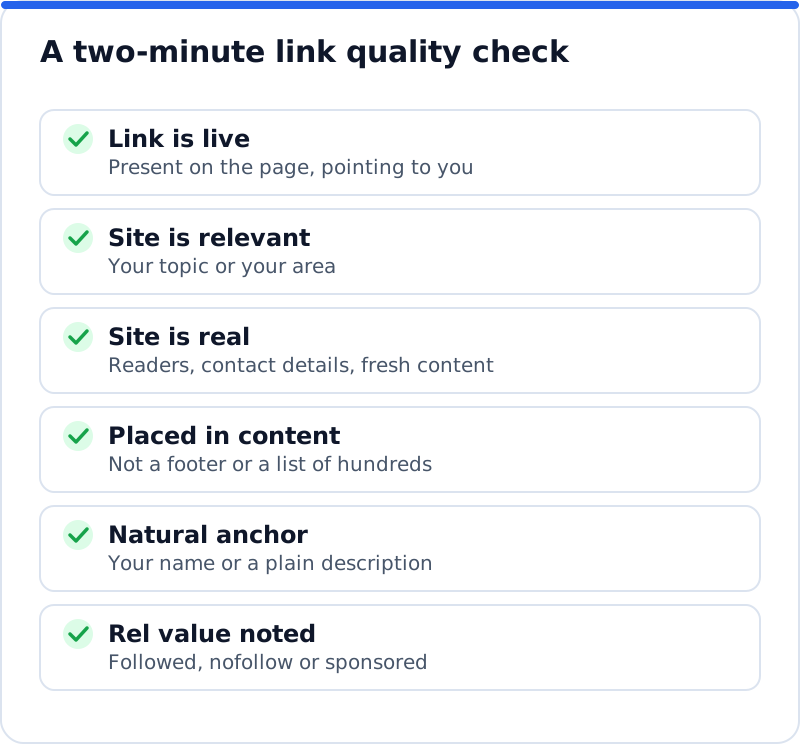
Run the same checks before you chase a link, not only after you have it. If a prospect fails on relevance and on reality, no amount of authority makes it worth an hour of outreach. If it passes on relevance and placement but the link would be nofollow, it may still be worth pursuing for the visitors it can send. Keep a note of your verdict next to each link or prospect, so your judgements stay consistent over time. After a few dozen links you will find you can sort most of them at a glance.
Why twenty relevant links beat a thousand weak ones
Quantity feels reassuring, and link sellers know it, which is why packages promising hundreds or thousands of links are so common. The trouble is that weak links add almost nothing each, and many are ignored outright, so a thousand of them can add up to very little. Twenty links from relevant, trusted websites each carry real weight, describe your business accurately and keep working for years. They also bring visitors who are genuinely interested, which a thousand links on pages nobody reads never will. For a boutique hotel in Porto, links from a regional tourism board, two travel guides and a handful of local partners will do more than any bulk package.
Good links also compound in a way weak ones do not. A business mentioned in a trade magazine is more likely to be noticed by a journalist, invited to speak at an event or listed by an association, each of which brings another relevant link. Weak links lead nowhere, because nobody reads the pages they sit on. A focus on backlink quality also keeps you safely inside Google's spam policies, so you never have to unwind past shortcuts. The question to ask of every link is whether you would be pleased for a customer to find it.
Measuring backlink quality across your profile
A business website may have links from dozens or hundreds of sites, so you also need a view of the whole profile. Google Search Console's Links report shows your top linking sites, the pages they link to and the most common linking text, which is a good starting point. It does not show authority, rel values or spam signals, so you will need a backlink tool for those. Count linking websites rather than individual links, because one site that links from every page in its footer is still only one relationship. Then look at the share of links that are relevant, followed and placed in content, and how that share changes over a few months.
Our AI backlink checker with a trust score does this in one pass. It finds linking sites through web search and its own crawler, which confirms each link on its page, and shows each site's authority (based on Open PageRank, shown from 0 to 100), whether the link is followed, spam signals and pages that mention you without linking. It then sums the profile up in a trust score. The full audit adds a relevance judgement for each site, the anchor text, toxic links with a disavow file and history over time, so you can see whether quality is rising. The same backlink trust also feeds the website score in the wider AI SEO tools for business websites, where it accounts for 40% of the score out of 100.
Questions business owners ask
Is a high authority score always a good link?
No, because authority scores are estimates of a site's link strength, not judgements of whether a link to you makes sense. A high-scoring site on an unrelated subject, or one that sells links openly, may pass very little value and can carry risk. A lower-scoring site that is relevant to your industry or your town is often the better link. Use scores to compare similar sites and to sort a list of prospects, then let relevance and placement decide. If a seller leads with the score and cannot show you real readers, walk away.
Is a link from a website in another country worth having?
It can be, as long as the website is relevant to what you do. A ceramics supplier in Stoke linked from a respected Dutch pottery magazine has earned a link that fits its trade. A foreign site on an unrelated subject, or in a language your customers never read, adds little. For a business that serves one town, local and national links do more, because they match where its customers are. Be wary only when many foreign links arrive at once from places you have never dealt with.
Can a bad link hurt my rankings?
A single bad link almost never does, because Google has said its systems aim to ignore spammy links rather than count them against you. Problems arise when there is a clear pattern of manipulation, such as many paid links with keyword anchors, which can lead to lower rankings or a manual action. If you have never bought links or joined link schemes, random spammy links are usually best left alone. Search Console's Manual actions report will tell you if Google has taken action on your site. Spend your energy on earning good links rather than worrying about odd ones.
Building a profile you would be proud to show
Start by listing the links you already have and judging each linking site with the two-minute check, so you know where your profile stands. Then write down the ten most relevant websites in your industry and your area that do not yet link to you, such as associations, suppliers, local media and industry publications. Work through them steadily, earning links with real memberships, useful contributions and genuine stories rather than payments. Check the profile again every few months and watch the share of relevant, followed links in content rise. Pick the first three websites on your list this week and make the first approach today.
Every site that links to yours, its authority and relevance, the trust your backlinks earn and the links your competitors have.
Check your backlinks with the AI Backlink Checker →