Showreels, Case Notes and Rights on a Videographer Portfolio Website
This guide answers how a videographer should build a portfolio website, from the showreel and grouped films to case notes, playback, rights for portfolio use and an enquiry asking for dates and deliverables. Once published, the reel's home costs $119 a year in hosting, or $19 when a month is paid by itself, plus a domain, and no invoice arrives for drafting it.
- No coding required
- Live in minutes
- Blog, SEO and chatbot tools included
A videographer portfolio website exists to get a potential client watching good footage within seconds, then to turn that impression into a dated, budgeted brief. Wedding filmmakers, corporate and brand videographers, music video directors, event crews and documentary shooters all depend on one, whether they work solo or as a small production team. The path from footage to a dated brief is mapped on our video production website example, where an invented production company built on AI Web Maker sets out its briefs, shoots and edits. Keeping the portfolio online costs $119 across twelve months, or $19 each month for a filmmaker paying as bookings arrive, and a domain is added. No bill arrives while the site is drafted and its films are played back in the AI Web Maker preview, which leaves time to settle the reel and the film groups first. The hard part is restraint: choosing which seconds of hundreds of hours deserve a place, and clearing the rights to show them publicly. The viewers, the pages, the reel, film groups and case notes, playback, rights, packages and briefs, search, cost and the reasons bookings slip away are all covered.
This article is part of our complete guide: Website Builder Comparison.
Couples, brand managers and artists: who watches a videographer's work, and how
Three broad groups watch a videographer's portfolio, and each judges the footage against a different occasion. Engaged couples look for emotion, storytelling and a style that matches their day, and they often watch on a phone together in the evening. Brand and marketing managers want clarity, pace and evidence that a film did its job on a website, a stage or a social feed. Musicians and labels look for visual ideas, energy and a director who understands their genre. All three press play within the first few seconds and decide almost as quickly whether to keep watching. A portfolio that shows each group footage from their own kind of occasion, near the top of the page, keeps them long enough to reach the enquiry.
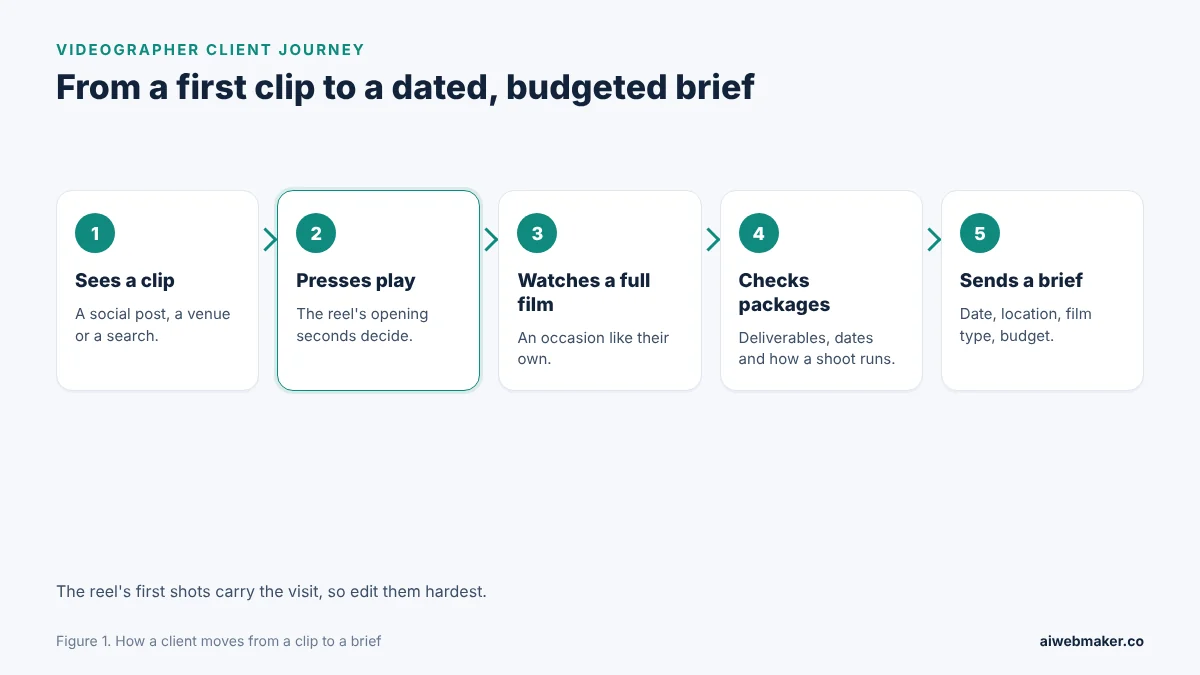
The second step in this client journey is the moment of truth, because a viewer who presses play on the reel decides within its opening seconds. Before that, they arrive from a short clip on social media, a venue's recommendation or a search for filming help near them. A viewer who stays past the opening then looks for one complete film from an occasion like their own. The fourth step is practical, as they check packages, deliverables, availability and the way a shoot runs. Only then does the enquiry arrive, ideally with a date, a location and a rough budget already attached. Since so much rides on the reel, its first shots deserve more editing time than any page on the site.
Reel, films, packages and enquiry: the pages a videographer needs
| Page or setting | What it holds | Decision to make first |
|---|---|---|
| Home | The main reel and one line on the work | Which reel opens the site |
| Selected work | Films grouped by occasion or client type | The groups clients will recognise |
| Film pages | Embedded film, stills and a case note | The same layout for every film |
| Services | Types of production with pricing guidance | What each package delivers |
| How a shoot runs | Planning, filming, editing, delivery | Typical turnaround and revisions |
| About | The videographer or crew, kit and style | What makes the approach distinct |
| Enquiry | Date, location, film type, deliverables, budget | Which answers make a quote possible |
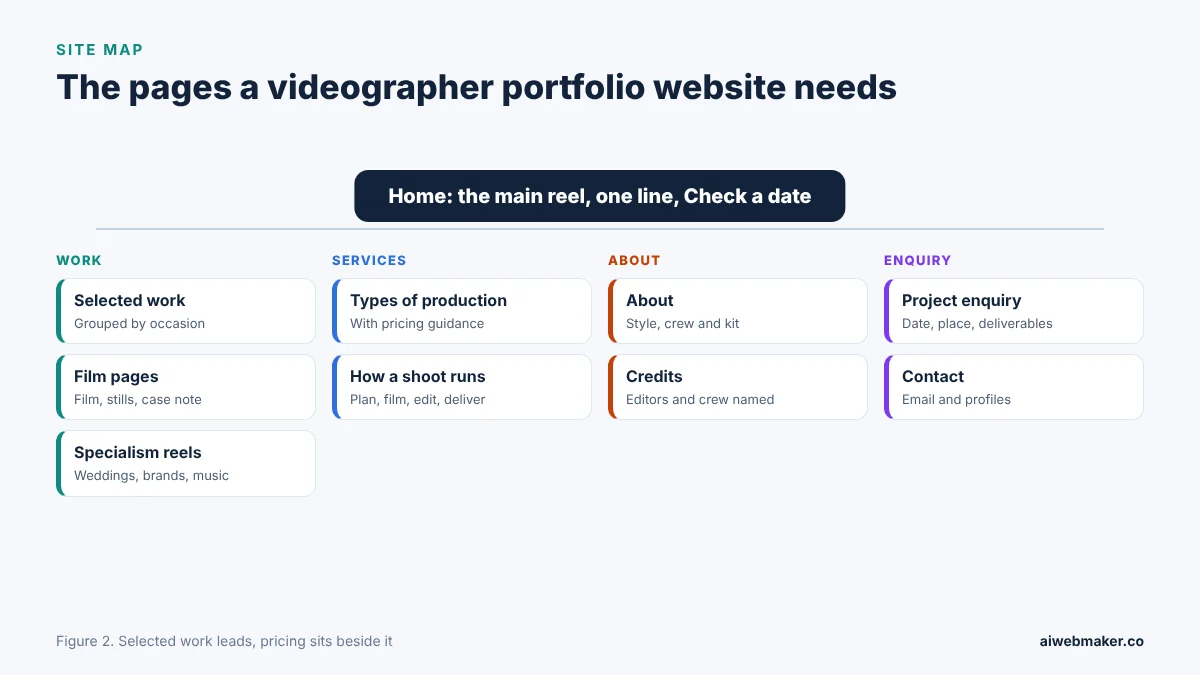
Selected work anchors this videographer site map, flanked by the services, the person behind the camera and the route to an enquiry. The work branch splits by occasion, so a couple sees weddings while a brand manager sees product films and interviews. Services set out each type of production with guidance on price, which filters out briefs that could never fit. The about and enquiry branches introduce the crew and gather the dates and deliverables a quote depends on. Northframe, the production company among the sample sites, lists its types of production with pricing guidance and a project enquiry form beside a page of selected work. The video production portfolio sample with selected work and pricing guidance shows that arrangement from a buyer's side, and few solo videographers need anything larger.
Cutting a showreel for the client watching it
A portfolio showreel should be cut for the client most likely to watch it, not for fellow filmmakers or a festival jury. A main reel of around one to two minutes holds attention, and a shorter reel for each specialism lets a couple or a brand see only relevant work. The opening seconds carry the most weight, so the strongest image, a striking movement or a moment of real emotion belongs first. Music should suit the audience and must be licensed for this use, which is a separate question from the licence held for the original film. Captions or a closing card naming the kinds of work shown help viewers who watch with the sound off. Recutting the reel once or twice a year keeps it in step with the work being booked now.
Grouping films and writing case notes that sell the thinking
Films should be grouped by the occasion a client is planning, such as weddings, brand films, interviews, music videos, events or documentary work. Each group can lead with its strongest complete film, followed by two or three supporting pieces, rather than a long scroll of everything. A short case note beside every film explains what the client wanted and how the film met that aim. Stills pulled from the footage give a quick sense of colour and framing before anyone presses play. Notes on crew size, kit and filming days help a client judge whether their own project fits. Clear groups and honest notes turn an archive of footage into evidence of judgement.
| Case note field | What it tells the client |
|---|---|
| Client type | Whether the work matches their own occasion |
| Brief | What the film needed to achieve |
| Length and formats | Main film, cutdowns, vertical versions |
| Where it was shown | Website, event screen, social feeds, broadcast |
| Crew and filming days | The scale of the production |
| Role | Director, camera operator, editor or full crew |
| Outcome | How the client used the film, where they agree to share it |
Playback, embeds and keeping film pages quick
Video files placed directly on a page are the fastest way to make a portfolio slow, so most videographers show films from a dedicated video platform instead. Embedding a player from such a platform lets it stream at a quality that suits each viewer's connection and device. A poster still on each film page keeps the page light until the visitor chooses to play. A short muted loop can work on the home page, provided it is small and the full reel is one click away. Client work that cannot be public is better shared through private or unlisted links sent directly, rather than hidden pages on the portfolio. Pages that load quickly on a phone keep viewers watching the footage instead of a spinning circle.
| Approach | Suits | Watch point |
|---|---|---|
| Embedded player from a video platform | Full films and the main reel | Platform settings on privacy and suggestions |
| Poster still with a play button | Film pages and group grids | A still that represents the film fairly |
| Short muted loop | The home page opening | Small file, full reel one click away |
| Private or unlisted link | Client work not yet public | Shared directly, not listed on the site |
| Vertical cutdown | Social clips and phone viewers | Shown beside the main version |
| File placed directly on the page | Rarely suitable | Slow pages and heavy data use |
Music, releases and client consent for portfolio use
Rights for portfolio use are often separate from the rights a client bought, so each film needs checking before it goes public. Music licensed for a client's corporate film may not cover a reel on the videographer's own site, and a commercial track used at a wedding rarely does. People on camera, especially guests, children or passers by, may need to consent before their image appears publicly, and privacy law differs from one country to the next. Brand clients sometimes restrict publication until a launch date, or permanently under a confidentiality agreement. Crew members, editors and colourists deserve credit for their part in a film. Agreeing portfolio use in the contract at booking avoids awkward requests after delivery.
Packages, starting prices and the questions that turn interest into a brief
Packages and starting prices help a videographer attract briefs that fit, because they filter out enquiries far from the budget before anyone spends an hour on a call. A wedding package might state hours of coverage, the length of the highlights film and whether a full ceremony edit is included. Brand work can show starting points for an interview film, a product film or an event recap, with custom projects quoted after a conversation. The portfolio website builder that drafts work and enquiry pages turns a brief description of the filmmaker into a first draft, and its video production sample sets pricing guidance next to the selected work. The enquiry should then ask the few questions a quote depends on, so the first reply can be specific. Fewer, sharper questions also get more forms completed than long questionnaires.
| Enquiry question | Why it matters |
|---|---|
| Date and location | Availability and travel |
| Type of film | Which package or crew applies |
| Expected length and cutdowns | Editing time |
| Where the film will be shown | Format, aspect ratio and music licensing |
| Approximate budget | Whether the brief can fit |
| Films they admire | Style and expectations |
Wedding films, brand videos, event coverage: what clients type
Clients searching for a videographer describe the occasion first and the person second. Typical phrases include wedding videographer with a town or region, corporate video production, brand film for a product launch, music video director, conference filming or elopement filmmaker. Using those words in film titles and case notes matters, because search engines read text far better than footage. A studio or registered business address can support a map listing, and reviews mentioning calm direction, punctual delivery and moving results persuade cautious couples and careful brand managers alike. Articles on planning a wedding film timeline, preparing for an interview shoot or choosing between a highlights film and a full edit attract clients early in their planning. Steady, specific writing gives a videographer a search presence that a social feed alone cannot build.
Hosting, domain and credits for a filming business
Hosting and a domain are the portfolio's only recurring costs, and filming guide articles drafted with credits stay under a dollar each. With a full season booked, one yearly payment keeps the total lowest. Someone building a client list between jobs may prefer monthly billing while the bookings grow. New films, recut reels and fresh stills cost nothing extra to publish. The table lists both routes and gives the $189 tier a row for comparison only.
| Item | Yearly | Monthly |
|---|---|---|
| Hosting the portfolio | $119 | $228 over twelve months |
| Domain | Depends on the ending | Depends on the ending |
| Higher plan, for comparison | $189 a year | Not needed |
| Twelve filming guide articles at about $0.65 | About $7.80 | About $7.80 |
| New films, reels and stills | No charge | No charge |
| Year before the domain | About $126.80 | About $235.80 |
Why a viewer stops the reel and closes the tab
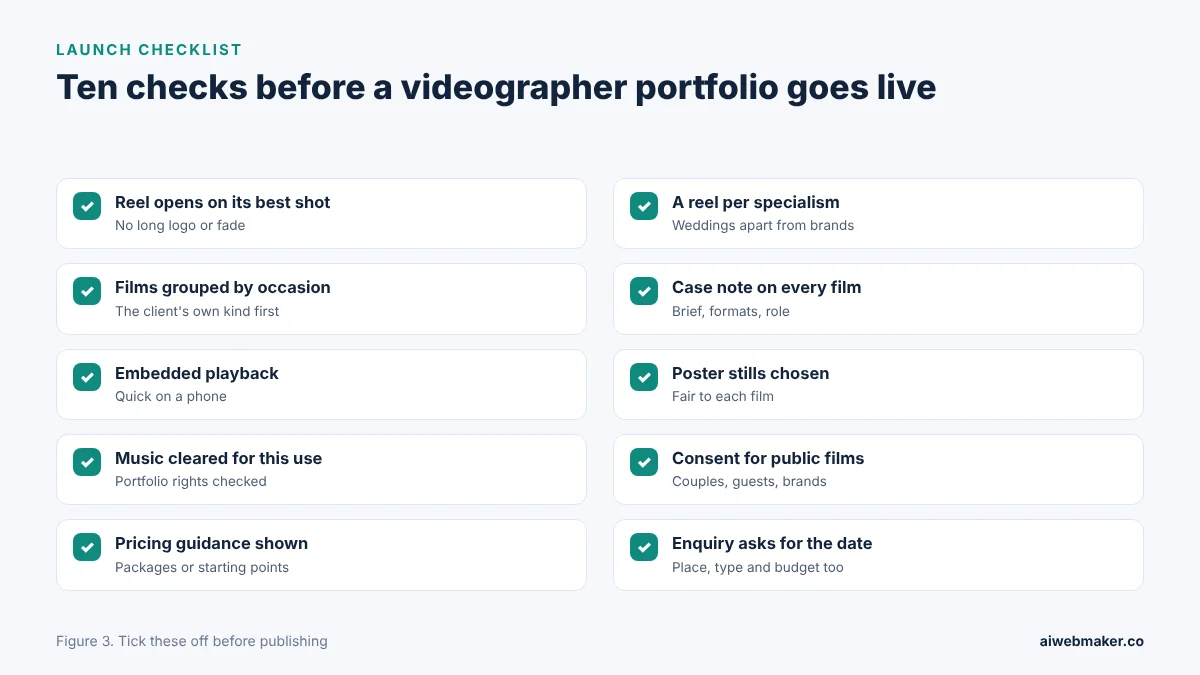
Viewers close a videographer's site when the reel opens slowly, with a logo sting or a long fade before any real footage. A single mixed reel that jumps from weddings to product shots loses both couples and brand managers. Film pages that stall on a phone, because files were placed directly on the page, end the visit before playback starts. Packages with no hint of price leave clients guessing whether an enquiry is worth sending. When the enquiry skips the date and the type of film, the first reply turns slow and vague. Ten checks for a filmmaker's site appear in the next image, one for every gap above.
Frequently asked questions
Should full wedding films be public on the portfolio?
Full wedding films can be public when the couple agrees, but many prefer a highlights film or a private link for the full edit. Guests appear in most wedding footage, and their privacy deserves respect as well as the couple's. A short highlights film usually shows style and storytelling well enough for new couples. Full films can be shared privately with serious enquiries who want to see a complete day. Asking the couple at booking avoids an awkward request after the film is delivered.
How often should the showreel be recut?
A showreel is worth recutting once or twice a year, or whenever several stronger films have been delivered. The reel should reflect the work being booked now, not the style of three seasons ago. Swapping the opening shots alone can refresh a reel quickly between full recuts. Separate specialism reels can be updated on their own schedule. A current reel tells clients the videographer is busy and improving.
Can work filmed as a second shooter or crew member appear?
Work filmed as a second shooter, camera operator or editor can appear when the lead filmmaker or production company agrees. The role should be stated plainly, such as second camera at a wedding or editor on a brand film. Some companies allow portfolio use only after the client has published the film. Implying sole authorship of a team production damages trust if the client or the lead later sees it. Accurate credit protects relationships that often bring the next job.
Is aerial footage worth featuring?
Aerial footage can lift a wedding or property film, but it should support the story rather than dominate the reel. Rules for flying drones vary widely by country, often covering registration, operator training, distances from people and permission for certain sites. A videographer offering aerial work should state that it follows local rules and that some venues may not permit it. Featuring a few aerial shots in context shows the skill without suggesting every shoot includes it. Honest notes on where aerial filming is possible set the right expectations.
How one delivered film settles the site's year
A single booked film typically pays for many years of a videographer's portfolio hosting. Monthly billing turns each $19 into a small slice of one filming day's fee. Each new film posted with a clear case note adds weight to a site that has already paid for itself. A tight reel, honest groups, quick playback and cleared rights build the confidence that turns a viewer into a client. Videographers who post each delivered film promptly give returning visitors something new to watch. When an enquiry arrives already naming a film from the portfolio, the site has done its job.
Build your website in Minutes and get the AI Tools that work
Start Building Your Website →