Baked Goods Sold Online: Fresh Boxes, Firm Cut Offs, Clear Labels
This guide shows how a baker sells baked goods online so that orders arrive fresh, on the right day and within the food rules, from the range and cut offs to delivery, labels and custom cakes. Once orders open, AI Web Maker bills $119 to host the shop all year, or $19 each month, and the domain is bought on top.
- No coding required
- Live in minutes
- Blog, SEO and chatbot tools included
Selling baked goods online means taking orders for boxes, loaves, traybakes and celebration cakes through a shop that works while the oven is cold. It suits home bakers, market stall bakers, high street bakeries and cake makers who want to plan each bake from orders already placed. Loaves, cake orders and allergen notes all appear on our bakery website example, a complete sample for an imaginary baker that AI Web Maker produced to show how such a shop reads. With AI Web Maker, the bakery's hosting comes to $119 when settled annually, or a baker can choose $19 billed each month, and the domain costs whatever its ending sets. Drafting the shop and testing a basket in the preview cost nothing, so the baker pays only once orders open. The hard part is that baked goods are perishable, fragile and governed by food rules, so a shop that sells well can still fail on freshness, timing or labels. Below come the buyers, the pages, which bakes travel, deadlines, fulfilment, product pages, food rules, custom work, search phrases and a full year of running costs.
This article is part of our complete guide: Website Builder Comparison.
Who orders baked goods online, and what are they planning for?
People ordering baked goods online are usually planning around a moment, which makes timing as important as taste. Gift buyers send cookie boxes, brownies or biscuits in tins for birthdays, thanks and holidays, often to an address far away. Regulars reserve their weekend loaves, pastries or a weekly treat for collection so they never find the shelf empty. Celebration customers plan cakes for birthdays, weddings and christenings weeks ahead, with firm ideas about flavours and design. Offices and event hosts order platters and catering in bulk, and they care most about quantity, delivery time and dietary needs. A bakery shop that recognises these four kinds of order serves each one without confusing the others.
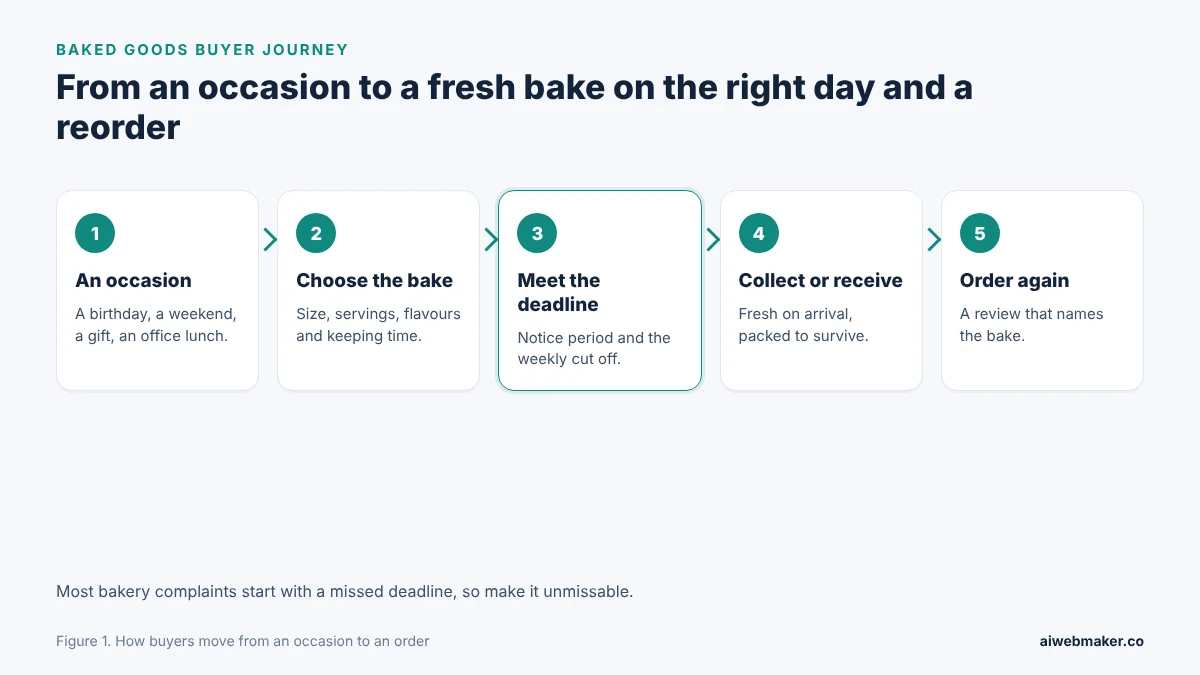
Every order in this journey starts with an occasion, and the step that most often goes wrong is the deadline. The buyer picks a bake that suits the moment, whether a gift box, a loaf for Saturday or a three tier cake. The notice period and the weekly cut off then decide whether that order is still possible. Collection or delivery follows, and freshness on arrival decides whether the buyer is delighted or disappointed. A good experience brings a reorder, a recommendation or a review that mentions the bake by name. Bakers who make deadlines unmissable on every page avoid most of the complaints that hurt food businesses.
What does an online bakery shop need on its pages?
An online bakery shop needs pages that answer questions about freshness, timing and ingredients before anyone places an order. Product pages and the ordering page do most of the work, because they carry the notice times and cut offs. The allergens and ingredients page protects customers and the bakery alike. A custom orders page keeps celebration cakes and catering away from the ready shop, where they would muddle the range. Setting these pages out clearly at the start prevents a stream of messages asking the same questions every week.
| Page | What it must make plain | Common gap |
|---|---|---|
| Shop | Bakes available to order, with prices | Items shown that cannot be made this week |
| Product pages | Size, servings, ingredients, storage | No word on how long it keeps |
| How to order | Notice times and weekly cut offs | Deadlines hidden in small print |
| Collection and delivery | Slots, zones and fees | Delivery area never stated |
| Allergens and kitchen | Allergens used and cross contact | Only on a separate page nobody opens |
| Custom cakes and catering | Brief, lead time and Enquire route | Mixed in with ready bakes |
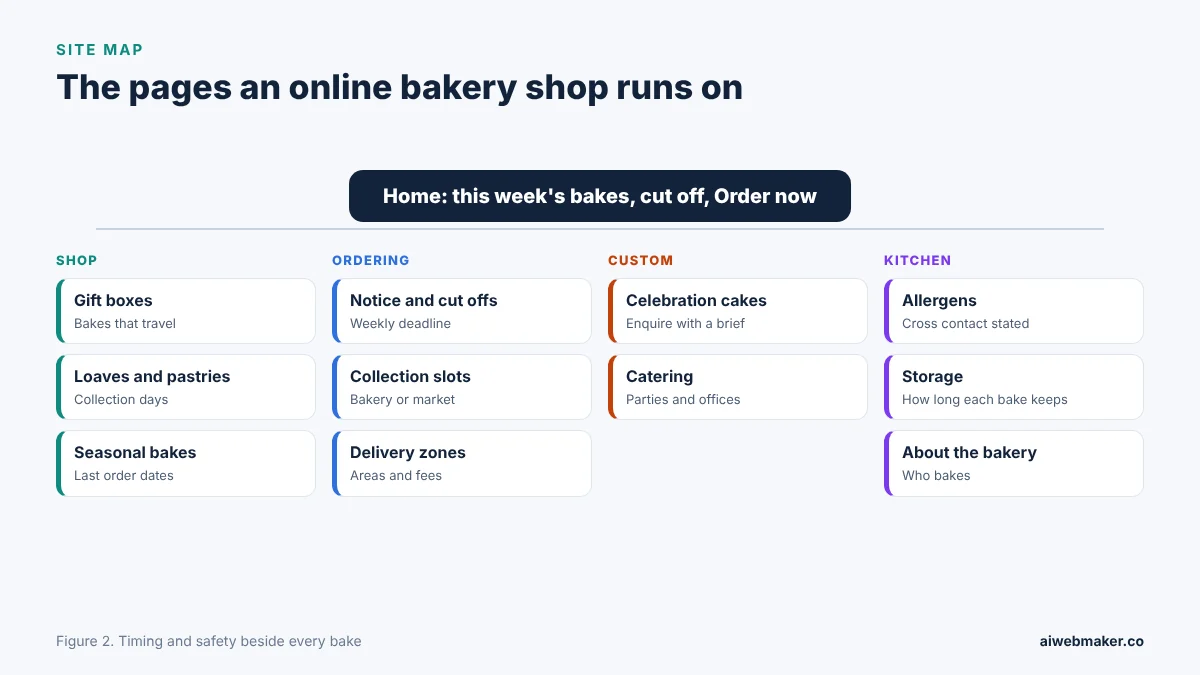
Reading the site map from the shop outwards shows how timing and safety pages sit beside every bake. The shop branch holds gift boxes, loaves and pastries, and seasonal bakes when they run. The ordering branch explains notice times, cut offs, collection slots and delivery zones. The custom branch handles celebration cakes and catering through enquiries, while the kitchen branch covers allergens, storage and the story of the bakery. Golden Crumb, the bakery among the samples, sets out its celebration cakes, its catering for parties and offices, its ordering steps and its notice periods on one page for custom work. The bakery sample with custom cake ordering steps and notice periods shows those details beside the ready shop.
Which bakes travel, keep and sell well online?
The bakes that sell best online are sturdy, keep for several days and make an appealing gift, while delicate bakes suit collection. Cookies, brownies, blondies, shortbread and traybakes survive a courier and stay pleasant for days. Loaf cakes, fruit cakes and biscuits in tins travel well and suit gifting at holidays. Cream cakes, custard tarts and laminated pastries lose their best qualities within hours, so they belong in local collection or short delivery. Choosing the range around travel and shelf life prevents the crushed or stale parcels that ruin a reputation.
| Bake | Typical keeping time | Travel | Best route |
|---|---|---|---|
| Cookies and biscuits | Several days to weeks in a tin | Good with padding | Posting and gifting |
| Brownies and traybakes | Several days | Good when wrapped | Posting and local delivery |
| Loaf and fruit cakes | About a week, longer for fruit cakes | Good | Posting at holidays |
| Bread and sourdough | A day or two at best | Fair | Collection and local delivery |
| Laminated pastries | Best on the day | Poor | Collection only |
| Cream and custard bakes | Short, and chilled | Poor | Collection or chilled local delivery |
How do notice times and weekly cut offs shape baking days?
Notice times and cut offs turn an unpredictable stream of orders into a baking plan the kitchen can actually deliver. Each product should state how much notice it needs, and the ordering page should give one clear weekly cut off, such as Wednesday evening for weekend collection. A cut off lets the baker buy ingredients, schedule proving and decorating, and refuse nothing at the last minute. Closures, such as a baker's holiday, belong on the home page and the ordering page so nobody plans a party around a closed kitchen. Firm, visible deadlines protect the baker's sleep and the customer's celebration together.
| Order type | Typical notice | What to state on the page |
|---|---|---|
| Weekly loaves and pastries | Until the weekly cut off | Day and time of the cut off |
| Gift boxes for posting | A few days | Dispatch days and delivery estimate |
| Celebration cakes | One to several weeks | Notice by size and design |
| Wedding cakes | Months, with a tasting | Booking window and consultation |
| Office and event catering | Several days | Minimum quantities and delivery time |
| Holiday preorders | A fixed early deadline | Last order date and collection days |
How should collection, delivery and the checkout work together?
Collection, delivery and posting should each be offered only for bakes that survive them, with every fee visible before the order is placed. At checkout the baker's own delivery fee is added to the basket, so the buyer sees the subtotal, that charge and any discount code before ordering. A delivery page can list the zones covered, the days the van runs and the collection slots at the bakery or market stall. Packaging, such as rigid boxes, cake boards and insulated packs for hot weather, should be costed into the fee or the price. The AI online store builder that adds the baker's delivery fee at checkout drafts the shop, its product options and the bag from a short list of bakes and prices. Clear fulfilment rules keep fragile orders local and sturdy ones travelling.
What should a bakery product page say about size, servings and storage?
A bakery product page should tell the buyer how big the bake is, how many people it serves, what it contains and how long it keeps. Weight or dimensions, servings and the number of pieces in a box answer the first questions a buyer asks. Product options can carry sizes, flavours or box quantities, so one listing covers a six, a twelve and a twenty four piece box. Storage advice, such as keeping a cake cool, freezing loaves on the day or warming pastries, helps the bake arrive at its best on the table. A complete product page sells the bake and prevents the complaint that it was smaller than expected.
Which food safety and labelling rules apply when baking for sale?
Food safety and labelling rules apply to almost every baker who sells, including those working from a home kitchen, but the details vary widely between countries and regions. Many places require a food business to register with a local authority before trading. In the United States, for example, each state sets its own cottage food rules, which can restrict the bakes a home kitchen may sell and the places it may sell them. Allergens must be declared clearly, and the list of major allergens set by law differs, with fourteen in the European Union and nine in the United States. Labels on boxes may need ingredients, allergens, a best before or use by date and the bakery's name and address, so a baker should check the rules with the local food authority before the first order. Getting these rules right protects customers and the bakery's good name.
| Rule area | What it often covers | Where to check |
|---|---|---|
| Registration | Registering the kitchen before trading | Local or national food authority |
| Home kitchens | Limits on what can be made and sold | Cottage food or home baking rules |
| Hygiene | Training, cleaning, temperature control | Food hygiene guidance |
| Allergens | Declaring major allergens on every item | National allergen rules |
| Labels | Ingredients, dates, name and address | Food labelling rules |
| Posting food | Packing and keeping bakes safe in transit | Food authority and courier terms |
How should custom cakes, catering and seasonal orders be handled?
Custom cakes and catering suit listings without a fixed price, which show an Enquire button so the customer can describe the occasion before any quote. The enquiry should ask for the date, the number of servings, flavours, dietary needs and any design ideas or reference photos. The baker replies with a quote and a design suggestion, and any deposit is arranged directly between baker and customer once both agree. Seasonal orders, such as holiday boxes, festive loaves or celebration bakes tied to local traditions, work well as limited listings with an early last order date. A discount code for loyal customers or a new box works well when used sparingly, since bake prices rest on real ingredient and labour costs. A shop that handles custom and seasonal work clearly earns the bakery's most valuable orders.
Which phrases do buyers type before ordering a box or a cake?
People searching for baked goods usually type the bake, the occasion and a delivery wish, such as brownie box delivery, birthday cake near me or sourdough collection this weekend. A product or collection page titled in those everyday words gives each search a sensible match. Bakeries with a shop or regular market stall should keep their map listing current, with opening times, photos of real bakes and the shop's web address. Articles on storing bread, freezing cake or choosing a cake size for a party draw readers who may order later. Helpful, specific writing brings the steady search visitors that a busy oven depends on.
How much does an online bakery shop cost to keep open for a year?
A bakery shop pays for two things each year, its hosting and its domain, while optional articles barely move the total. Paying for twelve months at once is the lower of the two totals. Monthly billing can suit a home baker trying online orders for the first time. Changing the range, prices, cut offs or codes adds nothing to the bill. A $189 tier is listed beside the main plan for comparison only.
| Item | Yearly | Monthly |
|---|---|---|
| Hosting the bakery shop | $119 | $228 over twelve months |
| Domain | Depends on the ending | Depends on the ending |
| Higher plan, for comparison | $189 a year | Not needed |
| Twelve baking and storage articles at about $0.65 | About $7.80 | About $7.80 |
| Range, price and cut off changes | No charge | No charge |
| Year before the domain | About $126.80 | About $235.80 |
Why do buyers leave a bakery shop without placing an order?
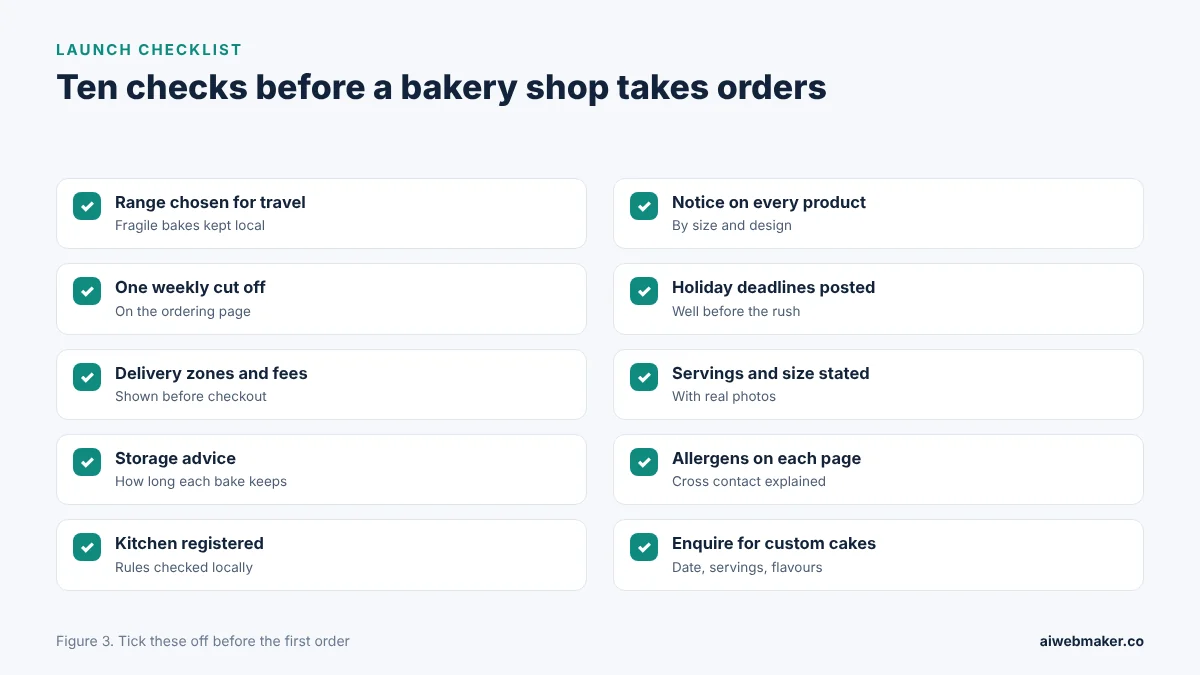
Buyers leave a bakery shop when they cannot tell whether a bake will arrive in time for the day they need it. Hidden notice periods or a missing cut off make them fear a ruined celebration. No allergen information sends careful parents and hosts straight to another baker. Silence about delivery areas and fees makes the order feel uncertain. Ten checks shown in the next figure settle those worries before a buyer gives up.
Frequently asked questions
Can a home baker sell baked goods online legally?
Many home bakers can sell online legally, but only after following the rules where they live, which may include registration, inspection or limits on what can be sold. Some places allow home baking for sale with few conditions, while others restrict certain bakes or require a commercial kitchen. Rules on posting food across regions or borders can be stricter again. The local food authority is the right place to confirm what applies. Checking first protects the baker from fines and the customer from risk.
How should a bakery handle allergens when it uses nuts in the same kitchen?
A bakery that uses nuts, sesame or other major allergens in the same kitchen should say so clearly on each product page and on its allergen page. Cross contact can occur through shared equipment, surfaces or air, so promising that a bake contains no trace of an allergen is rarely safe. Customers with severe allergies need honest information to decide for themselves. Ingredient lists should be kept current whenever a recipe or supplier changes. Plain, careful allergen notes earn the trust of the most cautious buyers.
Is it worth posting cakes and bakes nationally?
Posting nationally is worth it for sturdy bakes that keep for several days, such as cookies, brownies and fruit cakes in tins. Fragile cakes, cream fillings and fresh pastries rarely survive a courier, so they suit local delivery or collection instead. Boxes, padding and postage all belong in the delivery charge or the price. A test parcel sent to a friend reveals problems before customers find them. Careful choice of what to post keeps reviews warm.
Which details make a celebration cake quote quick to prepare?
A quick, accurate quote needs the date, the number of servings, flavours, fillings, dietary needs and any design ideas or reference photos. Asking whether the cake will be collected or delivered, and to which address, helps the baker plan the finish and the box. A budget range saves time on designs that would cost far more than the customer expects. Clear questions reduce the back and forth that slows every quote. A complete brief makes the baker's reply quicker and more accurate.
How few orders pay for a year of online baking?
A few gift boxes or one celebration cake normally outweigh the $119 a bakery shop spends on hosting each year. Bakers paying monthly typically recover the $19 within one or two weekend orders. The larger gain is planning each bake from orders already placed, which cuts waste and unsold stock. Bakers who keep notice times, cut offs and allergen notes accurate give buyers every reason to order again. An oven that runs to a known order book is the clearest return on the year.
Build your website in Minutes and get the AI Tools that work
Start Building Your Website →