Running a Rental Booking Website for Gear, Vehicles and Event Hire
This guide explains how a rental booking website lists hire items, keeps one item from being promised twice and sets terms that prevent disputes, across equipment, vehicle and event hire. Hire firms pay AI Web Maker $119 to stay live all year, or $19 in any month they choose to pay singly, plus a domain priced by its ending.
- No coding required
- Live in minutes
- Blog, SEO and chatbot tools included
A rental booking website lists the things a business hires out and lets customers request them for a date. It suits tool and plant hire, vehicle and van rental, party and event hire, camera and sound gear, bikes, boats and costumes. Hire by the date is what our party rental business website example shows, with tents and day rates listed for an invented hire firm whose pages AI Web Maker generated. A hire firm on AI Web Maker pays $119 for a full year of hosting, or $19 a month on monthly billing, and its domain carries the price of the chosen ending. Drafting the listings, terms and hire pages, then reviewing them in the preview, brings no bill at all. The hard part of hire is that each item exists only once or a few times, so one careless promise leaves a customer stranded on the day that mattered. Damage, late returns and delivery add risks that appointment businesses never face. What follows covers how renters plan, the pages a hire site needs, listings and periods, clash prevention, terms, delivery and setup, safety, search and the yearly sums.
This article is part of our complete guide: Website Builder Comparison.
Who hires things out online, and how do renters plan a hire?
Hire businesses range from a single person renting out a photo booth to a yard with hundreds of tools, vans and generators. Their customers usually plan around a fixed date, such as a wedding, a weekend project, a house move or a corporate event. Many compare two or three hire firms on price, condition and what is included before sending any request. Event customers often book months ahead, while trade customers may need a machine tomorrow morning. Almost all of them worry about the same things, which are whether the item will arrive working, what happens if it breaks and what the deposit involves. A hire site that answers those worries up front earns the request that a vague one loses.
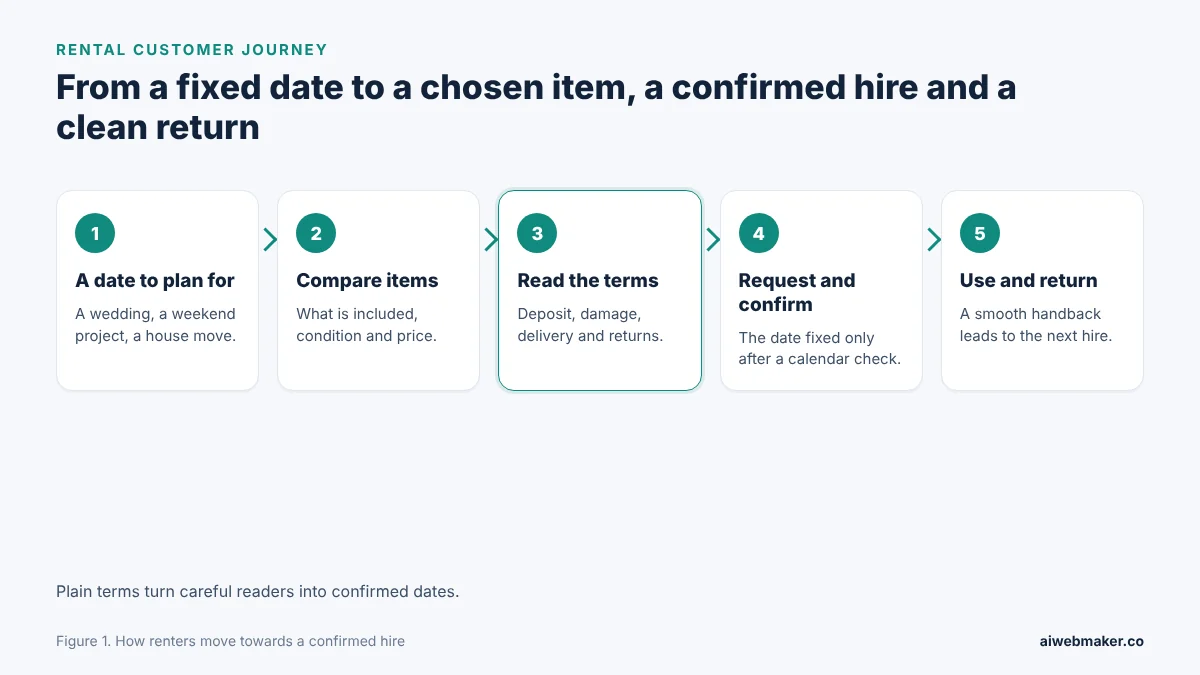
Every hire in this journey is anchored to a date, and the step that decides most hires is reading the terms. The customer starts with an occasion or a job, then compares items or packages for what they include and what they cost. Before requesting, careful renters read the deposit, damage and delivery rules, and unclear rules are where many of them stop. The request then goes to the business, which confirms the date only after checking that the item is not already out. Delivery or collection, use and return complete the hire, and a smooth return often leads to the next booking. Hire firms that write their terms plainly turn more of these careful readers into confirmed dates.
Which pages and hire settings does a rental site depend on?
A rental site depends on clear listings and clear rules, because customers are borrowing something valuable and want to know exactly what they are agreeing to. The table below sets out the core pages and what each must make plain. Listings and packages do most of the selling, while the terms page does most of the protecting. Delivery and setup details often decide between two similar quotes. A short page on how hire works, from request to return, removes the uncertainty that first time renters feel. Getting these pages right is cheaper than settling a single dispute.
| Page or setting | What it must make plain | Why renters look for it |
|---|---|---|
| Hire items | What each item is, its condition and price | To compare like with like |
| Packages | What is bundled for an occasion | To avoid choosing gear item by item |
| Hire periods | Half day, day, weekend or week | To match the plan to the price |
| How hire works | Steps from request to return | To know what happens and when |
| Terms | Deposit, damage, late return, cancellation | To understand the risks |
| Delivery and setup | Areas, charges, access, timing | To plan the day |
| Contact and yard | Address, hours, collection times | For customers who collect |
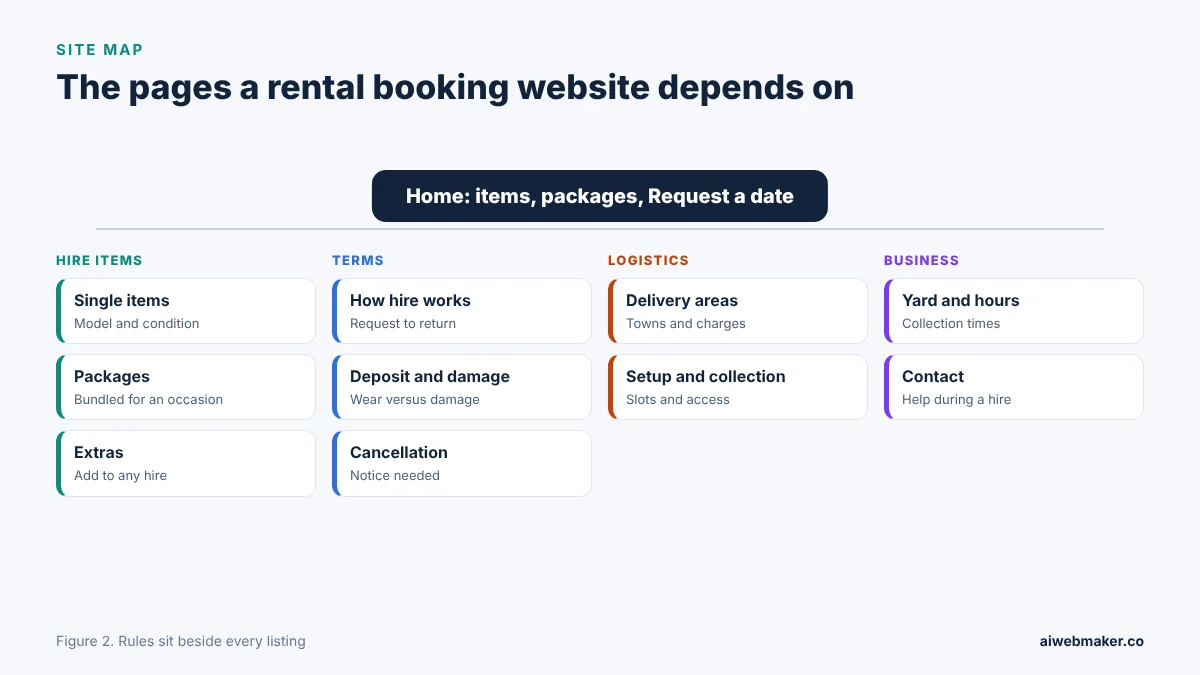
The hire listings anchor this site map, with the rules and logistics pages arranged so that renters can check them before requesting a date. The items branch holds single pieces of equipment, occasion packages and any extras. The terms branch covers how hire works, the deposit and damage rules and cancellation. The logistics branch handles delivery areas, setup and collection, while the business branch gives the address, hours and contact details. Snapjoy Photo Booths, one of the sample businesses, rents out three packages, one for weddings, one for parties and birthdays and one for corporate events, with a separate page on how hire works. The photo booth hire sample with three occasion packages lets visitors reserve a date just as a customer would.
How should hire items, packages and periods be listed?
Each listing should describe one thing a customer can hire, whether a single item, a bundle for an occasion or a fixed hire period, with a price that matches. A tool yard might list a mini digger, a floor sander and a tile cutter, while an event firm lists a dance floor package and a lighting package. Packages help customers who do not know which pieces they need, since they buy an outcome rather than a list of equipment. Hire periods, such as a weekend or a full week, can be listed as their own items when prices differ by length. Descriptions should state what is included, the condition of the item and any skill, licence or age the renter needs. Precise listings mean fewer surprises when the customer collects.
| Listing type | Example | What the description should state |
|---|---|---|
| Single item | Generator, camera body, carpet cleaner | Model, condition, fuel or power needs |
| Occasion package | Wedding booth, party lighting set | Everything included and setup time |
| Hire period | Weekend van, weekly scaffold tower | Start and return times, mileage or limits |
| Extra | Props, attendant, spare batteries | Price and which packages it suits |
| Trade item | Plant for contractors | Operator requirements and insurance |
How does a request keep one item from being promised twice?
A request system keeps an item from being promised twice because no date is fixed until the owner checks the calendar and confirms it. On AI Web Maker the customer sends a request, and the hire firm accepts it, suggests another date or item, or declines it. That control matters most for firms with one or two of each item, where a single clash means a ruined event. Payment is arranged by the hire firm directly, so it can take a deposit in its own way, and no fee from any hire goes to the platform. A short note about the trade is all the AI booking website builder that turns a fleet into requestable items needs to draft the listings and pages. Each confirmation should restate the date, the item and the collection or delivery time.
Turnaround time between hires is the hidden part of availability, and it should be counted before any date is confirmed. Equipment usually needs cleaning, charging, refuelling or inspection before it goes out again. Vehicles need a check of tyres, fluids and damage, and event gear may need hours to dismantle and reload. A business that ignores turnaround ends up promising a return on Sunday night and a new hire on Monday morning with no time between. Declined requests also show which items deserve a second unit, so the record of refusals is worth keeping. Counting turnaround honestly is what keeps every confirmed date one the business can meet.
What should hire terms say about deposits, damage and late returns?
Hire terms should say how much deposit is held, when it is returned, what counts as damage and what a late return costs, all before the customer requests a date. The deposit, where one is used, is arranged by the business directly, and the page should explain how and when it is refunded. Normal wear should be separated clearly from damage, ideally with examples. Photos of each item taken at handover protect both sides if a dispute arises. Contract, consumer and insurance rules for hire vary by country, and vehicle or plant hire may need licence and identity checks, so firms should take local advice on their wording. Written terms protect the equipment and the relationship together.
| Term | What to state | Why it matters |
|---|---|---|
| Deposit | Amount, how it is paid, when it is returned | The most common source of disputes |
| Damage | Wear versus damage, with examples | Prevents arguments at return |
| Late return | Charge per hour or day | Protects the next customer's hire |
| Cancellation | Notice needed and any charge | Lets the firm rehire the date |
| Renter duties | Safe use, storage, no subletting | Sets responsibility during hire |
| Identity and licences | Documents needed at collection | Required for vehicles and some plant |
How do delivery, setup and collection change a hire?
Delivery, setup and collection often cost the hire firm more time than the hire itself, so they deserve clear rules and fair charges. A delivery page should list the areas covered, the charge by distance or zone and the times the van can arrive. Access matters a great deal for bulky items, since stairs, narrow gates or a venue's loading rules can turn a simple drop into a long job. Event gear may need a setup slot before guests arrive and a collection slot after the venue closes. Customers beyond the usual area may still be welcome to collect from the yard. Clear logistics keep requests realistic and the day calm.
How should safety checks and instructions be presented?
Safety checks and user instructions belong on the site because renters often use unfamiliar equipment without anyone beside them. Each listing can mention the checks carried out between hires, such as electrical testing, brake checks or inspection of straps and fittings. Where rules require specific tests or certificates, which varies by country and by type of equipment, the firm should keep them current and say so. Simple instructions, links to manuals held by the firm and a phone number for problems during the hire help renters use items safely. Protective equipment, such as goggles or gloves, should be listed where it is supplied or required. Visible care for safety separates a professional hire firm from a casual one.
What do renters search for when they need something for a day?
Renters usually search with the item, the occasion and a place in mind. Typical phrases include photo booth hire for a wedding, van rental this weekend or floor sander hire near me. A page for each main item or package, headed in those everyday words, gives the search a clear match. Firms with a yard or showroom should keep their map listing accurate, with opening times, photos of real stock and the site address. Reviews that mention clean equipment, punctual delivery and fair deposit returns persuade cautious renters more than any slogan. Guides on choosing the right size of skip, generator or marquee for an event bring planners in long before their date. Practical, honest pages earn the steady requests that peak seasons depend on.
What does a hire site cost to keep online for twelve months?
A hire site carries two paid items across the year, hosting and a domain, and any optional articles cost only a few dollars more. Paying for the whole year in one go is the lower total. Monthly billing can still suit a new hire firm testing which items rent well. Adding items, changing packages and editing terms cost nothing extra. The $189 tier is included in the table only to compare the two plans.
| Item | Yearly | Monthly |
|---|---|---|
| Hosting the hire pages | $119 | $228 over twelve months |
| Domain | Depends on the ending | Depends on the ending |
| Higher plan, for comparison | $189 a year | Not needed |
| Twelve hire guide articles at about $0.65 | About $7.80 | About $7.80 |
| Item, package and term changes | No charge | No charge |
| Year before the domain | About $126.80 | About $235.80 |
What makes renters close a hire site and ring another firm?
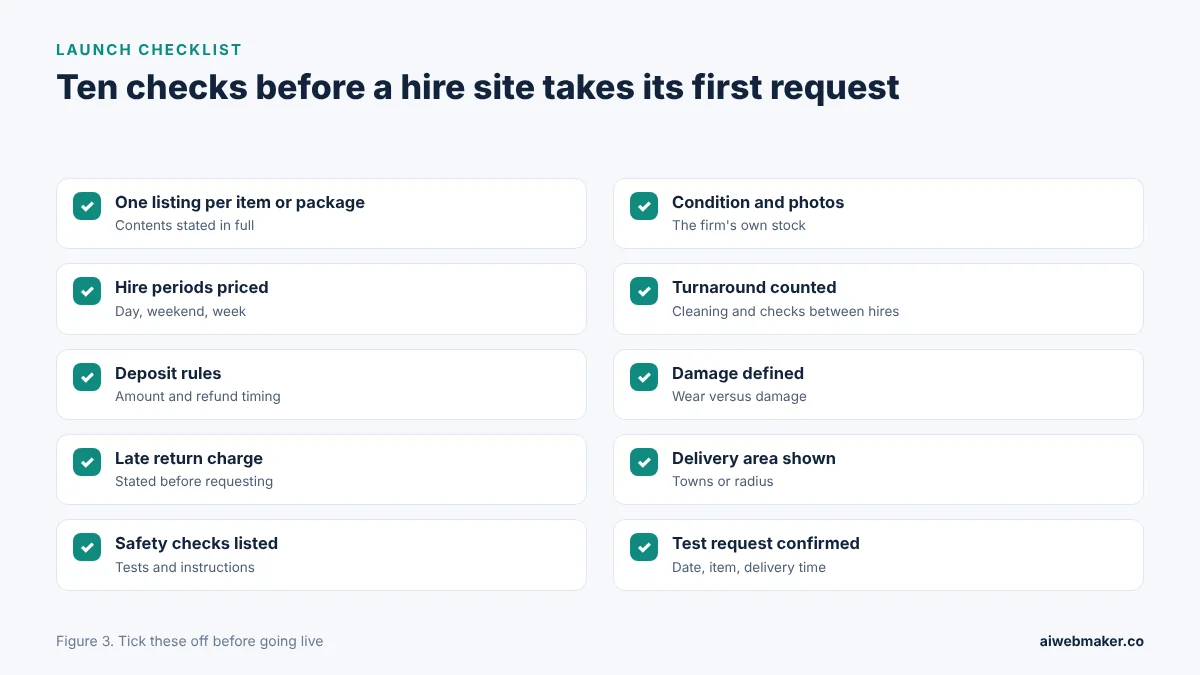
Renters close a hire site when listings show no condition, no price or no clear statement of what is included. Missing deposit and damage rules make careful customers fear an argument at return. A delivery area that is never stated leaves people unsure whether the firm can reach them at all. Stock photos instead of the firm's own equipment suggest the gear may look very different on the day. A request route that is hard to find loses event planners working against a deadline. The figure below sets out ten points that keep renters on the page.
Frequently asked questions
Can a hire run over several days or a week?
Longer hires work well as listings of their own, such as a weekend rate or a weekly rate, or they can be agreed when the business confirms the request. Many hire firms charge a first day and a reduced rate for each extra day. The description should explain how longer hires are priced and when the item must come back. Customers with unusual lengths can mention them when sending the request. Clear options make longer, more profitable hires easier to sell.
How far ahead do renters reserve for peak dates?
Renters planning weddings, festivals and corporate events often reserve months ahead, while trade customers may only plan a day or two out. Peak seasons, such as summer weekends or the end of the year, fill first for event gear. A note on the home page about popular dates encourages early requests. Hire firms can also decide how far ahead they are willing to confirm, so stock is not tied up too early. Knowing the rhythm of the year helps a firm plan new stock.
What happens if an item breaks before a confirmed hire?
If an item breaks before a confirmed hire, the business should tell the customer at once and offer a replacement, a similar item or a full refund of anything paid. The terms page can explain this promise in advance, which reassures renters. Firms with spare units or partner firms can often save the date. Honest, early notice keeps a customer who might otherwise post an angry review. Planning for breakdowns is part of running a reliable hire business.
Should renters see the delivery area before requesting?
Renters should see the delivery area before requesting, since bulky items cannot travel far without extra cost and time. A list of towns or a radius from the yard answers the question quickly. Delivery charges by distance or zone prevent unpleasant surprises at confirmation. Customers beyond the area can be told whether collection is possible. Stating coverage plainly saves both sides a wasted request.
Does one weekend hire pay for the year of hosting?
One weekend hire is normally worth more than the $119 that a full year of hosting costs. On monthly billing, a part of one day's hire often covers the $19. Repeat customers, such as event planners or contractors, multiply that return without extra cost to the site. The larger value lies in clashes avoided, disputes prevented and requests that arrive at night while the yard is shut. Hire firms that keep listings, terms and delivery details accurate earn trust before the first handover. A calendar of confirmed dates with no double promises shows the money working.
Build your website in Minutes and get the AI Tools that work
Start Building Your Website →