Beyond Pretty Photos: Planning a Makeup Artist Portfolio Website
The guide sets out what a makeup artist portfolio needs so that admiration becomes a requested date for a wedding, shoot or event. Twelve months online cost $119, monthly billing is $19, a domain is added, and refining the draft in the preview brings no bill.
- No coding required
- Live in minutes
- Blog, SEO and chatbot tools included
A makeup artist portfolio website shows an artist's work on real faces and gives every visitor a simple way to request a date. Brides, photographers and event guests all use it to judge the finish before they ask. It suits bridal specialists, editorial and fashion artists and those who handle stage or special effects work. Keeping it public costs $119 per year, or a $19 monthly charge, with the chosen domain ending priced on its own. Our makeup artist business website example shows a whole site of this kind, following an invented artist who specialises in wedding mornings from finished looks to the request for a date, all built in AI Web Maker. Shaping the galleries and pages in the preview involves no payment, so the artist can publish only when every look sits right. The hard part for makeup is credibility, because filters and heavy retouching have taught clients to distrust flawless images. Ahead are curation, honest photography, consent, services and trials, wedding mornings and travel, hygiene, search and the yearly cost.
This article is part of our complete guide: Website Builder Comparison.
Brides, photographers and event guests: who hires from a portfolio?
Each group that hires a makeup artist reads the portfolio with its own worry in mind. Brides want to know that the look will survive tears, heat and a long day while still looking like themselves in photographs taken years later. Bridesmaids and mothers of the couple care about speed, comfort and whether the artist works with mature or sensitive skin. Photographers and brands look for range, creativity and reliability on a set, and they judge an artist by the teams they have worked with. Someone dressing for a formal dinner or a big birthday wants a polished evening finish rather than a whole bridal package. A portfolio that recognises these readers shows each of them evidence that answers their particular worry.
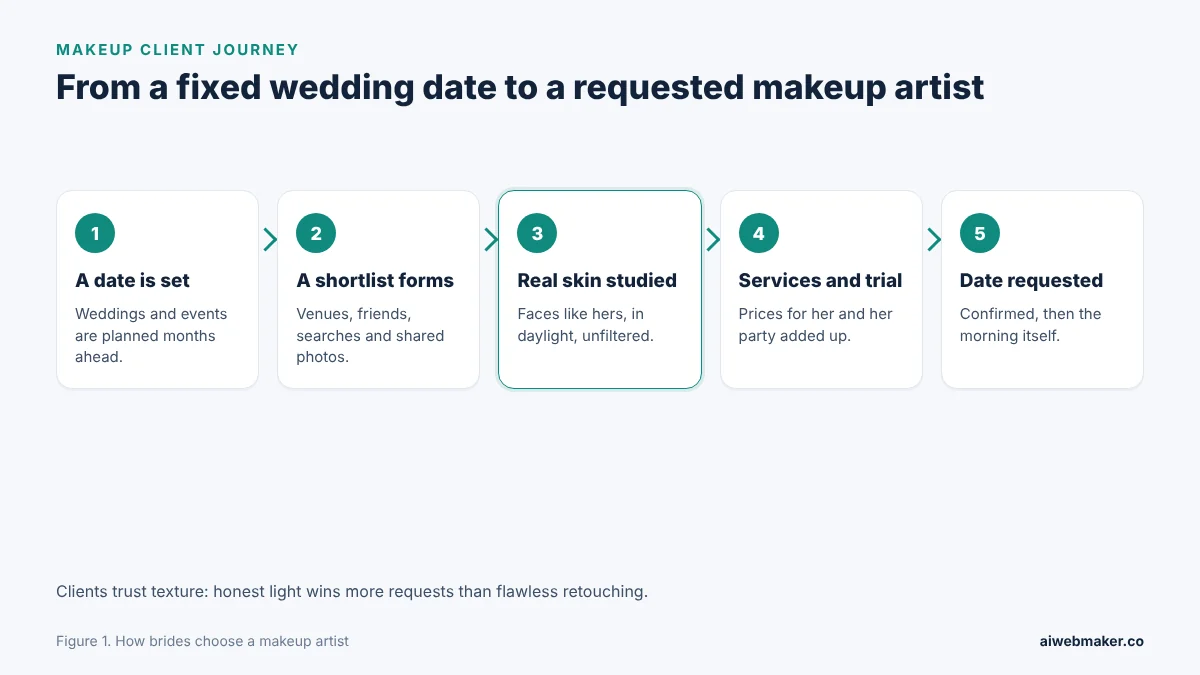
The journey opens with a date already fixed, which is why makeup artists are often chosen many months ahead. A shortlist forms from recommendations, venue suggestions, searches and photographs shared by friends. The highlighted step is the study of real skin, where a bride looks for faces like hers, in daylight and without filters, before trusting anyone. Services, prices and the trial come next, because she needs to add up the cost for herself and her party. The date request follows, and the wedding morning itself determines whether praise and recommendations come afterwards. Every page should move a visitor smoothly from the first glance to that request.
Galleries, services and the date request: pages to build
| Page | What a client checks | What it should hold |
|---|---|---|
| Home | The artist's style in a glance | A signature look, the occasions covered, Request a date |
| Portfolio by occasion | Looks like the one they want | Bridal, editorial, events, photoshoots |
| Services and prices | What each service includes | Duration, price, what is included |
| Bridal trial | How the look is tested | Timing, length, what to bring |
| Travel and timings | Whether the artist reaches the venue | Areas, travel fees, start times |
| About and hygiene | Who will touch their face | Training, kit hygiene, product notes |
| Request a date | A simple first step | Date, location, number of faces |
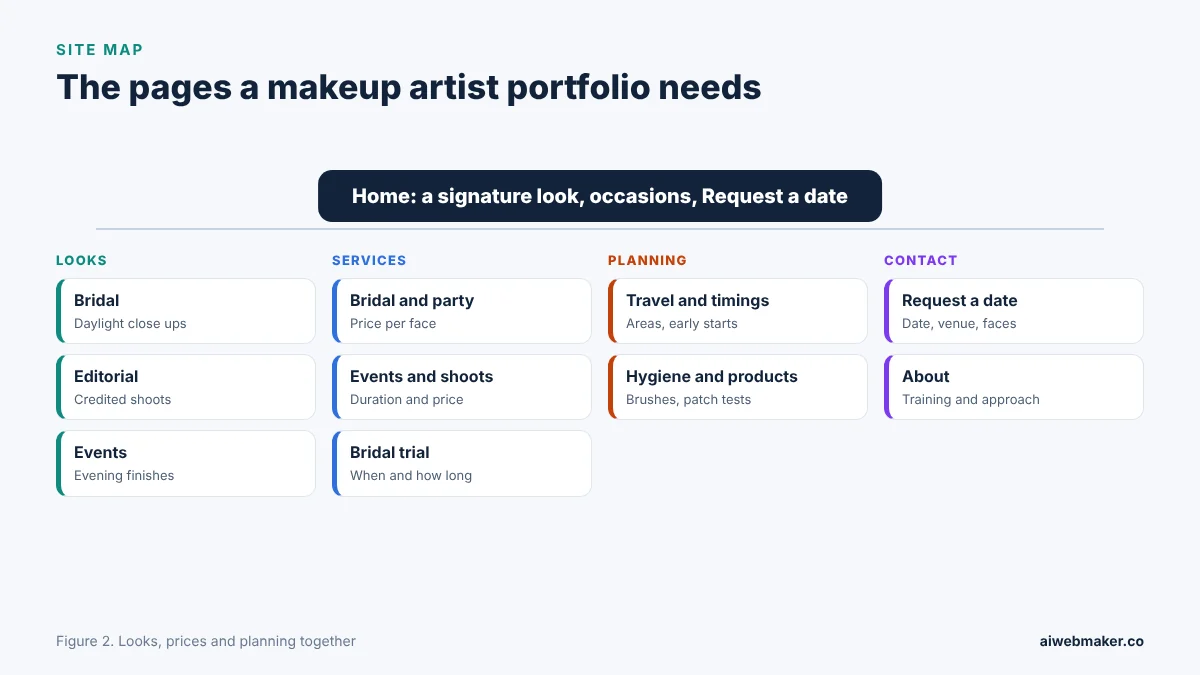
Looks, services, planning and contact make up the four groups in this plan, each reachable in one tap from the home page. Looks pages hold the portfolio sorted by occasion, while service pages explain what each booking includes and what it costs. Planning pages cover the trial, travel, timings and hygiene, which are the questions brides ask most often by message. Rosewood Makeup Artistry, the artist among our samples, offers four bookable services covering brides, bridal parties, events and occasions, and photoshoots. The makeup artist sample offering four bookable services beside its portfolio shows how a client can request a date on the same site where the looks are admired. An editorial artist could rename the groups around campaigns and shoots while keeping the same outline.
Curating looks by occasion and showing every kind of skin
A makeup portfolio works best when it is sorted by occasion, so each client sees work that matches the day they are planning. Bridal looks should lead for artists who want weddings, while editorial work can lead for artists chasing campaigns and shoots. Within each group, a range of skin tones, ages, textures and eye shapes tells clients the artist can work with faces like theirs. Each look should show a close portrait and a full frame, ideally with a line naming the look, such as soft glam or natural bridal. The portfolio website builder that drafts portfolio and contact pages prepares the outline once an artist describes their work in a few lines, after which the artist's own photographs take over. A curated, diverse portfolio widens the circle of clients who can imagine themselves in the chair.
| Occasion | What the client checks | Images to include |
|---|---|---|
| Bridal | Longevity and a natural likeness | Close portraits, daylight, end of day shots |
| Bridal party | Consistency across several faces | Group shots, varied ages and skin tones |
| Editorial and fashion | Range and creativity | Published work and test shoots, credited |
| Events and occasions | A polished, camera ready finish | Evening looks under mixed light |
| Photoshoots and headshots | Skin that reads well on camera | Before and after under studio light |
| Stage and special effects | Technique and durability | Process shots and finished characters |
Honest photography, retouching and the credits a shoot deserves
Clients trust makeup photos that show texture, so the camera should flatter the work rather than erase the skin. Daylight from a window, a neutral white balance and no beauty filters give the truest picture of the finish. Light retouching for stray hairs is common, but smoothing away pores misrepresents the result, and some advertising rules on retouched images vary by country. Close ups of base, eyes and brows show technique, while a photo taken late in the evening proves the look lasted. Professional photographers usually hold the copyright in their images, so permission and a credit line should be agreed, along with credits for models, hair stylists and designers. Written consent from every client whose face appears, and from a parent or guardian for anyone under age, should come before publication.
Services, prices and trials that a bride can add up herself
Services should be listed so that a bride can calculate the total for herself and her party without sending a message. Each service needs a name, what it includes, how long it takes and its price, with extras such as lashes or a touch up kit priced separately. A bridal trial deserves its own listing, since it is usually booked months ahead and sometimes deducted from the wedding price where the artist chooses. When a client requests a date, the artist confirms it, offers another time or declines, and any retainer to hold the day is arranged directly with the client. The terms for cancellations and date changes belong beside the prices rather than hidden in a reply. Clear, complete listings turn a gallery visit into a request that needs little back and forth.
| Service | What it includes | What to state |
|---|---|---|
| Bridal makeup | Skin preparation, full look, lashes | Duration, price, what the touch up kit contains |
| Bridal party | Makeup for each attendant | Price per face, how many faces per hour |
| Bridal trial | A rehearsal of the wedding look | When to book, length, whether it is credited |
| Events and occasions | A polished look for one evening | Duration, price, location options |
| Photoshoots | Camera ready makeup and touch ups on set | Hours on set, price, travel terms |
Wedding mornings, travel and the size of the party
A wedding morning runs to a timetable, so the site should help couples plan around the artist rather than discover limits on the day. The number of faces the artist can prepare before the ceremony determines whether an assistant is needed, and that should be stated plainly. Start times for early ceremonies, travel areas and any travel or early start fee belong on one planning page. Practical requests, such as a table near a window, a power socket and a chair at the right height, help the venue prepare. Destination weddings can be handled through an enquiry, with travel and accommodation agreed in writing. Clear planning information prevents stressful surprises and makes the artist easier to recommend.
| Detail | Why it matters | Example wording |
|---|---|---|
| Faces before the ceremony | Decides whether an assistant joins | Up to a set number alone, more with an assistant |
| Start time | Early ceremonies need early starts | An early start fee applies before a set hour |
| Travel area | Couples need to know the venue is covered | Areas included, others quoted |
| Venue needs | Good light and space speed the work | A table near a window and a socket |
| Destination weddings | Travel and stays need agreeing | Quoted on enquiry |
Hygiene, patch tests and product questions
Makeup touches eyes, lips and skin, so hygiene deserves a calm, specific explanation rather than a vague promise. The page can describe how brushes are cleaned between clients, how products are scooped onto a clean palette instead of touched straight from the jar, and where disposable wands handle mascara and lips. Clients with known allergies or sensitive skin should mention them when requesting a date, and a patch test before the trial can be offered for lash adhesive or new products. Active infections, open cuts or flaring skin conditions are reasons to postpone and seek advice from a doctor or pharmacist, not something an artist should treat. Some clients care about fragrance, vegan or long wear formulas, so a short note on the kit helps them choose. Rules on cosmetics hygiene and any licensing differ between countries, so the artist should check what applies locally.
Phrases brides type, listings and helpful articles
Searches usually pair a service with a place, such as bridal makeup in a named town, wedding makeup near me or mature skin makeup. Headings on galleries and services that repeat that wording meet those searchers halfway. An artist working from a studio address can keep a map listing showing hours, finished looks and the site address. Past brides writing about how the makeup lasted through tears and dancing, punctuality and a calm manner persuade nervous brides. Articles on skin preparation in the weeks before a wedding, or on planning a wedding morning timetable, reach brides early in their planning. A helpful site keeps an artist in mind long before the date is booked.
The portfolio's annual bill for a working makeup artist
What the portfolio itself costs each year is hosting plus a domain, and a busy season leaves that unchanged. A single yearly payment is $119, whereas the month by month route adds up to $228. Twelve articles drafted with AI credits, such as skin preparation guides, total under eight dollars. New looks, revised prices and updated travel notes are published without any charge. Both payment routes are tabulated here, and the $189 tier sits among them purely as a benchmark.
| Item | Yearly | Monthly |
|---|---|---|
| Hosting the portfolio pages | $119 | $228 over twelve months |
| Domain | Depends on the ending | Depends on the ending |
| Higher plan, for comparison | $189 a year | Not needed |
| Twelve skin and planning articles at about $0.65 | About $7.80 | About $7.80 |
| New looks, prices and travel notes | No charge | No charge |
| Year before the domain | About $126.80 | About $235.80 |
What leaves a bride unsure enough to look elsewhere?
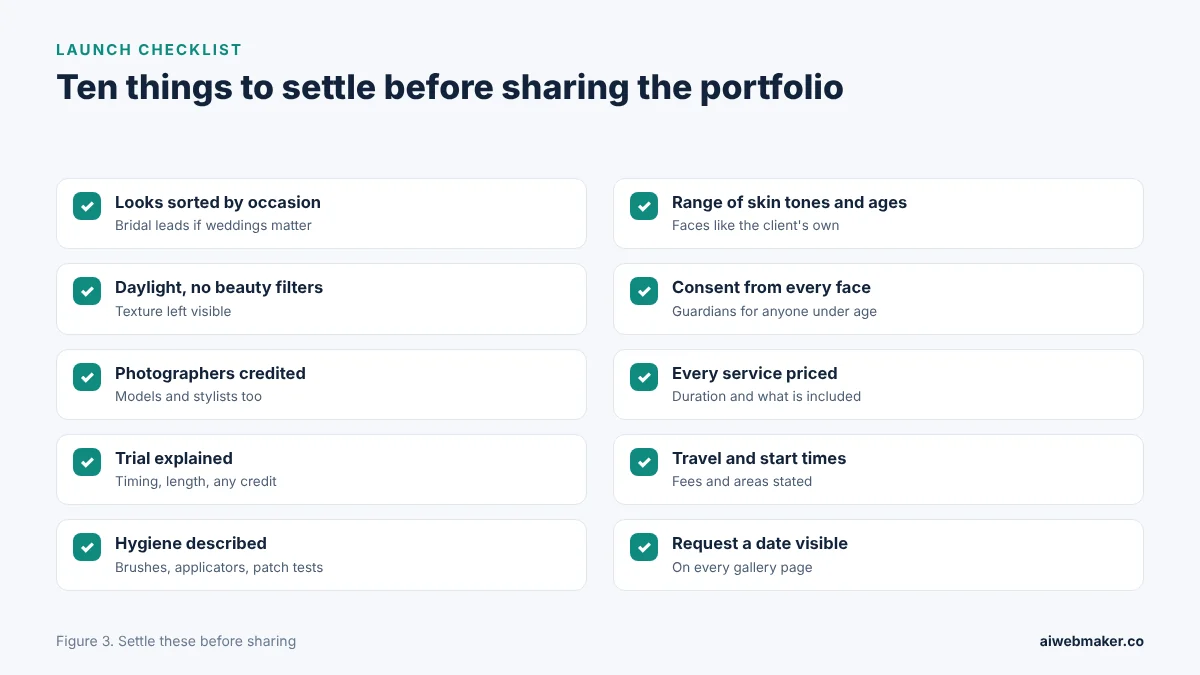
Brides look elsewhere when every photo is filtered so heavily that they cannot tell how the makeup really looks. A gallery with only one skin tone or age group suggests the artist has not worked with faces like theirs. Missing prices force a message that many busy brides never send. No word on travel or how many faces can be done before the ceremony leaves the timing in doubt. A date request buried under long scrolling stalls the very step the portfolio exists for. Here are ten things to settle before the site is shared with anyone.
Frequently asked questions
How far ahead of the wedding should the trial happen?
Many artists suggest a trial somewhere between one and three months before the wedding, once the dress and hair ideas are settled. A trial too close to the date leaves little room to adjust, while one too early can come before key decisions are made. Bringing photos of the dress, the jewellery and looks the bride admires makes the session far more useful. Some brides pair the trial with a dress fitting or an engagement shoot to see the look in context. The artist's own recommended window should appear on the trial listing. A well timed trial gives both artist and bride confidence for the day.
Can a portfolio include looks done on friends or models?
Looks created on friends, models or in test shoots are a normal way to build a portfolio, especially early in a career. They show technique and range when paying clients are still few. Each image should still be honest about the conditions, with studio shoots labelled as editorial rather than presented as bridal work. Written consent from every person photographed remains essential. As real client work accumulates, it should take the lead in each group. A portfolio that grows from tests to real weddings tells a credible story.
Should the product brands appear on the site?
Naming the main brands can help clients with sensitivities, preferences for vegan or fragrance kits, or a wish for long wear formulas. A short note on the kit is usually enough, without a full inventory that dates quickly. Artists should avoid implying endorsements they do not hold. Clients with allergies still need to mention them directly, since ingredients vary between products. Updating the note when the kit changes keeps it accurate. Openness about products builds trust with careful clients.
What happens if the artist falls ill on the wedding day?
Experienced artists plan for illness by keeping a network of trusted colleagues who can step in at short notice. The terms page can explain this arrangement in a sentence, so brides know a backup exists. Any refund or transfer of the retainer in that case should be written into the agreement. Sharing the trial notes and photos with the replacement artist helps them recreate the agreed look. Clear contingency plans reassure brides who worry about everything going wrong. Preparedness is part of the professionalism they are paying for.
Counting the weddings that settle a year online
Usually one bridal booking more than covers the $119 that hosts a makeup portfolio for twelve months. Artists choosing monthly billing find that $19 is covered by a single event booking. Each bridal party and photoshoot booked after that adds to a site already paid for. Honest photos of real skin, complete prices and clear planning pages are what persuade a bride to trust an artist with her wedding morning. Every season of new looks makes the next season easier to fill. Date requests that arrive months ahead, with the party size already counted, show the portfolio is doing its planning work.
Build your website in Minutes and get the AI Tools that work
Start Building Your Website →