Bay Hours and Sunny Saturdays: How a Car Wash Booking Website Works
This guide answers how a car wash booking website turns washes, valets, detailing and fleet visits into requests the team can fit around bays, staff, drying space and the weather. Bays aside, the site costs $119 for twelve hosted months, or $19 in monthly instalments, plus its own domain, while building and previewing stay unbilled.
- No coding required
- Live in minutes
- Blog, SEO and chatbot tools included
A car wash booking website lets drivers request a wash, a valet, detailing or a fleet visit at a set time, and the team fits each into its bays. Hand car washes, valeting centres, mobile cleaners who work on driveways and car parks, detailing studios and fleet cleaning services all use this pattern. Wash slots, vans and fleet work all appear together in the car wash website example, where a car wash of our own invention gets a full set of AI Web Maker pages. Hosting on AI Web Maker is a yearly $119, or $19 for each month paid singly, plus a domain picked from around 400 endings, and the whole draft can be built and previewed before any payment. Its real difficulty is selling bay time, since a full valet can hold a bay for hours while a quick exterior wash takes minutes. Demand also follows the weather, so a sunny Saturday after a week of rain can overwhelm a site that a wet Tuesday leaves idle. This article covers who requests, the pages needed, service lengths, bay planning, request handling, policies, first visits, regulars and fleets, seasons, search and the yearly cost.
This article is part of our complete guide: Website Builder Comparison.
Commuters, sellers and van owners: who reserves a wash in advance
Drivers who reserve a time are usually after the longer services, because nobody wants to queue for two hours while the car is valeted. Commuters book an early drop off so the car is ready after work. Parents pick a slot while children are at school. People selling a car, returning a lease vehicle or preparing for a wedding want a thorough clean by a fixed date. Owners of new or dark cars often request detailing ahead, so they can ask about products and methods before they arrive.
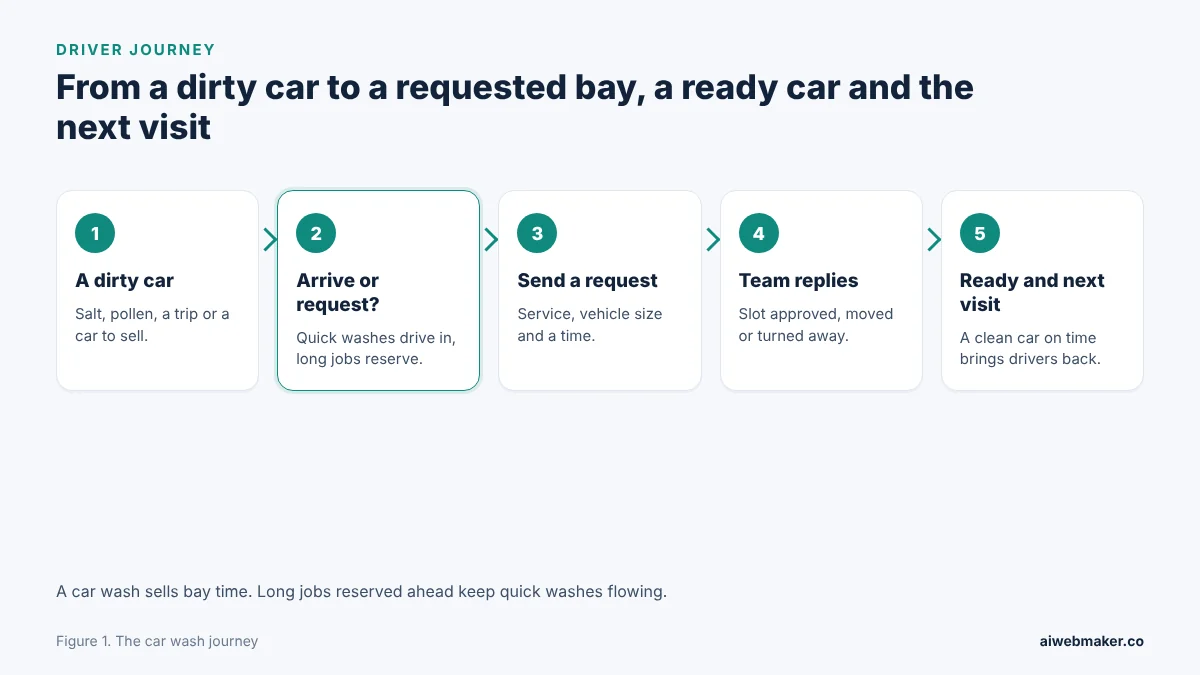
The pivotal step in this journey is choosing between a wash on arrival and a requested bay, which is why it is highlighted. Quick exterior washes rarely need a request, so those drivers simply check the hours and drive over. Longer services move on to a request, with the vehicle size shown by the service chosen, and the team replies with a time that fits the bays. The car is then cleaned while the driver waits or gets on with the day elsewhere. The final step is the next visit, which a good result and an easy request make far more likely.
Wash list, bay rules and request settings to set up
A car wash's booking pages are few, yet each one prevents an argument at the bay or a wasted trip. The wash list names each service, its price by vehicle size and roughly how long the car stays. A page on how drop offs work explains keys, waiting, collection times and what to remove from the car. Policies cover lateness, heavy soiling, weather and missed slots, while a fleet page invites businesses to arrange regular visits. That leaves the request itself asking only for the service, the time and the driver's contact details.
| Page or setting | What it holds | What it prevents |
|---|---|---|
| Wash list | Each service, price by size, time in the bay | Disputes over what was included |
| Vehicle sizes | Small car, estate, large SUV, van | Surprise charges at the bay |
| Before you arrive | Remove valuables, child seats, roof boxes | Delays and damaged items |
| Wash policies | Lateness, heavy soiling, weather, missed slots | Arguments over a lost bay |
| Fleet page | Regular visits, groups of vehicles, invoicing | Fleet calls with no starting point |
| Request page | Service, vehicle, time, contact details | Phone tag on a busy forecourt |
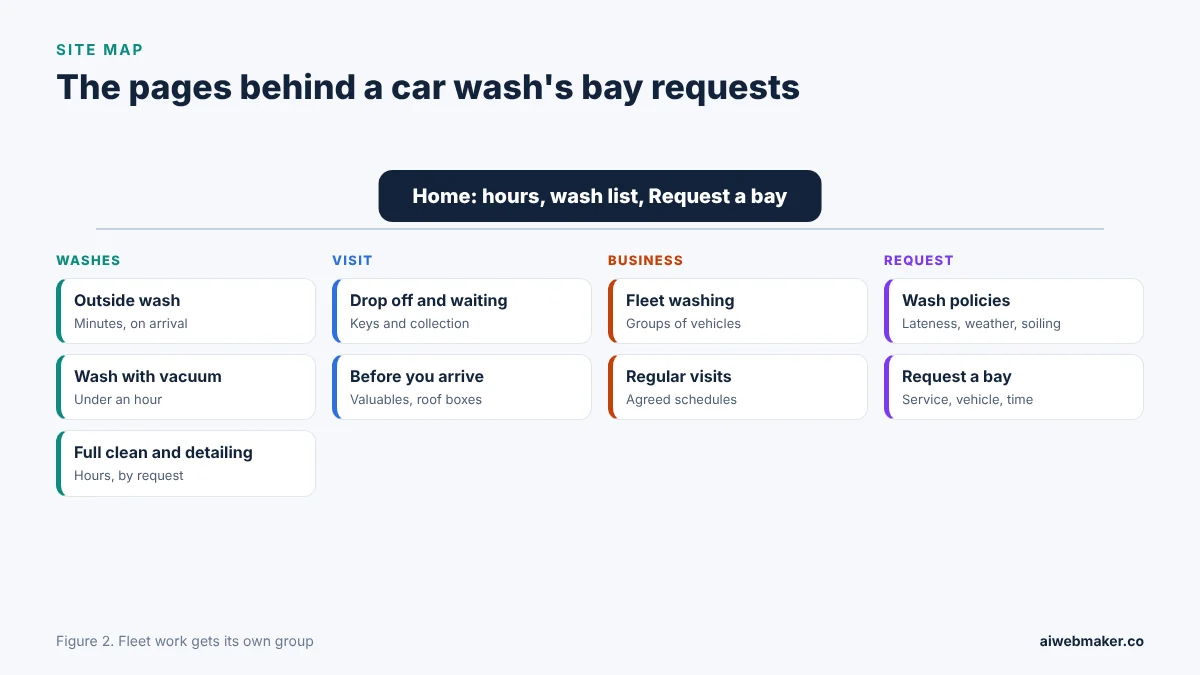
Four groups branch from the home page in this structure, and fleet work stands as its own group rather than a footnote under the washes. The washes group runs from the quickest service to the most thorough, each with its time in the bay. Visit pages cover drop offs, waiting and preparing the car, and the business group handles fleets and repeat accounts. Splashpoint Car Wash is one of our invented sample businesses, and it offers five services, from an outside wash and a wash with vacuum to a full clean, detailing and fleet washing. Its car wash sample with five services drivers can reserve shows a driver choosing a wash and then a time, which is the flow every request should follow.
Time in the bay for each service, and why size changes it
Each service on the list should state how long the car stays, because drivers plan their day around that number and the team plans the bays. A quick exterior wash moves fast, a wash with vacuum takes longer, and a full interior and exterior clean can hold a bay for much of a morning. Vehicle size changes every one of these times, since a seven seat SUV or a high roof van has far more surface and interior than a small hatchback. Pet hair, sand and child seat crumbs add time as well, so the team may ask about the interior before confirming. Stating the time and the size rules up front prevents most disputes before they start.
| Service | Time the car stays, roughly | Arrive or request | What changes the time |
|---|---|---|---|
| Outside wash | Minutes | Arrive | Queue length, vehicle size |
| Wash with vacuum | Under an hour | Either | Interior condition, pet hair |
| Full clean | A few hours | Request | Size, stains, seat shampoo |
| Detailing | Most of a day or more | Request | Paint condition, coatings, curing |
| Fleet washing | By arrangement | Request | Number of vehicles, livery, location |
Planning bays, staff and drying space through the day
A car wash's real capacity is bay hours, staff and drying space together, so accepting requests means fitting long jobs around the steady flow of quick washes. Many sites keep one bay for drive in washes and give the others to requested valets and detailing. Staff numbers matter as much as bays, because a full clean needs two people for part of the job and a polish needs a skilled detailer. Drying and finishing space is the hidden constraint, since a washed car waiting to be dried blocks the next one. Since every request waits for the team to accept it, bays can be filled sensibly without crowding the forecourt.
| Part of the day | What fits best | Why |
|---|---|---|
| Opening hour | Full cleans and detailing drop offs | Finished before collection time |
| Mid morning | Fleet vans, wash with vacuum | Commuter queue has cleared |
| Afternoon | Shorter requested jobs | Ready before closing |
| Last hour | Outside washes only | No long job left half done |
Answering requests while the forecourt is busy
Requests arrive in bursts, often the evening before a sunny weekend, so the team needs a habit of reading them at set times rather than between cars. Each reply should confirm the time, or offer the nearest slot that genuinely fits the bays, and repeat the drop off and collection details. A request for a full clean on a crowded Saturday can be steered to a weekday morning, often with a quicker turnaround. A van listed as a small car, or a note about heavy mud or pet hair, deserves a quick check of the price before confirming. Mobile cleaners should also confirm the address, parking and whether water and power are available.
| What the request shows | A sensible reply |
|---|---|
| A long job at an open early slot | Confirm with drop off and collection times |
| A full clean on a packed Saturday | Offer a weekday slot with quicker turnaround |
| A van booked as a small car | Confirm the right size and price first |
| A driver who mentions mud or pet hair | Agree any extra charge before the day |
| A mobile visit to a flat or car park | Check parking, water and power access |
The booking website builder that lets the wash approve each bay request is built for this kind of planning. Drivers choose a wash and a preferred time and submit it, and the team approves the slot, moves it to a quieter hour or turns it away. Payment happens between driver and business, at the till or by the operator's usual method, and the platform claims nothing from the takings. Once an operator lists what it sells, AI Web Maker drafts the wash list, the fleet page and the request route in a single run. Because no bay is committed until the team answers, a full Saturday never turns into an overbooked one.
Lateness, rain and heavy soiling rules drivers see in advance
Drivers should meet the wash rules before they request and again in the reply, since a late or missing car leaves an earning bay idle. A grace period for late arrivals, followed by a shorter service or a new time, keeps the day on track. Weather needs its own rule, since some drivers cancel when rain is forecast, and the site can say whether rain affects exterior work or only the driver's mood. Heavy soiling, such as caked mud, sand, mould or pet hair, can carry a stated extra charge agreed before the work. Consumer rules on charges and liability differ between countries, so operators should check the local position before publishing terms.
A first drop off with keys, valuables and collection times
A first visit goes smoothly when the driver knows where to park, who takes the keys and when the car will be ready. The page should ask drivers to remove valuables, loose items and child seats where possible, since an empty interior cleans faster and better. Roof boxes, aftermarket parts and loose trim are worth mentioning before arrival, so the team can plan around them. A quick walk round the car at drop off, noting existing scratches, sets a calm tone for the visit. Drivers who know exactly what will happen arrive relaxed and return without hesitation.
Regulars, fleet visits and the seasons that move demand
Regular drivers keep the bays earning on quiet days, which makes their return visit the one worth smoothing most. Many drivers settle into a wash every few weeks, more often in winter, and a fixed weekday slot suits them well. Fleet clients such as car dealers, taxi firms and delivery companies want predictable visits for several vehicles, arranged through the fleet page and confirmed with the operator directly. Seasons then reshape demand, with road salt in winter, pollen and tree sap in spring, holiday trips in summer and a rush before car sales and events. Rainy weeks empty the forecourt while the first dry weekend fills it, so opening extra early slots after rain is worth planning. Patterns differ by climate and hemisphere, so each site should learn its own from last year's requests.
How drivers search before reserving a bay
Drivers type phrases such as hand car wash near me, full valet today, interior car cleaning, mobile car valet or van washing, often with their area. Service names that use those exact words give each search a direct match on the wash list. A map listing with accurate hours, the entrance location and photos of real finished cars helps drivers commit before they set off. Reviews that mention careful work, honest timings and fair prices persuade cautious owners of new cars. Short articles, such as preparing a car for sale or removing winter salt, reach drivers before they need a clean.
The car wash hosting figures for one year
Hosting the wash list, the fleet page and the request page costs $119 for the year, or $228 if the operator splits it into twelve months at $19. On top comes the domain, whose price follows the ending the operator selects. Twelve car care articles cost roughly $7.80 in AI credits. Changing prices, services and opening hours through the seasons adds nothing. For comparison only, the table also includes the $189 tier.
| Item | Yearly | Monthly |
|---|---|---|
| Hosting the pages | $119 | $228 over twelve months |
| Domain | Depends on the ending | Depends on the ending |
| Higher plan, for comparison | $189 a year | Not needed |
| Twelve car care articles at about $0.65 | About $7.80 | About $7.80 |
| Price, service and hours updates | No charge | No charge |
| Year before the domain | About $126.80 | About $235.80 |
Missing times and size rules that send drivers to the next forecourt
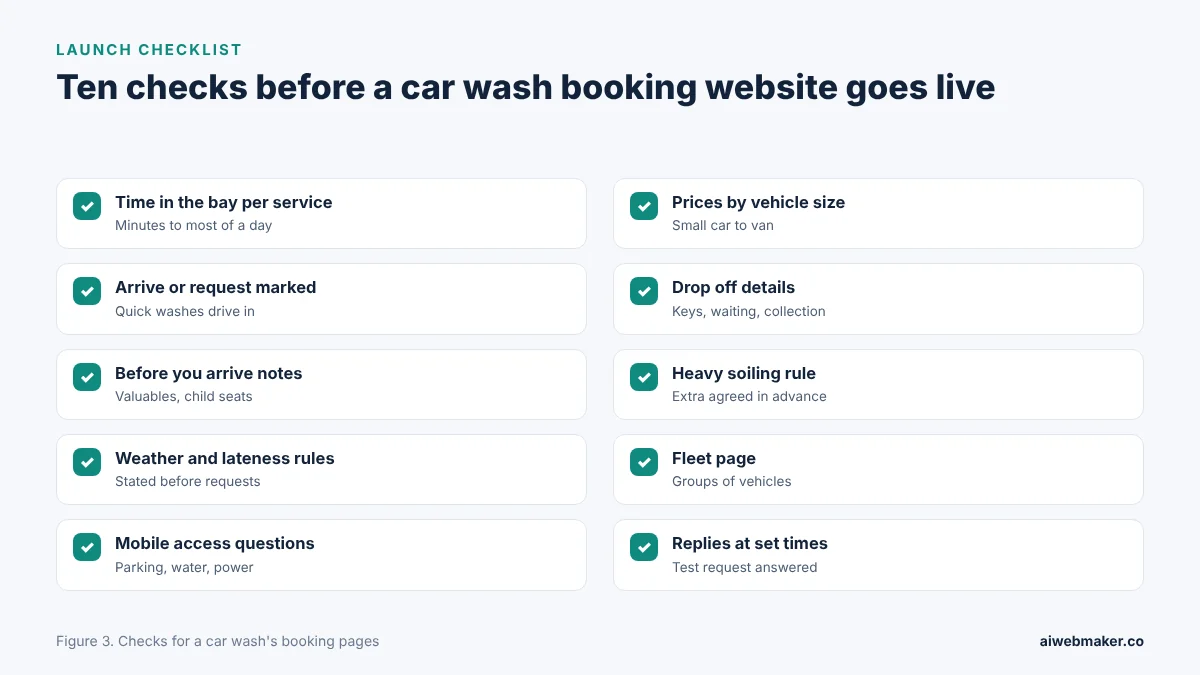
Drivers abandon a car wash page when it gives no idea how long the car will be kept, because they cannot plan the day around it. Prices without size rules make owners of vans and large SUVs expect a surprise at the bay. No drop off or collection details leave people unsure whether to wait or leave. Silence on weather and late arrivals turns an ordinary rainy morning into a dispute. These gaps line up with ten launch checks in the illustration here.
Frequently asked questions
Should quick washes need a request at all?
Quick exterior washes usually work best on arrival, since they take minutes and drivers expect to pull in and go. The website can say so plainly and list the hours, saving requests for longer services. Some sites still accept requests for quick washes at peak times, which helps drivers on a tight schedule. Keeping one bay for drive in work protects that flow whatever the request page holds. A clear split between arrival and request services keeps the forecourt moving.
How does a mobile car cleaner handle requests from flats?
A mobile cleaner should ask for the address, parking arrangements and whether water and power are available before confirming. Apartment car parks often have rules on washing, so the driver may need permission from the building manager. Waterless or low water methods can help where hoses are not allowed, and the service page can explain them. Rules on washing in public places and on drainage vary between councils and countries, so the cleaner should check locally. Clear questions upfront prevent a wasted trip.
Can a driver wait while the car is cleaned?
Drivers can usually wait for shorter services, and the website should say where the waiting area is and how long each service takes. For full cleans and detailing, dropping the car off and collecting it later suits most people better. Nearby cafés, shops or transport links are worth mentioning for drivers who leave. A collection time stated in the reply avoids cars sitting finished at closing. Clear expectations make both waiting and drop offs easy.
How should a car wash handle a group of fleet vehicles?
Fleet vehicles are best arranged through a fleet page that invites the business to describe its vehicles, numbers and preferred visit pattern. The operator can then agree a schedule, such as several vans every week at a quiet time, and confirm each visit. Washing at the client's depot may suit mobile teams, while fixed sites can set aside a bay at an agreed hour. Pricing and invoicing for fleets are agreed directly with the business. A steady fleet arrangement fills the quiet midweek hours reliably.
The handful of valets that settle the year's hosting
Two or three full cleans normally out earn the $119 that keeps a car wash's booking pages up for a year. Paying by the month, the operator recovers the $19 from a single wash with vacuum. Most of the return sits with regulars and fleets, because one monthly driver or one company with several vans soon outweighs the hosting bill many times over. Clear bay times, honest size rules and prompt replies are what make the first request feel safe. A Saturday where every bay runs to plan shows the booking pages are earning their place.
Build your website in Minutes and get the AI Tools that work
Start Building Your Website →