Handmade Soap Online: Website Cost, Ingredient Lists, Honest Claims
Twelve months of hosting for a soap shop come to $119, or $19 at the start of each month, plus a domain. Inside: buyers, pages, methods and curing, ingredient labels, cosmetic rules, claims, favours, packing, search and the yearly budget.
- No coding required
- Live in minutes
- Blog, SEO and chatbot tools included
Twelve months of hosting for a soap shop come to $119, or the maker can pay $19 at the start of each month, and the web address is registered as an extra. AI Web Maker raises no charge while bars, ingredient lists and prices are drafted and previewed. While drafting, hold your pages against the soap company website sample, an imagined maker's shop generated by AI Web Maker that presents its bars alongside skin types and gift sets. A modest pile of bars sold in a single month covers that annual cost. The harder work is explaining ingredients honestly and staying inside cosmetic rules, which in many countries treat a bar differently depending on what its label claims. Soap is also reordered whenever a bar runs out, so one loyal customer is worth many single sales. Ahead are buyers, pages, making methods and curing, ingredient lists, the line between cosmetic and medicine, product pages, favours, packing, search and the yearly bill.
This article is part of our complete guide: Retail Website Design.
Which shoppers choose handmade bars over supermarket soap?
Shoppers choose handmade bars for gentler ingredients, distinctive scents, less plastic or the simple pleasure of a well made object. People with dry or sensitive skin often look for short ingredient lists and unscented options, and they read every word. Gift buyers want attractive wrapping, a bundle and delivery in time for an occasion. Event buyers, such as couples, hotels, spas and companies, order favours or guest soaps in quantity. Loyal regulars simply want to reorder their usual bar without fuss. A soap shop that serves each of these shoppers, while staying careful about claims, builds steady repeat trade.
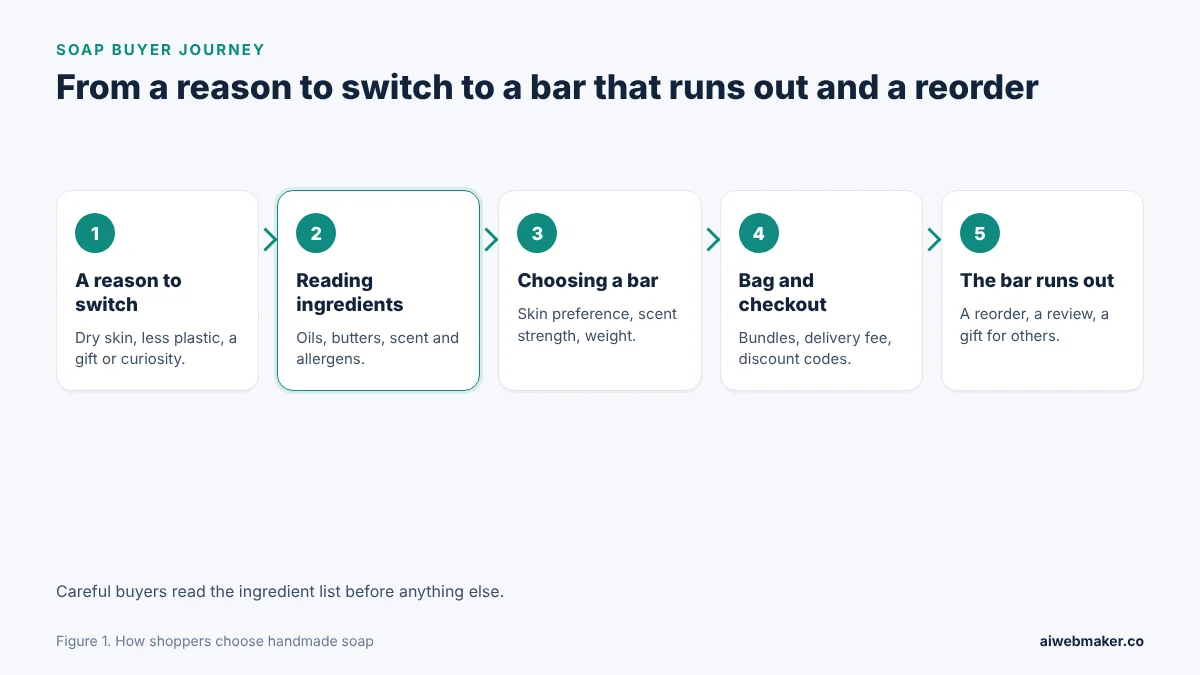
The second step carries the highlight here, because soap buyers often read the ingredient list before they look at the price. A reason to switch might be dry winter hands, a wish for less packaging or a gift for someone who loves handmade things. Reading ingredients reveals whether the bar suits the buyer's skin, scent preferences and values. Choosing a bar then comes down to scent strength, size and the starter selections the shop suggests. Checkout should be simple, and the day the bar runs out decides whether the buyer returns. A soap site that answers the ingredient question clearly removes the biggest barrier to a first order.
What pages does a soap shop need beyond the product list?
A soap website needs a shop, an ingredients page and a story, with custom orders and contact details completing the set. The shop groups bars by scent, skin preference or ingredient and shows each bar's weight and price. The ingredients page explains each oil, butter, scent and colourant and why it was chosen. An about page describes how the bars are made and cured, and a custom page handles favours, hotels and gift boxes. Delivery details and a contact route close every remaining question. Each page answers one concern, which keeps a careful shopper reading rather than wondering.
| Page | Shopper question | What to show |
|---|---|---|
| Shop | Which bar suits me? | Bars by scent and skin preference, weight, price |
| Ingredients | What is in it? | Every ingredient, its purpose, allergen notes |
| How it is made | Why handmade? | Method, curing time, batch size |
| Custom and gifts | Can favours be ordered? | Quantities, wrapping, lead times |
| Care | How can a bar last longer? | Draining dishes, storage, travel tips |
| Delivery and contact | When will it arrive? | Areas, times, fees, contact |
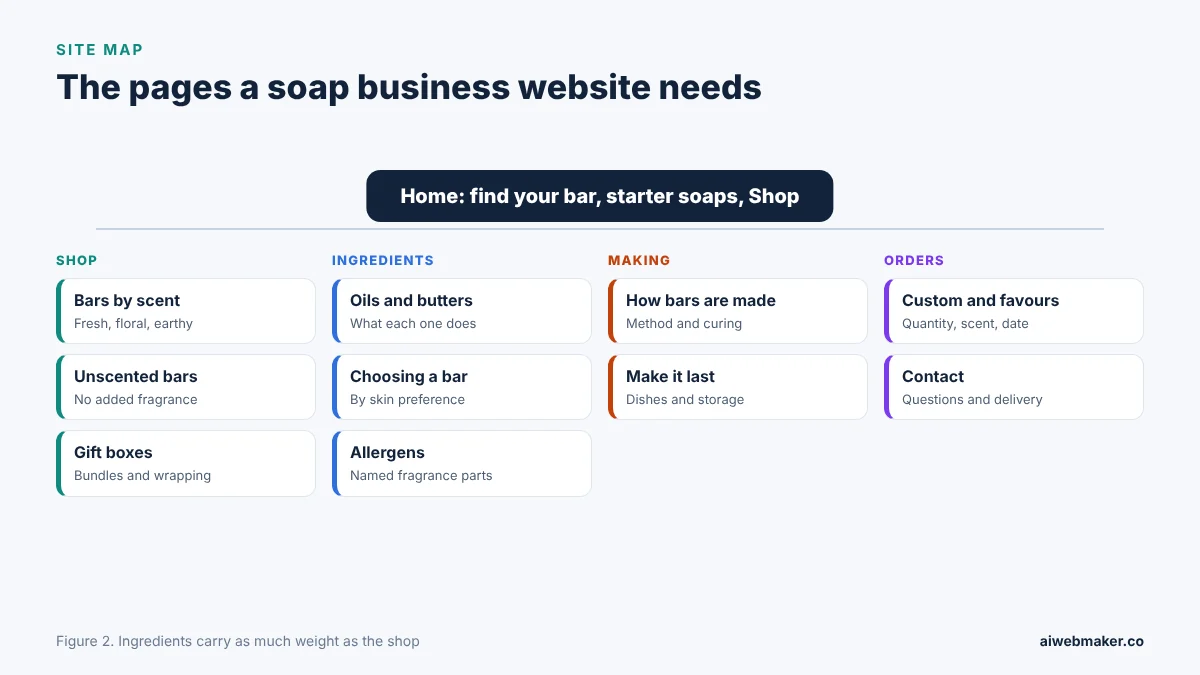
Ingredients get a branch of their own in this plan, because for soap buyers they carry as much weight as the shop. The sample maker, Meadowfoam Soap Co, lists four soaps for sale, and its home page opens with Find your bar and a short list of soaps to start with. Its ingredients and skin care page covers the natural ingredients used and a guide to choosing a soap for different skin, while the about page explains how the bars are made. A custom and gifts page sets out the enquiry process and what to include, such as quantity, scent, wrapping and the date needed, with a pointer to ready made gift items. The soap business website example with an ingredients and skin care page took 52 seconds to assemble across five pages, from the shop to the contact page. A home page section called Make a bar last longer adds care tips that keep customers happy between orders.
Cold process, hot process or melt and pour: how should the method be explained?
Buyers increasingly ask how a bar was made, and a short account of the method builds trust without a chemistry lesson. Cold process soap is made by mixing oils with lye and leaving the bars to cure for several weeks, while hot process cooks the mixture so bars can be used sooner. Melt and pour starts from a ready made base, which suits makers focused on design and quick production. Every true soap is made with lye, and a well made, properly cured bar has none left over, which is worth explaining calmly to nervous buyers. Batch sizes, curing racks and hand cutting all help justify the price. Openness about method turns a curious visitor into a confident buyer.
| Method | How it works | Typical cure | What buyers notice |
|---|---|---|---|
| Cold process | Oils and lye mixed, then left to cure | Several weeks, often around four to six | Hard, long lasting bars |
| Hot process | Mixture cooked before moulding | Usable sooner, often cured briefly | Textured, rustic tops |
| Melt and pour | A ready made base melted and shaped | None needed | Bright designs, smooth finish |
| Liquid soap | Made with a different alkali | Rested before bottling | Pump bottles, softer feel |
How should ingredient lists and allergens be written?
Ingredient lists should be complete, accurate and written the way the law expects in each market where the soap is sold. In many countries cosmetic ingredients are listed by their international INCI names, usually in descending order of quantity, so saponified olive oil may appear as sodium olivate. Some regions also require certain fragrance allergens to be named above set levels, and essential oils contain these just as synthetic fragrances do. The product page can show the formal list alongside a plain explanation, such as gentle olive oil or creamy shea butter. Net weight, the maker's name and address and a batch reference are commonly required on the label itself. Complete lists protect shoppers with allergies and show that the rules are taken seriously.
When does a soap become a cosmetic or a medicine in the eyes of the law?
How a soap is described can change which rules apply to it, and the details change between countries. American rules, for example, treat a bar made of fats and lye and sold only as soap differently from one that promises to moisturise, while a claim to treat a condition can make it a drug. In the European Union and in Great Britain, soap for use on the skin is generally a cosmetic, which typically requires a safety assessment, a responsible person and notification before sale. Claims that a bar heals eczema, clears acne or cures any condition are medical claims that most countries restrict. Words such as gentle, mild or creamy describe the experience without promising treatment. Anyone asking whether a bar will help a skin condition is best pointed to a doctor or pharmacist.
| Claim on a label | Why it is risky | Safer wording |
|---|---|---|
| Heals eczema | A medical claim in most countries | Gentle, unscented bar |
| Clears acne | Promises to treat a condition | A simple, mild cleansing bar |
| Antibacterial | May bring extra rules | Cleans gently |
| Contains no chemicals | Every ingredient is a chemical | Name the actual oils and butters |
| Hypoallergenic | Hard to prove | Short ingredient list, no added fragrance |
| Natural | The meaning varies | List the real ingredients |
What should a soap product page show about weight, scent and bar life?
A soap product page should give the net weight, the full ingredient list, the scent strength and an honest idea of how long the bar lasts with daily use. Weight matters because bars vary widely in size, and buyers cannot compare prices fairly without it. Scent strength, from unscented to strong, helps people who share a bathroom or prefer mild products. Close photos of texture, colour and the cut edge stand in for touch and smell. Suggested uses, such as hands, face, body or shaving, guide the choice without making medical claims. Thorough product pages cut questions and returns alike.
How do favours, hotel soaps and gift boxes fit beside the shop?
Custom orders such as wedding favours, hotel guest soaps and corporate gift boxes can equal a month of ordinary sales, which justifies a separate route. Buyers need to know minimum quantities, label and wrapping options, scent choices and how much notice is needed, since cold process bars must cure before they ship. Inviting buyers to mention quantity, scent, wrapping and the date needed in their enquiry lets the maker quote in one reply. The online store builder for soap makers with bundles and gift boxes gives each bar a product page with options such as scent or bundle size, collects choices in a bag and runs a checkout that totals the order with delivery included. Discount codes reward regulars, and bespoke orders that need a quote can use the Enquire button. Ready made gift boxes in the shop catch buyers who need something sooner.
How should soap be packed, stored and posted?
Soap travels well, but corners chip and scents fade if bars are packed carelessly or kept somewhere damp. Wrapping each bar in paper or card protects its edges, and a snug box stops movement in transit. Packaging without plastic suits most buyers of handmade soap and is worth mentioning on the product pages. Bars should rest somewhere cool and dry before sale, and customers benefit from the same advice once the parcel arrives. Delivery areas, times and fees belong on a clear delivery page, along with what happens if a parcel is damaged. Thoughtful packing makes the first impression as good as the bar.
Which searches lead shoppers to a handmade soap shop?
Soap shoppers search by ingredient, preference and occasion, typing phrases such as handmade soap, olive oil soap, goat milk soap, unscented soap or soap wedding favours. Collection and product pages headed with those phrases meet each search directly, with no need for claims about treating skin. A map listing with photos, opening times and the website address helps makers who also sell from a studio or market stall. Reviews that mention how a bar feels, how long it lasted and how the parcel arrived help other buyers decide. Articles on making soap last, reading an ingredient list or choosing a bar for winter attract careful buyers. Useful, honest writing earns a loyal audience over time.
How does a soap maker budget for the shop's yearly bill?
Budgeting for the shop is simple, since hosting and the domain are the only fixed lines and twelve articles on ingredients or care add about $7.80. A maker selling through the year pays least by settling once annually. Someone starting with a few markets and a first online batch may prefer monthly billing. Listing a new batch, changing a scent or adding photos comes at no extra cost. Both columns appear here, with the $189 tier beside them only as a reference point.
| Item | Yearly | Monthly |
|---|---|---|
| Hosting the soap shop | $119 | $228 over twelve months |
| Domain | Depends on the ending | Depends on the ending |
| Higher plan, for comparison | $189 a year | Not needed |
| Twelve ingredient and care articles at about $0.65 | About $7.80 | About $7.80 |
| New batches, scents and photos | No charge | No charge |
| Year before the domain | About $126.80 | About $235.80 |
What puts careful shoppers off a soap product page?
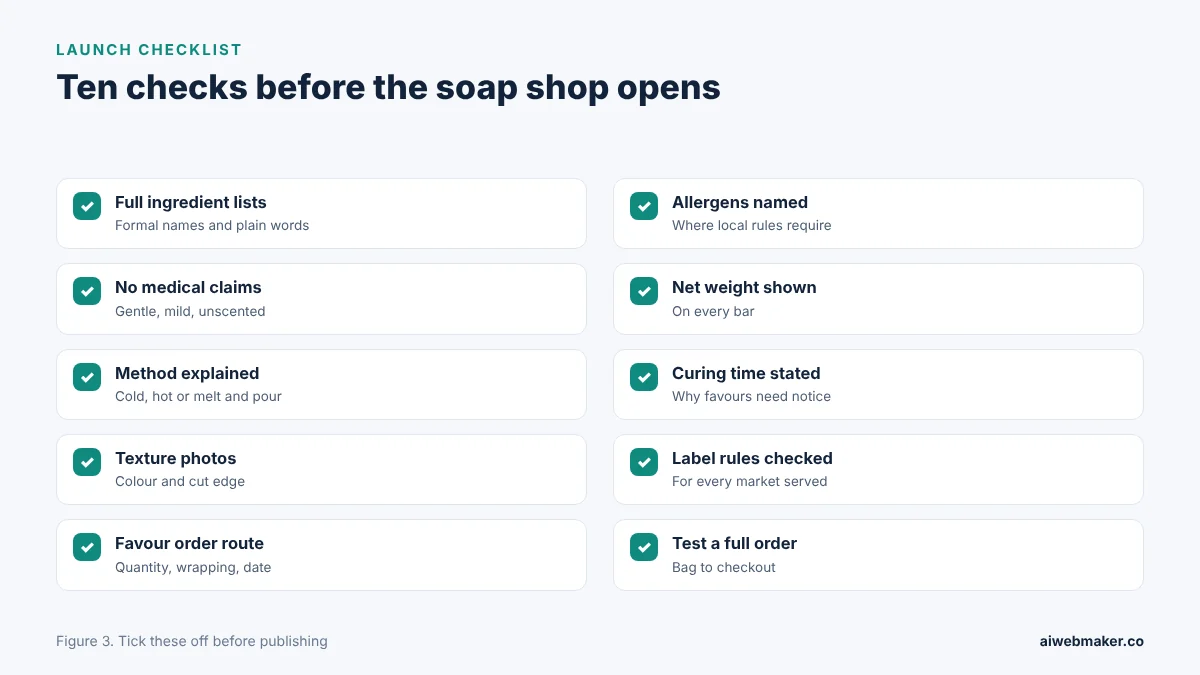
Careful shoppers leave a soap page when the ingredient list is missing, incomplete or hidden behind a vague phrase such as natural goodness. Claims that a bar cures a skin condition make informed buyers doubt everything else. No weight or size makes the price impossible to judge. Blurry photos that hide texture and colour fail to replace touch. A shop with no delivery or packaging notes leaves gift buyers unsure. Working through the ten checks pictured below keeps these gaps closed at launch.
Frequently asked questions
Why do cold process bars need weeks to cure?
Cold process bars need time to cure because water evaporates and the bar becomes harder, milder and longer lasting. The chemical reaction that turns oils into soap is largely complete within the first days, but the bar keeps improving for weeks afterwards. Many makers cure for around four to six weeks, though the right time depends on the recipe. Explaining curing on the about page shows why custom orders need notice. Patient curing is one of the clearest marks of a carefully made bar.
Can a soap be sold as good for eczema?
Claiming that a soap helps eczema, psoriasis or acne usually turns it into a medicinal product in the eyes of the law, which brings much stricter rules. The website can describe a bar as gentle, mild or unscented without promising any effect on a condition. Shoppers with a skin condition should be encouraged to ask a doctor or pharmacist before trying new products. Testing a small area of skin first is sensible advice for anyone with sensitive skin. Honest wording protects the maker and respects buyers who are looking for help.
What do INCI names on a soap label mean?
INCI names are the international names used for cosmetic ingredients, so the same oil reads the same way on labels in many countries. Saponified oils appear under names such as sodium olivate for olive oil or sodium cocoate for coconut oil. Shea butter added as an ingredient appears as Butyrospermum Parkii butter, and water appears as aqua. A plain language list beside the formal one helps shoppers understand what they are buying. Clear labelling makes it easier for people with allergies to check every ingredient.
How can buyers make a handmade bar last longer?
A handmade bar lasts longer when it dries between uses, so a draining soap dish and a spot away from the shower stream make a real difference. Cutting a large bar in half and using one piece at a time also helps. Bars kept in a cool, dry cupboard until needed stay firm. These tips can appear in a care section, on product pages and on a printed card packed with each order. Buyers who get more use from each bar trust the next one they buy.
Does one month of bar sales cover the soap shop's year?
For most makers, a month of ordinary bar sales comfortably exceeds the $119 that hosts the soap shop for the year. Choosing monthly billing, a few bars usually cover the $19. A single favour order for a wedding or a hotel can be worth more than several years of hosting. Complete ingredient lists, careful claims and photos that show real texture persuade careful buyers better than slogans. Makers who list each new batch as it finishes curing give regulars a reason to come back. Reorders from people who finished their first bar are the steadiest income a soap shop has.
Build your website in Minutes and get the AI Tools that work
Start Building Your Website →