Motorcycle Dealer Website Cost, From Stock Listings to Test Rides
A motorcycle dealer pays $119 a year to host its site, or $19 a month, and adds a domain. Covered: how riders choose, stock listings, licences and test rides, the gear shop, part exchange and finance, search and the yearly sum.
- No coding required
- Live in minutes
- Blog, SEO and chatbot tools included
Hosting a motorcycle showroom on AI Web Maker costs $119 for the riding year, or $19 in each month the dealer would rather pay, plus a domain. Stock pages, the gear shop and the test ride request can all be shaped and tested in the preview, and that stage is never invoiced. A single helmet and jacket sale covers the hosting for the year, and one used bike sold covers it many times. The real challenge is that nobody buys a motorcycle from a photo, so the website exists mainly to get riders onto the right bike for a test ride. Riders also arrive with doubts about licences, history, part exchange values and finance, and a page that dodges them loses the visit. What follows covers how riders choose, listings, licences and test rides, the gear shop, part exchange and finance, search and the hosting sum.
This article is part of our complete guide: Retail Website Design.
How do riders pick a bike, and then a dealer?
Riders usually pick a type of bike first and a dealer second, so the website must help with both decisions in that order. Learners and new riders look for bikes that suit their licence and budget, often a commuter or a small scooter. Returning riders and those trading up compare adventure tourers, naked roadsters and sports tourers on distance covered, condition and price. Touring riders care about luggage, comfort and service history, while commuters care about running costs. Many visitors only want gear, such as a new helmet or jacket, and judge the dealer by how easily they can buy it. A dealer site that answers the bike question and the trust question together turns browsing into booked rides.
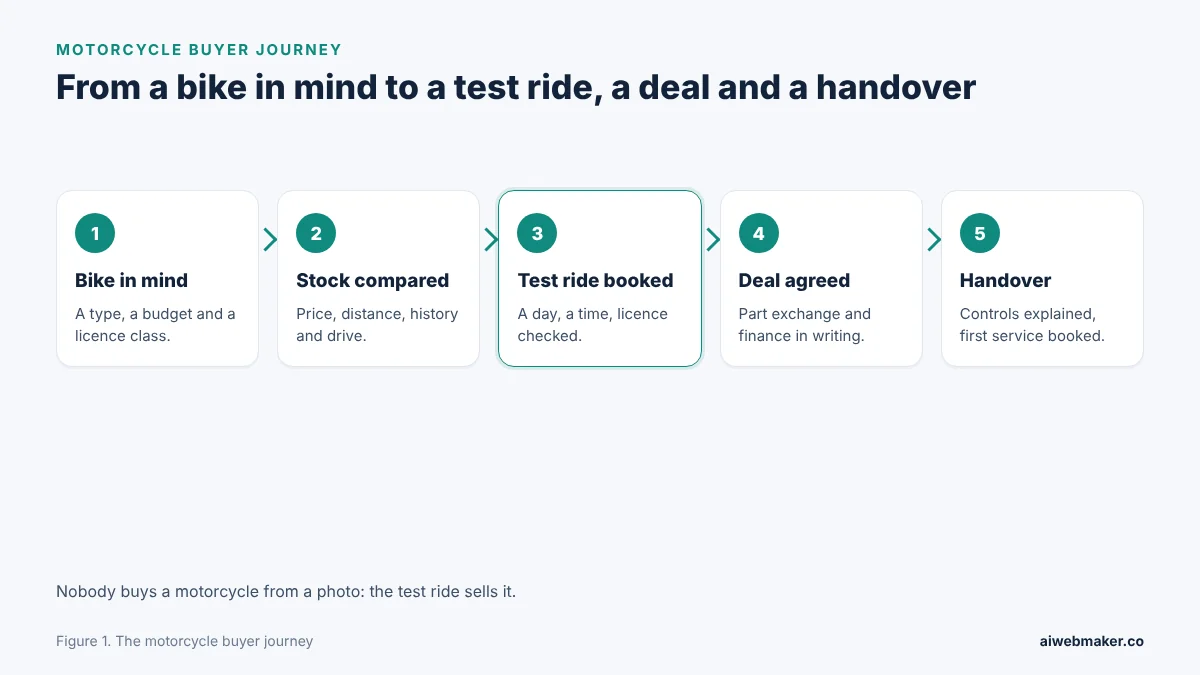
Riders move through this journey from a bike in mind to a handover with the first service already booked. The marked step is the test ride, because almost every sale depends on it and many riders choose the dealer that makes booking one easiest. Before it, riders compare stock on price, distance, history and drive, and they check whether their licence allows the bike. After it, the deal is agreed with part exchange and any finance written down. The handover closes the path, and a patient explanation of the controls is what earns the review. Each step needs a page that removes a doubt before the rider has to ask.
Bikes, gear, deals: the pages a showroom needs
A showroom's website needs pages for the bikes, the gear and the deal, plus a route to the test ride that appears on every page. The stock page carries the most traffic, because riders return to it again and again as new bikes arrive. The gear shop sells helmets, clothing and accessories with sizes, which brings steady orders between bike sales. A part exchange page and a paying page answer the money questions that otherwise stall a sale. A workshop page shows that the dealer looks after bikes after they leave. Together these pages make the showroom feel open and honest before a rider walks in.
| Page | What riders check | What it should include |
|---|---|---|
| Bikes in stock | Price, year, distance | Cash price, engine size, distance, drive, test ride button |
| Gear shop | Sizes and prices | Size options, Add to bag, returns rules |
| Test rides | Can it be ridden first | Licence rules, kit, route, booking |
| Part exchange | What the current bike is worth | How it is valued, how long the figure stands |
| Paying | The ways to pay | Full payment, holding deposit, lender finance |
| Workshop | Care after the sale | Servicing, fitting accessories |
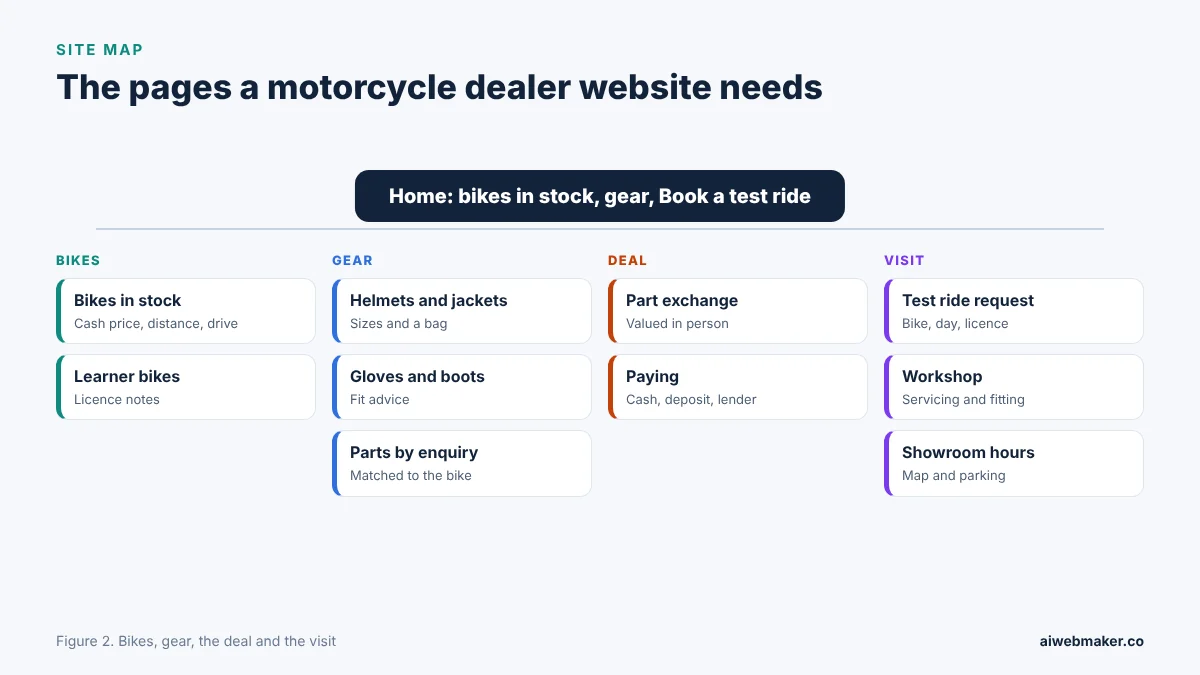
Off the home page, this site map branches into bikes, gear, the deal and the visit, which is the order a rider's questions arrive in. Bike pages carry the stock and the learner choices, gear pages carry helmets, clothing and parts by enquiry, deal pages carry part exchange and paying, and visit pages carry the test ride request, the workshop and the opening hours. Our sample dealer, Twinpeak Motorcycles, lists six bikes with cash prices: a 2021 adventure tourer of 800 cc, a 2022 naked roadster of 650 cc, a 2023 learner commuter of 125 cc, a 2019 sports tourer of 1,000 cc, a 2020 retro cruiser of 900 cc and a new 2024 maxi scooter of 300 cc. Its gear shop sells a full face helmet, a textile touring jacket, leather summer gloves and touring boots, each with sizes. The motorcycle dealer website example with a gear bag and test ride booking adds sections on part exchange, paying, ride steps, reviews and questions. Following that layout keeps the test ride within reach wherever a rider happens to be reading.
What should a used bike listing tell a careful rider?
A used bike listing should give every detail a careful rider would check in person, because most riders shortlist from the website before visiting. The year, engine size and distance covered come first, followed by the drive type, since chain, belt and shaft drives need different care. Service history, the number of owners and any modifications matter as much as the price. Tyre tread, chain condition and the next service due tell a rider what will need spending soon. A note on any workshop warranty, and what it covers, reassures buyers wary of used machines. Listings this complete bring in riders who have already decided to ride the bike.
| Detail | Why riders check it |
|---|---|
| Year and engine size | Licence fit, insurance and value |
| Distance covered | Wear and remaining life |
| Drive type | Chain, belt and shaft need different care |
| Service history | Evidence of regular maintenance |
| Tyres and chain | Costs due soon after purchase |
| Extras fitted | Luggage, heated grips, crash bars |
| Warranty | What the dealer covers, and for how long |
Licence classes, restricted bikes and the test ride
Licence rules shape which bikes a rider may buy and ride, and they vary widely between countries. Some countries tie learner licences to small engines, while others link licence classes to power output and allow certain bikes to be restricted. A dealer's page should explain that rules differ, note which bikes can be restricted where licence rules require it, and ask riders to check their own licence before booking. Test rides need the right licence for the bike's class, suitable kit and insurance cover arranged by the dealer. A set route with an adviser riding along keeps the ride safe and makes comparisons fair. Clear words on licences prevent wasted trips and disappointed riders at the door.
Selling helmets, jackets and boots with sizes and a bag
Gear is the steady side of a dealership, and a proper shop with sizes turns casual visitors into regular buyers. Helmets need size options, and the page should explain how to measure the head and why a helmet must fit snugly without pressure points. Jackets, gloves and boots need clear size charts, materials and protection details such as armour and waterproof liners. The online store builder for motorcycle dealers selling gear in sizes gives each item its options, a bag, a checkout that works out the delivery fee and room for discount codes. Parts priced by the bike, such as a chain and sprocket kit, carry an Enquire button so the workshop can match them first. Helmet approval marks differ between countries, and riders should be invited to check which ones the law accepts where they ride.
| Item | Option the rider picks | Fit advice for the page |
|---|---|---|
| Full face helmet | Size | Measure around the head above the brows |
| Textile touring jacket | Size | Armour should sit on shoulders and elbows |
| Leather summer gloves | Size | Fingers should reach the ends without pinching |
| Touring boots | Shoe size | Try with riding socks, check ankle movement |
| Chain and sprocket kit | Enquire | Matched to the bike by the workshop |
Part exchange and finance, written down before signing
Part exchange and finance decide many motorcycle sales, so the website should describe both plainly and without pressure. A part exchange valuation usually checks the distance, service book, tyres, chain and any marks, and riders want to know how long the figure stands. Money still owed on the current bike can sometimes be settled from its value where the lender agrees. Finance comes from a lender rather than the dealer in many cases, it is subject to approval, and the rules governing it vary by country. The total amount payable should be shown before anything is signed. Clear terms let riders plan their purchase calmly instead of feeling rushed at the desk.
| Option | How it usually works | Good to know |
|---|---|---|
| Pay in full | The cash price is paid at collection | Registration and transfer fees listed apart |
| Holding deposit | A sum holds a bike for a set number of days | Taken off the price, refund terms stated |
| Lender finance | Monthly payments agreed with a lender | Subject to approval, terms vary by country |
| Part exchange | The current bike's value comes off the price | Valued in person, figure honoured for a period |
What riders type when they want a bike or gear
Riders type phrases such as used motorcycles for sale, adventure bike for sale, 125 cc learner bike, motorcycle dealer near me, motorcycle helmets or part exchange motorcycle. Each bike listing and gear page should use the words riders use, including the type of bike and the engine size. A map listing with showroom hours, photos of the stock and the workshop helps riders decide whether the trip is worth making. Reviews that mention honest valuations, patient test rides and well prepared bikes carry real persuasion. Articles on choosing a first big bike, fitting a helmet or storing a bike over winter attract riders months before they buy. Useful writing of this kind keeps the dealer in a rider's mind between purchases.
The dealer's website year, line by line
A dealer's website asks for hosting, either annual or monthly, a domain priced by its ending and a small sum for articles. Busy showrooms usually choose the annual route, while a dealer opening a second site may prefer monthly payments at first. Twelve riding and gear articles take about $7.80 of AI credits over the year. New stock, changed prices and fresh gear sizes cost nothing to add. The table that follows sets annual billing against monthly billing for a showroom, with a row for the $189 tier that a dealer can read and pass over.
| Item | Yearly | Monthly |
|---|---|---|
| Hosting the showroom pages and gear shop | $119 | $228 over twelve months |
| Domain | Depends on the ending | Depends on the ending |
| Higher plan, for comparison | $189 a year | Not needed |
| Twelve riding and gear articles at about $0.65 | About $7.80 | About $7.80 |
| New stock, prices and gear sizes | No charge | No charge |
| Year before the domain | About $126.80 | About $235.80 |
Why do riders leave a dealer site without booking?
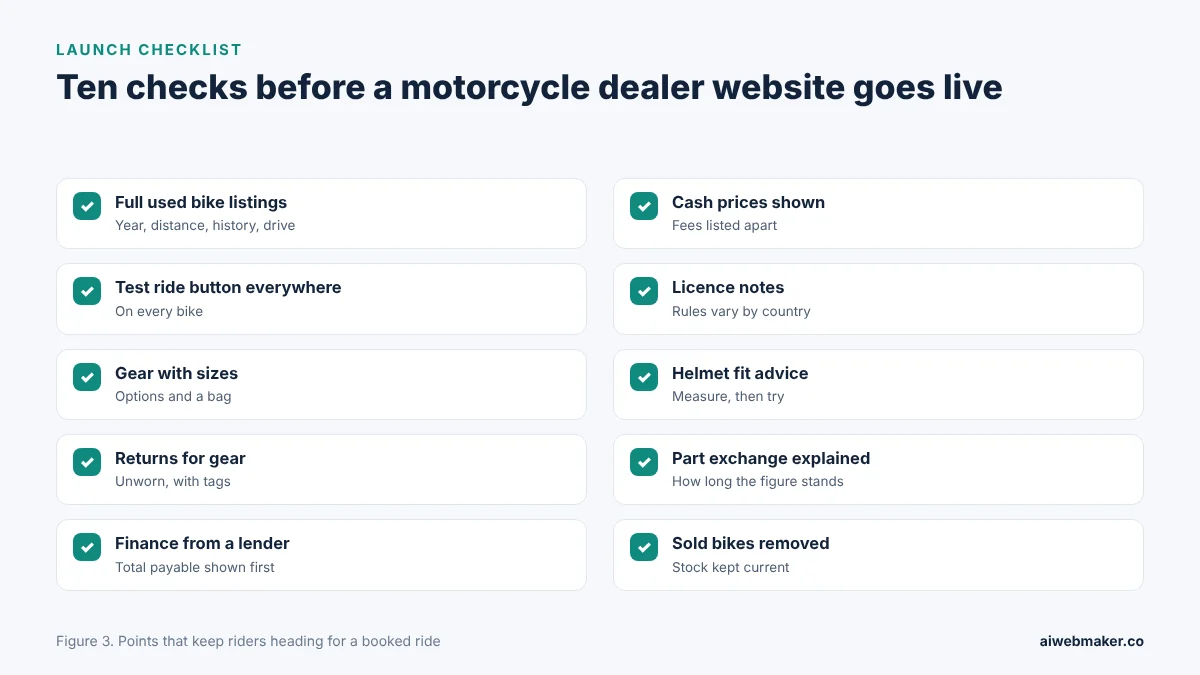
Riders leave a dealer site when bike listings show a photo and a price but no distance, history or drive type. A test ride button that is hard to find, or a form that asks for too much, loses riders who were ready to visit. Gear without sizes or returns rules feels risky to buy online. Silence on part exchange and finance leaves riders unsure whether the deal is affordable. Stock that has already sold, still shown as available, damages trust quickly. Ten points in the figure keep riders moving towards a booked ride.
Frequently asked questions
What licence does a rider need for a test ride?
A rider usually needs a full licence for the bike's class, and the exact classes vary from one country to another. Some dealers also offer rides on bikes that can be restricted for riders with limited licences, where the law allows it. The website should ask riders to bring their licence and to check what it covers before booking. Helmets and gloves can often be borrowed, though many riders prefer their own. Spelling this out avoids turning riders away at the showroom door.
Can a dealer clear money still owed on a bike?
In many cases the amount still owed can be settled from the part exchange value, provided the lender agrees. The dealer then takes the outstanding amount off the valuation and puts the figures in writing. If more is owed than the bike is worth, the rider pays the difference or adds it to new finance where permitted. Rules on this vary by country and by lender. A clear explanation on the website helps riders understand their position before they visit.
How should a helmet fit when bought online?
A helmet should feel snug all round, with no pressure points, and it should not move when the rider shakes their head. Measuring the head above the eyebrows and comparing with the maker's size chart is the usual starting point. Shapes differ between makers, so trying two sizes in the showroom is often worth the trip. The website should explain the exchange policy for unworn helmets. Good fit advice reduces returns and keeps riders safer.
Is finance arranged by the dealer or a lender?
Finance is usually provided by a lender, with the dealer introducing the rider and helping with the paperwork. The lender checks the application, sets the rate and decides whether to approve it. Rules on credit and how it may be advertised vary by country, so the dealer's wording should follow local requirements. The rider should always see the total amount payable before signing. A plain explanation on the website builds trust and avoids misunderstandings.
A helmet and jacket already settle the hosting year
Selling one helmet and one touring jacket usually brings in more than a whole year of hosting and the domain. On monthly billing, a single pair of gloves outweighs the $19 for that month. Every used bike sold after a rider studies a complete listing and books a ride adds a sale worth many years of hosting. Honest listings, clear licence notes and a gear shop with proper sizes persuade riders who would otherwise drive to a bigger showroom. A diary of test rides booked by riders who already know the bike they want shows the site is earning its place.
Build your website in Minutes and get the AI Tools that work
Start Building Your Website →