Kitchen Store Website Cost: Pan Care, Knife Rules and Gift Lists
A kitchen store spends $119 a year on hosting, or $19 a month, plus a domain. Inside: who buys cookware online, the pages a kitchen shop needs, pan care, sizes and options, knife rules and sharpening, demos, gift lists, search and costs.
- No coding required
- Live in minutes
- Blog, SEO and chatbot tools included
Hosting a cookware shop on AI Web Maker costs about one casserole's price, $119 for the year, or $19 for a month of pans and knives online, plus a domain. Writing the pan cards, the care table and the gift list page, and checking them on every screen in the preview, is unbilled work as far as AI Web Maker is concerned. A single enamelled casserole with a chef's knife already outweighs that bill. Cookware is tricky to sell online because it is bought to last for years, yet buyers cannot lift the pan, feel the knife's balance or see how a coating wears. Knives also come with legal duties that vary from one country to another. What follows covers who buys cookware online, the pages a kitchen shop needs, materials and care, sizes and options, knife rules and sharpening, demos, gift lists, search and the hosting figures.
This article is part of our complete guide: Retail Website Design.
Home cooks, bakers and couples with a list: who buys kitchenware
Kitchenware buyers range from someone replacing a worn out frying pan to a keen cook choosing a knife for life. Everyday cooks want a pan that suits their hob, a fair price and an honest word on how long it will last. Keen cooks compare steels, weights and handles, and they want to know how a knife is sharpened and cared for. Bakers look for tin sizes and finishes, since a loaf tin of the wrong size changes the bake. Couples setting up a home look for a gift list, and their guests want a simple way to buy from it. A kitchen store website that speaks plainly to each of these buyers sells pieces that people keep for decades.
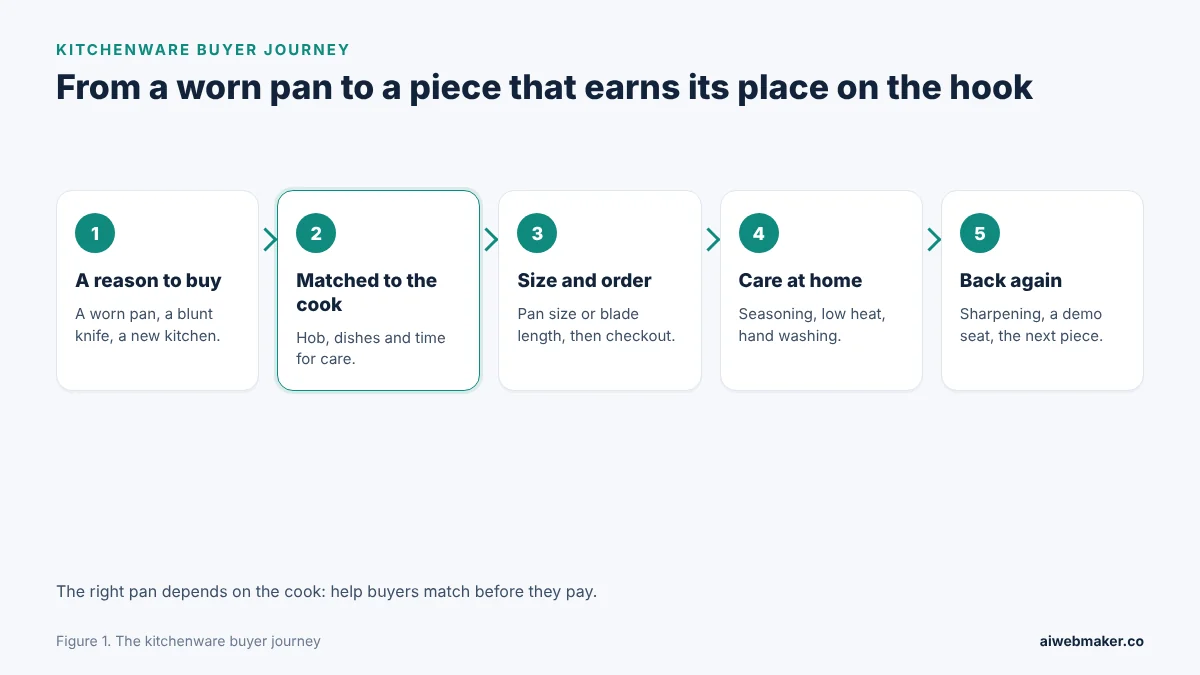
Reading along the row, the path begins with a worn non stick pan, a blunt knife or a new kitchen to equip. The highlighted step is matching the piece to the cook, because the right pan depends on the hob, the dishes and the time someone is willing to spend on care. Choosing the size or blade length follows, then the order, with delivery priced by weight or collection from the shop. Care comes next, and a pan looked after properly is the one that earns a good review. The last step is the return visit, for sharpening, a demo seat or the next piece. A kitchen shop's pages should help buyers at the matching step above all.
Pans, knives, demos and lists: the pages a kitchen shop needs
A kitchen shop's site needs product pages for pans, knives, casseroles and bakeware, plus a care guide. Sharpening and demo pages, the gift list page and a note on delivery and returns round it off. Product pages carry the material, the sizes, the hob types and the price. The care guide explains what each material needs, including the parts that eventually wear out. Service pages bring people back between purchases, which is where loyalty is built. The gift list page explains how a couple opens a list and how guests buy from it. Laid out this way, the site sells the first pan and earns the visits that follow.
| Page | What the buyer checks | What it should include |
|---|---|---|
| Frying and saute pans | Material, size, hob | Sizes, induction note, oven limit, price |
| Knives | Steel, length, care | Blade lengths, hand wash note, age rule |
| Casseroles and bakeware | Capacity and finish | Litres or tin sizes, oven limit, weight |
| Care guide | How each piece lasts | Washing, things to avoid, signs of wear |
| Sharpening | Price and turnaround | Per blade price, same day times, limits |
| Demos | Seats and dates | Time, seats, price, what is tasted |
| Gift lists | Opening and buying | Steps, exchanges, delivery in one drop |
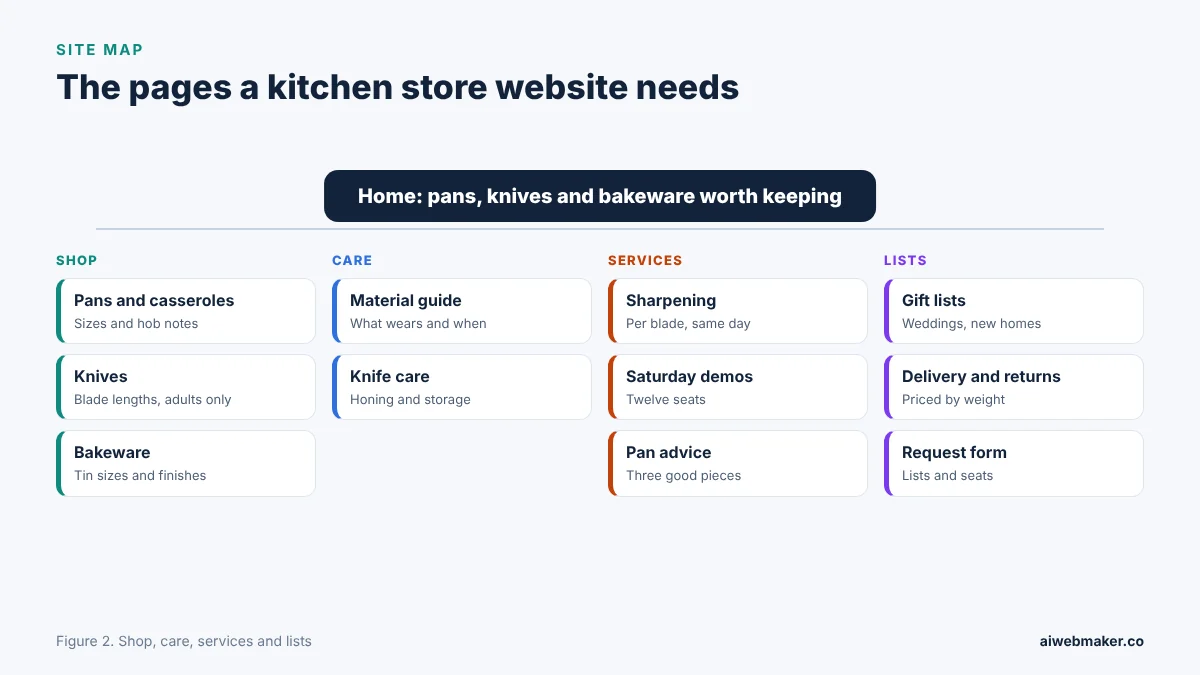
Four groups grow out of the kitchen shop's home page: the shop, the care pages, the counter services and the gift lists. The shop holds pans, knives, casseroles and bakeware, the care group holds the material guide and knife care, the services group holds sharpening and Saturday demos, and the lists group holds wedding and new home lists with delivery and returns. Copper and Crumb Kitchenware, the sample store, sells a carbon steel frying pan, a chef's knife, an enamelled cast iron casserole, a non stick saute pan and a bakeware trio, and takes enquiries for a hand forged knife made to the buyer's length. Behind the counter it offers knife sharpening, a Saturday demo seat, wedding and new home lists and pan advice. The kitchen store website example with pan care notes and gift lists also sets out a care table, four gift list steps, pictures of the copper rail and bench, counter questions and a form for lists and demo seats. That layout follows a cook from the first pan to a lifelong habit of coming back.
Carbon steel, cast iron, non stick: honest care for each material
Care advice is where a kitchen shop proves it sells pieces to keep rather than pieces to replace. Carbon steel turns dark and patchy as it seasons, which is normal, and it should be dried on the heat and wiped with a little oil. Enamelled cast iron dislikes cold water on a hot pot and metal scourers, and chipped enamel can spread. Every non stick coating wears out in the end, and an empty pan left on high heat can damage the coating and give off fumes, so low to medium heat is the rule. Knives last longest when washed by hand, dried at once and kept off glass or stone boards. A care table that admits these limits builds more trust than a promise that a pan will last forever.
| Piece | Wash | Avoid | Worth knowing |
|---|---|---|---|
| Carbon steel pan | Hot water and a brush, dry on the hob | Soaking, the dishwasher | Dark patches are seasoning |
| Enamelled cast iron | Warm soapy water once cool | Cold water on a hot pot, scourers | Lift rather than drag |
| Non stick pan | Soft sponge, warm water | High heat when empty, metal tools | Replace once it flakes |
| Stainless steel | Sink or dishwasher | Bleach and steel wool | Heat marks wipe off |
| Kitchen knives | By hand, dried at once | Dishwasher, glass boards | Hone often, sharpen when needed |
Pan sizes, blade lengths and the Enquire button for a forged knife
Kitchenware almost always comes in sizes, and a buyer who chooses the wrong one is a likely return. Frying pans in the sample come in 24, 28 or 32 cm, chef's knives in 16, 20 or 24 cm blades and casseroles in 2.5, 4 or 6 litres. The online store builder for kitchen shops selling pans by size shows those sizes and finishes as options on each card, sends the chosen pieces to the bag, and closes with a checkout that tallies the pans, puts the delivery fee on top and has a field for discount codes. A hand forged knife made to a buyer's length and handle wood has no fixed price, so it shows an Enquire button instead. Each card should also say whether the piece works on induction and how hot it may go in the oven. Clear sizes and limits mean fewer returns and happier cooks.
Knife sales, age checks and the sharpening bench
Knives carry legal duties that a kitchen shop must take seriously, and the rules differ between countries. The sample sells knives to adults only and asks for proof of age when a knife is collected or delivered. Because the law varies, some delivery addresses may not be able to receive knives at all, and the page should say so before checkout. Sharpening is the other side of selling knives, and it brings people back every few months. The sample sharpens straight edged blades on stones at $6 each and sends serrated or badly chipped knives to a specialist, with the price given first. A page that handles both the law and the edge shows a shop that understands knives.
| Service | Sample price | What the page should say |
|---|---|---|
| Knife sharpening | $6 a blade | Straight edges only, same day if left before 13:00 |
| Saturday demo seat | $15 | Twelve seats, tasting and recipe included |
| Wedding and new home lists | No charge to open | Guests buy in store or by phone |
| Pan advice | At the counter | Three good pieces instead of a boxed set |
Saturday cooking demos in the kitchen at the back
Cooking demos turn a kitchen shop into somewhere people want to spend a Saturday morning. The sample cooks a dish every Saturday at 11:00 on pans from its own shelves, from a carbon steel omelette to a loaf baked in cast iron. Twelve stools, a tasting and a printed recipe come with a $15 seat, and nobody is pressed to buy. A demo page should state the date, the dish, the number of seats and how a seat is confirmed. Questions from the audience often reveal what cooks struggle with at home, which in turn shapes the care guide and the articles. Demos give buyers the confidence to choose a pan they might otherwise have feared.
Wedding and new home gift lists, from opening to one delivery
Gift lists bring a kitchen shop large orders spread across many buyers, and the page should explain the steps clearly. A couple opens a list through the request form or in the shop, usually three to four months before the day. They choose pieces together, walking the shelves or sending a wish list by message. Guests then ask for the list by name in store or by phone, and each piece is marked as bought so nothing is doubled. Everything is wrapped and delivered in one drop after the day, and the sample allows unused gifts to be exchanged within 60 days. A clear list page wins couples who might otherwise register at a department store.
Searches that lead cooks to a cookware counter
Cooks searching for kitchenware type a material, a piece and often a place. Examples include carbon steel pan, chef's knife 20 cm, cast iron casserole, knife sharpening near me or wedding gift list kitchen shop. Product pages that name the material, the size and the hob type answer those searches precisely. The map listing should carry demo times, sharpening hours, photos of the copper rail and a link to the care guide. Reviews that mention a pan seasoned properly or honest advice on a cheaper choice persuade new buyers strongly. Articles on seasoning carbon steel, choosing a first knife or caring for cast iron bring in cooks who are still deciding. Patient, practical writing makes the shop the place cooks trust for advice.
Hosting, domain and recipe articles: the cookware shop's sums
Hosting and a domain make up a kitchen shop's website spend, and recipe or care articles drafted with credits come to pocket change across the year. Shops with steady demo and list trade usually settle annually, while a newly opened cookware shop might pay monthly during its first wedding season. A monthly article on seasoning, sharpening or baking tins totals about $7.80 for the year. New pans, price changes and demo dates cost nothing to add. The cookware shop's year appears in both billing styles below, and the $189 line is there purely to measure against.
| Item | Yearly | Monthly |
|---|---|---|
| Hosting the pans, knives and gift list pages | $119 | $228 over twelve months |
| Domain | Depends on the ending | Depends on the ending |
| Higher plan, for comparison | $189 a year | Not needed |
| Twelve cooking and care articles at about $0.65 | About $7.80 | About $7.80 |
| New pans, prices and demo dates | No charge | No charge |
| Year before the domain | About $126.80 | About $235.80 |
What makes cooks shut a cookware shop's tab?
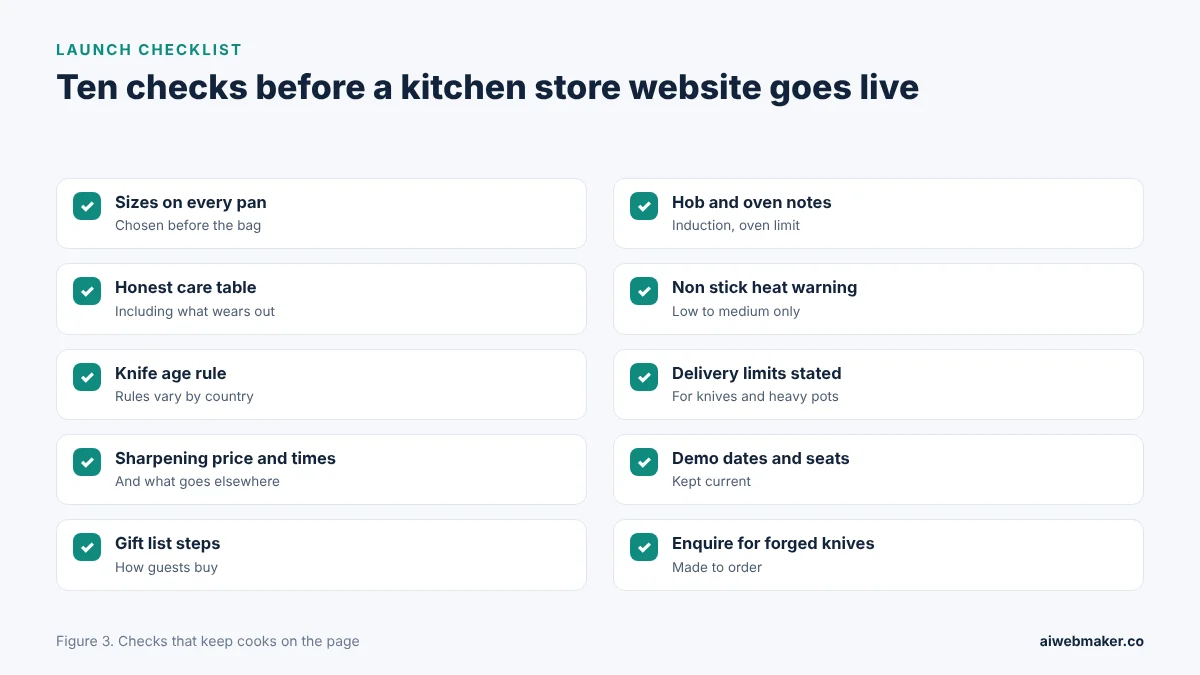
Cooks shut a cookware site when pans show no size, no hob note and no oven limit, leaving them unsure whether a piece suits their kitchen. Care advice that pretends non stick lasts forever makes experienced cooks doubt everything else on the page. Knife pages with no word on age checks or delivery limits cause problems at the door. Gift lists with no explanation of how guests buy leave couples choosing another shop. Delivery fees that surprise buyers on a heavy casserole spoil an otherwise easy order. Ten kitchen shop checks, pictured next, deal with each of those snags.
Frequently asked questions
Why does a carbon steel pan turn black?
A carbon steel pan turns black as seasoning builds up, and that layer is what lets food release. Patchy colour in the first weeks is normal and evens out with use. Rust spots come from leaving the pan wet, and they can be scrubbed off before the pan is dried on the heat and oiled. The product page and care guide should explain this before the buyer worries. Honest notes stop good pans being returned.
Can a kitchen shop sell knives online?
Many kitchen shops sell knives online, but the rules on selling and delivering knives differ between countries. The sample sells only to adults and asks for proof of age on collection and delivery. Certain delivery addresses cannot legally receive a blade, and the knife page has to flag that early. A shop needs to know the law both where it trades and wherever its parcels land. Careful wording protects the buyer and the business.
How long does a non stick pan last?
Every non stick coating wears out, often within a few years of daily cooking, and sooner when used on high heat. Low to medium heat, wooden or silicone tools and hand washing slow the wear. Once the surface flakes or food starts to stick, the pan should be replaced. A care page that says this plainly earns trust with experienced cooks. Honesty about wear is part of selling well.
How do guests buy from a wedding gift list?
In the sample, guests ask for the list by name in the shop or by phone, and each gift is marked as bought so nothing is doubled. The couple chooses the pieces beforehand, in the shop or by sending a wish list. Gifts are wrapped and delivered together after the day, or collected. Unused gifts can be exchanged within a set period. A clear explanation on the list page makes the process easy for everyone.
A casserole and a chef's knife against a year of hosting
One enamelled casserole sold to a keen cook usually earns more than a kitchen shop spends on hosting all year. With monthly billing, three sharpened blades and a demo seat cover the $19. Every couple who opens a gift list after reading the list page brings dozens of guests through the door. Honest care notes, clear sizes and careful knife rules persuade buyers who expect a pan to last for years. Kitchen shops that keep their demo dates and care advice up to date will see the website send cooks straight to the copper rail.
Build your website in Minutes and get the AI Tools that work
Start Building Your Website →