Exotic Pet Vet Website Cost, From Species Lists to Husbandry Reviews
An exotics clinic covers its species lists and fee cards with $119 of hosting a year, switching to $19 monthly if it prefers, and buys the domain separately. Inside: keepers, pages, species lists, visit and test fees, husbandry reviews, emergencies, search and the budget.
- No coding required
- Live in minutes
- Blog, SEO and chatbot tools included
A clinic for reptiles, birds and small mammals spends $119 on twelve months of hosting or $19 on a single month, and picks a domain ending at its own price. Shaping the species list, the fee cards and the appointment request in preview costs the clinic nothing on AI Web Maker. A single new pet health check followed by one consultation more than covers the hosting year. The deeper difficulty is that keepers rarely know which vet will even see a bearded dragon or a cockatiel, so the website has to say exactly who it treats and what to do when an animal is in trouble. It also has to explain fees for tests most keepers have never heard of. Ahead come the keepers, the pages, species, visit fees, specialist checks, husbandry reviews, emergencies, search and the yearly costs.
This article is part of our complete guide: Pet Business Website Builder.
Bearded dragons, budgerigars and bonded rabbits: the keepers who search for an exotics vet
Keepers who look for an exotics vet often start with a simple question that general practices cannot answer: will anyone here see this animal? New owners book a first check soon after buying a gecko, a parrot or a pair of guinea pigs, wanting a weight on record and advice on the setup. Others arrive worried because an animal has stopped eating, sits fluffed up or seems quieter than usual, and they need to know whether to phone at once. Tortoise keepers look ahead to hibernation, and backyard hen keepers want a vet who treats birds without treating them as a curiosity. People planning to buy an animal sometimes want advice before it arrives. Every one of them checks the species list, the emergency route and the cost of tests before booking.
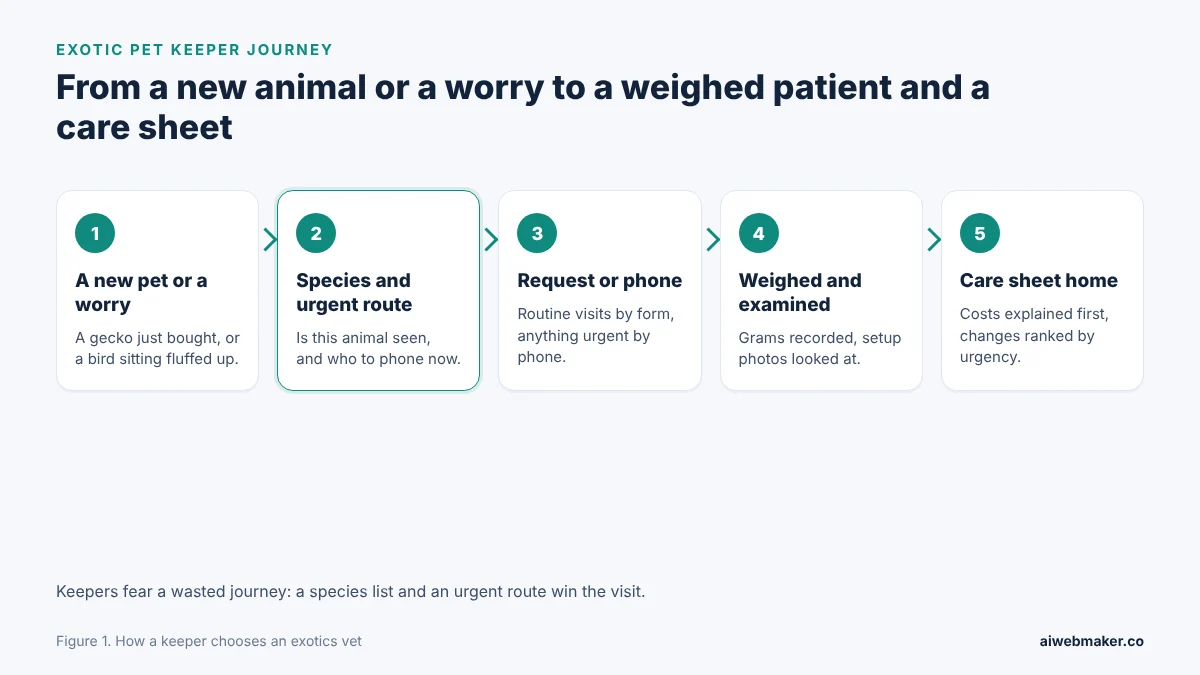
For an exotics keeper, the second step of this path decides almost everything, because a clinic that does not see the species is no use at any price. The path begins with a new pet or a worry about one already at home. In the highlighted step the keeper confirms the species is treated and reads what counts as an emergency and who to call. Routine visits then go through the request form, while urgent cases are sent to the phone. The last steps cover the visit itself, with the animal weighed and the setup discussed, and a written care sheet or plan taken home, which is what brings the keeper back for the next check.
Species seen, fees, checks and an emergency line: the pages an exotics clinic publishes
An exotics clinic's pages should start with who it sees and what to do in an emergency, because those two answers decide whether a keeper reads any further. Appointment types and their fees come next, written plainly enough for a first time owner to understand. Specialist checks need their own page, since keepers rarely know what a faecal check or a dental under anaesthetic involves. Husbandry advice deserves a section of its own, because many visits end with a conversation about heat, light and diet. A visiting page on carriers, warmth and separate waiting areas makes the journey calmer for animals that stress easily.
| Page | Keeper's question | What it should state |
|---|---|---|
| Species seen | Will this clinic treat the animal | Groups and examples, and species referred elsewhere |
| Emergency line | What to do right now | Warning signs, phone in hours, the out of hours route |
| Appointments and fees | What a visit costs | Visit types, length, prices, tests priced first |
| Specialist checks | What a test involves | The sample taken, the method, a starting price |
| Husbandry advice | Why the vet asks about the enclosure | What to bring, a review with or without the pet |
| Visiting | How to travel with the animal | Carriers, warmth, separate waiting areas |
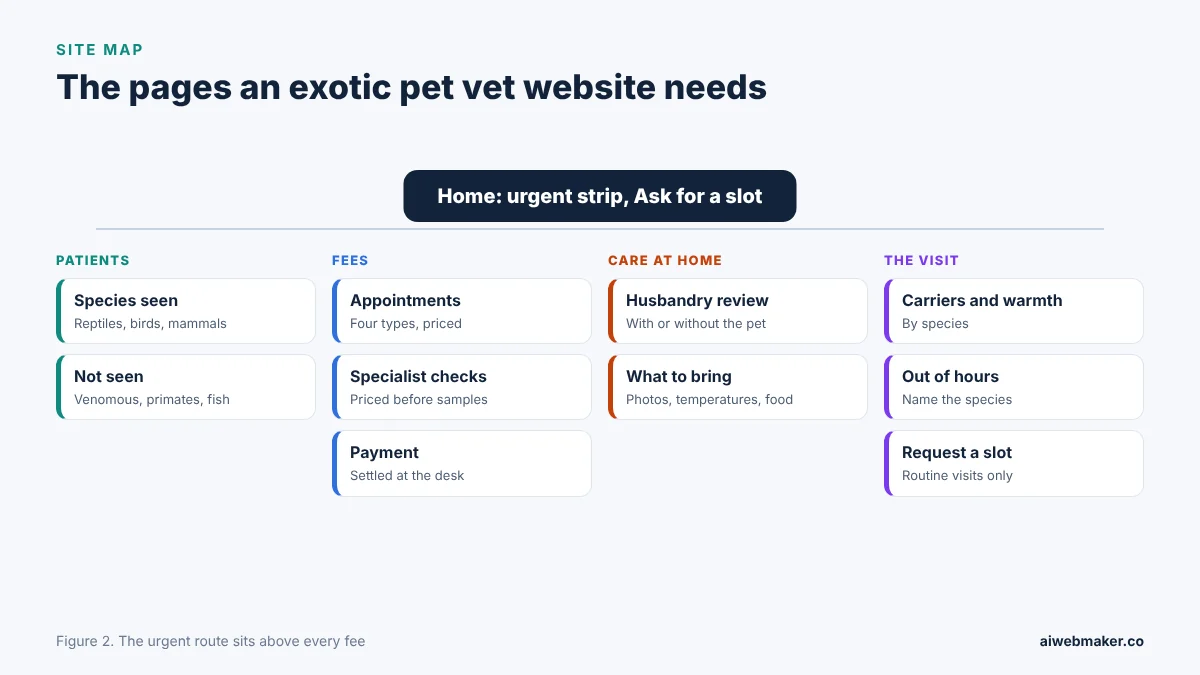
Patients, fees, care at home and the visit are the four strands of this exotics plan, with an emergency strip sitting above all of them. Scales and Feathers Exotic Vets, the sample clinic, opens with the line about knowing a gecko from a guinea pig and three facts: three groups of animals, every patient weighed to the gram and a 30 minute standard consultation. The exotic pet vet website example with an emergency line above the fees then lists reptiles, birds and small mammals, and states that it does not see venomous species, primates or fish. Four appointment types follow: a new pet health check at $55, a consultation at $68, a husbandry review at $45 and nails, beak and wing care at $28. A table of specialist checks, a section on the enclosure, travel tips, photos, reviews, questions and an appointment request complete the page.
One species list, three very different patients
The species page is the clinic's first filter, and it should be specific enough that a keeper never travels to the wrong door. Grouping animals into reptiles, birds and small mammals, then naming common examples in each, lets a keeper find a bearded dragon or a chinchilla at a glance. Each group needs a line on how the clinic adapts to it, such as heated rooms for reptiles or dim, quiet rooms for birds. Saying which animals are not seen, and suggesting the keeper rings before travelling if unsure, prevents disappointment. Licensing for keeping some species differs by country, and protected animals may need paperwork under rules such as the international CITES agreement, so the page can remind keepers to check their own obligations.
| Group | Examples in the sample | What the page mentions |
|---|---|---|
| Reptiles | Lizards, snakes, tortoises and turtles | Heated rooms, temperatures, lighting and diet |
| Birds | Parrots, cockatiels, budgerigars, canaries, finches, hens | A dim room and short handling |
| Small mammals | Rabbits, guinea pigs, ferrets, rats, chinchillas, degus, hamsters | Teeth, diet and weight, bonded pairs seen together |
| Not seen | Venomous species, primates and fish | Ring first, and another clinic suggested |
Fees for visits that last fifteen to forty minutes
Exotics fees confuse keepers because the animals are small and the visits feel short, so each appointment type should say what the time buys. The sample's new pet health check takes 40 minutes and records weight and body condition, checks sex where possible, looks at setup photos and sends a care sheet home. A consultation for an unwell or worrying animal takes 30 minutes, with same day slots kept back each morning and the plan and costs explained first. Tests, X rays and medicines are priced separately, and the page promises that every cost is explained before anything is done. Fees are settled at the desk at the end of each visit, which the request section repeats.
| Appointment | Length | Sample price | What it covers |
|---|---|---|---|
| New pet health check | 40 minutes | $55 | Weight, sex where possible, setup photos, a care sheet |
| Consultation | 30 minutes | $68 | A full examination, a plan and its costs |
| Husbandry review | 30 minutes, pet optional | $45 | Heat, light, humidity, space and diet |
| Nails, beak and wing care | 15 minutes | $28 | Trims as needed, wing trims discussed first |
Specialist checks priced before a sample is taken
Specialist checks are where an exotics bill can surprise a keeper, so the page should name each check, what it involves and a starting price. The sample lists a faecal parasite check, a blood sample sized to the animal's weight, X rays, a dental check for rabbits and guinea pigs under anaesthetic, a tortoise check before hibernation and DNA sexing for birds. Its introduction says that a test is suggested only when its answer would change what happens next, which is a policy keepers can respect. A closing note confirms that every price is agreed before a sample is taken. Writing the checks out this way turns an unexpected cost into an informed choice.
| Check | What it involves in the sample | From |
|---|---|---|
| Faecal parasite check | A fresh dropping under the microscope | $30 |
| Blood sample | A tiny sample sent to a laboratory | $85 |
| X rays | Gentle restraint or a short anaesthetic | $120 |
| Rabbit and guinea pig dental check | Back teeth examined under anaesthetic | $160 |
| Tortoise check before hibernation | Weight, body condition and a faecal check | $50 |
| DNA sexing for birds | Feathers or a drop of blood sent away | $35 |
Husbandry reviews: advice booked before, during or without a visit
Husbandry advice is the service that sets an exotics clinic apart from a general practice, and it can be sold on its own. The sample explains that many problems it sees begin with something slightly wrong at home, such as a basking spot a little too cool, a lamp that has stopped working or a diet low in hay. Keepers are asked to bring photos of the enclosure, temperatures at both ends, the age of any UV lamp and a week's food list. A review can be booked with or without the animal, even before buying one, and ends with a written list of changes ranked by urgency. With the booking website builder for exotic pet clinics and their routine visits, a keeper requests a review or a check, and a nurse confirms it, offers another day or suggests a clinic better placed to help. Fees are paid at the desk to the clinic, with no portion passing to the platform, while anything urgent goes to the phone instead of the form.
Emergencies, out of hours and the phone before the form
An exotics clinic's emergency guidance should be short, visible on every page and clear that a form is never the route for an animal in trouble. The sample lists the signs that mean phoning at once, including bleeding, struggling to breathe, collapse, fits, a rabbit or guinea pig that has stopped eating or passing droppings, and any animal caught by a cat or dog. Outside opening hours it sends keepers to their nearest emergency vet, asking them to name the species first so the clinic on duty can say whether it can help. Veterinary practice is regulated nationally, and the rules on out of hours cover and who may treat which animals differ between countries. Keeping this section to signposting, rather than advice on treatment, protects both the animal and the clinic.
Vet for a bearded dragon and parrot vet near me: searches by species
Keepers rarely search for an exotics clinic by name, and type the species and the problem instead. Typical phrases include vet for a bearded dragon, parrot vet, rabbit dental check or tortoise hibernation check. Pages that name each species group and each check hand each of those searches an exact match. A map listing with real opening hours, a note on the out of hours route and photos of the quiet consulting rooms helps a worried keeper decide quickly. Reviews from owners of particular species, such as a gecko eating again or a parrot handled calmly, persuade other keepers of that species. Articles on preparing for hibernation, choosing a UV lamp or bringing a bird to the clinic attract keepers long before they need an appointment.
The clinic's website sums for a year
An exotics clinic's website year is the hosting and its domain, with twelve husbandry articles from AI credits adding around $7.80. A clinic with steady appointments finds the yearly $119 the cheapest route. A practice that has just opened its doors may prefer $19 a month while its list of keepers grows. Updating a fee, adding a species or rewording the emergency strip is never charged. The $189 plan appears below only as a point of reference.
| Item | Yearly | Monthly |
|---|---|---|
| Hosting the exotics clinic pages | $119 | $228 over twelve months |
| Domain | Depends on the ending | Depends on the ending |
| Higher plan, for comparison | $189 a year | Not needed |
| Twelve husbandry articles at about $0.65 | About $7.80 | About $7.80 |
| Fee, species and check updates | No charge | No charge |
| Year before the domain | About $126.80 | About $235.80 |
No species list and no emergency route: why keepers ring another clinic
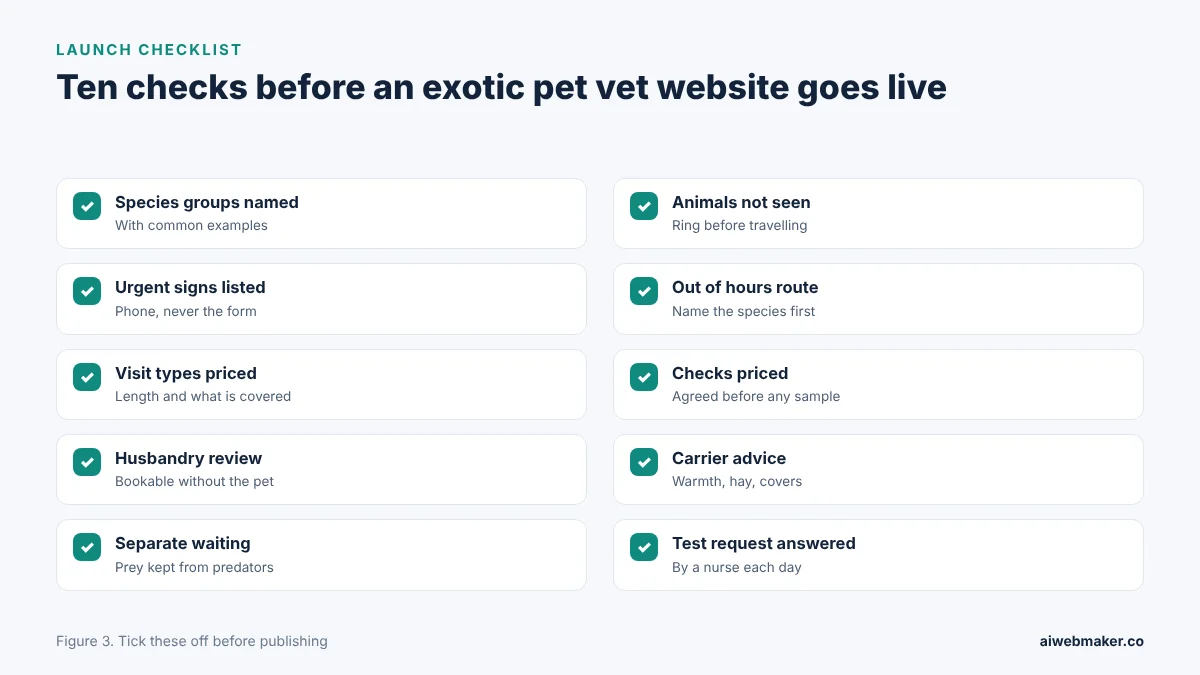
Keepers ring another clinic when a page never says which animals it treats, because they cannot risk a journey with a stressed patient. No emergency guidance suggests the clinic has not thought about the animals most at risk. Fees for checks hidden until the visit make an already anxious keeper fear a large bill. A waiting room shared with barking dogs worries owners of birds and rabbits, so silence about separate areas counts against the clinic. Generic pet photos say nothing about expertise with scales or feathers. Ten remedies for these gaps fill the clinic's launch card below.
Frequently asked questions
Does a dedicated exotics clinic also see cats and dogs?
Some practices see both, while dedicated exotics clinics often keep to reptiles, birds and small mammals. The sample sees exotics only, which keeps waiting areas quiet and equipment sized for small patients. A clinic that does not see cats and dogs can still suggest a nearby practice for them. The page should state its choice plainly near the species list. Clear wording saves keepers of mixed households from confusion.
Why are exotic patients weighed in grams at every visit?
Small animals can lose weight that matters long before an owner notices it by eye. Recording weight in grams at every visit builds a trend the vet can compare over months. A change of a few grams means far more to a budgerigar than to a large dog. Each weight goes on the animal's record, which helps future visits. The page can explain this briefly so keepers understand why the scales come out first.
Can a keeper get setup advice before buying a reptile or bird?
Many exotics clinics offer advice before an animal arrives, and the sample's husbandry review works without a pet present. Keepers bring photos or a sketch of the planned enclosure and a list of the equipment they intend to buy. The vet then goes through heat, light, space and diet for the species in mind. Advice given early can prevent problems that would later need treatment. Offering this openly brings in keepers at the very start of their time with a new animal.
Where should a keeper turn when an exotic pet is unwell at night?
Outside the clinic's hours, the keeper should phone the nearest emergency vet and name the species before setting off. Not every emergency clinic treats every exotic animal, so that call matters. The website should give the out of hours route clearly and repeat it near the request form. Keepers should never wait for a reply to an online form when an animal is in trouble. Rules on out of hours cover differ by country, so each clinic should describe its own arrangement.
A new pet check and a review, and the clinic's hosting year is paid
A new pet health check plus a husbandry review brings in close to the full $119 that hosts an exotics clinic's pages for a year. Paid by the month, $19 is less than a single nail and beak trim. Keepers who find a clinic that understands their species tend to stay for the animal's whole life, which for tortoises and parrots can be decades. A clear species list, an emergency route and prices for checks persuade careful keepers more than any collection of cute photos. A keeper who rings during hours already knowing which species are seen shows the pages are sending the right animals to the right door.
Build your website in Minutes and get the AI Tools that work
Start Building Your Website →