A Year of Dog Walking Website Costs, Counted in Regular Walks
A dog walking business pays $119 in yearly hosting or $19 in monthly instalments, and registers its own domain. Topics run through how owners choose, walk types, meet and greets, keys, insurance, groups, weather, emergencies, requests, search and annual spending.
- No coding required
- Live in minutes
- Blog, SEO and chatbot tools included
For a dog walking business, the yearly hosting bill is $119, while walkers who would rather pay monthly are charged $19, and the domain is added at its own price. AI Web Maker sends no bill for the drafting stage, so a walker can rework every walk, price and policy in preview until it reads right. Walks, prices and policies set out in that spirit are visible on the dog walking business website we made as a sample with AI Web Maker, where an imaginary walker explains how keys and new enquiries are handled. A fortnight of regular walks for one dog usually earns more than that annual figure. The harder part is trust, because an owner is handing over house keys and a much loved animal to someone found online. Walking also earns through repetition, so the site has to win regular clients who stay for months or years. Covered below: how owners choose, walk types, meet and greets, keys and insurance, group limits, weather, emergencies, walk requests, search and yearly costs.
This article is part of our complete guide: Pet Business Website Builder.
What do owners check before trusting a walker with keys and a dog?
Owners check a walker's reliability, safety and character before anything else, because the arrangement involves their home as well as their dog. They look for a real name and face, a clear area covered and evidence of insurance. Next they compare walk types, lengths and prices against their working week. Owners of puppies, older dogs or nervous dogs read closely for signs that the walker adapts to them. Many then ask for a meet and greet before agreeing to anything regular. A website that answers these points calmly turns a cautious owner into a weekly client.
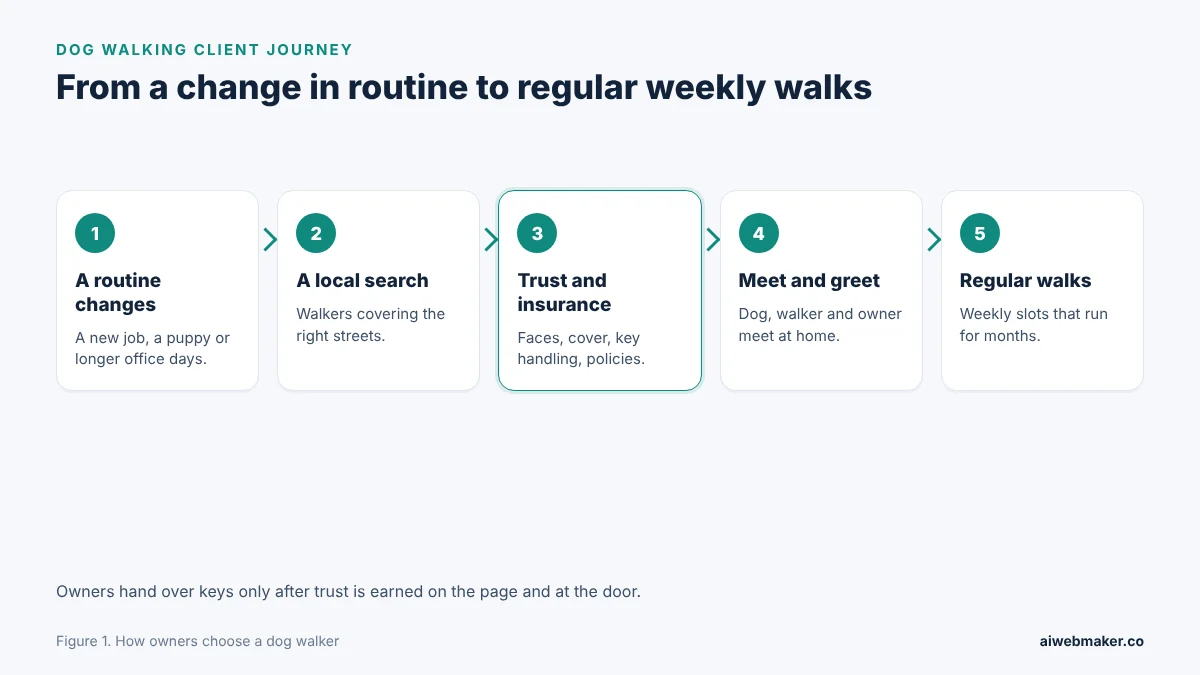
The journey usually starts with a change in the owner's week, such as a return to the office or a new puppy that cannot be left for long. A local search follows, and owners discard any walker who does not clearly cover their streets. The highlighted third step is where most decisions are made, as owners weigh faces, insurance, key handling and policies. A meet and greet then lets the dog, the owner and the walker size each other up at home. Regular walks reward getting every earlier step right, and they can last for years. A walking website earns its keep at the trust step more than anywhere else.
How should solo walks, group walks and home visits be laid out?
Each walk type deserves its own clear entry, because a young spaniel and an elderly terrier need very different outings. Solo walks of different lengths suit energetic dogs, reactive dogs and owners who want one to one attention. Small group walks give sociable dogs company and owners a lower price. Puppy visits break up a long day for young dogs, while pet sitting visits cover feeding, play and medication for cats and other animals too. A gentle stroll for senior dogs shows that the business thinks about every age. When every option states its length, price and who it suits, owners choose without a phone call.
| Walk or visit | Who it suits | What to state |
|---|---|---|
| 30 minute solo walk | Busy days, small or older dogs | Area, price, time window |
| 60 minute solo walk | Energetic or reactive dogs | Route types, lead rules |
| Small group walk | Sociable dogs | Maximum group size, how dogs are matched |
| Puppy visit | Young puppies home alone | Toilet break, play, feeding |
| Pet sitting visit | Cats and dogs while owners travel | Feeding, medication, home checks |
| Senior dog stroll | Older dogs and a slower pace | Distance, rest stops, mobility care |
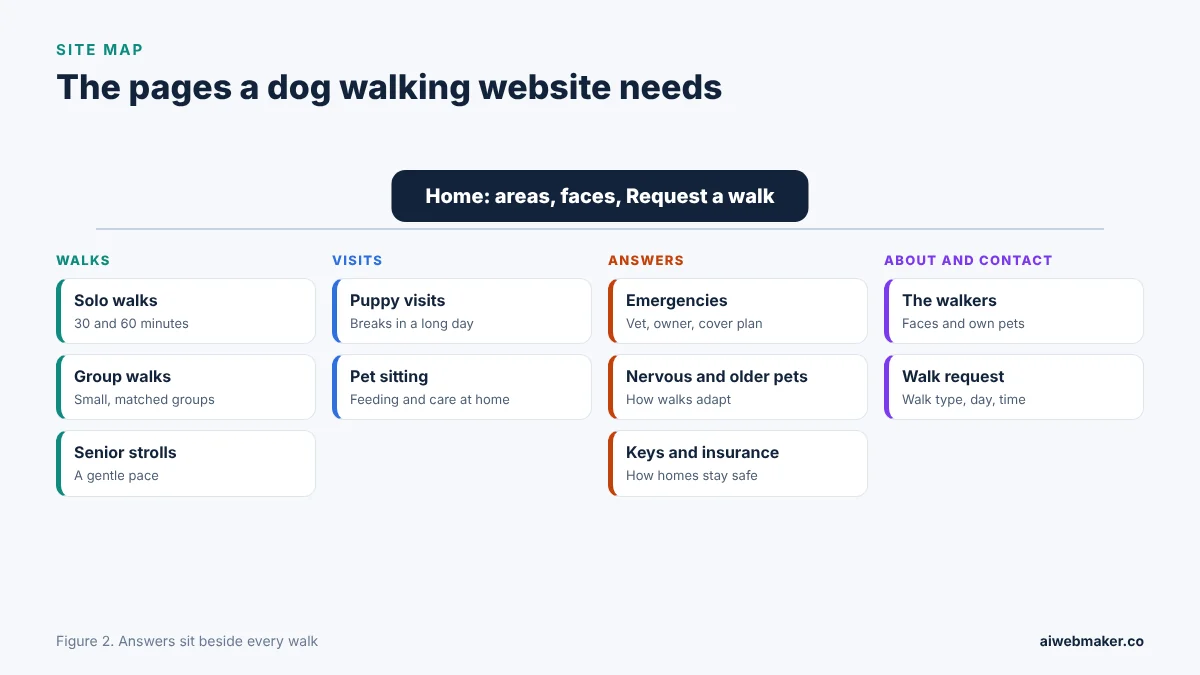
Walks and visits fill the two left branches of this plan, while answers and the people behind the walks sit beside them for owners who need reassurance. Happy Paws Pet Care, our sample walking business, lists six bookable options: a 30 minute solo walk, a 60 minute solo walk, a small group walk, a puppy visit, a pet sitting visit and a senior dog stroll. Its answers page explains what happens in an emergency and how walkers care for nervous, elderly or special needs pets. The home page shows opening hours, how to get urgent help and the people who will know each pet, while the about page tells why the business began. All six services and their pages came together in 52 seconds, as the dog walking website example with six bookable walks and visits shows. An enquiry form on the contact page catches owners with questions first.
Why does a meet and greet come before the first walk?
A meet and greet comes first because it lets the dog meet the walker on home ground and lets the owner judge the walker in person. The walker learns the dog's lead manners, recall, fears and quirks, along with practical details such as where the lead hangs and how the alarm works. Vet details, emergency contacts, feeding notes and any medical needs are recorded at this point. Many walkers follow with a short trial walk before agreeing a regular slot. The website should say whether the meet and greet is charged and how long it lasts. A careful first visit prevents most problems that would otherwise surface months later.
How should keys, alarms and insurance be explained?
Keys, alarms and insurance should be explained plainly, because owners worry about their home as much as their dog. Good practice includes key tags with no address, secure storage and a record of who holds which key, with lockboxes or codes used only where the owner agrees. Liability insurance covering dogs in the walker's care is something many owners ask about, so stating the cover held answers the question early. Some cities and local councils require a permit for professional walkers or cap the number of dogs one person may walk, so the rules where the business operates need checking. Pet first aid training and background checks can be listed where they are genuine. Clear answers here often convert a nervous enquiry into a signed agreement.
| Trust detail | Why owners ask | How to show it |
|---|---|---|
| Insurance | Accidents, injuries, damage | The type of cover held, stated plainly |
| Key handling | Security of the home | Unlabelled tags, secure storage, return policy |
| Local permits | Rules in some cities and councils | Permit details where they apply |
| Pet first aid | Injuries on walks | Course name and when it was taken |
| Background checks | Access to the home | Only where genuine and current |
What keeps a group walk calm and safe?
A group walk stays calm and safe when the group is small enough for one walker to control every dog at once. Many businesses set their own cap below any local limit, and stating that number reassures owners. Dogs are best matched by size, energy and temperament, with new dogs joining gradually after a solo assessment. Off lead time should happen only with the owner's written agreement, a reliable recall and a safe, enclosed or quiet space. Transport between home and the walking area needs secure crates or guards in the vehicle. Owners who see a clear group policy trust that their dog walks with suitable companions.
How should walks change in heat, cold and storms?
Walks should change with the weather, and a written policy shows owners that the walker puts the dog's safety first. In hot weather, walks can move to early mornings or evenings, shorten and avoid hot pavements that can burn paws. Dogs with short noses, older dogs and heavy coated breeds are especially vulnerable to heat, and signs of overheating need an immediate response. Icy paths, road grit, storms and fireworks seasons call for shorter routes and extra care with nervous dogs. The website can explain when a walk becomes a garden play visit instead, and whether the price changes. A clear weather policy avoids arguments on the day and keeps dogs safe.
| Condition | Usual adjustment | What owners are told |
|---|---|---|
| Hot days | Early or late walks, shade, water | When walks shorten or become visits |
| Cold and ice | Shorter routes, paw checks | Coats for small or thin coated dogs |
| Storms | Indoor play or a short break | How nervous dogs are comforted |
| Fireworks season | Walks before dusk, secure harnesses | Extra checks on fittings |
| Flooding or smoke | Visits instead of walks | Any change to the price |
What should an emergency plan for a walking business cover?
An emergency plan should cover what happens if a dog is injured, falls ill, goes missing or the walker cannot attend. The usual order is to keep the dog safe, contact the owner, then go to the owner's chosen vet or the nearest one if the owner cannot be reached. How vet costs are handled should be agreed in advance and written into the agreement. A plan for missing dogs, including who to call and where to search, is rarely needed but always checked for. Cover arrangements for a walker's illness or holiday show that the business is dependable. Prepared answers reassure owners long before anything goes wrong.
How do regular walk requests reach the walker?
Regular clients usually agree a weekly pattern after the meet and greet, then request extra walks when plans change. Through the booking website builder that dog walkers use for walk requests, an owner picks a walk type, chooses a day and time and sends the request. The walker looks at the route and the other dogs booked that day, then accepts it, proposes another time or declines it. Owners pay the walker directly, for example against a weekly or monthly invoice, with every cent of those payments staying with the business. Cancellation notice, holiday cover and public holiday rates belong on the same page so nothing surprises a client. A request route that respects the walker's diary keeps the business sustainable as well as busy.
Which local searches lead owners to a dog walker's site?
Owners searching for a walker type phrases such as dog walker near me, puppy visits, group dog walks or pet sitter, often naming a neighbourhood or park. Walk pages that use those words, and an areas page naming the streets and districts covered, match the way people search. The map listing deserves photos of real walks, accurate hours, the areas served and the website address. Reviews mentioning punctuality and a happy dog weigh heavily with other owners. Seasonal articles on hot weather walking or calming dogs during fireworks reach owners at the moment they worry. Steady local writing makes the walker a familiar name in the neighbourhood.
What does the walking diary need to set aside for the website each year?
Setting money aside for the website means hosting and a domain, with a year of seasonal walking articles drafted through credits costing about $7.80 in total. Established walkers with full diaries save most with one annual payment. A walker still building a client list may choose monthly billing at first. Updating walk prices, areas and holiday dates carries no extra charge at any point. The figures below set the yearly and monthly options next to the $189 tier as a comparison.
| Item | Yearly | Monthly |
|---|---|---|
| Hosting the walking pages | $119 | $228 over twelve months |
| Domain | Depends on the ending | Depends on the ending |
| Higher plan, for comparison | $189 a year | Not needed |
| Twelve seasonal walking articles at about $0.65 | About $7.80 | About $7.80 |
| Walk prices, areas and holiday dates | No charge | No charge |
| Year before the domain | About $126.80 | About $235.80 |
Why do owners close a walker's page without enquiring?
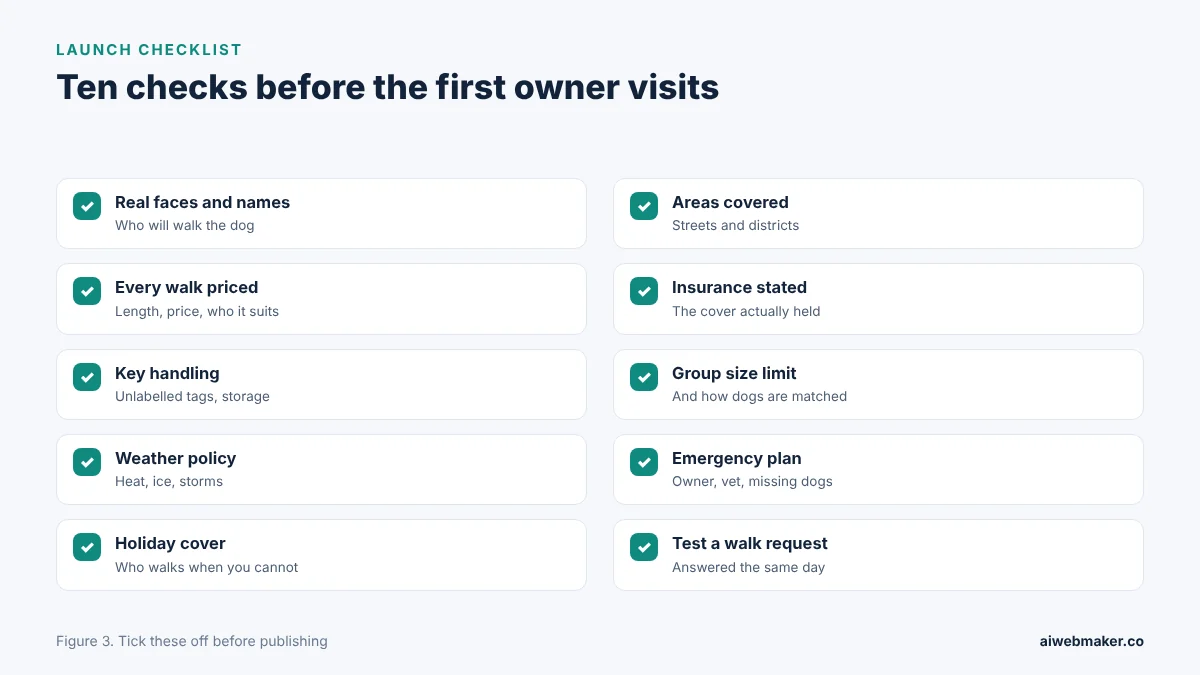
Owners close a walker's page fastest when there is no face, no name and no mention of insurance, because nobody hands keys to a stranger. A missing area list leaves them unsure the walker even covers their street. Unclear group sizes or off lead rules worry owners of small or nervous dogs. No word on emergencies or holiday cover suggests the business has not thought ahead. Prices hidden behind a phone call make busy owners move on to someone clearer. These are the doubts the ten launch checks pictured next are meant to clear.
Frequently asked questions
Is a trial walk worth charging for?
A trial walk is worth offering, and many walkers charge a modest fee or fold it into the first week of regular walks. The trial shows the walker how the dog behaves on the lead, around other dogs and near traffic. It also lets the owner see how the walker handles the dog before committing to a weekly slot. The website should state whether the trial is charged, how long it lasts and what happens afterwards. A clear trial reduces cancellations and starts the relationship on honest terms.
What happens if the regular walker is ill or on holiday?
Owners want to know that walks continue when their usual walker is away, or at least that they will be told in good time. Larger businesses can send a colleague who has already met the dog, while solo walkers may partner with a trusted local walker. The website should explain how cover works, how much notice owners receive and whether they can decline a substitute. Honest answers matter more than perfect cover. Owners forgive a cancelled walk far more easily than a surprise stranger at the door.
Do dog walkers need insurance or a licence?
Insurance and licence rules for dog walkers vary widely between countries, regions and even cities. Many professional walkers hold liability insurance covering dogs in their care, and some local authorities require permits or limit the number of dogs per walker. A walker should check the rules where they work and state their cover plainly on the website. Owners increasingly ask about insurance before booking, so a clear answer saves time. Openness about cover is one of the strongest signs of a professional operation.
Can a walker give medication or care for an elderly dog?
Many walkers care for older dogs and give simple medication, but only with the owner's written instructions and within what they are comfortable doing. The senior stroll and puppy visit pages can explain how pace, distance and rest stops adapt. Anything beyond routine care should stay with the owner and their vet. Any change in the dog's health should be reported to the owner promptly. Careful, honest limits make owners of older dogs some of the most loyal clients.
How many regular walks repay a year of the walker's website?
One dog on a regular weekly pattern usually repays the $119 of hosting within a couple of weeks. At $19 a month, two or three walks generally clear the bill. A client who keeps walking with the business for a year brings dozens of outings, and happy owners recommend walkers to neighbours in the same park. Visible insurance, a calm emergency plan and an easy walk request win trust that leaflets cannot. Walkers who keep availability and areas current spend less time answering the same questions. A diary of familiar dogs waiting at the door each week is the return that counts.
Build your website in Minutes and get the AI Tools that work
Start Building Your Website →