A Dog Trainer's Website: Yearly Cost, Sessions and Kind Methods
A dog trainer's booking pages cost $119 to host for twelve months, or $19 if paid month to month, and a domain sits on top. Covered here: how owners choose, sessions, methods, formats, puppies, behaviour cases, requests, search and annual costs.
- No coding required
- Live in minutes
- Blog, SEO and chatbot tools included
Hosting a dog trainer's booking pages comes to $119 across a year, or $19 each month for trainers who prefer smaller payments, and the domain is chosen and paid for alongside. AI Web Maker does not bill trainers for drafting session pages or for testing them on the preview screen. A single puppy course usually earns more than twelve months of hosting. Session pages for a puppy course and for recall work can be seen together in our dog training business website design, a fictional trainer's site we generated with AI Web Maker. The real difficulty is that owners rarely search for a trainer when life is calm, because they search when a puppy nips, a dog drags them down the street or recall fails in the park. Those owners are stressed, sometimes embarrassed and wary of harsh methods they have read about. What follows covers how they choose, the session pages, methods, formats, puppy courses, behaviour cases, session requests, search and the budget for a year.
This article is part of our complete guide: Pet Business Website Builder.
How do owners pick a trainer when their dog has a problem?
Owners pick a trainer by matching their problem to someone who clearly handles it, then checking that the methods feel kind and the price fits. A new puppy owner looks for a course that starts soon and suits the puppy's age. An owner whose dog pulls or ignores recall searches for that exact problem and wants to see it named. Owners of reactive or anxious dogs read far more carefully, looking for experience, calm language and an honest first step. Many also check whether the trainer visits homes, runs classes in a hall or works online. The trainer whose pages name the problem, the method and the next step usually gets the booking.
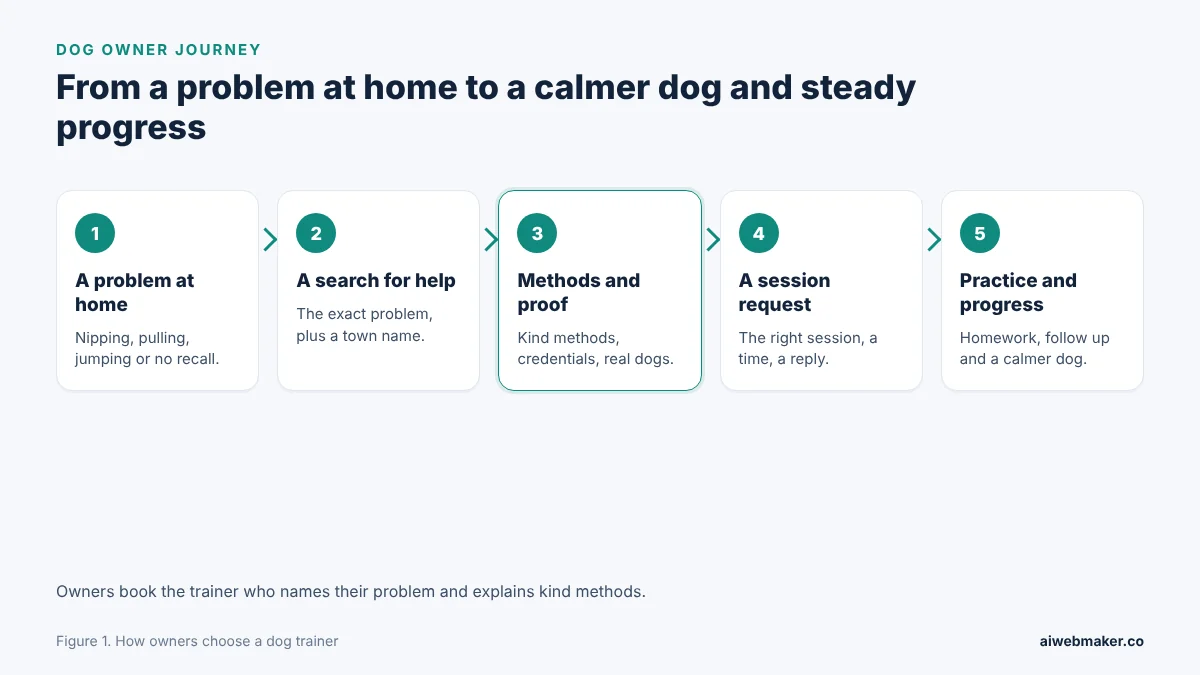
Most owners reach the second step already worried, which is why the third, where they judge methods and proof, carries the highlight. A problem at home might be a puppy biting hands, a rescue dog barking at visitors or an adult dog that bolts after squirrels. The search that follows is specific, so a page named after the problem meets the owner exactly where they are. Methods and credentials then decide whether the owner trusts this person with a dog they love. A session request turns that trust into a plan, and steady practice at home turns the plan into progress. Each page should carry an owner one step further along this path.
Which session pages help owners book the right training?
A dog training website works best when each session has its own page, named after the problem or stage it addresses. Puppy courses, everyday manners, lead walking, recall and behaviour support attract different owners with different worries. Each page should say who the session suits, how it runs, how long it lasts, where it happens and what it costs. A services page explains formats and what to expect, while an about page sets out methods and background. An advice section and a contact page complete the site. Clear separation spares a worried owner from wading through puppy content to find help for an adult dog.
| Session | Typical owner | What the page should cover |
|---|---|---|
| Puppy course | New puppy, first weeks at home | Age range, handling, toilet habits, early cues |
| Manners and obedience | Young or adolescent dog | Sit, stay, settle, greeting people calmly |
| Lead walking | A dog that pulls | Equipment advice, short practice plans |
| Recall | A dog that runs off | Safe practice spaces, long line work |
| Behaviour support | Fear, reactivity or guarding | Longer first consultation, vet check advice |
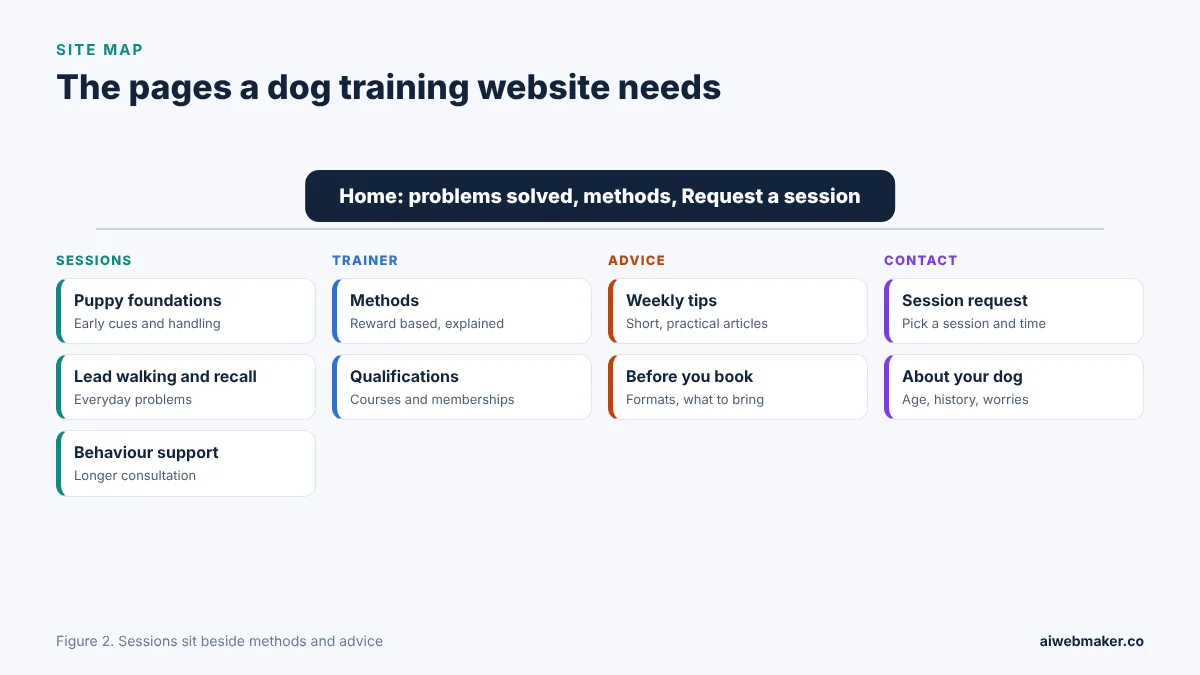
Sessions form the busiest branch of this plan, with advice and the trainer's background close by so owners can check methods before asking for a time. In the sample built for Good Sit Dog Training, five sessions can be booked: Puppy foundations, Good manners and basic obedience, Lead walking, Recall training and Behaviour support, which carries the highest price. Its services page explains session formats and what to expect, then offers a section called Learn More Before You Book for owners still deciding. The about page tells why the trainer works with dogs and lists qualifications and experience, while the home page carries advice given every week. The dog training website example with five bookable sessions was generated in 59 seconds across five pages. Its contact page invites owners to describe themselves and their dog, which prepares the first conversation.
Why do reward based methods matter to owners reading a trainer's page?
Many owners now look specifically for reward based training, and they read a trainer's page for clues about how their dog will be handled. In many places dog training needs no licence, so anyone can call themselves a trainer, and careful owners know it. Explaining the method plainly, such as rewarding the behaviour the owner wants and managing the situations that trigger problems, reassures more than jargon. Some countries and regions restrict or ban certain aversive tools, such as electric shock collars, so trainers should know the rules where they work. Recognised courses, professional memberships and any code of practice followed add weight. A calm, transparent account of methods is often the reason an owner books.
| Question owners ask | What a clear answer includes |
|---|---|
| How will my dog be taught? | Rewards for wanted behaviour, small steps |
| What equipment do you use? | Flat collars, harnesses, long lines, treats |
| What happens when my dog gets it wrong? | Changing the setting, not punishment |
| Can my family join in? | Who attends and how practice works at home |
| How is progress judged? | Goals agreed at the start, reviewed each session |
Home visits, group classes or online: which format suits which dog?
Formats suit different dogs and owners, and the website should help each owner choose before booking. Home visits work well for problems that happen at the door, on the sofa or on the owner's own street. Group classes give puppies and sociable dogs practice around distractions, though they can overwhelm a nervous dog. Online sessions suit coaching on routines, puppy planning or homework between visits. Some trainers also meet owners in a park or town centre, where real distractions can be practised safely. A short comparison helps owners match the format to their dog's temperament and their own week.
| Format | Suits | Points to state |
|---|---|---|
| Home visit | Problems at home, reactive dogs | Area covered, any travel charge |
| Group class | Puppies, sociable dogs | Class size, venue, vaccination rules |
| Online session | Coaching owners, planning | What owners need ready on camera |
| Training walk | Lead walking, real distractions | Meeting points, weather plans |
What should a puppy course page tell a new owner?
A puppy course page should tell new owners when to start, what the course covers and what their puppy needs before joining. Vets and behaviourists describe the early weeks of a puppy's life as a sensitive period for socialisation, so owners appreciate starting soon. The trainer's own vaccination rules, set with veterinary advice, belong on the page so owners can plan. Handling, toilet habits, settling alone, gentle play and early cues such as sit and come form the usual core. The page can also say how many weekly sessions run and what homework follows each one. Owners who know what to expect commit with confidence and often return for later courses.
When should behaviour cases go to a vet or a specialist?
Behaviour cases such as aggression, sudden fear or distress when left alone need a careful first step, because pain or illness can sit behind a change in behaviour. A responsible trainer advises owners to see their vet first when a problem appears suddenly or worsens quickly. Complex cases may need a veterinary behaviourist, and saying so on the website shows professionalism rather than weakness. The behaviour support page can explain that the first consultation is longer, takes a full history and sets a management plan before training begins. Bite incidents may also bring local rules into play, which vary by country and region. Honest limits protect the dog, the family and the trainer's name.
How does a session request reach the trainer, and what happens next?
Sending a session request should take an owner under a minute, from choosing the session to picking a day and an hour. The trainer reviews each request, then confirms it, moves it to a better time or declines it when the dog's needs fall outside their work. Payment is arranged directly between trainer and owner in whatever way the trainer already uses, and no part of any fee reaches the platform. Listing each session as its own option, the booking website builder for dog trainers with session requests lets an owner ask for exactly the help they need. Reviewing before accepting lets the trainer suggest a behaviour consultation instead of a group class when that suits the dog better. A fast, thoughtful reply often decides whether an owner books or keeps searching.
What do worried owners type into search before calling a trainer?
Worried owners type the problem first, with phrases such as puppy classes near me, dog pulls on lead, recall training or reactive dog trainer. Most add a town, so session pages headed with those exact problems meet the search directly. A map listing with the training area, the venues used and photos of real sessions captures many local searches. Reviews that describe a specific improvement, such as a calmer walk or a reliable recall, persuade owners facing the same struggle. Weekly advice on topics like jumping up or settling a puppy at night builds a following that later books. Helpful writing makes the trainer a name owners trust before they ever meet.
Where does a trainer's website money go over a year?
A trainer's website money goes on hosting and a domain, and a full year of advice articles drafted with credits costs under eight dollars. Trainers with a settled client list keep costs lowest on the annual route. Someone launching their first classes may choose monthly billing until the diary fills. Adding a session, changing class dates or updating prices costs nothing more. Below, both billing routes are set against the $189 tier, which is listed purely as a comparison.
| Item | Yearly | Monthly |
|---|---|---|
| Hosting the training pages | $119 | $228 over twelve months |
| Domain | Depends on the ending | Depends on the ending |
| Higher plan, for comparison | $189 a year | Not needed |
| Twelve dog advice articles at about $0.65 | About $7.80 | About $7.80 |
| New sessions, class dates and prices | No charge | No charge |
| Year before the domain | About $126.80 | About $235.80 |
Which warning signs send owners to another trainer?
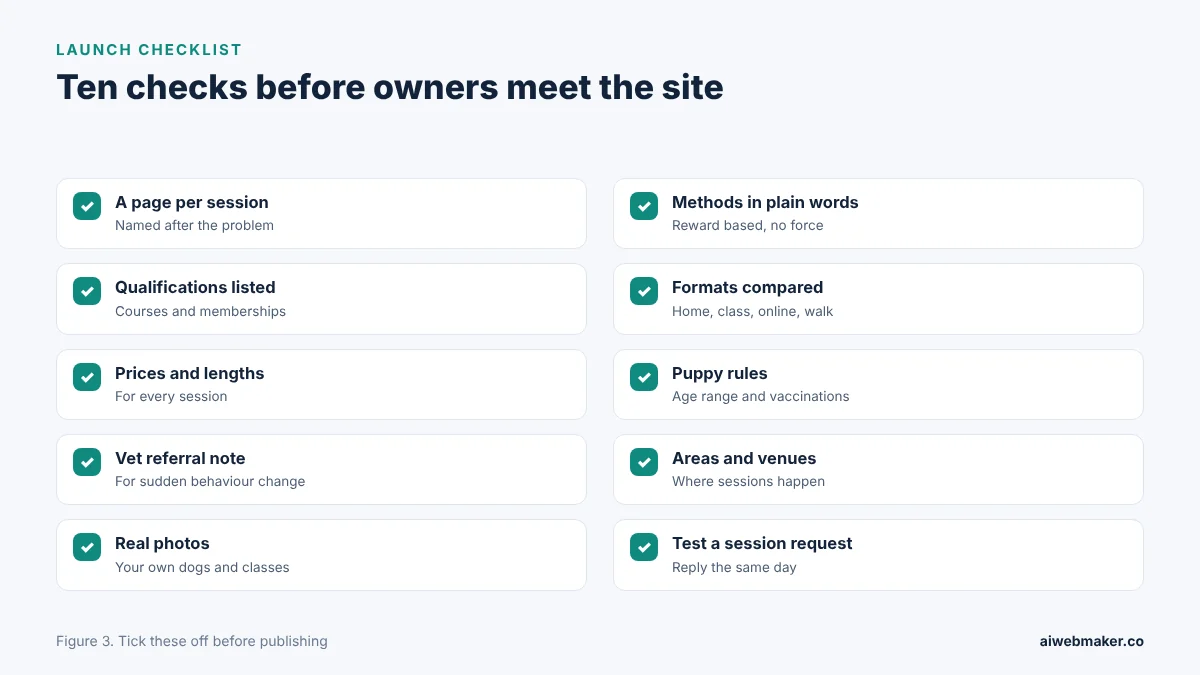
Owners leave a trainer's website when the methods are vague or hint at force, because they fear what will happen to their dog. Promises of guaranteed results in one session make careful owners suspicious rather than hopeful. A site with no prices or session lengths leaves them unable to plan. Missing details about where sessions happen, or which areas are covered, stall the decision. Stock photos of dogs instead of real sessions suggest little experience to show. Each of the ten points in the next figure removes one of these doubts.
Frequently asked questions
How many sessions does a typical puppy course include?
Puppy courses commonly run over several weekly sessions, giving puppies time to practise between lessons and owners time to build habits. The exact number depends on the trainer and the format, so the course page should state it clearly. Some trainers add a follow up session or an online check in once the course ends. Owners also appreciate knowing the age range accepted and any vaccination rules. A clear outline lets owners commit to the whole course with confidence.
Can a trainer promise a dog will be fixed?
No honest trainer can promise that a dog will be fixed, because behaviour depends on the dog's history, health and the practice it gets at home. A website can promise effort, a clear plan and kind methods instead. Owners respond better to realistic goals than to bold guarantees. Advertising rules in many countries also discourage claims that cannot be supported. Truthful language builds a reputation that outlasts any single success story.
Is online dog training worth offering?
Online sessions are worth offering when the work is mostly about coaching the owner, such as puppy routines, toilet training plans or homework reviews. They suit owners who live far away or have dogs that find visitors stressful. Problems that need the trainer to see the dog in real surroundings usually still call for a visit or a walk. The website should explain what online sessions cover and what owners need ready, such as treats and a quiet room. Clear expectations make online work a valued option rather than a disappointing substitute.
What should owners bring to a first training session?
Owners usually need small tasty treats, a well fitted collar or harness, a standard lead and anything their dog finds comforting. For home visits, a quiet room and the family members who will practise help the session run well. Puppy owners should bring vaccination records if the trainer asks for them. A note on the services page about what to bring saves questions and helps the dog succeed. Prepared owners and relaxed dogs make every minute of the first session count.
Is one puppy course enough to repay the trainer's website?
The fees from one puppy course normally exceed the $119 a trainer spends on a year of hosting. Billed monthly, the $19 is typically covered by part of one private session. Every behaviour client who finds the trainer through search adds weeks of work, and many return with their next dog. Kind methods explained clearly, named problems and an easy session request carry weight that advertising cannot. Trainers who keep their advice fresh find owners arriving already trusting them. A diary of calmer dogs and returning families is the result that matters most.
Build your website in Minutes and get the AI Tools that work
Start Building Your Website →