Junk Removal Website Cost and Load Pricing Customers Can Trust
Haulers pay $119 for a full year of junk removal hosting, or $19 per month while the diary fills, buying a domain too. Inside: who books a pickup, service pages, load and item pricing, excluded items, disposal and recycling, pickup requests, business work, search and the yearly cost.
- No coding required
- Live in minutes
- Blog, SEO and chatbot tools included
Haulers can run a junk removal site on AI Web Maker for $119 per year, or on a $19 monthly plan, buying a domain as well. Until the site goes live, the pickup pages and prices sit in the preview at no cost, ready to be adjusted as often as the owner likes. Planning those pickup pages goes better with the junk removal website open beside them, the complete sample for an imaginary clearance firm whose loads, pickups and recycling were all laid out in AI Web Maker. Two garage cleanouts, or a single office clearance, normally cover the hosting for the whole year. Fear of the unknown bill shapes this trade, since customers worry that the price will jump once the truck arrives and the crew sees the pile. A second worry is quieter but growing: where does the junk actually go, and could it end up dumped by the roadside with the customer's name on an envelope inside? What follows covers who books a pickup, the service pages, pricing, excluded items, disposal and recycling, pickup requests, business work, search and what the year costs.
This article is part of our complete guide: Home Services Website Builder.
Clear outs, moves and renovations: who books a pickup?
People book junk removal at moments of change, and each moment shapes what they look for on the website. Families moving house need furniture and appliances gone before the keys are handed over, often at short notice. Homeowners finishing a renovation want rubble, old units and packaging removed quickly. People clearing a garage, a loft or a shed usually face a mixed pile and want one price for the lot. Landlords between tenants and relatives clearing a late parent's home need a crew that works fast and treats belongings with respect. Offices and shops want old desks and fittings taken away outside business hours, with paperwork for their records.
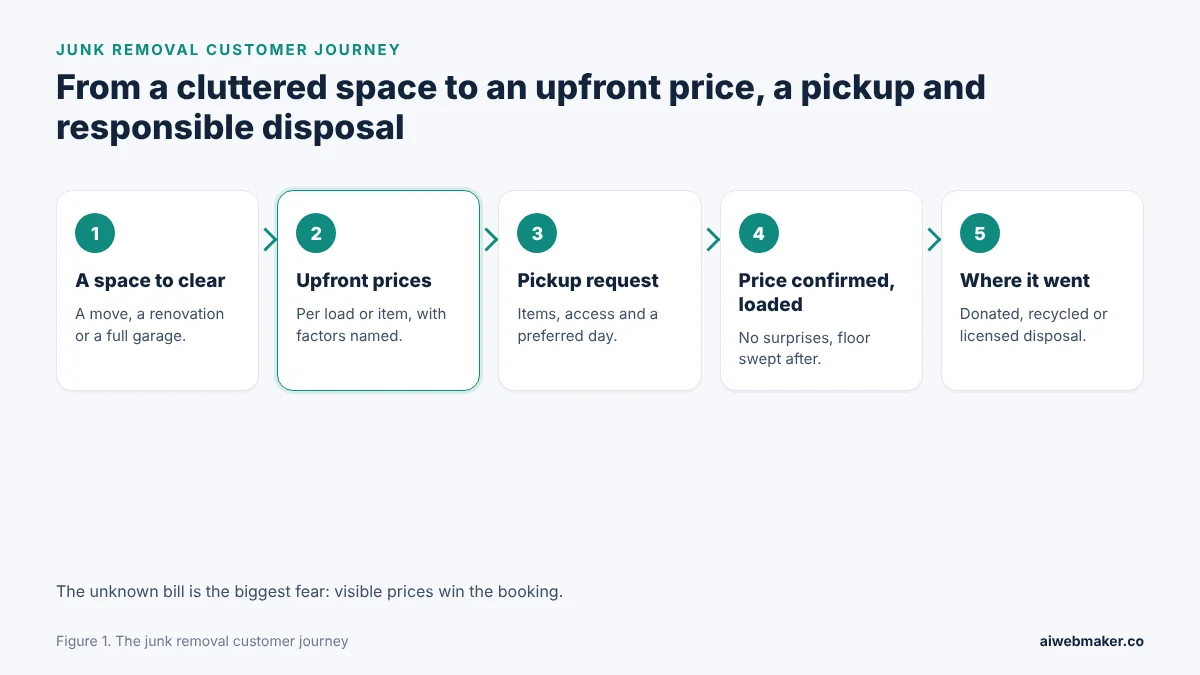
Of these five steps, the second matters most, since an upfront price is what turns a nervous browser into someone willing to book. The journey begins with a full garage, a renovation pile or an empty flat that needs clearing. Visible prices for each kind of load, with the factors that change them, settle whether the customer asks for a pickup. The request then names the items, the access and a preferred day. The pickup itself, with the price confirmed before loading and the space left swept, decides whether the customer recommends the firm. A final note on where everything went completes the trust that brings repeat business.
Six kinds of pickup and what each page should state
Junk removal customers think in terms of what they want gone, so a page or bookable service for each kind of load works better than one general description. Furniture and appliances are the most common single items, while garage cleanouts and yard waste bring mixed loads. Renovation debris is heavy and often needs separate pricing, and business cleanouts need after hours work and careful handling of documents and equipment. Each page should state a starting price and what is included. The table below sets out what customers want to know for each type of pickup.
| Pickup type | Typical load | What the page should state |
|---|---|---|
| Furniture removal | Sofas, beds, wardrobes, tables | Price per item or load, dismantling, stairs |
| Appliance pickup | Fridges, washers, cookers | Handling of fridges, disconnection beforehand |
| Garage cleanouts | Mixed boxes, tools, bikes | Load based price, sorting for recycling |
| Yard waste | Branches, soil, old fencing | Bagged or loose, weight limits |
| Renovation debris | Rubble, old units, plasterboard | Heavy material pricing, excluded items |
| Business cleanouts | Desks, chairs, shop fittings | After hours work, disposal paperwork |
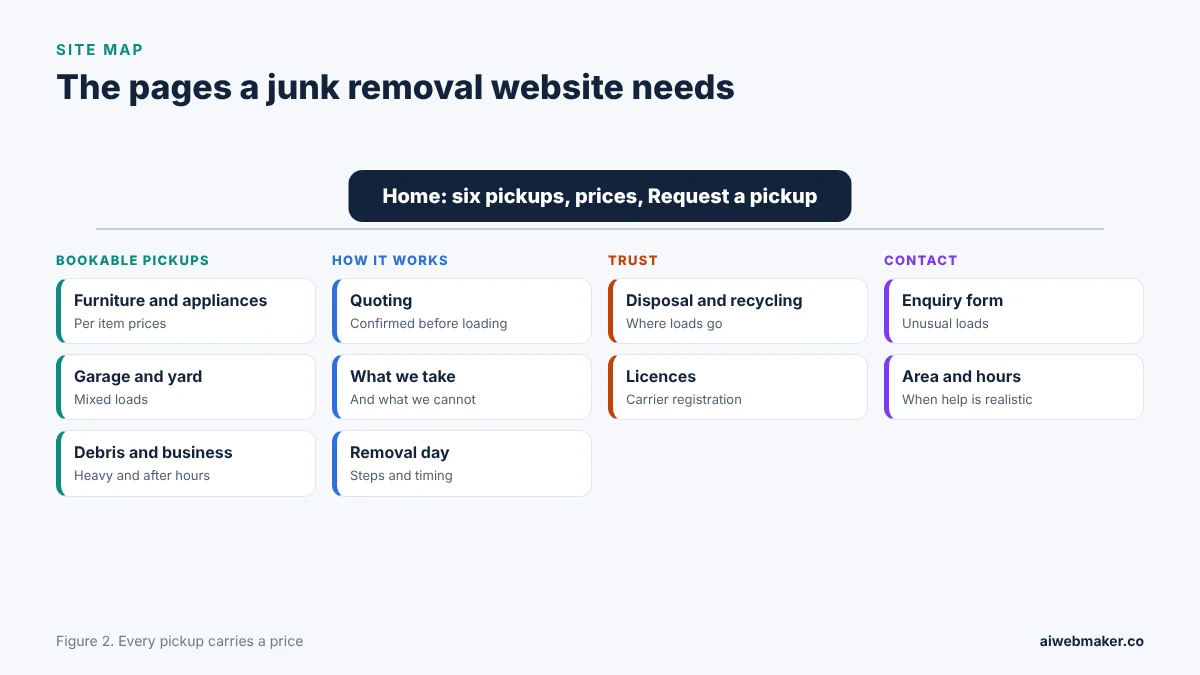
Built around its six pickups, the junk removal site groups its pages into services, how it works, trust and contact. Service pages carry each pickup with a price and a request button. How it works pages explain quoting, excluded items and what happens on the day. Trust pages describe disposal, recycling, licences and insurance. Our sample business, Haulaway Junk Removal, offers six bookable services, each with its own price, from furniture removal and appliance pickup to garage cleanouts, yard waste, renovation debris and business cleanouts, with business cleanouts priced as the largest job on its menu. Its how it works page covers the steps from quote to removal day, how each job is quoted, what happens to the items collected and common questions about what it takes, the about page covers responsible disposal and recycling, and the contact page lists the service area and hours; the junk removal website example with six bookable pickups and clear prices was built in 45 seconds.
Pricing by load fraction, by item or by weight
Junk removal pricing usually follows one of a few models, and naming the model on the website stops arguments on the driveway. Many firms price by the fraction of the truck a load fills, such as a quarter, half or full load. Single bulky items, such as a sofa or a fridge, often carry their own fixed price. Heavy materials like rubble, soil or roof tiles may be priced by weight or carry a surcharge, because disposal sites charge more for them. Labour factors, including stairs, long carries and dismantling, can add to the total. The most important promise is that the final price is confirmed on site before anything is loaded.
| Pricing model | How it works | Suits |
|---|---|---|
| Load fraction | Price set by how much of the truck is filled | Garage and house clearances |
| Per item | Fixed price for each bulky item | Single sofas, fridges, mattresses |
| Weight or heavy surcharge | Extra for dense material | Rubble, soil, tiles, concrete |
| Minimum charge | Covers travel and a small load | Very small collections |
| Labour extras | Stairs, carries, dismantling | Flats, lofts, fitted furniture |
Items crews will not take, and why
Every junk removal firm has items it cannot carry, and listing them clearly prevents awkward moments when the crew arrives. Hazardous materials such as paint, solvents, chemicals and gas bottles usually need specialist disposal under rules that vary between countries and local authorities. Suspected asbestos must never be loaded by an ordinary crew, because disturbing it can release harmful fibres. Some firms take tyres, batteries or fridges only with a surcharge, since they need separate treatment. Pointing customers to the right local service for excluded items is a helpful touch that costs nothing. A clear exclusions list makes customers more confident about everything the crew does take.
| Item | Why it is excluded or handled separately | Where customers can turn |
|---|---|---|
| Paint and solvents | Hazardous and often flammable | Local household waste facility |
| Chemicals and pesticides | Toxic and tightly regulated | Hazardous waste collection services |
| Gas bottles | Risk of explosion | The supplier or specialist collectors |
| Suspected asbestos | Dangerous when disturbed | Licensed asbestos specialists |
| Batteries and tyres | Need separate recycling | Retailers or recycling points |
| Medical waste | Infection risk | Pharmacies or health services |
Donation, recycling and licensed disposal
Where the junk ends up matters to customers and, in many places, to the law. A responsible firm sorts each load, sending usable furniture to charities or reuse shops, metals and cardboard to recyclers and electrical items to approved treatment where rules require it. Landfill should be the last resort, and saying so on the website sets the firm apart from cheaper operators. Rules on waste carriers vary, and in England, for example, businesses that carry waste must be registered, while householders have a duty to check that whoever takes their waste is authorised. Offering a receipt or waste note showing where the load went protects the customer if anything is later dumped illegally. Honest disposal turns a simple haul into a service people feel good recommending.
From pickup request to an empty garage
A pickup request should be quick, with the customer choosing the type of load and a preferred day and describing what needs to go. The page can suggest mentioning stairs, parking, the rough size of the pile and any heavy or awkward items, and keeping a couple of photos ready in case the firm asks. When the request comes in, the firm can confirm the day, propose a different one or decline the job if it falls outside the area. The customer and the firm settle payment between themselves, and the platform keeps no cut of the job. The AI booking website builder that junk removal firms use for bookable pickups assembles the pickup pages and the request route after the owner sums up the business in a short description. A request route this simple turns the urge to clear a garage into a booked morning.
Business cleanouts, landlords and estate clearances
Commercial and sensitive clearances need a different tone, and a separate page shows these customers the firm understands their situation. Offices care about working after hours, keeping corridors clear and getting paperwork that shows how equipment was disposed of. Confidential documents and old computers should go to specialist shredding and data destruction services rather than a general skip. Landlords need fast turnarounds between tenants and photos showing the property left clear. Families clearing a relative's home value patience, respect and the return of any personal papers or valuables found during the work. A table of these clients and their needs helps the firm speak to each one in the right voice.
| Client | What they need | What the page should promise |
|---|---|---|
| Offices and shops | Out of hours work, records | Disposal notes, tidy common areas |
| Landlords and agents | Fast turnaround between tenancies | Photos of cleared rooms, flexible days |
| Estate clearances | Patience and respect | Personal papers and valuables returned |
| Builders and renovators | Regular debris collection | Heavy material pricing, repeat visits |
Search terms that start a clear out
People ready to clear space type phrases such as junk removal near me, furniture collection, garage clearance, rubbish removal or house clearance, often with their district. Titling each pickup page with the customer's own wording, such as garage clearance, lets search engines match it precisely. Photos of the truck, the crew and a cleared garage on the map listing, beside correct opening times, win many of the urgent local searches. Reviews that mention a fair price, a polite crew and a swept floor persuade more than any slogan. Articles on preparing for a house move, what can be recycled or how to clear a loft safely bring readers who later book. A firm that helps people plan their clear out becomes the one they call when the day arrives.
The hauler's annual website sum
A junk removal firm's website brings two yearly lines, the hosting and the domain, with clearance guides drafted through AI credits at about $0.65 apiece. Haulers with a busy diary pay least through the annual option. A new hauler with one truck may prefer monthly billing until the diary fills. New prices, extra pickups or updated disposal notes cost nothing to publish. The table pairs a hauler's yearly and monthly routes, adding the $189 tier as a marker rather than a recommendation.
| Item | Yearly | Monthly |
|---|---|---|
| Hosting the junk removal pages | $119 | $228 over twelve months |
| Domain | Depends on the ending | Depends on the ending |
| Higher plan, for comparison | $189 a year | Not needed |
| Twelve clearance articles at about $0.65 | About $7.80 | About $7.80 |
| Prices, pickups and disposal notes | No charge | No charge |
| Year before the domain | About $126.80 | About $235.80 |
Why a customer with a full garage clicks away
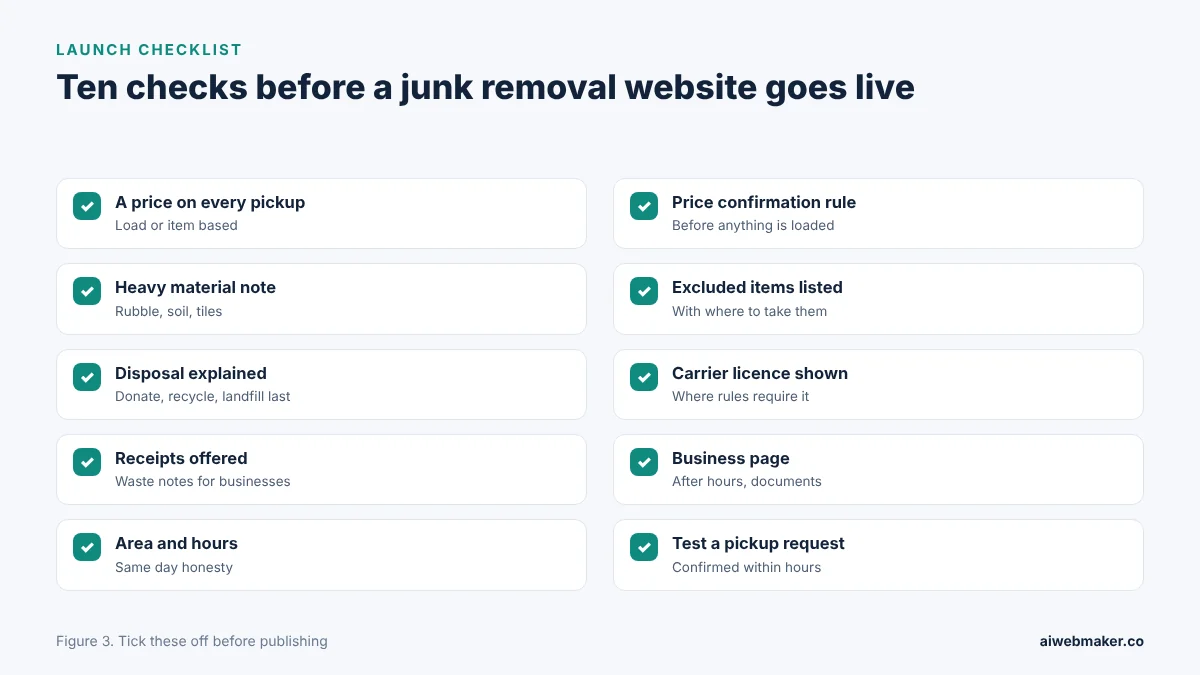
A customer with a full garage clicks away when the website shows no prices, because an unknown bill is the very thing they fear. No explanation of how the final price is confirmed makes them expect a jump on the day. A missing list of excluded items leaves them unsure whether the paint tins in the corner will cause trouble. Silence about where the junk goes worries people who have heard about illegal dumping. A request route that hides behind a phone number loses those who browse late at night. Ten quick checks for a hauler's site, shown in the next figure, deal with each of these worries.
Frequently asked questions
Do customers need to carry items outside before the crew arrives?
Most junk removal crews carry items out themselves, which is a large part of what customers pay for, but the website should say so clearly. Items can stay where they are, whether in a loft, a basement or an upstairs bedroom. Customers should mention stairs, narrow doorways and parking so the right crew size arrives. Anything that must stay behind should be clearly marked or moved aside. Clear expectations keep the visit fast and the price fair.
Can a pickup happen on the same day as the request?
A same day pickup is sometimes possible, depending on the crew's schedule, the size of the load and the area. The request route should invite customers to say if the job is urgent. The firm then confirms whether a slot can be found or offers the next available day. Stating the usual service hours on the contact page helps customers judge what is realistic. Honest availability turns urgent searches into booked jobs without broken promises.
What happens to furniture that is still usable?
Usable furniture can often be donated to charities or reuse shops, provided it is clean, safe and meets their rules, which vary. Upholstered items may need fire safety labels in some countries before they can be passed on. Items that cannot be donated are taken apart for recycling where possible. The website can say which organisations the firm works with, where that is accurate. Customers like knowing their old sofa may find a new home.
Is a receipt or waste note provided after collection?
A receipt or waste note should be offered after collection, and businesses may be required to keep one under local waste rules. The note records what was taken, when and by whom. Householders benefit too, since it shows they used an authorised carrier. A line on the site naming the paperwork each customer receives removes any doubt. Clear records protect both the customer and the firm.
Two pickups against twelve months of hosting
Two garage cleanouts tend to earn a junk removal firm more than the $119 it spends keeping its pickup pages online for the year. One sofa collection covers several months on the $19 plan. Every landlord or office that books again after a smooth first clearance adds work with no extra marketing. Upfront prices, a clear exclusions list and honest disposal notes answer the fears that stop people booking. Firms that photograph each cleared space keep their proof as fresh as their trucks. A run of repeat bookings from landlords and builders shows the hauler's site earning its place on the van.
Build your website in Minutes and get the AI Tools that work
Start Building Your Website →