Carpet Cleaning Website Cost, Fibre by Fibre and Stain by Stain
Carpet cleaners are billed $119 annually for hosting, with $19 monthly as the alternative and a domain on the side. The guide covers customers, services, methods and drying times, fibres, stains, the visit, pricing, commercial work, search and twelve months of costs.
- No coding required
- Live in minutes
- Blog, SEO and chatbot tools included
Carpet cleaners on AI Web Maker are billed $119 for a year of hosting, with a $19 monthly option for cleaners who want it, while the domain carries its own price. No invoice arrives while the rooms, prices and process page are written and checked in the preview. For the process page, a useful model is the carpet cleaning business website, where a carpet cleaner who exists only in this AI Web Maker sample explains stains and drying across a whole site. A couple of living rooms and a sofa usually bring in more than that yearly figure. The harder part of this trade is trust inside the home, because customers are letting a stranger with a machine onto their floors. Many have heard stories of soaked carpets, shrunken rugs or stains that crept back days after the van left, and they compare quotes that are priced in confusing ways. This article walks through who books a carpet cleaner, the service pages, methods and drying times, fibres, stains, the visit, pricing, commercial work, search and the yearly budget.
This article is part of our complete guide: Home Services Website Builder.
Spills, move outs and pets: who calls a carpet cleaner
Most carpet cleaning enquiries start with a specific event rather than a vague wish for cleaner floors. A red wine spill before a family gathering, a dog that has had an accident or a toddler with a felt pen creates sudden urgency. Tenants moving out want carpets presentable for the final inspection, and landlords and letting agents want the same between tenancies. Offices, schools and shops need traffic lanes restored without closing for days. Each of these customers wants to know quickly that the cleaner handles their kind of problem, their kind of fibre and their kind of property.
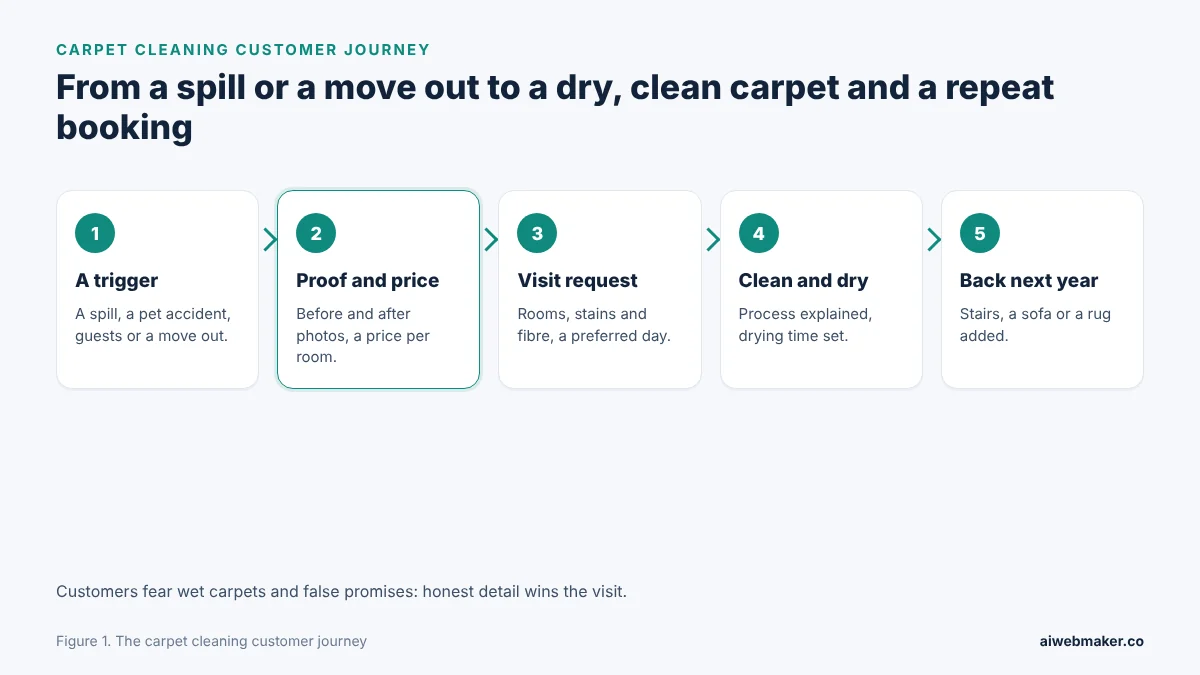
Every path in this journey begins with a trigger, whether a spill, a pet, a move out or simply a carpet that has dulled along the hallway. The deciding step comes next, when the customer looks for before and after photos and a price per room that makes sense. A visit request follows, ideally carrying the number of rooms, the stains involved and the fibre if it is known. On the day, a clear process and an honest drying time decide how the customer feels about the result. Satisfied households tend to return each year and add a sofa, a rug or the stairs. A website built around those five moments gives the cleaner a fair chance at each of them.
Rooms, sofas, stains and offices: the service pages to publish
Each service needs its own page or marked section, since a landlord after an end of tenancy clean searches differently from a parent facing a stain. Carpet cleaning by room is the core service, priced in a way households can follow. Upholstery cleaning covers sofas, armchairs and dining chairs, and it often gets added once customers see it listed. Stain and spot treatment deals with single problems that do not need a whole room cleaned. Commercial carpet cleaning needs its own page, since offices care about scheduling, low disruption and regular maintenance.
| Service | Typical request | What the page should state |
|---|---|---|
| Carpet cleaning | Living rooms, bedrooms, hallways | Price per room, drying time, method |
| Upholstery cleaning | Sofas, armchairs, dining chairs | Fabrics handled, cleaning codes checked |
| Stain and spot treatment | Wine, coffee, pet accidents | What usually lifts and what may remain |
| Commercial carpet cleaning | Offices, shops, schools | Out of hours work, regular schedules |
| End of tenancy cleans | Tenants and landlords | Whole property pricing, timing |
| Rugs and stairs | Wool rugs, runners, staircases | Which rugs are cleaned on site |
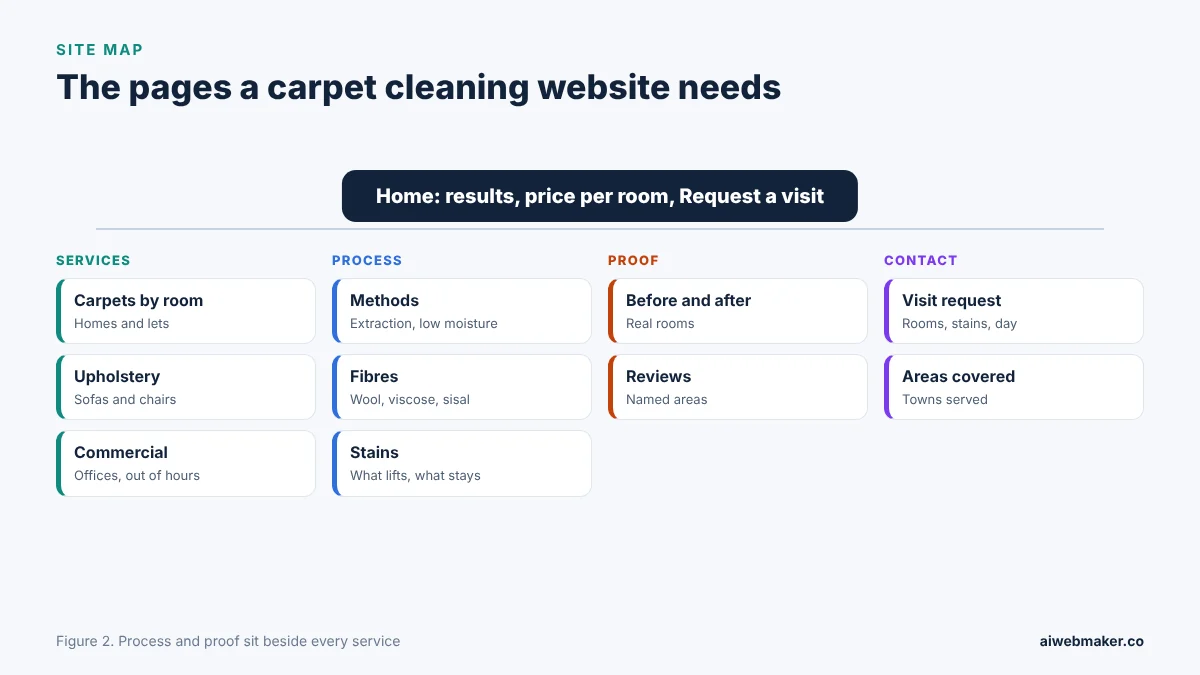
The carpet cleaning site divides into services, the process, proof and contact, with the home page pointing to each and carrying a request button near the top. Service pages hold rooms, upholstery, stains and commercial work. The process branch explains methods, drying times and the fibres that need special care. Proof pages show before and after photos and reviews from named neighbourhoods, while contact pages carry the visit request and the areas covered. Freshstep Carpet Care, the sample company built for this trade, offers four bookable services, carpet cleaning, upholstery cleaning, stain and spot treatment, and commercial carpet cleaning, and its process page sets out the cleaning method step by step before describing the products it uses. The carpet cleaning website example with a step by step process page also includes services, about and contact pages, and it took 46 seconds to build.
Hot water extraction or low moisture: methods and drying times
The cleaning method decides how deep the clean goes and how long the room stays out of use, so customers deserve a plain comparison. Hot water extraction, often called steam cleaning, sprays a cleaning solution into the pile and pulls it back out with strong suction, along with loosened soil. Low moisture encapsulation uses a solution that crystallises around dirt, which is then vacuumed away, and it suits offices that must reopen quickly. Bonnet cleaning, dry compounds and rotary shampooing have their places too, mostly for maintenance or delicate situations. Drying times depend on the method, the carpet, airflow and the weather, so a range is more honest than a promise. Explaining the choice helps customers understand why the cleaner recommends one approach for their home.
| Method | How it works | Often quoted drying time | Best suited to |
|---|---|---|---|
| Hot water extraction | Solution injected and extracted with suction | A few hours to most of a day | Deep cleaning of most synthetic carpets |
| Low moisture encapsulation | Solution crystallises around soil, then vacuumed | Often an hour or two | Offices and busy commercial floors |
| Bonnet cleaning | Absorbent pad on a rotary machine | Short | Light maintenance between deep cleans |
| Dry compound | Absorbent powder brushed in and vacuumed | Little or none | Water sensitive carpets |
| Rotary shampoo | Shampoo worked in with a brush | Longer, with careful rinsing | Heavily soiled areas, with caution |
Wool, viscose and sisal: fibre cautions before any water touches the pile
Fibre identification should come before any cleaning, because the wrong method on the wrong fibre can cause damage that no apology repairs. Nylon and polyester are forgiving and respond well to hot water extraction. Wool cleans beautifully but needs solutions suited to it and controlled heat, since harsh alkaline products can harm the fibre. Viscose, sometimes sold as art silk or bamboo silk, can brown, lose its texture and stay damp for longer, so many cleaners treat it with great care or decline it. Natural plant fibres such as sisal, jute and seagrass can shrink and stain with water and usually need dry methods. A page that names these cautions shows customers the cleaner knows the difference between a quick job and a careful one.
| Fibre | Character | Cleaning caution |
|---|---|---|
| Nylon | Durable, common in homes | Responds well to extraction |
| Polyester | Soft, holds colour | Oily soil can cling to it |
| Polypropylene | Stain resistant, budget friendly | Can crush in traffic lanes |
| Wool | Natural, resilient, luxurious | Wool suited products, gentle heat |
| Viscose | Silky look, delicate | Browning and texture loss, often declined |
| Sisal and jute | Natural plant fibres | Water can shrink and mark them |
Which stains come out, which only fade, and which never move
Stain advice is where honesty matters most, because customers who expect miracles and receive a faint shadow write disappointed reviews. Fresh spills of coffee, wine, mud or food usually lift well, especially when they have not been rubbed or treated with household products. Pet urine is harder, since the smell often comes from the backing or underlay rather than the surface, and it may need a separate treatment. Bleach marks are not stains at all, because the colour has been removed, so cleaning cannot bring it back and only spot dyeing may help. Old dye, ink, rust and candle wax each need their own approach and may not fully disappear. Telling customers this before the visit turns a partial result into an expected one.
| Stain | Usual outcome | Honest note |
|---|---|---|
| Fresh coffee or tea | Usually lifts | Older stains may leave a faint shadow |
| Red wine | Often lifts when treated quickly | Home remedies can set it |
| Pet urine | Surface lifts, odour may remain | Underlay may need treating |
| Bleach | Colour cannot be restored | Spot dyeing is a separate service |
| Ink, dye and rust | Varies widely | Tested on a small area first |
| Candle wax | Usually removable | Coloured wax can leave dye behind |
Inside the visit: the cleaning process step by step
A clear description of the visit removes most of the anxiety customers feel about letting a cleaner into the house. The technician should start by inspecting the carpet, checking the fibre and pointing out any stains or wear that may not improve. Dry vacuuming comes next, because loose grit is easier to lift dry than wet. A pre spray is applied and worked in, then the carpet is rinsed or extracted, groomed and left with air movers if needed. The page can explain which furniture the team moves, how they protect skirting boards and whether customers should keep pets and children off until the carpet is dry. Through the booking website builder for carpet cleaners and upholstery specialists, a household requests a visit, the cleaner confirms it, moves it to another day or says no, and any payment is arranged between cleaner and customer with nothing taken by the platform.
Pricing by room or by area, and the commercial accounts behind it
Carpet cleaning is priced in several ways, and a site that explains its own method stops customers comparing quotes that are not alike. Many cleaners price residential work by room, with notes on what counts as a large room and how stairs and hallways are charged. Others price by square metre or square foot, which suits commercial work and open plan homes. Minimum call out charges, heavy soiling, furniture moving and protector treatments should be named clearly. Commercial customers, from offices to holiday lets, often prefer regular schedules and work outside opening hours, so the commercial page should say how that is arranged. Clear terms bring enquiries from people ready to book rather than people collecting numbers.
Carpet cleaner near me: how households search for a clean
Households looking for a cleaner type phrases like carpet cleaning near me, sofa cleaning, end of tenancy carpet clean, pet urine removal or rug cleaning, along with the town. The service pages should echo those words in their headings so the right page meets the right search. Map entries naming the areas served, with opening hours and genuine before and after photos, draw many of the calls that matter. Reviews that mention a specific stain, a careful technician or quick drying persuade cautious customers. Articles covering the first minutes after a spill, carpet care in homes with pets or looking after a wool rug answer questions people search right when the problem happens. Practical, specific writing turns a cleaner into the local name people remember.
Hosting a carpet cleaning business online for a year
Carpet cleaners face a short bill: hosting plus a domain, with stain advice articles drafted through credits hardly noticeable. A cleaner with a full diary spends least by paying annually. A new operator with a single machine and a van may prefer monthly billing until the round grows. Changing prices, adding services and posting new photos cost nothing beyond the hosting. The table holds an annual column and a monthly one, and a $189 row is included only to compare.
| Item | Yearly | Monthly |
|---|---|---|
| Hosting the carpet cleaning pages | $119 | $228 over twelve months |
| Domain | Depends on the ending | Depends on the ending |
| Higher plan, for comparison | $189 a year | Not needed |
| Twelve stain and care articles at about $0.65 | About $7.80 | About $7.80 |
| Price, service and photo updates | No charge | No charge |
| Year before the domain | About $126.80 | About $235.80 |
Wet carpet fears and vague quotes: why visitors move on
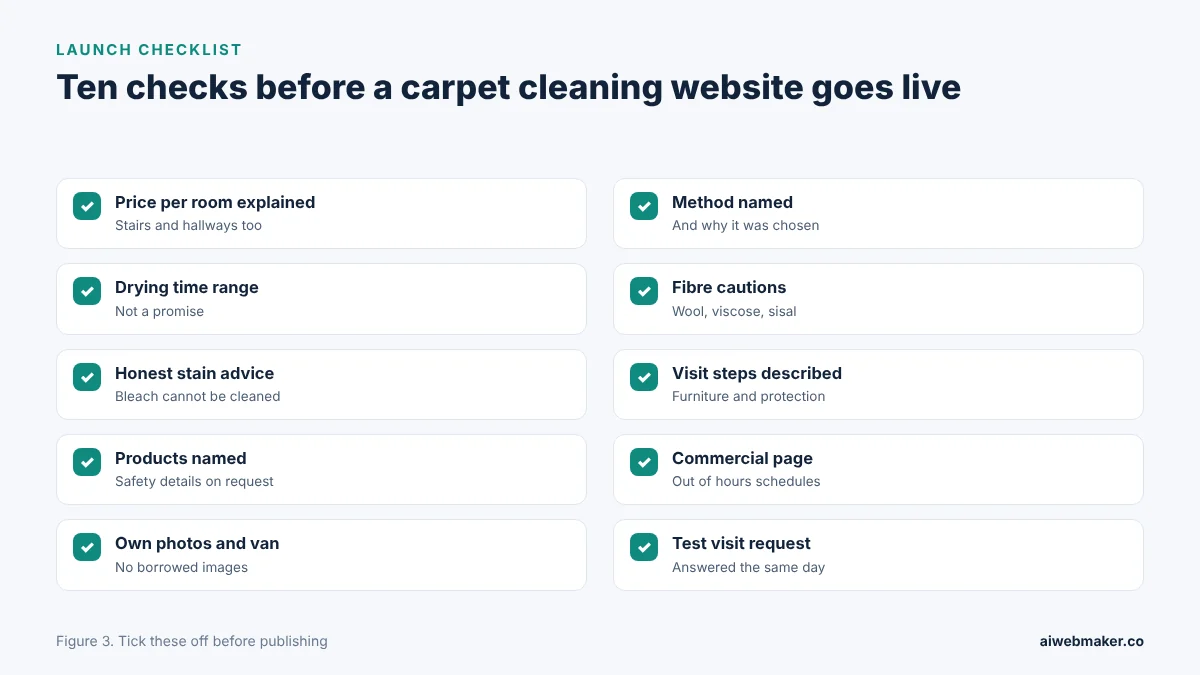
Visitors leave a carpet cleaning site when nothing tells them how long the carpet will be wet or what the method is. A price that says only "from" with no explanation of rooms or stairs looks like the start of an argument. Promises that every stain will vanish make experienced customers suspicious rather than hopeful. Photos borrowed from elsewhere, with no sign of the cleaner's own van or team, weaken trust further. A request route that asks for nothing about rooms, fibres or stains leaves the cleaner guessing and the customer waiting. Before launch, each of the ten points pictured below deserves a quick test on a phone.
Frequently asked questions
How long do carpets take to dry after cleaning?
Drying time depends on the method, the carpet, the room and the weather, so most cleaners give a range rather than an exact figure. Low moisture methods can leave a carpet usable within an hour or two, while hot water extraction may take from a few hours to most of a day. Opening windows, running heating or air conditioning and using fans all help. Customers should avoid walking on damp carpet in outdoor shoes and keep furniture off it until dry. A clear range on the website stops worried calls the next morning.
Is it safe for children and pets after a clean?
Most professional cleaning solutions are designed to be safe once the carpet has dried, but children and pets are best kept off damp carpet. Residues from poor rinsing can attract dirt, so thorough extraction matters for families. Cleaners should be able to name the products they use and supply safety information on request. Anyone with particular sensitivities should mention them when requesting a visit. Clear answers here reassure parents and pet owners more than any general claim.
Can old pet urine smells be removed?
Old pet urine smells can often be reduced and sometimes removed, but success depends on how far the urine has soaked into the backing and underlay. Surface cleaning alone may leave odour behind, so specialist treatments or underlay replacement are sometimes needed. A cleaner may use ultraviolet light to find old spots before treating them. Honest expectations prevent disappointment if the smell returns on a humid day. Explaining the options in advance lets the customer decide how far to go.
Should a wool rug be cleaned at home or taken away?
Some wool rugs can be cleaned safely at home, while valuable, antique or colour sensitive rugs are often better cleaned off site where they can be washed and dried properly. Fringes, dyes that may bleed and the rug backing all affect the choice. A cleaner should test colour fastness before using water on any rug. The website can say which rugs are handled on site and which are collected. Being clear about this protects both the rug and the cleaner's reputation.
Two living rooms and a sofa against a year online
The $119 that carries a carpet cleaning site for a full year is usually less than the fee for two living rooms and a sofa. On monthly terms, the $19 is smaller than the fee for one small stain treatment at most firms. Every household that returns next spring with the stairs and a rug adds work the site helped secure. Honest drying times, careful fibre advice and frank stain expectations win the trust that slick promises lose. Cleaners who keep adding fresh before and after photos give each visitor a reason to choose them. A diary filling with repeat visits from people who first read the process page shows the site has more than earned its keep.
Build your website in Minutes and get the AI Tools that work
Start Building Your Website →