Car Wash Website Cost When Drivers Decide in Seconds
A car wash site costs $119 to host over the year, or $19 in a given month, with a domain bought too. Sections: who checks a wash online, the wash menu, wash methods, bay requests, add ons, fleet accounts, water rules, search and the annual bill.
- No coding required
- Live in minutes
- Blog, SEO and chatbot tools included
A car wash can have AI Web Maker host its site for $119 across a year, or charge $19 for any month the owner prefers to pay singly, plus its domain. Nothing is invoiced while the wash menu, the prices and the photos of the bays are drafted and previewed screen by screen. The car wash website design shows such a menu finished, with wash slots, vans and fleets on a complete sample for a car wash invented purely to show what AI Web Maker builds. The takings from a few full interior and exterior cleans cover that yearly figure with room to spare. The real difficulty is that car washes compete on convenience measured in seconds, since a driver choosing where to wash rarely reads more than the opening hours and the price board. Many drivers also fear brushes and harsh chemicals, and they avoid any wash that cannot explain how it treats paint. What follows covers who checks a wash online, the wash menu, cleaning methods, requests for longer cleans, add ons, fleet accounts, water rules, search and the yearly budget.
This article is part of our complete guide: Home Services Website Builder.
Commuters, families and fleet managers: who checks a car wash online
Car wash customers look the business up for different reasons, and most of them want an answer within a few seconds. Commuters want to know whether the wash is open on the way home and how long a quick exterior wash takes. Owners of new or dark cars worry about scratches, so they look for hand washing, soft mitts and an explanation of the products used. Fleet managers and tradespeople with liveried vans want regular slots, a sensible price for several vehicles and clear invoicing. A site that serves each of these visitors in a single screen keeps them from driving past to a rival.
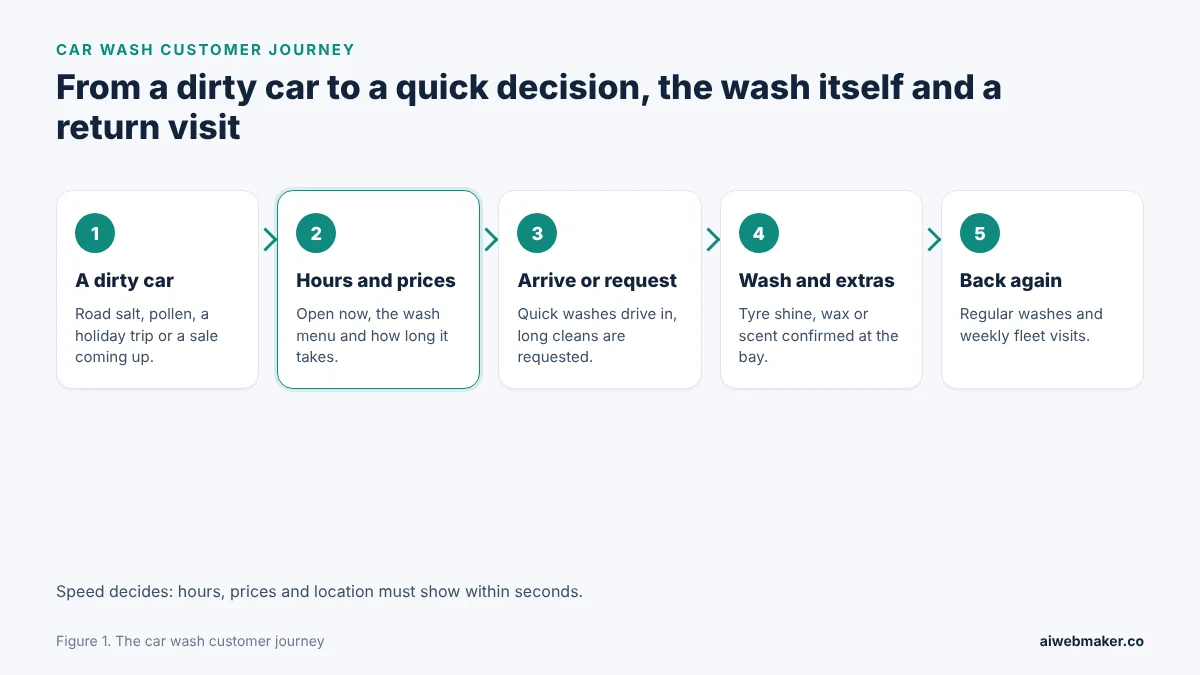
A dirty car is where every visit begins, whether the cause is road salt, spring pollen, a holiday trip or a car about to be sold. The second stage carries the most weight, because the driver checks opening hours, the wash menu and the price before deciding to drive over. Quick exterior washes usually happen on arrival, while a full clean or a fleet visit is requested ahead so the bay is ready. The final stage is a return, either because the result impressed or because a fleet account brings the vans back every week. A website that removes doubt at the second stage wins far more of those first visits.
Exterior, vacuum, full valet and fleet: building the wash menu
The wash menu works best as a short, priced list that a driver can read standing beside the car, with longer services explained on their own pages. Each line should say what is cleaned, roughly how long it takes and whether it is a drive in service or one to request ahead. Add ons sit underneath, so a driver choosing a basic wash sees the small extras that make a difference. Fleet and van work needs a separate line, because the vehicles, the schedule and the invoicing differ. A clear menu answers the question most drivers have before they leave the house.
| Service | What it covers | Rough time | Arrive or request |
|---|---|---|---|
| Exterior wash | Pre rinse, foam or shampoo, rinse, hand dry | Under half an hour | Arrive |
| Wash and vacuum | Exterior plus seats, mats and boot | Around 45 minutes | Arrive or request |
| Full interior and exterior clean | Shampoo, plastics, glass, door shuts | Two to three hours | Request |
| Detailing and polish | Machine polish and protective wax | Half a day | Request |
| Fleet and van washing | Livery, wheels, cab interiors | By arrangement | Request |
| Add ons | Tyre shine, wax, interior scent, glass treatment | A few minutes each | With any wash |
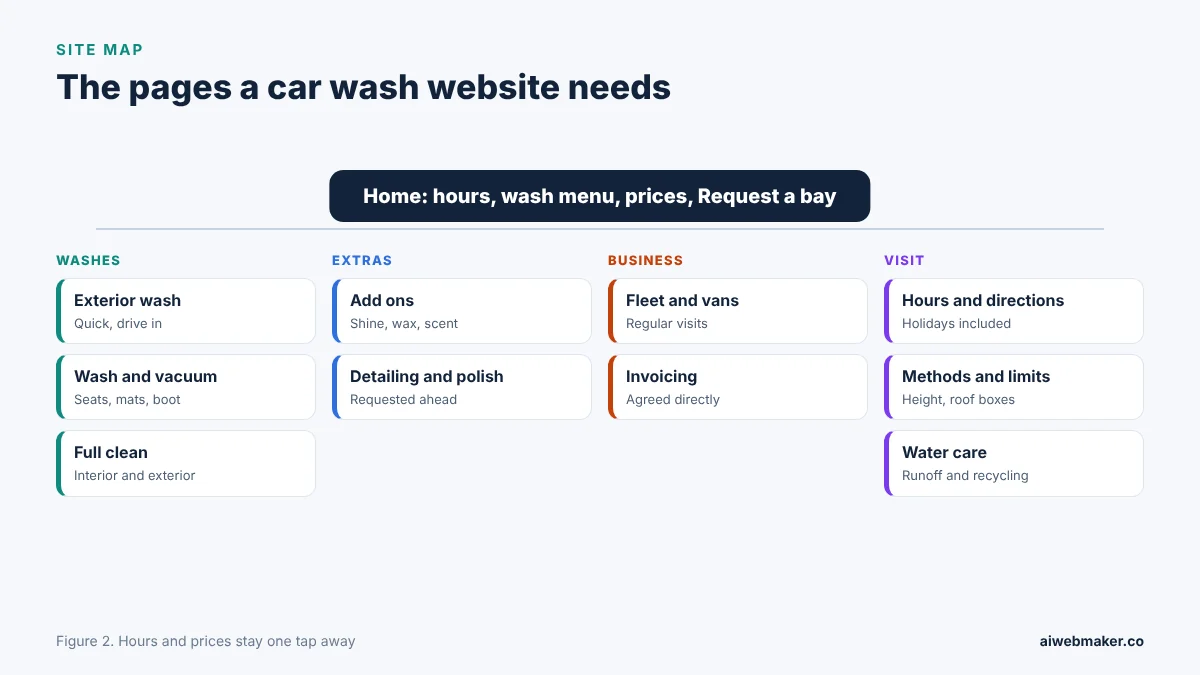
Four clusters of pages sit under the home page, which itself should show the hours, the menu and a request button above the fold. The washes cluster covers the quick exterior wash, the wash and vacuum and the full clean. Extras hold the add ons and the detailing work, while the business cluster explains fleet arrangements and invoicing. Visit pages give directions, opening hours and any limits on vehicle height or roof boxes. Our sample business, Splashpoint Car Wash, offers five bookable services, an exterior wash, a wash and vacuum, a full interior and exterior clean, detailing and polish, and fleet and van washing, each with its own price, and its services page places the add on treatments after the interior cleaning and valeting section, followed by pricing and quotes. The car wash website example with a priced wash menu and bay requests was assembled with four supporting pages in 46 seconds.
Hand wash, tunnel or touchless: telling drivers how the car is cleaned
Drivers choose a car wash partly on method, so the site should state plainly how cars are cleaned and why that method was chosen. Hand washes using mitts and separate buckets are gentle on paint but take longer and depend on the care of the staff. Tunnel washes with soft cloth or foam strips are fast, although owners of dark or freshly coated cars often hesitate. Touchless systems rely on high pressure water and stronger detergents, which avoids contact but may leave a thin film of road dirt behind. Being open about the method, including its limits, attracts customers who are comfortable with it and keeps complaints low.
| Wash type | How it works | What drivers worry about | What the page should state |
|---|---|---|---|
| Hand wash | Mitts, buckets, hand drying | Time taken, staff care | Products used and drying method |
| Soft cloth tunnel | Conveyor with foam or cloth strips | Swirls on dark paint | How the cloth is cleaned and replaced |
| Touchless | High pressure water and detergent | Leftover film, strong chemicals | Which detergents and rinses are used |
| Self service bay | Driver uses lance and brush | Grit trapped in the brush | Tips for rinsing tools first |
A clear damage policy belongs beside the methods, because aerials, roof racks, loose trim and aftermarket parts can be caught by machines. The page should name the items drivers must remove or fold before a tunnel wash. Height limits for vans and vehicles with roof boxes stop awkward moments at the entrance. Explaining how a claim is reported, and what the wash checks before accepting liability, shows fairness rather than defensiveness. Stating these rules in advance protects both the driver and the business.
Requesting a bay for the longer cleans
Quick washes can stay on a drive in basis, but full cleans, polishing and fleet visits tie up a bay for hours and suit a request made in advance. A request page can ask for the vehicle type, the service wanted, a preferred day and time, and any notes such as heavy pet hair. The booking website builder for car washes and valeting bays lets the driver send that request, after which the wash confirms it, suggests a better time or declines when the bays are full. Payment is then taken by the business directly, at the till or by whatever means it already uses, and the platform keeps no cut. Requests arriving in advance let the manager plan staff, chemicals and bay space rather than guessing at the morning rush. Drivers benefit too, because they arrive to a ready bay instead of a queue.
Add ons that raise the ticket without slowing the line
Add ons lift the average ticket because a driver who has already chosen a wash is easy to persuade into a small extra that shows. Tyre shine, a spray wax and an interior scent take minutes and change how the car feels as it leaves. Glass treatments that help rain run off, and a quick clean of the door shuts, appeal to careful owners. Each add on should carry a price and a sentence on what it achieves, so staff confirm rather than sell from scratch. Listed this way, extras earn steadily without stretching the time each car spends in the bay.
| Add on | What it does | Good moment to offer it |
|---|---|---|
| Tyre shine | Dark, clean finish on the sidewalls | Every exterior wash |
| Spray wax | Short term gloss and water beading | Before rain or winter |
| Interior scent | Leaves the cabin smelling fresh | After a wash and vacuum |
| Glass treatment | Helps rain run off the windscreen | Autumn and winter |
| Pet hair removal | Lifts hair from fabric and carpet | Family and dog owner cars |
Fleet and van accounts that keep the bays busy midweek
Fleet work deserves its own page because companies with vans, rental cars or taxis want predictable cleans rather than one off visits. The page can explain how regular visits are arranged, whether vehicles are washed on site or at the depot, and how invoices are issued. Rates for groups of vehicles can be agreed directly, since fleets vary so much in size and condition. Practical notes, such as height limits, ladder racks and how long each van takes, help a fleet manager plan. Steady fleet visits fill quiet weekday hours that drive in trade rarely covers.
Water, runoff and the rules that differ from place to place
Water use and runoff are worth explaining because more drivers ask about the environmental side of washing, and local rules can be strict. In many places washwater must go to a foul sewer or through an interceptor rather than into storm drains, although the exact rules vary by country and by local authority. Washes that recycle part of their water can say so, describing the system in plain terms rather than with vague green claims. Drought restrictions in some regions limit when and how cars may be washed, and a short note keeps customers informed. Mobile washes should explain how they contain runoff at a driveway or depot. Honest, specific statements earn more trust than a leaf logo and a slogan.
Car wash near me, open now: how drivers search for a wash
Drivers searching for a wash type phrases like car wash near me, hand car wash, car valeting, van wash or car wash open now, usually from a phone. The most important search tool for a wash is an accurate map listing, with hours that change on public holidays, a pin in the right place and recent photos of the bays. Each main service deserves a page whose heading carries the words drivers use, such as full valet or van wash. Reviews that mention short waits, friendly staff and a spotless interior make the listing far more persuasive. Short articles on washing off road salt, removing bird droppings before they etch the paint or caring for a car in pollen season attract readers at the moment they need a wash. Kept current, these signals put the wash in front of drivers just when they are deciding.
The car wash bill across twelve months
Two lines make up the car wash website bill, hosting and the domain, while seasonal articles written with credits barely register. A wash with steady trade spends least by paying the year in one go. An owner opening a first site may prefer the monthly route while the business builds its regulars. Price board changes, new add ons and updated hours are part of the hosting and cost nothing more. The rows below compare paying yearly with paying monthly, and a $189 tier sits alongside purely as a yardstick.
| Item | Yearly | Monthly |
|---|---|---|
| Hosting the car wash pages | $119 | $228 over twelve months |
| Domain | Depends on the ending | Depends on the ending |
| Higher plan, for comparison | $189 a year | Not needed |
| Twelve wash and car care articles at about $0.65 | About $7.80 | About $7.80 |
| New prices, extras and hours | No charge | No charge |
| Year before the domain | About $126.80 | About $235.80 |
Missing hours and hidden prices: what sends drivers elsewhere
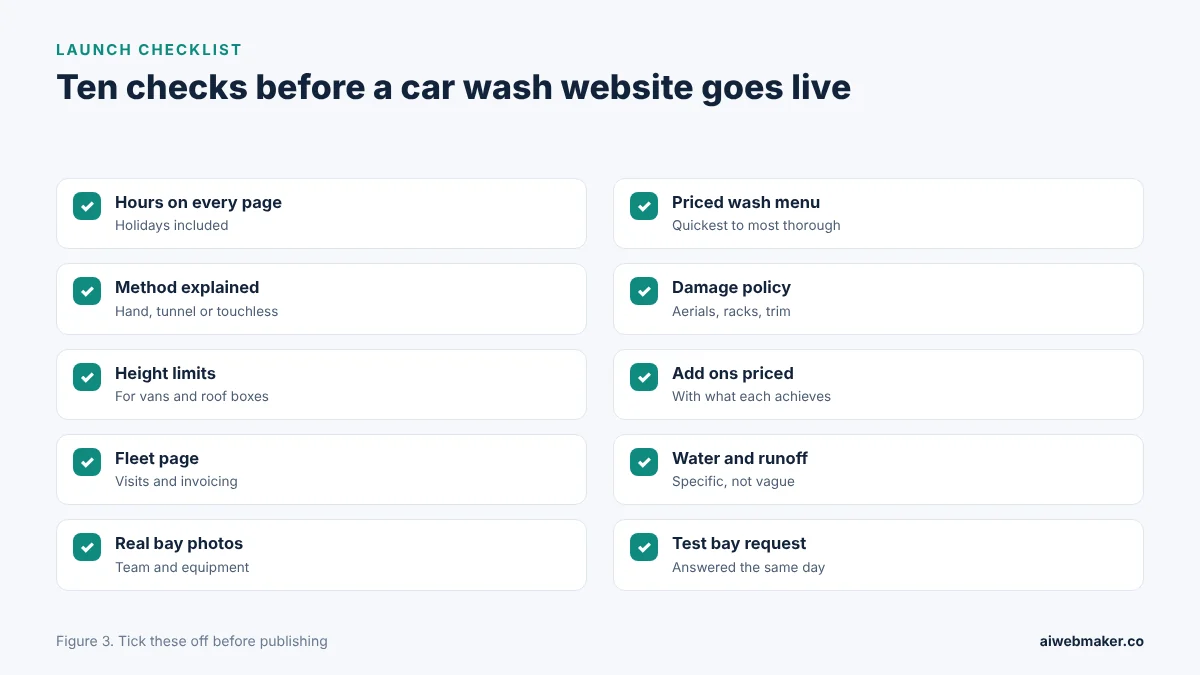
Drivers abandon a car wash site fastest when the opening hours are missing or wrong, because nobody wants to queue at a closed gate. A menu without prices suggests the wash is expensive or inconsistent. Stock photos of gleaming cars, rather than the actual bays and team, make the place hard to picture. Silence about methods leaves owners of dark or coated cars assuming the worst. Van drivers who cannot find height limits or fleet details simply go to a depot wash instead. The ten points pictured here are worth ticking off before the site is shared with a single customer.
Frequently asked questions
Do automatic brushes scratch paint?
Modern soft cloth and foam strips are much gentler than the old bristle brushes, but any contact wash can mark paint if grit is trapped in the material. The risk depends on how often the cloth is cleaned and replaced and on how dirty the car is when it arrives. A good pre rinse removes much of the loose grit before contact begins. Owners of dark or freshly corrected cars may still prefer a hand wash or a touchless option. A wash that explains its maintenance routine gives these drivers the facts to choose.
How often should a car be washed in winter?
Where roads are salted, many drivers wash every week or two to stop salt sitting on the paint and underbody. In mild, dry climates, washing less often is usually fine. An underbody rinse is particularly useful after snow or ice, since salt gathers where nobody looks. The website can give simple seasonal advice without making promises about rust prevention. Practical guidance like this brings drivers back at the moments they most need a wash.
Can a van with a roof rack go through the wash?
Whether a van with a roof rack can go through depends on the height limit of the wash and the design of the equipment. Tunnels and gantry machines usually have a maximum height, and racks, ladders or roof boxes may need removing or a hand wash instead. The visit page should state the limit clearly, ideally in both metres and feet where customers use either. Fleet managers appreciate this detail when planning which vans to send. A clear answer avoids a wasted trip and an awkward reversal at the entrance.
Should a car wash promote a wash club on its website?
A wash club or a pack of prepaid washes can be described on the website, explaining what is included, the price and how to join. The sign up and payment are handled by the business itself, at the site or through whatever arrangement it already runs. Clear terms on cancellation and which washes are covered prevent disputes later. Regulars like knowing the offer exists before they arrive. Explaining it well turns occasional visitors into weekly customers.
When the bays fill, the hosting year is already paid
The $119 that keeps the car wash pages online for a year is less than the takings from a few full interior and exterior cleans. For a wash on the monthly route, the $19 is smaller than the extras sold on a single busy afternoon. Every fleet account won through the business page adds weeks of steady work that the site helped open. Accurate hours, a priced menu and a plain account of the wash method do the convincing that a busy forecourt cannot. Once drivers start arriving with the service already chosen from the site, the year of hosting has paid for itself.
Build your website in Minutes and get the AI Tools that work
Start Building Your Website →