Car Detailing Website Cost, From Headlight Jobs to Paint Correction
Detailers spend $119 to host their pages through the year, or $19 a time on monthly billing, with a domain beside it. Inside: who books, the packages, paint correction, coatings and sealants, studio or driveway logistics, price drivers, aftercare, search and what hosting costs.
- No coding required
- Live in minutes
- Blog, SEO and chatbot tools included
A detailing business hands AI Web Maker $119 for its pages to stay up all year, or $19 for each month it would sooner be billed monthly, plus a domain. Drafting the packages, adding photos of finished cars and testing each screen in the preview is not billed, so the owner sees everything first. For a sense of the finished view, the car detailing company website gives a made up detailer a complete AI Web Maker site, from package list to booking. One paint correction or coating job normally earns far more than that yearly figure, which makes the fee a minor line in the accounts. The harder problem is that most drivers cannot tell a valet from a detail, or a polish from a correction, so every package above the cheapest can look like an upsell. Many also arrive wary, having heard about buffer burns, fresh swirl marks or coatings that faded long before the promised date. What follows covers who books a detailer, the packages worth listing, correction and protection explained without jargon, slot requests, price drivers, aftercare, search and the bill for keeping the site up.
This article is part of our complete guide: Home Services Website Builder.
Who books a detailer, and what do they inspect in the photos first?
Detailing customers come from several distinct groups, each looking for different evidence before sending a request. Owners of new or nearly new cars want protection applied before the first winter, and they study coating work on similar paint colours. Parents with a family car want the crumbs, spilled juice and dog hair gone, so they look at interior shots of seats and footwells. Enthusiasts with classic or performance cars want a specialist who understands soft paint, delicate trim and patient hands. Each group judges the detailer mainly by photos of cars like its own, which is why the gallery matters more than any slogan.
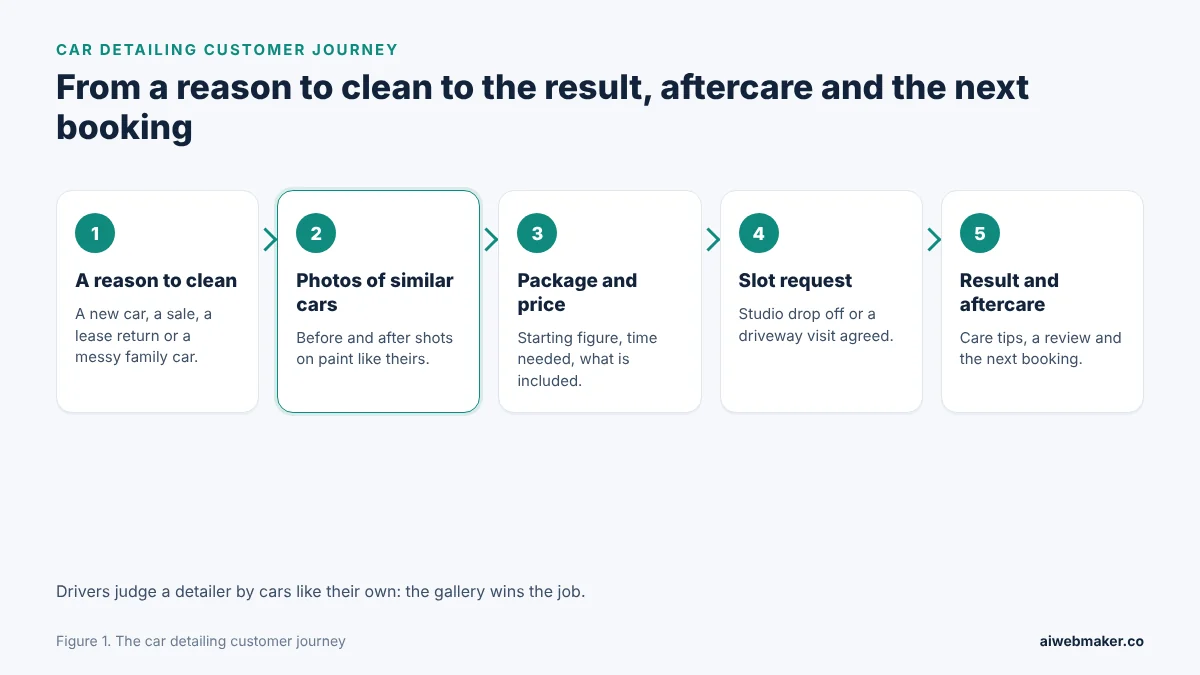
The journey starts with a reason, such as a new car, a sale, a lease return or simply a family car that has become unpleasant to sit in. Before contacting anyone, the driver looks for before and after photos of a similar vehicle, and this is the step where most detailers win or lose the job. A package showing a starting price, the hours needed and everything included then helps the driver choose. Aftercare advice and a friendly message after the job decide whether the customer returns for maintenance washes or a coating later. Every page on the site should carry the visitor one stage further along that path.
From headlight restoration to ceramic coating: the packages a detailer lists
Each package deserves its own page or a clearly separated section, because a driver wanting a cleaner interior searches differently from one chasing deep gloss. An exterior detail covers a careful hand wash, decontamination and a protective layer, while an interior deep clean deals with seats, carpets, plastics and glass. Paint correction removes swirls and light scratches by machine polishing, and ceramic coating adds durable protection on top of well prepared paint. Headlight restoration is a small job that often introduces the detailer to a customer who later returns for more. Setting the packages out in order of price and depth lets visitors see the whole ladder and pick a sensible first rung.
| Package | What is done | Rough time | Who it suits |
|---|---|---|---|
| Exterior detail | Hand wash, decontamination, sealant or wax | Two to four hours | Regular upkeep, before a sale |
| Interior deep clean | Vacuum, shampoo, steam, plastics, glass | Three to five hours | Families, pet owners, smokers' cars |
| Full valet | Interior and exterior together | Half a day or more | Lease returns, a spring refresh |
| Paint correction | Machine polishing in one or more stages | One to three days | Swirled or dull paint |
| Ceramic coating | Wash, correction, panel wipe, coating, curing | One to two days | New cars, owners wanting protection |
| Headlight restoration | Sanding, polishing and a UV protective layer | About an hour | Yellowed or cloudy lenses |
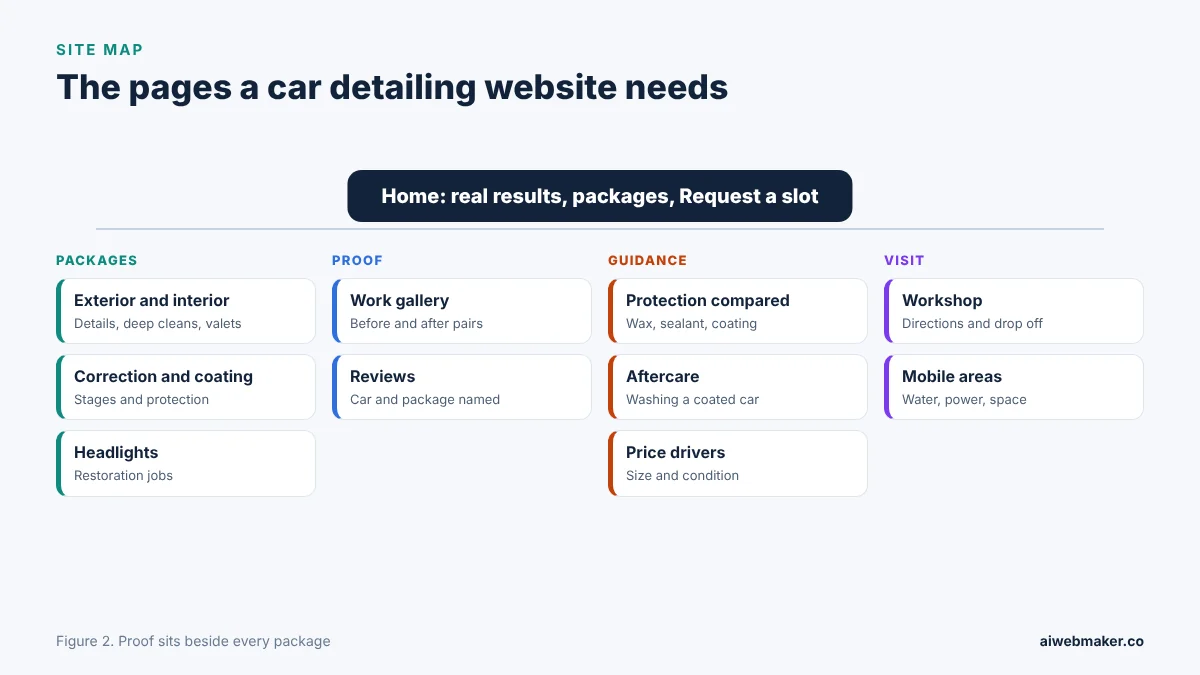
Four branches hold the detailing site together, and the home page points into each of them with real photos and a clear request button. Package pages carry what is done, how long it takes and a starting figure. Proof pages hold the before and after gallery and customer reviews, while guidance pages explain correction, coatings and aftercare. Visit pages give workshop directions or the areas a mobile unit reaches. Our sample business, Gloss Garage Detailing, offers six bookable services, namely exterior details, interior deep cleans, full valets, paint correction, ceramic coating and headlight restoration, each with its own price, plus a work page that opens with before and after pairs and a contact page with directions to the workshop. The detailing studio website example with paint correction and coating packages was put together in 48 seconds, ready for the owner's own photos.
How should paint correction be explained to a driver who only sees swirls?
Paint correction is best explained as removing a very thin layer of clear coat to level out defects, which is permanent work on a finite material. Swirl marks, light scratches, water spots and haze from automatic washes sit in that top layer and scatter light, which makes paint look dull. A careful detailer measures paint thickness with a gauge, tests a small area and then chooses the pads and compounds for each panel. A single stage polish improves gloss and removes lighter marks, while two or more stages remove deeper defects at the cost of more time. Scratches that have broken through the clear coat cannot be polished away and need paint repair, and an honest page says so. Explaining these limits up front prevents the disappointment that leads to poor reviews.
| Correction level | What it addresses | Honest limits |
|---|---|---|
| Gloss enhancement | Haze, light swirls, dullness | Deeper marks remain visible |
| One stage correction | Most wash swirls and water spots | Some fine scratches may stay |
| Two or more stages | Heavier swirls and random deep marks | More time, more clear coat removed |
| Paint thickness check | Thin or resprayed panels | May limit how far polishing can go |
Coatings, sealants and waxes, compared without the marketing gloss
Protection products should be compared on durability, upkeep and what they genuinely resist, because coating advertising often promises more than chemistry can deliver. Carnauba wax gives a warm shine but wears off within weeks or a few months, depending on washing and weather. Ceramic coatings bond to prepared paint and can last for years when maintained, although durability claims vary widely between products and conditions. Paint protection film is a separate service that resists stone chips, which no coating can do. A table with honest ranges helps a driver match the product to the car, the budget and the time they will spend washing.
| Protection | Often quoted durability | Strengths | Points to consider |
|---|---|---|---|
| Carnauba wax | A few weeks to a few months | Warm gloss, low cost | Needs frequent reapplying |
| Synthetic sealant | Several months | Easy upkeep, good water beading | Less depth than a coating |
| Ceramic coating | One year to several years | Chemical resistance, easier washing | Needs correction first, not scratch proof |
| Paint protection film | Several years | Resists stone chips and light scuffs | Higher cost, fitted by trained installers |
Studio drop off or driveway visit: settling the slot request
A detailing slot request has to settle where the work happens, because studio jobs and driveway jobs need very different preparation. A studio customer needs the address, drop off and collection times, and whether there is a waiting area or a lift to the station. A mobile customer needs to know whether the detailer brings water and power, how much space is required and what happens if it rains. The request itself can ask for the make and model, the condition of the car, the package wanted and a preferred day. Where the detailer's site comes from the booking website builder for car detailers and mobile valeters, the customer sends that request, and the detailer can accept it, propose a different day or turn it down, with payment settled directly between them and no share taken by the platform. Clear arrangements now make the day smooth for both sides.
Vehicle size, condition and the honest starting price
Starting prices work well in detailing when the page explains what moves the final figure, because two cars of the same model can need very different amounts of work. Heavy pet hair, sand from beach trips, mould from a damp interior or the aftermath of a spill can add hours. Paint condition decides how many correction stages are needed, and a thin or resprayed panel can change the plan on the day. Inspecting the car, or asking for clear photos by email, lets the detailer confirm the price before the work begins. A short table of these drivers keeps the conversation fair and stops the haggling that a bare number invites.
| Price driver | Why it changes the job |
|---|---|
| Vehicle size | More panels, seats and glass to treat |
| Pet hair | Slow to lift from carpets and fabric |
| Sand, mud and road salt | Extra decontamination and vacuuming |
| Mould or odours | Specialist cleaning and drying time |
| Paint condition | Decides the number of correction stages |
| Access and location | Travel, water and power for mobile work |
What aftercare advice keeps a coated car looking new?
Aftercare advice belongs on the website because the result a customer sees in six months depends as much on their washing habits as on the original work. A page can explain the two bucket method, a pH neutral shampoo and soft microfibre towels, and why automatic brush washes undo correction work. Coating owners need to know how long to wait before the first wash and how often to apply a maintenance product, following the coating maker's guidance. Offering a maintenance wash at a set interval gives the customer a reason to come back. Well written aftercare pages keep the paint, and the diary, in fine condition long after the first visit.
Ceramic coating near me: the searches, map listing and reviews that matter
Drivers find detailers through phrases such as car detailing near me, ceramic coating, mobile valet, interior cleaning or paint correction, often followed by the name of their area. The wording a driver types should appear in the heading and first lines of the matching package page, so search engines can pair the two. A map listing with the workshop address or the areas served, current opening hours and photos of recent cars draws a large share of local searches. Reviews that name the car and the package, such as a coating on a black estate, persuade more than generic praise. Articles on topics like protecting paint from road salt, cleaning a car seat after a spill or choosing between wax and a coating bring readers who later book. Fresh photos and articles show both search engines and drivers that the business is busy and current.
What the website costs against a season of coatings and valets
A detailer's website bill is made of hosting and the domain, with car care guides drafted through credits adding cents rather than dollars. A detailer with a settled flow of customers spends least by settling the year in a single payment. A detailer starting out with one van may find the monthly route easier through the first season. Adding packages, swapping gallery photos and changing prices are part of the hosting and carry no extra charge. Annual and monthly routes are compared in the rows that follow, with the $189 tier kept only as a benchmark.
| Item | Yearly | Monthly |
|---|---|---|
| Hosting the detailing pages | $119 | $228 over twelve months |
| Domain | Depends on the ending | Depends on the ending |
| Higher plan, for comparison | $189 a year | Not needed |
| Twelve car care articles at about $0.65 | About $7.80 | About $7.80 |
| New packages, photos and prices | No charge | No charge |
| Year before the domain | About $126.80 | About $235.80 |
Why a driver closes a detailing site and calls someone else
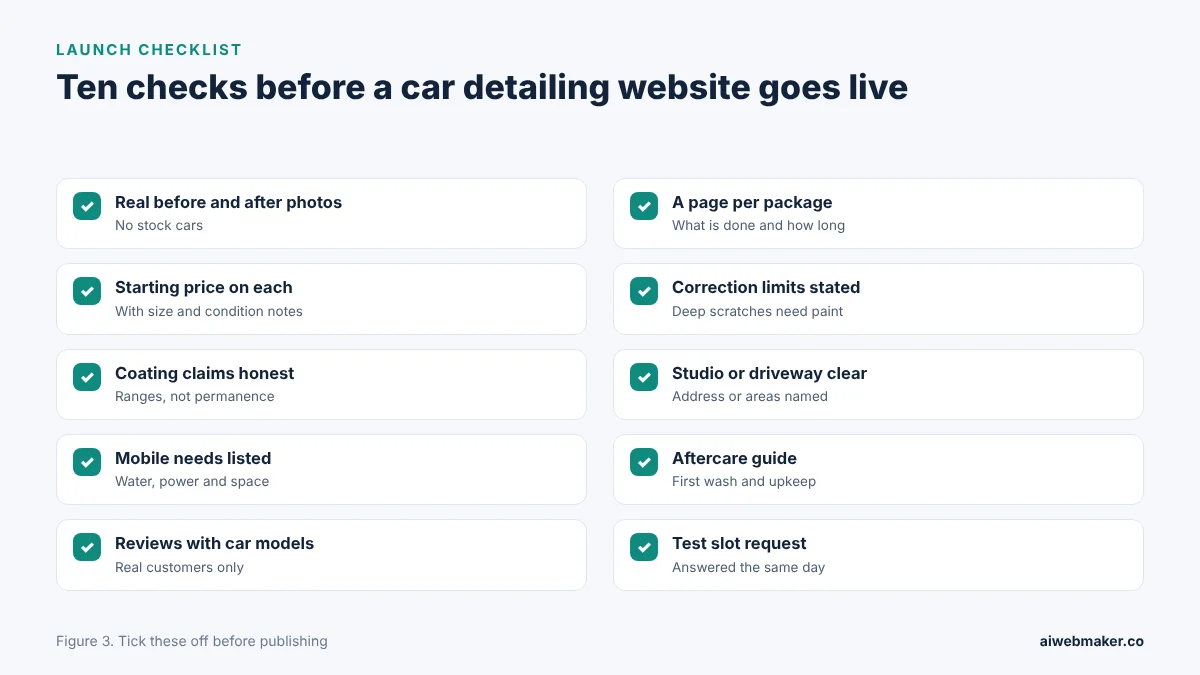
Drivers close a detailing site quickly when the gallery shows stock images or glossy cars with no before shot. Packages without a starting figure make people assume the price is high, and vague names like gold or platinum hide what is actually done. Mobile detailers who never say which areas they reach waste the time of drivers just outside them. Coating pages that promise permanent protection or a scratch proof finish make careful owners suspicious. A request route buried under paragraphs loses customers who had already decided. Each of the ten checks pictured here removes one of those doubts ahead of launch day.
Frequently asked questions
How long does a ceramic coating job take?
A ceramic coating job usually takes one to two days, because the paint must be washed, decontaminated and corrected before the coating goes on. Curing time follows, and many products ask that the car stays dry and indoors for a period after application. Cars with heavily swirled paint take longer, since the coating locks in whatever defects remain. Detailers should state their own typical timing and explain that it depends on the size and condition of the car. Clear timing lets customers arrange other transport for the days the car is away.
Is a mobile detailer as good as a studio?
A mobile detailer can produce excellent results on washes, valets and interior work, since the same products and methods travel well. Paint correction and coatings are harder outside, because dust, sunlight and humidity affect both the polishing and the curing. Some mobile detailers carry shelters or lighting to manage this, while others keep that work for a unit. The website should state honestly which packages are offered on a driveway and which need the studio. Matching each job to the right setting protects the finish the customer is paying for.
Can a coating stop scratches and stone chips?
A ceramic coating adds some resistance to light marring and makes washing easier, but it does not stop scratches or stone chips. Coatings are very thin, so a stone hitting the bonnet at speed will still chip the paint underneath. Paint protection film is the product designed for chip resistance, and it is usually fitted to the front of the car. Careful washing remains the best defence against swirl marks, coating or not. Saying this plainly on the website builds more trust than any promise of a permanent shield.
Should a detailer ask for photos before confirming a price?
Asking for photos before confirming a price is sensible for interior jobs and paint correction, where condition varies most. A few clear pictures of the seats, carpets and worst panels let the detailer judge the time needed. The request page can mention this, and the detailer can ask for photos by email after replying. Final prices can still change after an inspection on the day, and the customer should hear about it before work starts. Agreeing the figure in advance avoids awkward conversations when the car is collected.
Does one paint correction cover the detailer's year?
Twelve months of hosting at $119 is usually less than the takings from one paint correction or coating. Paid monthly, the $19 is smaller than the charge for one headlight restoration at most detailers. Every customer who returns for maintenance washes after a first job adds value the site helped create. Real before and after photos, honest explanations of correction and coatings, and a simple slot request carry the persuasion that glossy slogans never manage. When the diary fills with coatings requested by people who studied the gallery first, the website has repaid its year many times over.
Build your website in Minutes and get the AI Tools that work
Start Building Your Website →