Eye Clinic Website Cost, From Referral Letter to Cataract Package
An eye clinic keeps its condition, referral and surgery pages hosted at $119 yearly, or a rolling $19 whenever a month begins, before the domain. Covered: who looks, first visit fees, referrers, cataract packages, funding, drops and urgent routes, search and the yearly bill.
- No coding required
- Live in minutes
- Blog, SEO and chatbot tools included
An eye clinic keeps its condition, referral and surgery pages on AI Web Maker hosting for $119 a year, or a rolling $19 whenever a month begins, before the domain. Arranging the condition cards and the fee table in the preview, and reading them through until they are right, is not billed. A single new patient consultation at the sample clinic's $240 fee covers two years of that hosting. What complicates the work is that eye patients are often older, anxious about their sight and guided by a referral letter they only half understand. Families, optometrists and insurers read the same pages, each looking for something different. This guide covers who looks, first visit fees, referrers, cataract packages, funding, dilating drops, urgent routes, search and the yearly budget.
This article is part of our complete guide: Healthcare Website Builder.
Referral letters, worried relatives and self referrals: who looks up an ophthalmologist
Most people reach an eye clinic's website because someone else has noticed a problem first. An optometrist may have spotted early cataract, raised eye pressure or changes at the back of the eye and written a referral letter. Adult children often search on behalf of a parent whose sight is fading, comparing clinics by distance, fees and how surgery is explained. People with a diagnosis such as glaucoma look for a clinic that will monitor them for years. A smaller group refers themselves after reading about a symptom, and they need to know whether a referral is required.
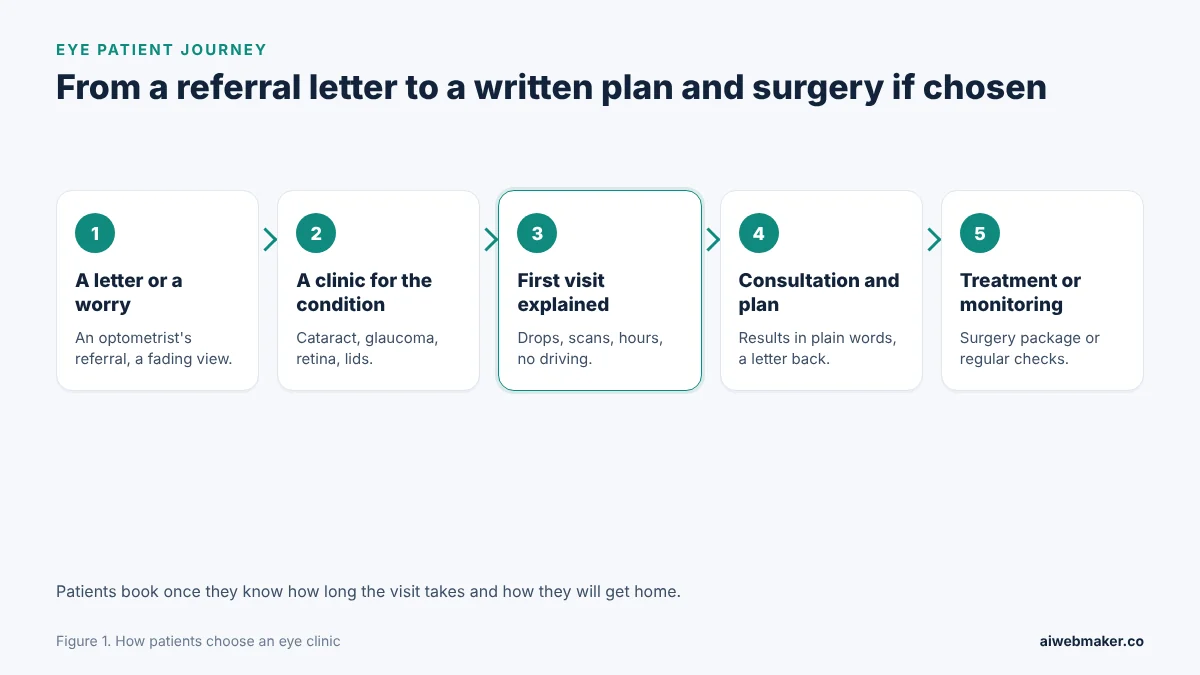
The third step carries the highlight, because a first visit that takes most of a morning, with drops that blur sight for hours, needs explaining before anyone books. A referral letter or a worry starts the journey, followed by a search for a clinic that treats the condition named in the letter. Reading what the first visit involves, including tests, drops and the ban on driving afterwards, decides whether the patient asks for an appointment. The consultation then produces a written plan and a letter to the optometrist or family doctor. Treatment or monitoring follows, and the clinic that explained every step usually keeps the patient for years.
Conditions, the referral path and surgery fees: pages for an ophthalmology practice
An ophthalmology site needs condition pages written in plain language, because patients arrive with a word from a letter rather than a clear question. Each condition page explains what the problem is, which tests are done and what the first visit costs. A referral page sets out how letters arrive and how quickly they are read. A first visit page covers drops, driving and the time to allow, while a surgery page lays out every stage of a cataract operation. Fees, funding and the planned appointment request close the site, with urgent advice impossible to miss.
| Page | Patient's question | What it should include |
|---|---|---|
| Conditions | Does this clinic treat what my letter says? | Cataracts, glaucoma, macular, diabetic, dry eyes, lids |
| Referrals | Is a letter needed, and what happens to it? | Who refers, how fast it is read |
| First visit | How long, and is driving home safe? | Tests, drops, two to three hours, no driving |
| Cataract surgery | What happens, and what does it cost? | Stages, package price, two part payment |
| Fees and funding | Who pays, and when? | Consultation fees, monitoring fees, insurers |
| Urgent symptoms | Is this an emergency? | Signs that need care today, phone and emergency number |
| Request | How is a planned visit requested? | Referrer, eye affected, what has changed |
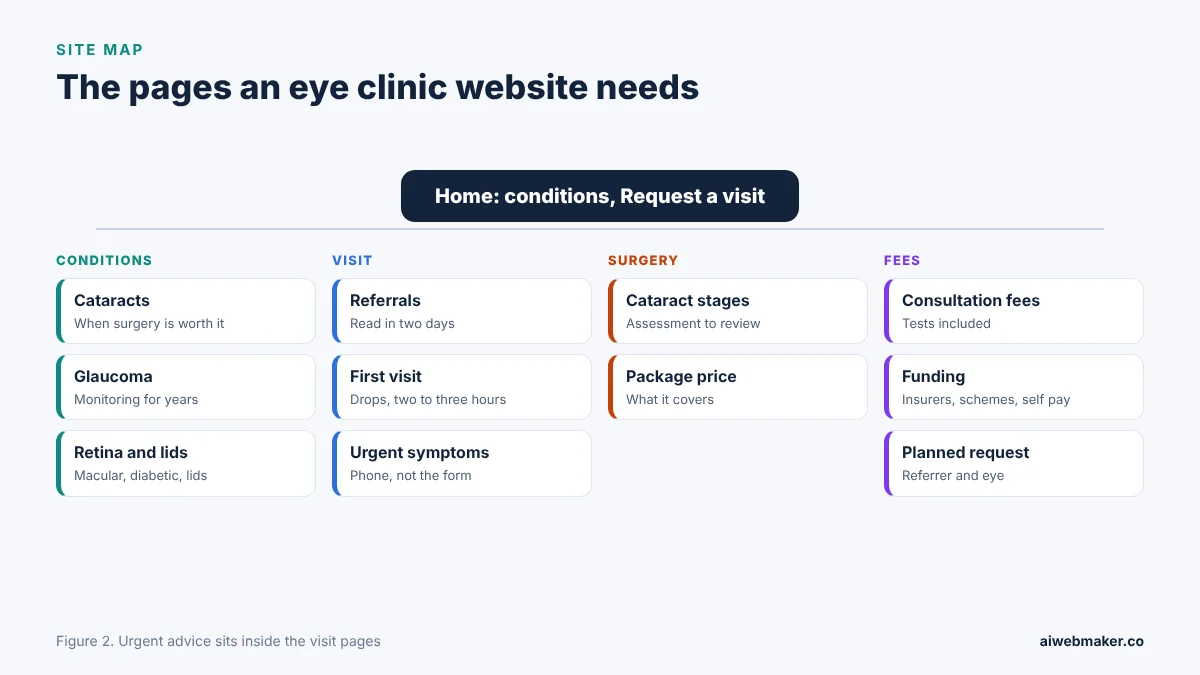
Condition pages fill the first branch of this map, while the visit, surgery and fee branches answer the practical worries that follow a diagnosis. Visit pages hold the referral path and the first visit, because both shape how a patient plans the day. Kestrel Eye Clinic, the invented practice in our eye clinic website example with a referral path and cataract surgery set out, lists cataracts, glaucoma, macular conditions, diabetic eye changes, dry and sore eyes and eyelid problems, each with a first visit fee. Its fee cards are a new patient consultation, glaucoma monitoring and cataract surgery for one eye. An urgent box near the top tells anyone with sudden changes in vision to phone the clinic or the local emergency number rather than use the form.
First visit fees by condition, with the tests already inside
Eye patients worry that one consultation fee will grow into a string of charges for scans and tests, so the fee page should say what the first visit includes. Most first visits involve a vision check, an eye pressure reading and an examination after dilating drops, with scans such as OCT where the condition calls for them. The sample prices each first visit by condition and states that the tests needed on the day are part of the fee. Follow up visits for long term conditions, such as glaucoma monitoring, deserve their own price per visit. Clinics that set out these figures plainly take most of the fear out of the first appointment.
| Condition | Sample first visit fee | Tests often involved | What the page should add |
|---|---|---|---|
| Cataracts | $240 | Vision, pressure, examination after drops | Whether surgery is worth it now |
| Glaucoma | $240 | Pressure, visual field, nerve scan | How often monitoring follows |
| Macular conditions | $260 | OCT scan of the retina | How results are explained |
| Diabetic eye changes | $240 | Retinal photographs and examination | Links with the patient's own doctor |
| Dry and sore eyes | $180 | Lids and tear film | A plan to follow at home |
| Eyelid problems | $200 | Examination of the lids | When minor surgery is worthwhile |
Optometrists and family doctors: a page written for referrers
Referring optometrists and doctors send a large share of an eye clinic's patients, and a page written for them can steady that flow. It should explain how referral letters reach the clinic, who reads them and how quickly urgent letters are seen. The sample has an ophthalmologist read every referral within two working days and send a letter back on the day of the consultation. Referrers also want to know which conditions the clinic sees, whether it takes patients without a letter and that routine sight tests remain with the optometrist. A clinic that returns patients and clear letters to their optometrist earns the next referral.
The cataract package: what the from price covers and what changes it
Cataract surgery is the largest single purchase most eye patients make, so the package page has to show exactly what the price includes. The sample's from price for one eye covers the pre assessment and lens measurement, the operation itself, the drops and eye shield and a review visit. Factors that change the total should be listed in the same place, such as lens options offered at different prices, extra visits or treatment for another condition found during assessment. Most people have one eye done at a time, so the page should explain how the second eye is priced and scheduled. Payment terms, such as the sample's two parts at booking and on the day of surgery, complete a page that patients can plan around.
| Package element | In the sample's from price? | What the page should state |
|---|---|---|
| Pre assessment and lens measurement | Yes | Length of the visit, about 90 minutes |
| Surgery, drops and eye shield | Yes | Time in theatre and going home the same day |
| Review visit | Yes | When it happens and who sees the patient |
| Lens options at other prices | Depends on the clinic | Each option and its price, if offered |
| Second eye | Priced separately | Timing and whether the price is the same |
| Payment | Two parts | When each part is due |
Insurers, public schemes and patients paying for themselves
Funding is the question families ask most often after a diagnosis, and the answer differs between countries, schemes and insurance plans. In some countries a public service covers most eye surgery after a referral, while in others patients rely on insurance or pay for themselves. Many insurers and schemes will contribute only when there is a referral letter, which is why the sample welcomes self referrals but warns about funding. The fee page should list the clinic's own prices and suggest that patients check with their insurer or scheme before booking. Honest funding notes prevent the disappointment of a claim refused after treatment.
Drops, driving and the planned appointment request
Dilating drops blur sight and make eyes sensitive to light for several hours, so the request page must explain the logistics before anyone arrives alone by car. The sample asks patients to bring their glasses and a list of medicines, to allow two to three hours and to arrange a lift or public transport home. On the booking website builder for eye clinics that take referrals and planned visits, a patient sends a request for a planned appointment, and the sample's own form adds who referred them, which eye is affected and what has changed. The clinic reviews it and confirms a date, offers another or declines it with advice, and consultation fees are paid to the clinic, with no share going to the platform. Condition, fee and surgery pages come from the same builder once the clinic describes its work, and urgent symptoms stay routed to the phone.
| Symptom | Where the page should send the patient |
|---|---|
| Sudden loss or blurring of vision | Phone the clinic now, or the local emergency number |
| A curtain or shadow across the sight | Same day care, not the request form |
| A burst of new flashes or floaters | Same day care, not the request form |
| A painful red eye | Same day care, or emergency services out of hours |
| Gradual misting or glare | A planned appointment request |
| Grittiness or watering | A planned appointment request |
Cataract surgery cost, glaucoma specialist and other searches patients and families type
Patients and their families search with phrases such as eye clinic near me, cataract surgery cost, glaucoma specialist, ophthalmologist without referral or macular degeneration clinic, often with a town. A condition page headed with the patient's own wording answers that search in one step. A map listing showing parking, drop off bays and the level entrance helps families planning the trip for an older relative. Reviews that mention clear explanations, a calm first visit and a smooth operation reassure the next nervous patient. Articles on what to expect after cataract surgery, how dilating drops work or why glaucoma checks continue for years bring readers who become patients months later.
Slit lamps, scanners and theatre time beside the hosting bill
Imaging equipment, theatre time, clinical staff and indemnity insurance leave the website as one of the smallest lines in an eye clinic's budget. The yearly route at $119 costs less overall, and the $19 monthly route lets a practice in its opening season keep early outgoings flexible. Roughly 400 endings exist for the domain, and the one picked sets its price. A year of patient guides, twelve articles at about $0.65 each, adds roughly $7.80, and changing fees or adding a surgeon's profile costs nothing. The $189 tier is shown for comparison and is not needed.
| Item | Yearly | Monthly |
|---|---|---|
| Hosting the eye clinic pages | $119 | $228 over twelve months |
| Domain | Depends on the ending | Depends on the ending |
| Higher plan, for comparison | $189 a year | Not needed |
| Twelve patient guides at about $0.65 | About $7.80 | About $7.80 |
| Fee, surgeon and condition updates | No charge | No charge |
| Year before the domain | About $126.80 | About $235.80 |
Unpriced surgery, buried urgent advice and jargon: why patients look elsewhere
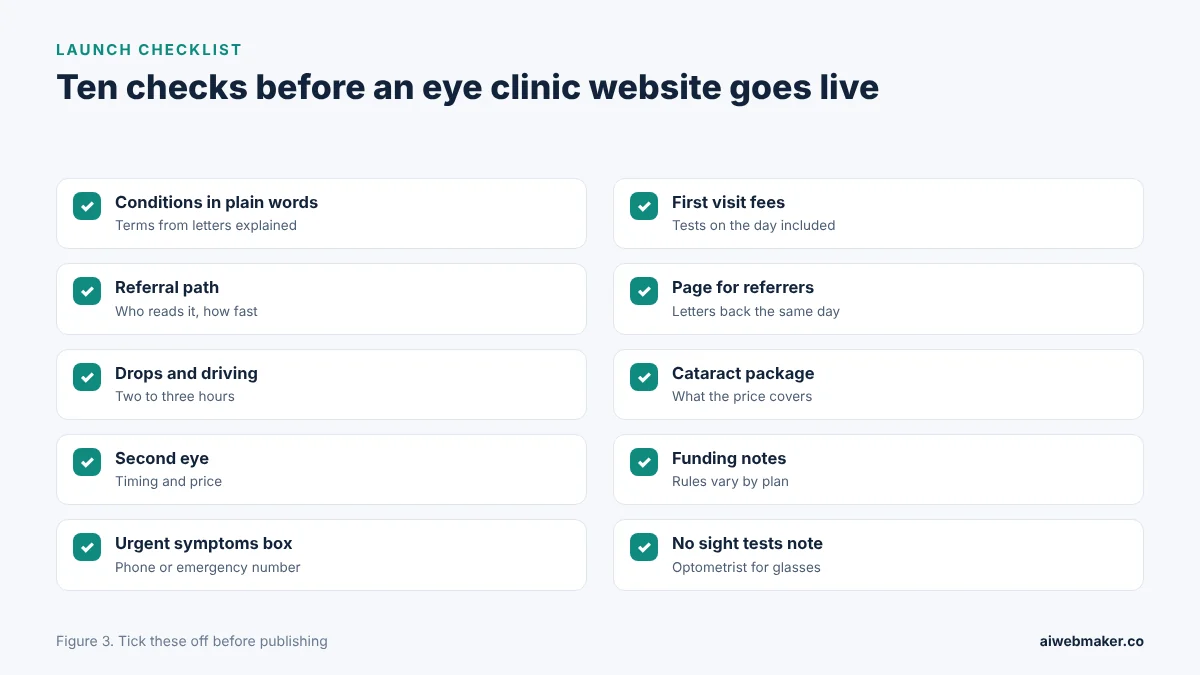
Patients and families leave an eye clinic's site when surgery is described without any price or a list of what the package includes. Urgent symptom advice hidden at the bottom of a page worries anyone who has just noticed a shadow in their vision. Pages full of unexplained terms, such as OCT or intraocular pressure, lose older readers who came for reassurance. Silence about drops and driving leaves patients stranded after a first visit they did not plan for. Every gap of this kind is covered in the ten clinic checks drawn below.
Frequently asked questions
Can a patient see an ophthalmologist without a referral letter?
Many private clinics accept self referrals, and the website should say whether this one does. Funding is the catch, because many insurers and public schemes contribute only when a referral letter exists. The rules depend on the country and the plan, so patients should check before booking if they hope to claim. A clinic can also explain that an optometrist is often the quickest route to a referral. Clear guidance saves patients a wasted visit or an unexpected bill.
Why should patients avoid driving after a first visit?
Most first visits use drops that widen the pupils so the back of the eye can be examined. Those drops usually blur sight and make it sensitive to light for several hours, which makes driving unsafe. The website should say how long the effect typically lasts and suggest a lift, a taxi or public transport. Sunglasses help on the journey home. Planning ahead turns an awkward afternoon into an easy one.
Are both eyes operated on during the same cataract visit?
Most people have one eye operated on at a time, with the second, if needed, a few weeks later. Practice varies, and some clinics offer both eyes on the same day for selected patients, which the surgeon would explain in person. A line on the clinic's usual approach, and on how the second eye is priced, belongs on the surgery page. Patients appreciate knowing how many visits and how much recovery time to plan for. Clear expectations make the whole process feel manageable.
How many hours should a patient set aside for the first appointment?
A first visit with tests, drops and a consultation often takes two to three hours, as the sample clinic states. Waiting for the drops to work accounts for part of that time, and scans are usually taken while the pupils widen. The website should give the clinic's own estimate and suggest bringing glasses, a list of medicines and something to read. Patients who plan for a long visit arrive calmer. A realistic timetable is one of the kindest things an eye clinic can publish.
Glaucoma checks, cataract lists and the hosting they repay
One new patient consultation at the sample's $240 fee pays for two years of the clinic's $119 hosting. On monthly billing, a single glaucoma monitoring visit covers more than eight months of $19 payments. A patient who goes on to cataract surgery and years of monitoring outweighs decades of hosting. Plain condition pages, honest package prices and urgent advice that cannot be missed persuade anxious patients and the optometrists who refer them. When referral letters start arriving with patients who already know about the drops and the lift home, the pages are earning their keep.
Build your website in Minutes and get the AI Tools that work
Start Building Your Website →