Vegan Restaurant Website Cost, Seasonal Menus and Allergen Honesty
For a plant kitchen, hosting means a single $119 yearly payment or $19 billed monthly, and its domain is an added cost. Inside: diners, the menu pages, seasons, allergens, what vegan excludes, groups and requests, health wording, search and the yearly sums.
- No coding required
- Live in minutes
- Blog, SEO and chatbot tools included
For a plant kitchen, AI Web Maker hosting is one $119 payment a year or a $19 charge each month, with the domain's price set by its ending. Writing up the breakfast, lunch and dinner menus, then checking the allergen columns screen by screen in the preview, involves no AI Web Maker bill. A single group dinner for nine covers that hosting several times over. Persuasion is the real work, since a vegan restaurant must convince two very different audiences at once: committed plant eaters who scrutinise every ingredient, and curious meat eaters who suspect they will leave hungry. Both groups need clear menus with prices, and both include people with nut, sesame or soy allergies that plant cooking makes more common, not less. What follows covers the diners, the menu pages, seasonal menus, allergens, what vegan excludes, group tables and requests, health wording, search and the yearly sums.
This article is part of our complete guide: Food Business Website Builder.
Committed plant eaters, curious meat eaters and mixed tables
A vegan restaurant draws a wider crowd than its name suggests, and each group reads the website differently. Committed vegans check that no dish, drink or dessert contains animal products, including honey and wines fined with animal ingredients. Curious meat eaters, often brought by a friend, look at the photos and prices to see whether the food looks filling. Mixed groups organising a birthday or a team dinner want a set menu that suits everyone. Diners with allergies look for a clear contains column, because plant cooking leans heavily on nuts, sesame, soy and gluten. Giving each of these groups its own clear section fills the room with a broader crowd than any single diet could.
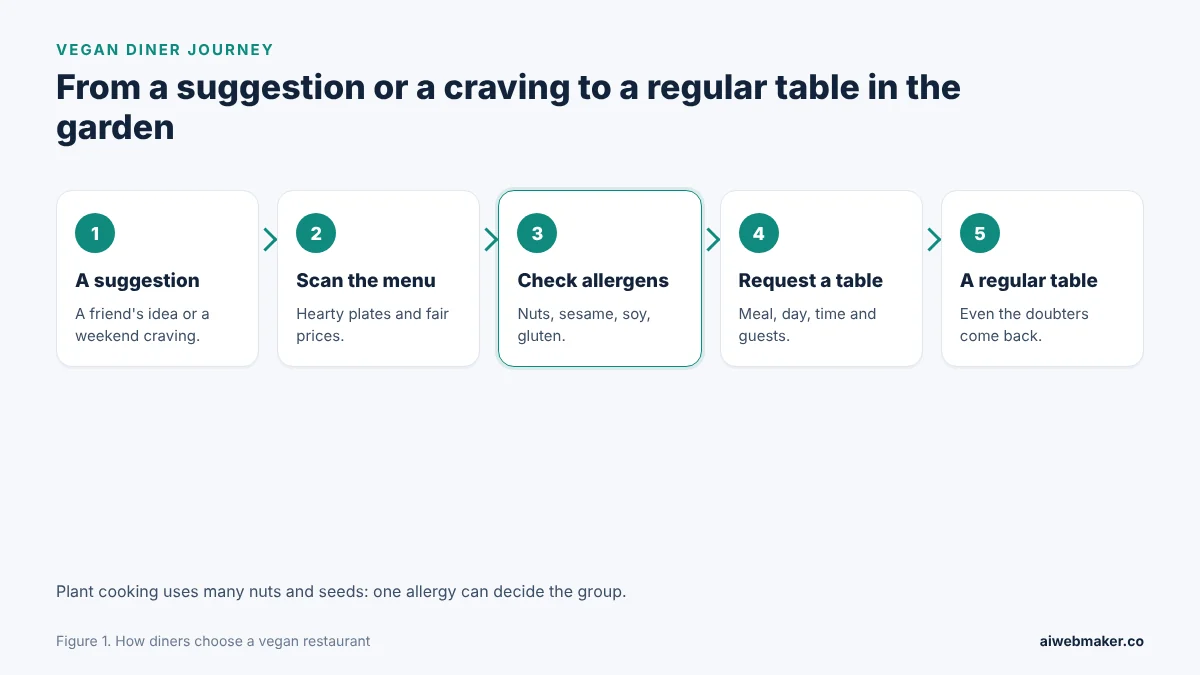
A friend's suggestion or a weekend craving opens the picture, and a regular table in the garden closes it. Scanning the menu for dishes that sound hearty comes first, especially for sceptical guests. The highlighted step is checking allergens, because nuts and sesame turn up in many plant dishes and one guest's allergy can decide where a whole group eats. Choosing breakfast, lunch, dinner or a group set follows, then sending a table request. A meal that leaves even the firm meat eaters talking about the pie is what brings the group back. Each step should be answered clearly on the page before the guest needs to ask.
Breakfast, lunch, dinner and groups: the sections a plant kitchen publishes
A vegan restaurant's site should follow the day, with each service set out separately so diners find the right menu quickly. The opening view needs the opening hours, the number of seats and a note on how often the menu changes. Breakfast, lunch and dinner menus follow, each with prices and a contains column. A section on the kitchen and its growers, a plain allergen panel and a note on health wording build trust. Group sets, the private room and a table request close the page with directions and hours.
| Section | The diner's question | What it should answer |
|---|---|---|
| Opening view | When is it open and what is it like? | Hours, seats, seasonal menus, garden |
| Breakfast, lunch, dinner | What is on each menu, at what price? | Dishes, prices, allergens per dish |
| The kitchen | Who cooks and where does food come from? | Growers, sauces made each morning |
| Allergens | Is it safe for my group? | Every allergen handled, cross contact |
| Groups and private room | Can you seat our party? | Set menus, numbers, deposit terms |
| Table request | How does booking work? | Meal, day, time, guests, allergies |
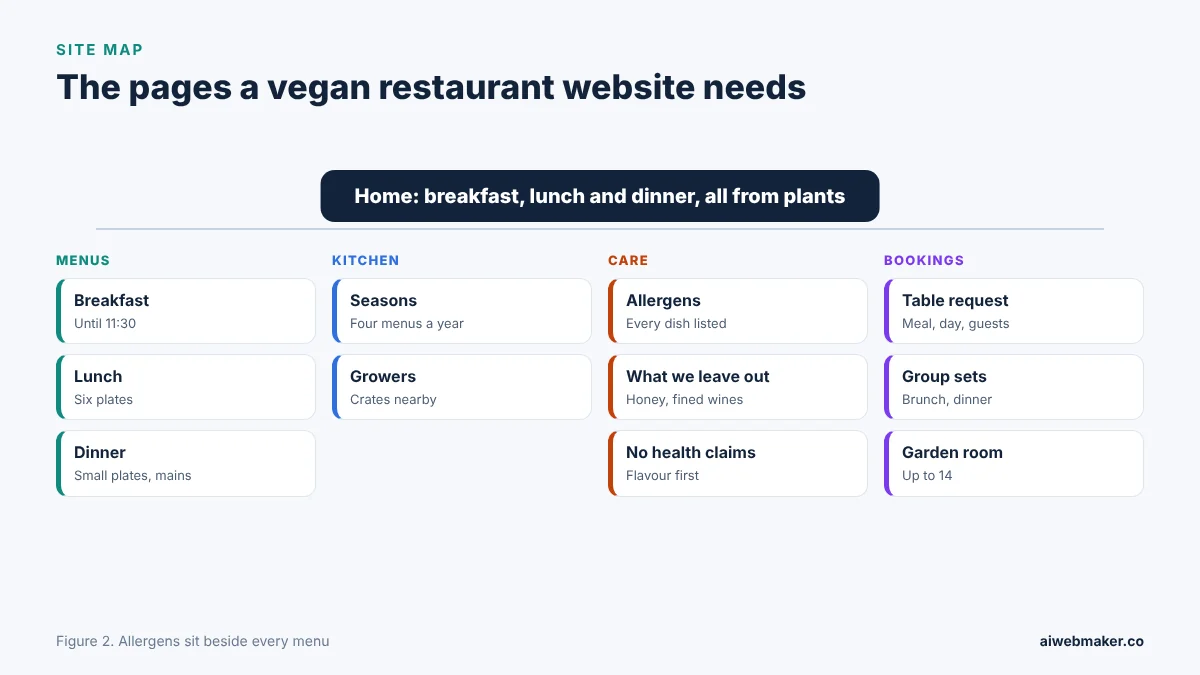
Followed through a single day, the plant kitchen's site falls into the menus, the kitchen story, the care notes and the bookings. Menu pages carry breakfast, lunch and dinner, while kitchen pages explain growers and seasons and care pages hold the allergen panel and the note on health claims. Our sample kitchen, Green Plate Kitchen, lists lunch plates such as roast squash and bulgur, red lentil and tomato soup, a smoked tofu banh mi, a green curry noodle bowl, a mushroom and lentil burger and a seasonal plate. Breakfast and dinner tables with a contains column sit around them, followed by a section on four menus a year, the allergen panel and three group options: a sharing brunch, a four course dinner and the garden room. The vegan restaurant website example with seasonal menus and group tables ends with a gallery, reviews, questions and a table request. Diners who scroll through it can plan a meal for a mixed group without picking up the phone.
Four seasonal menus and the growers behind them
Seasonal menus give a vegan restaurant its best story, because vegetables at their peak need little disguise. A kitchen that rewrites its menu four times a year around what local growers bring can tell diners exactly why the pie of autumn becomes a broad bean risotto in spring. Naming the growers, or at least the distance their crates travel, adds weight to the claim. Sauces, stocks, pickles and plant creams made in house each morning show the skill that plant cooking demands. Each new menu is a reason to post on the website and invite regulars back. Diners who follow the seasons with the kitchen become its most loyal guests.
Nuts, sesame, soy and gluten: why plant based is not allergen safe
Many diners assume a vegan kitchen is gentle on allergies, but plant cooking often uses more of the major allergens, not fewer. Cashews thicken creams, almonds and hazelnuts top breakfasts, tahini dresses salads and peanuts flavour curry broths. Tofu and tempeh bring soy, seitan is made from wheat gluten, and celery and mustard appear in stocks and dressings. Milk, egg, fish and shellfish are absent, which helps some diners greatly, but that is no reason to relax about the rest. Every dish should list what it contains, and the site should state plainly that shared counters and pans mean traces can travel. Diners with a severe allergy should be encouraged to mention it when booking, remind their server and speak to the chef before choosing.
| Allergen | Where it often hides in plant cooking | Note for the menu |
|---|---|---|
| Tree nuts | Cashew creams, almond milk, nut toppings | Name the nut, not just nuts |
| Peanut | Curry broths, satay, dressings | Flag it clearly on each dish |
| Sesame | Tahini, seeded breads, crispy toppings | Common in dressings and coatings |
| Soy | Tofu, tempeh, soy sauce, plant mayonnaise | Often in sauces diners do not see |
| Gluten | Seitan, bread, batters, soy sauce | Offer wheatless swaps where possible |
| Celery and mustard | Stocks, dressings, mayonnaise | Easy to forget, often regulated |
What the kitchen leaves out, from honey to fined wines
Committed vegans read the small print, so the kitchen's list of exclusions belongs on the website in full. Meat, fish, milk, egg and honey are the obvious items, but some wines and beers are clarified with animal products, and some sugars or colourings raise questions too. The word vegan has no single legal definition in many countries, so describing what the kitchen does and does not use is clearer than relying on the label alone. A restaurant that chooses only wines whose makers confirm they are made without animal products should say so. Any certification mentioned must be genuine and current. Precise wording here earns trust from the diners most likely to recommend the restaurant to others.
Group tables, the garden room and table requests
Group bookings are among the most valuable a plant kitchen takes, and they work best when set menus keep the kitchen in control of a large table and its allergies. A sharing brunch, a four course dinner or a private room each needs a price per person or a starting price, the number of guests it suits and the days it runs. With the booking website builder for plant based restaurants and their group tables, the diner picks the meal, the day, the arrival time and the party size, adds any allergies and sends a request. The restaurant then confirms the table, suggests the nearest time it can manage or declines on a fully booked evening. Any deposit for a group, and the bill itself, are settled between the diner and the restaurant, and none of that money passes through AI Web Maker. Clear terms on deposits, cancellations and table times sit alongside the request so every party knows the rules.
| Group option in the sample | Price | Suits | Key terms |
|---|---|---|---|
| Sharing brunch | $24 a person | 7 to 14 people | Weekend mornings, platters to share |
| Four course dinner | $42 a person | 7 to 14 people | Menu sent a week before |
| The garden room | From $380 for the evening | Up to 14 seated | Glass room by the garden |
Flavour first, with no health promises on the plate
Vegan menus attract health claims easily, but a restaurant is safer and more credible describing flavour, seasonality and craft. Promising weight loss, detox effects or disease prevention invites scepticism and, in many countries, the attention of regulators who police health claims about food. A short note that the food is cooked for flavour and the season, not planned as a diet or a treatment, sets the right tone. Questions about nutrition or medical diets belong with a doctor or a registered dietitian, and the website can say so. Diners who want a hearty, delicious meal will respond to honest descriptions far more than to promises. Careful wording protects the restaurant while letting the cooking speak for itself.
Searches like vegan brunch near me and plant based dinner
Plant food searches name the meal, the occasion or the place: vegan restaurant near me, vegan brunch, plant based dinner, vegan birthday dinner or vegan garden dining. Headings on the breakfast, dinner and group sections that use those phrases help search engines match them. A map listing with accurate hours, bright photos of seasonal plates and a level entrance noted where it exists helps every kind of visitor. Reviews from meat eating friends who enjoyed the meal, and from guests with allergies who felt safe, persuade sceptical diners. Articles about each new seasonal menu, the growers or cooking with plants bring readers back four times a year. Warm, specific writing makes the restaurant the obvious choice for a mixed group.
Plates and pages: the kitchen's annual web outlay
A plant kitchen's website carries two repeating charges, the hosting plan and its domain, while twelve seasonal articles paid for in credits cost under a bowl of soup. Restaurants with steady covers mostly pay the $119 in one go. A kitchen in its first year may prefer $19 a month. Menu changes each season, new photos and price updates add nothing. The two billing routes run down separate columns below, and the $189 plan appears only to show the difference.
| Item | Yearly | Monthly |
|---|---|---|
| Hosting the vegan restaurant pages | $119 | $228 over twelve months |
| Domain | Depends on the ending | Depends on the ending |
| Higher plan, for comparison | $189 a year | Not needed |
| Twelve seasonal menu articles at about $0.65 | About $7.80 | About $7.80 |
| Menu, photo and price updates | No charge | No charge |
| Year before the domain | About $126.80 | About $235.80 |
Why a mixed group settles on the steakhouse next door
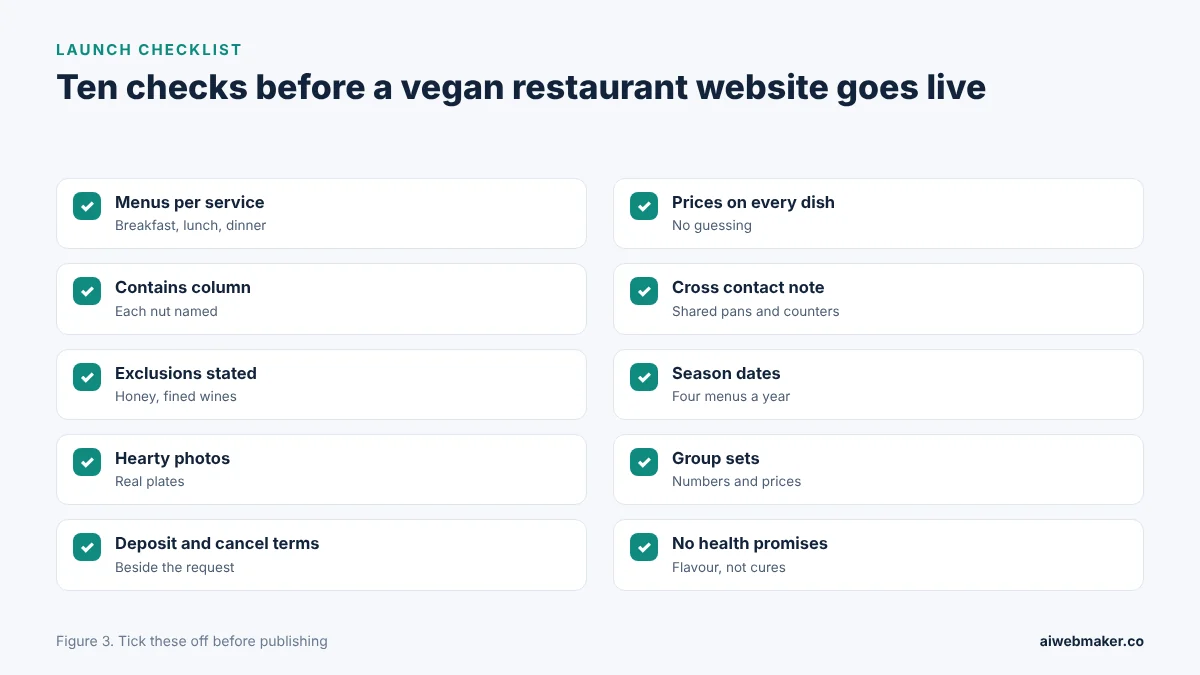
Mixed groups pick somewhere else when a vegan restaurant's site shows no prices or hearty main courses, because the doubters need convincing. Menus without a contains column alarm anyone with a nut or sesame allergy. Vague wording about what the kitchen excludes leaves committed vegans unsure about wine and desserts. No group set menu or private room sends birthday organisers to a place that offers one. A table request that hides cancellation and deposit terms creates friction later. Ten corrections for these problems are laid out in the graphic underneath.
Frequently asked questions
Does every wine on the list suit vegans?
Not every wine suits vegans, because some are clarified with animal products such as egg white, gelatine or fish derived ingredients. A vegan restaurant should choose wines whose makers confirm they are made without these, and the website should say so. Beer and some spirits raise similar questions. Diners appreciate a short note rather than having to ask the server. Clarity on drinks completes the trust built by the food menu.
Can the kitchen cook for a cashew allergy?
Cashews can often be left out of many dishes, but a small kitchen using nuts daily usually cannot promise a dish is untouched by them. The menu should name each nut rather than saying only nuts. Guests should mention the allergy when booking, remind the server and speak to the chef before ordering. The restaurant should be honest about cross contact. Clear, truthful answers make allergic diners feel welcome rather than anxious.
Will meat eaters in the group leave hungry?
Hearty plant dishes, such as pies, burgers, curries and generous grain bowls, satisfy most meat eaters when they are well cooked and properly portioned. Photos of real plates and clear descriptions help sceptical guests see what to expect. Group set menus with a main chosen by each guest let everyone pick something filling. Reviews from meat eaters who enjoyed the meal are powerful persuasion. A satisfied doubter often becomes the restaurant's most surprising regular.
How long is a table kept at weekend brunch?
Many restaurants set a table time for busy services, such as ninety minutes at breakfast and lunch and two hours at dinner. If no booking follows, guests can usually stay longer. A table is usually held only briefly for late arrivals, so a quick phone call helps. Publishing these times on the website means nobody feels rushed unexpectedly. Clear table times keep weekend services running smoothly for everyone.
Brunch tables that settle a year of hosting
One group dinner for nine brings in several times the $119 a vegan restaurant pays to keep its pages online for twelve months. Monthly, each $19 is covered by a couple of breakfast plates and two flat whites. Every table request that arrives with allergies listed, and every mixed group that books after reading the menus, is custom the site helped to earn. Honest allergen tables, precise wording about what the kitchen excludes and real photos of hearty plates persuade diners more than any slogan. Kitchens that publish each new season promptly keep regulars returning four times a year. Requests from doubters who name a dish they want to try show the menus have done their work.
Build your website in Minutes and get the AI Tools that work
Start Building Your Website →