Vegan Bakery Website Cost and the Ingredients That Never Get In
A vegan counter's pages stay live on $119 a year, about thirty croissants, or on $19 in each of twelve months, while the domain is bought by its ending. What follows works through the buyers, the sections, an ingredient audit, allergen labels, plant swaps, next morning orders, custom cakes, search and the annual figures.
- No coding required
- Live in minutes
- Blog, SEO and chatbot tools included
A vegan counter's pages stay online for $119 a year, about thirty croissants at the till, or $19 a month while regulars build, plus a domain. Product cards, the label table and the cake pages cost nothing to draft, reshuffle and check in the AI Web Maker preview until the counter goes live. One busy Saturday of croissants and cheesecakes covers that comfortably. What really decides a plant based bakery's online trade is trust running in two directions. Strict vegans want proof that no whey, gelatine or shellac slipped in through a glaze, while allergy families need to hear that vegan never means nut safe. Ahead: the buyers, the sections, an ingredient audit, allergen labels, plant swaps, next morning orders, custom cakes, search and the annual figures.
This article is part of our complete guide: Food Business Website Builder.
Strict vegans, milk allergy households and the merely curious
Three groups make up most of a vegan bakery's buyers, and each reads the site with a different worry. Committed vegans scan for hidden animal ingredients, such as carmine in pink icing or a pan spray made with animal fat. Families avoiding milk or eggs for health reasons see a bakery that never uses either, yet they still need the full allergen picture. Hosts of mixed parties want one cake that every guest can eat, which makes custom cakes a large share of the takings. Curious buyers simply want a good croissant and will return only if the first one is excellent.
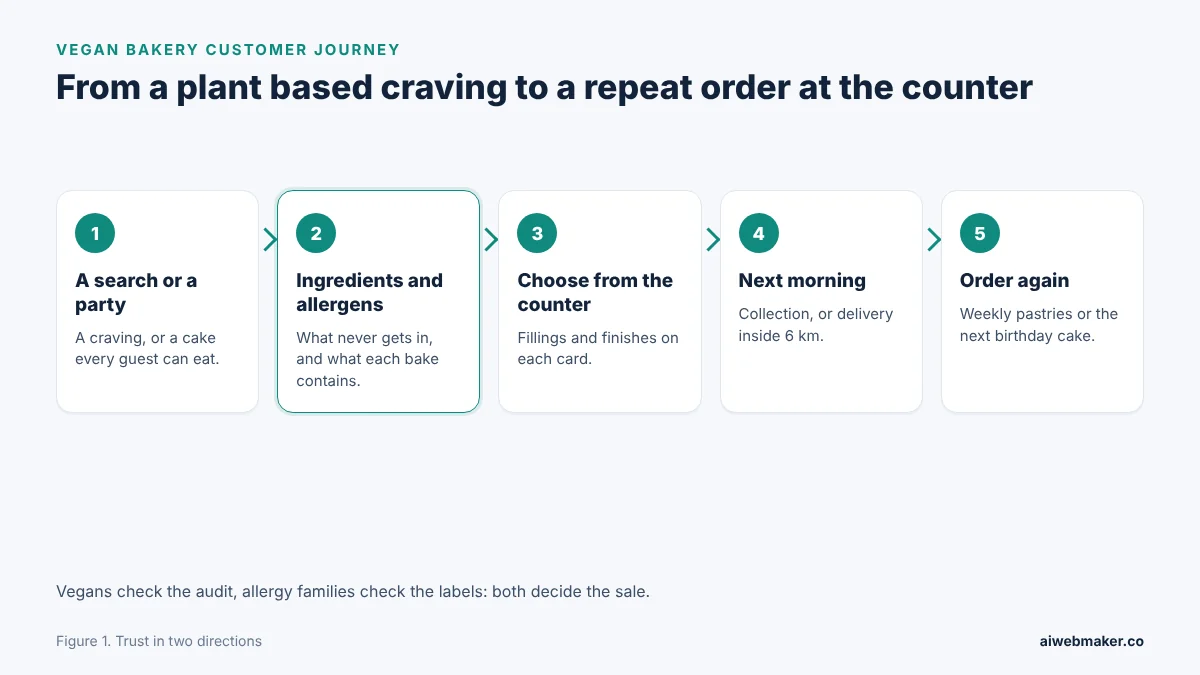
A search for a plant based bake opens this path, often with a craving or a party date attached. The second step carries the colour because it decides everything: the visitor checks what never enters the kitchen and which allergens each bake contains. Choosing from the counter follows, with fillings and finishes picked on each card. Collection the next morning, or a delivery inside the radius, is the fourth step. A repeat order, or a custom cake for the next birthday, closes the loop once the first bake has earned it.
The counter, the label table and the pages a plant kitchen publishes
A vegan bakery's site needs more explaining than a standard bakery's, because buyers question ingredients that other customers never think about. A short list of what the kitchen refuses settles the vegan question in seconds. The counter sells the daily bakes, while the allergen table answers the separate question of nuts, soy and gluten. A page on how butter, eggs and cream are replaced shows craft rather than compromise. Custom cakes, delivery and questions then complete a set of pages that leaves very little to guess.
| Section | Reader it serves | What it must state |
|---|---|---|
| Never used list | Strict vegans | Every animal ingredient and additive refused |
| The counter | Everyone | Bakes, options, prices, order deadline |
| Allergens | Allergy families | Contains and made alongside, bake by bake |
| Plant swaps | Curious and sceptical buyers | What replaces butter, eggs and cream |
| Custom cakes | Party hosts | Sizes, servings, notice, deposit |
| Collection and delivery | Everyone | Next morning times, radius, fee at checkout |
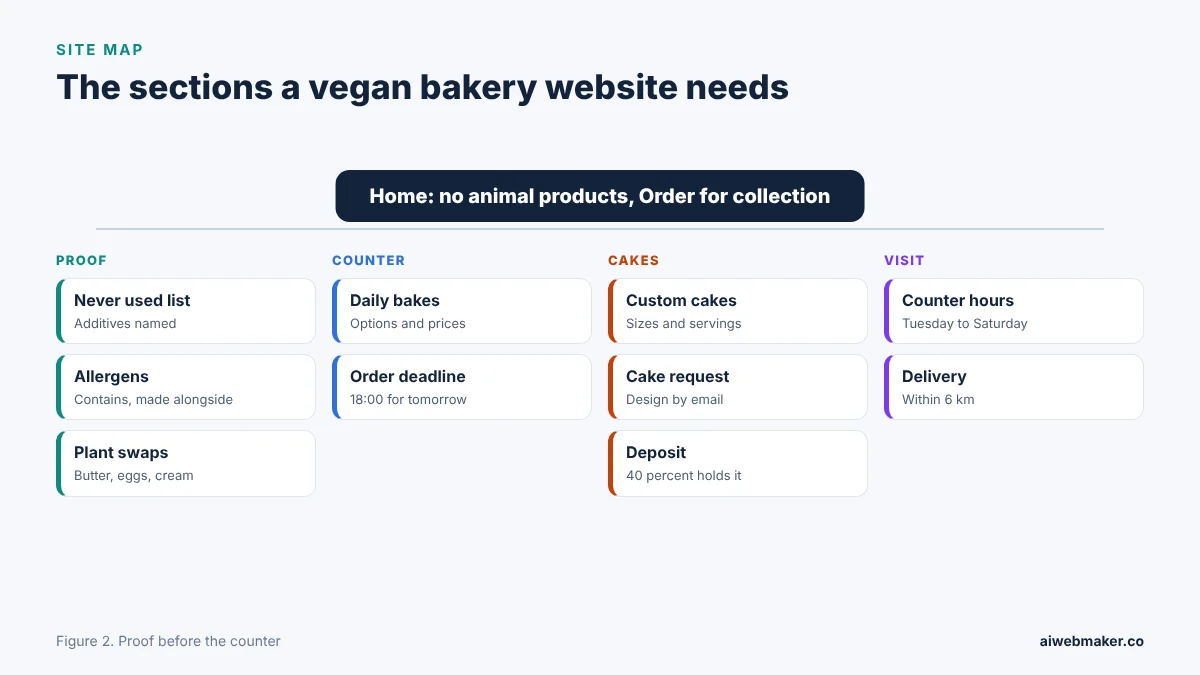
Proof, the counter, cakes and the visit form the four branches here, with proof placed first on purpose. Oat and Ember Vegan Bakery, the invented shop shown in the vegan bakery website example with allergen labels and custom cakes, opens with three facts: no animal products in any recipe, the first croissant tray in at four in the morning and ten days of notice for a custom cake. A list of twelve refused ingredients follows, from butter and ghee to carmine, shellac glaze, beeswax and sugar refined with bone char. The counter lists an oat butter croissant, a cardamom knot, an ember rye sourdough, a chocolate olive oil cake and a cashew cream cheesecake, with the custom celebration cake priced only after the design is agreed. An allergen table headed "Vegan, but never allergen safe" sits below, followed by the plant swaps, three cake sizes and a short list of questions.
The ingredient audit: carmine, shellac, whey and bone char
A vegan claim is only as good as the weakest bought ingredient, so the website should show the audit behind it. Glazes, sprinkles, chocolate and food colours are where animal ingredients most often hide, under names that shoppers rarely recognise. Some cane sugar is filtered through bone char during refining in certain countries, which is why careful bakers buy from mills that state their process. Release sprays for tins can contain animal fat, and a few flour improvers have animal origins too. The page should say that suppliers confirm ingredients in writing and that labels are rechecked on each delivery, because recipes change without notice.
| Hidden ingredient | Where it hides | What the baker checks |
|---|---|---|
| Carmine, E120 | Pink and red icing, sweets, sprinkles | Colour source on the label |
| Shellac, E904 | Shiny coatings on sprinkles and chocolate | Glazing agents listed |
| Whey, casein, milk powder | Chocolate, biscuits, margarine blends | Full ingredient list |
| Gelatine | Marshmallows, some fillings and jellies | Setting agent named |
| Bone char refined sugar | Some cane sugar in some countries | Mill statement in writing |
| Animal fat sprays | Tin release sprays | Product sheet for the spray |
Plant based is not nut safe: labels in a vegan kitchen
Vegan baking tends to lean on tree nuts, soy, oats and coconut, so a plant kitchen often carries more allergens than a traditional one. Cashews become cream fillings, almonds fill croissants and soy appears in plant butters and milks, often on the same benches. Each bake therefore needs two columns on the site, one for what it contains and one for what it is made alongside. Milk allergy families also need a careful note, since a vegan recipe uses no dairy but a bought chocolate may still be made in a factory that handles milk. British and European Union law, for example, makes allergen declarations a duty while giving the word vegan no single statutory definition on labels, and other regions set their own rules. Keeping the two promises apart on the page protects buyers and the bakery alike.
Replacing butter, eggs and cream without losing the crumb
A page on plant swaps converts sceptics, because most people assume vegan pastry must be dense, dry or bland. Laminated croissants need a firm plant butter that stays cold between folds, which often costs more than dairy butter and demands longer chilling. Aquafaba, the cooking water from chickpeas, whips like egg white for meringues, while ground flax and soured oat milk bind and tenderise sponges. Cashew cream replaces dairy cream in cheesecakes, which brings tree nuts into every slice. Explaining each swap, and the allergen it introduces, shows the skill behind the counter and justifies prices that run a little above a supermarket's.
| Animal ingredient | Plant replacement | What it changes |
|---|---|---|
| Butter in lamination | Shea and oat plant butter | Longer chilling, higher cost, may add oats |
| Egg white | Aquafaba | Whipped fresh and cold, adds chickpea |
| Whole egg in sponge | Ground flax with oat milk | Softer crumb, adds oats |
| Buttermilk | Oat milk soured with vinegar | Tender crumb, adds oats |
| Dairy cream | Soaked cashew cream | Adds tree nuts to the label |
| Egg wash | Oat milk with syrup | Gentler shine, adds oats |
Next morning orders, a 6 km radius and the counter online
Online orders suit a vegan bakery that bakes before dawn, because the baker needs tomorrow's numbers before the dough is made. Oat and Ember closes orders at 18:00 for collection the next morning and offers delivery within 6 km on weekday and Saturday mornings. Option labels can carry allergens directly, such as an almond filling marked as tree nuts, so a choice on the card never hides a risk. The online store builder for vegan bakeries with options on every bake attaches choices to each bake, gathers a morning's order into one bag and totals it at checkout with the delivery fee included, and a discount code can be entered on the same step. Because a custom celebration cake has no set price, its card carries an Enquire button that leads into a written design conversation.
Custom cakes, ten days of notice and a 40 percent deposit
Custom cakes earn more per hour than counter bakes, but a plant based sponge, filling and buttercream must be tested for every new flavour, so notice periods are longer. Oat and Ember asks ten days for layer cakes and five for a dozen cupcakes, with a two layer six inch cake from $48 and a three layer eight inch from $85. A deposit of 40 percent holds the date once the design is agreed by email, and it is returned in full for cancellations more than seven days ahead. A recipe with no nuts can be baked on request, but the site says plainly that it shares the ovens with them. Clear notice, deposit and allergen wording turns a hopeful enquiry into a confirmed order.
Searches for plant based croissants and eggless birthday cakes
Buyers of vegan bakes usually search with the diet first and the product second, so headings should follow that order. Typical phrases include vegan bakery near a named district, eggless birthday cake, plant based croissant and vegan cheesecake for delivery. The map listing should show counter hours, photos of the bakes and the website, since many visits begin on a phone nearby. Reviews that mention a named pastry or a mixed party where nobody noticed the cake was vegan are especially persuasive. Articles on reading chocolate labels or keeping sourdough fresh bring readers who later become regulars at the counter.
Croissant margins and the annual web outlay
A plant based bakery's web outlay boils down to hosting, a domain and, optionally, pocket change in AI credits for articles. Settling the hosting annually keeps the total lowest for a bakery with steady counter trade. A shop still finding its regulars may prefer the monthly route until the custom cake diary fills. Adding bakes, changing prices or updating the allergen table costs nothing beyond the hosting. The yearly column and the monthly one sit together in the grid, and the $189 tier appears there just for contrast.
| Item | Yearly | Monthly |
|---|---|---|
| Hosting the vegan bakery counter and cake pages | $119 | $228 over twelve months |
| Domain | Depends on the ending | Depends on the ending |
| Higher plan, for comparison | $189 a year | Not needed |
| Twelve label reading and baking articles at about $0.65 | About $7.80 | About $7.80 |
| New bakes, prices and allergen rows | No charge | No charge |
| Year before the domain | About $126.80 | About $235.80 |
Gaps that send a plant based buyer back to the supermarket
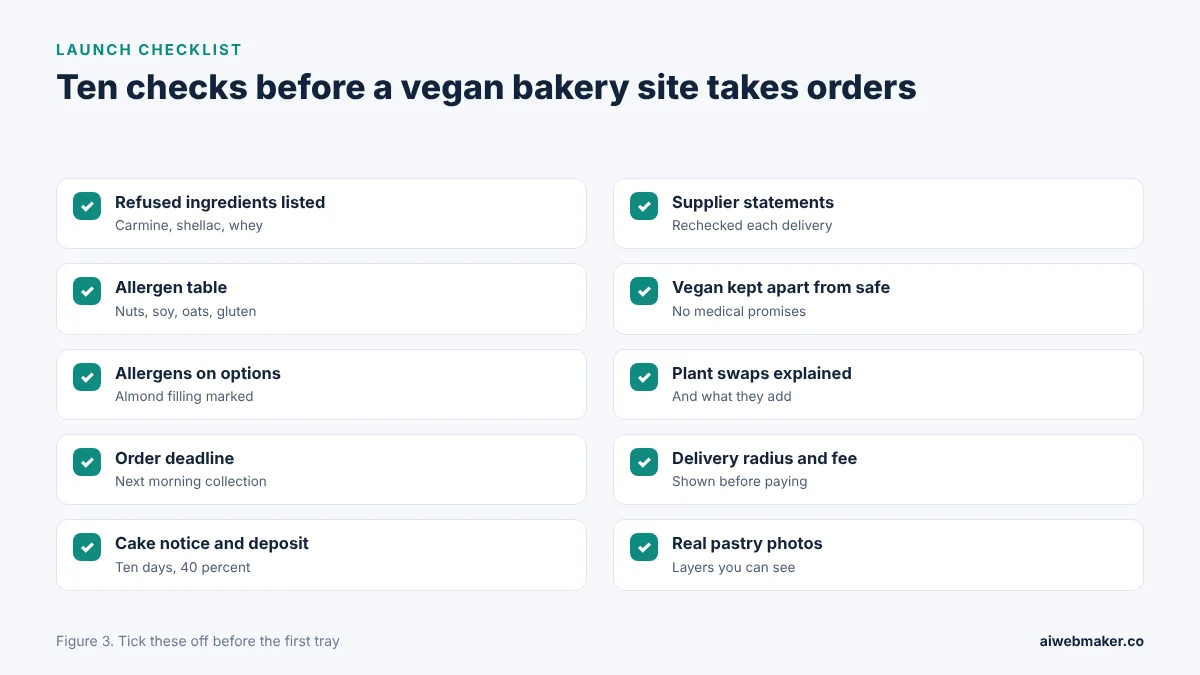
Vegan buyers leave when the site says vegan but never lists what that excludes, because vague claims read like guesswork. A missing allergen table worries every family with a nut or soy allergy. Product cards without options or prices make ordering slow, especially before an 18:00 cut off. No word on custom cake notice or deposits sends party hosts elsewhere. Photos that show flat or pale pastry undo the claim that plant butter can laminate as well as dairy, and every one of those faults has its own tick on the card beneath.
Frequently asked questions
Is a vegan cake safe for a child with a milk allergy?
A vegan recipe contains no milk, but that alone does not make it safe for a serious milk allergy. Bought ingredients such as chocolate may be produced in factories that handle dairy, and their labels may warn of traces. Parents should read the bakery's allergen table and ask about the exact ingredients for that cake. The bakery should never present vegan as a medical promise. Clear answers let each family decide with the facts in front of them.
Why does sugar appear on a vegan bakery's checklist?
In some countries, part of the cane sugar supply is filtered through bone char during refining. The sugar itself contains no animal product, but many vegans avoid it on principle. Bakeries that care about this buy from mills that state their refining method in writing. Saying so on the website answers a question that strict vegans often ask at the counter. That small detail shows how deep the ingredient checks go.
Do plant based bakes cost more to make?
Some do, because good plant butter, cashews and specialist chocolate can cost more than their dairy counterparts. Laminated pastry made with plant butter also needs longer chilling, which takes more of the baker's morning. Simpler bakes, such as sourdough, cost about the same as their traditional versions. Explaining this briefly on the swaps page helps buyers accept a fair price. Customers who understand the work rarely argue about the extra cost.
Will a vegan cake hold up at an outdoor party?
Plant buttercream softens faster in heat than some traditional icings, so outdoor summer parties need planning. A shaded table, a cool box for the journey and serving within a few hours all help. Ganache and firmer frostings travel better than soft whipped creams. The bakery can suggest the best finish when the design is agreed. Good advice before the day prevents a sagging cake in the sun.
Croissants, cheesecakes and the counter that settles the year
Thirty oat butter croissants, or four cashew cream cheesecakes, already take more at the till than a vegan counter's $119 hosting bill. Two custom cupcake dozens cover a monthly bill with room left over. Each strict vegan who trusts the ingredient list tends to come back weekly, and each mixed party that loves its cake sends new buyers to the counter. Honest labels, a visible audit and good pastry photos do the persuading that a slogan cannot. Morning trays that empty before nine are the clearest result a bakery's site can deliver.
Build your website in Minutes and get the AI Tools that work
Start Building Your Website →