Tea Shop Website Cost, Brewing Guides and Loose Leaf Sold by the Gram
A tea merchant pays $119 for each year of hosting, or monthly steps of $19, and settles the domain separately. Covered: buyers, the page, tea types, brewing, storage, caffeine and claims, the tea room, tastings, online sales, search and the yearly sums.
- No coding required
- Live in minutes
- Blog, SEO and chatbot tools included
A tea merchant pays AI Web Maker $119 for each year of hosting, or monthly steps of $19 when cash is tight, and settles the domain separately at its own price. No AI Web Maker charge arrives while the brewing guide, the tins and the tasting pages are written and then reread in the preview. A handful of 100 g bags and a gaiwan set cover the hosting for the year. What makes a tea website hard is that the customer cannot lift the lid of a tin and breathe in the leaf before buying. Words must do the work of scent, and a brewing chart must stop the bitter cup that makes newcomers give up on green tea. These pages cover the buyers, the page layout, tea types, brewing, storage, caffeine and claims, the tea room and tastings, online sales, search and the yearly figures.
This article is part of our complete guide: Food Business Website Builder.
Gift buyers, curious sippers and café owners: who browses the tins
People reach a tea merchant's site from quite different starting points, and each brings a distinct question. Curious drinkers who have only known tea bags want to know where to begin and how loose leaf is brewed. Enthusiasts look for a particular oolong, the new season's green tea or a gaiwan to brew it in. Gift buyers want a pretty tin or a teapot that can be posted with a card. Café and office managers want a steady supply and brewing cards their staff can follow. A page that gives every group a section of its own turns idle browsing into a first bag.
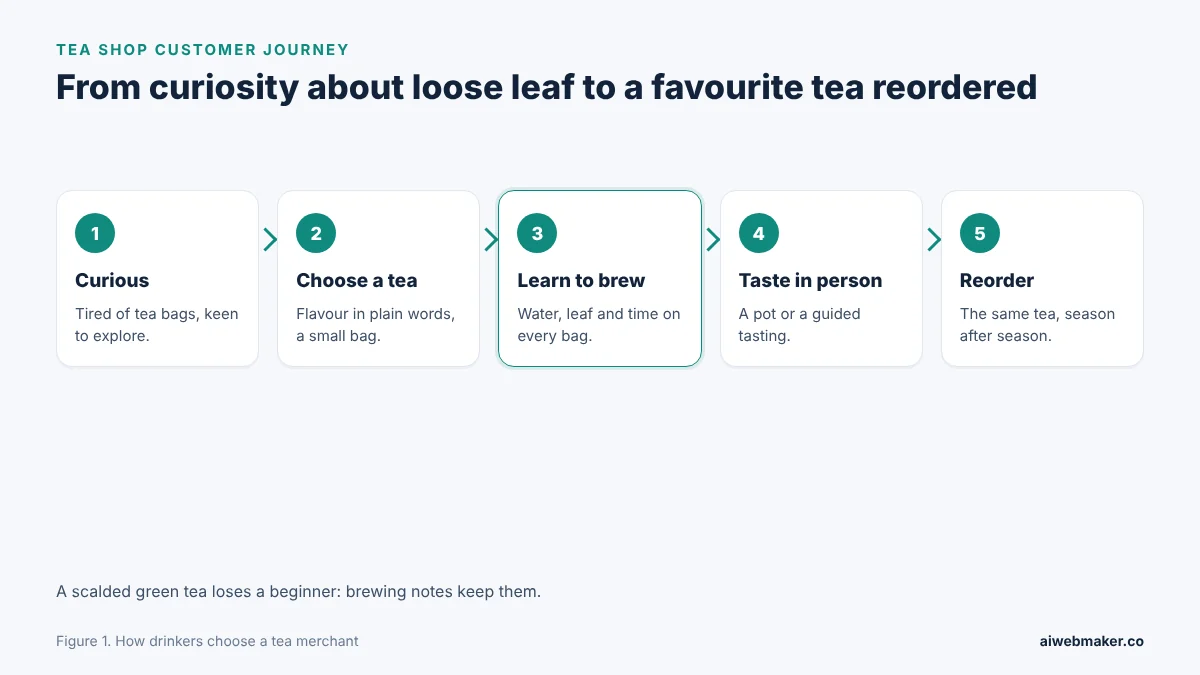
Curiosity sits at the left of the picture and a reorder of a favourite tea sits at the right, with three steps in between. The first step is choosing among dozens of unfamiliar names, which is where clear descriptions help most. The highlighted step is learning to brew, because a newcomer who scalds a green tea once may decide loose leaf is not for them. Tasting in the tea room or at a guided session follows for those who live nearby. A cup brewed correctly at home is what brings the reorder. Every page should help a beginner reach that good first cup.
Tins, brewing guide, tea room and tastings as one page
A tea merchant's site works best as a single scroll with clear sections, since most visitors want to compare teas and learn to brew without hunting through menus. The opening view should state the smallest bag sold and the number of teas on the shelves. A shop of teas and teaware follows, with weights and brewing notes on every card. A brewing guide, a tea room menu and a tastings section give reasons to visit in person. Questions on caffeine, storage and allergies close the page with the shop's hours.
| Section | The buyer's question | What it should answer |
|---|---|---|
| Opening view | What kind of tea shop is this? | Loose leaf by weight, smallest bag, the tea room |
| Teas and teaware | What should a beginner try? | Flavour in plain words, weight options, price |
| Brewing guide | How is it brewed? | Water temperature, leaf, time, number of brews |
| Tea room | Can the tea be tasted first? | Pots, flights, cakes with allergens |
| Tastings | Is there a class? | Dates, seats, price, what is tasted |
| Questions | Caffeine, storage, posting | Careful, plain answers |
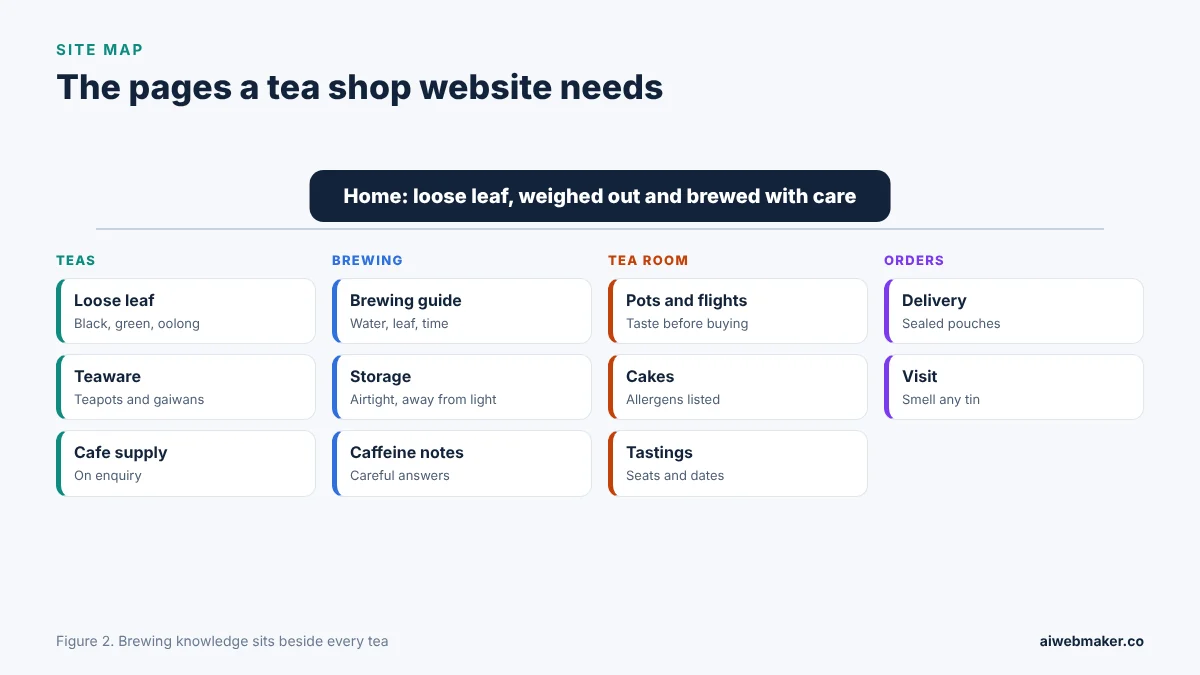
Arranged around the leaf, the merchant's site divides into teas, brewing knowledge, the tea room and orders. Tea pages hold the leaf and the teaware, while brewing pages carry the guide, storage advice and caffeine notes. Our sample merchant, Leaf and Kettle Tea Merchants, sells a breakfast black tea, a steamed green tea, a rolled oolong, a spiced chai blend, chamomile flowers, a glass teapot with infuser and a porcelain gaiwan set, and offers tea for cafés and offices on enquiry. A brewing guide table, a tea room section with its menu and three guided tastings follow, ahead of a gallery, reviews, questions over a pot and a request route for tastings or supply. The tea shop website example with a brewing guide and a tea room shows how a counter of open tins can be explained to someone who has never smelled one. Visitors who scroll from the leaf to the kettle arrive ready to choose.
Black, green, oolong, white and herbal: explaining the leaf
Nearly every true tea comes from one plant, and the differences between black, green, oolong and white lie mostly in how the leaves are processed. Green tea is heated soon after picking to stop oxidation, which keeps it fresh and grassy. Oolong is partly oxidised and often rolled or twisted, giving floral or toasty notes that open over several short brews. Black tea is fully oxidised, giving the malty strength that takes milk well. White tea is lightly processed and delicate, while herbal infusions such as chamomile or peppermint come from other plants entirely. A short table that sets these out in plain words gives a beginner a map of the shelves.
| Type | How it is made | What to expect in the cup |
|---|---|---|
| Green | Heated soon after picking to stop oxidation | Grassy, sweet, fresh |
| White | Withered and dried with little handling | Delicate, soft, light |
| Oolong | Partly oxidised, often rolled or twisted | Floral, creamy or toasty |
| Black | Fully oxidised | Malty, strong, good with milk |
| Spiced blends | Black tea with spices | Warm, often simmered with milk |
| Herbal infusions | Flowers, leaves or roots of other plants | No tea leaf, usually no caffeine |
Water temperature, leaf weight and steeping times
Brewing advice is the most useful thing a tea merchant publishes, since most disappointing cups come from water too hot or a steep too long. Delicate green and white teas want cooler water and shorter steeps, while black teas take water just off the boil. Oolongs reward a higher leaf ratio in a small vessel such as a gaiwan, with many short brews from one measure. Herbal infusions usually take boiling water and a longer steep. Every bag should carry its own brewing note, and the website should hold the full chart. These numbers are starting points, and encouraging buyers to taste and adjust keeps the advice honest.
| Tea | Water | Leaf for 250 ml | Steep | Brews |
|---|---|---|---|---|
| Black | About 95 °C | About 2.5 g | 3 to 4 min | 1 or 2 |
| Green | 70 to 80 °C | About 2.5 g | 1 to 2 min | 2 or 3 |
| Oolong | 85 to 95 °C | About 5 g in a gaiwan | 30 to 60 s | 5 or 6 |
| White | 80 to 85 °C | About 3 g | 3 to 5 min | 2 |
| Herbal | Boiling | About 2 g | 5 to 7 min | 1 |
Airtight pouches, harvest dates and the spring greens
Tea is a dried leaf, but it still fades, so the website should explain how it is packed and how buyers should keep it. Light, air, heat and strong smells all dull the flavour, which is why sealed, light proof pouches matter more than a pretty paper bag. Kept in an airtight caddy in a cool, dark cupboard, away from spices and coffee, keeps most teas at their best for many months. Green teas fade fastest and are usually best within months of opening. Many green and some oolong teas are picked in spring, and announcing the arrival of the new season gives regulars a reason to return. A merchant who talks about harvests and freshness shows buyers that tea is a crop, not a commodity.
Caffeine, daisy family allergies and careful health wording
Customers often ask about caffeine, and the honest answer is that it varies with the leaf, the amount used and the length of the steep. Black and oolong teas often carry more than green and white, though the overlap is wide, and herbal infusions such as chamomile contain none. Anyone who is pregnant or whose health is affected by caffeine should be pointed to a health professional rather than given a number. Chamomile and some other flowers can affect people allergic to plants in the daisy family, and blends with nut pieces or milk powder must say so on the card. Herbal teas also tempt sellers into health claims, but many countries regulate them strictly; in the European Union, for example, health claims on foods must be authorised before they can be used. Describing flavour, origin and brewing instead of promised benefits keeps a tea merchant on safe ground.
A pot at the back and seats at the tasting table
A tea room lets customers taste before they buy, and its section of the site should make that invitation clear. Any tea on the shelves can be brewed as a pot, and a tasting flight of three small cups from light to dark helps a beginner find a direction. Cakes and scones need their allergens listed, since most contain gluten, milk and egg and some contain nuts. Guided tastings turn curiosity into knowledge, and each one should state its date, length, number of seats and what is tasted. Private tastings for birthdays, teams or book clubs can bring in a valuable evening, with the organiser paying the shop directly on terms agreed between them. Customers who learn to taste with the merchant tend to buy with the merchant for years.
| Tasting | Length | Seats | What happens |
|---|---|---|---|
| Tea from leaf to cup | Ninety minutes | Up to ten | Six teas, from black to white |
| Oolong and the gaiwan | Two hours | Up to six | Many short brews from one measure |
| Private tasting | An evening | Up to twelve | Teas chosen around the guests |
Selling loose leaf and teaware online, with café supply on enquiry
Online sales let a tea merchant reach drinkers far beyond the street, as long as every product card carries the details a buyer would gather at the counter. Each tea needs a flavour description, a weight and a brewing note, and teaware needs its size and material. With the online store builder for tea merchants selling loose leaf and teaware, weights such as 50 g or 100 g, or glaze colours for a gaiwan, become product options, and choices collect in a bag. Checkout then adds the delivery charge for the buyer's address, and a discount code can welcome the new season's greens. Supply for cafés and offices, priced to the volume, can carry an Enquire button that starts the conversation. Food import rules differ by destination, and some restrict herbal blends, so international parcels should be checked before they are packed.
Searches like loose leaf near me, oolong to buy and gaiwan set
Tea buyers search by style, tool or place: loose leaf tea shop, buy oolong online, green tea brewing temperature, gaiwan set or afternoon tea near me. When product names and headings repeat those words, search engines can connect each phrase to the right section. A map listing earns its clicks with the tea room's hours, a photo of the tins and the street address. Reviews that mention brewing help, tastings or a favourite blend persuade hesitant beginners. Articles on brewing green tea without bitterness, storing tea or the spring harvest attract readers who later become customers. Patient teaching online gives a small merchant authority far beyond its shelf space.
The merchant's annual hosting tally, set out in rows
A tea merchant's site carries two repeating costs, the hosting plus the web address, and twelve brewing articles from AI credits cost less than a pot. Settled once, the hosting is $119 for the year. Spread out, it becomes $19 a month for a shop finding its feet. Adding new teas, changing prices or posting tasting dates adds nothing. The table sets the two billing routes side by side and lists the $189 plan as a point of comparison only.
| Item | Yearly | Monthly |
|---|---|---|
| Hosting the tea shop pages | $119 | $228 over twelve months |
| Domain | Depends on the ending | Depends on the ending |
| Higher plan, for comparison | $189 a year | Not needed |
| Twelve brewing and harvest articles at about $0.65 | About $7.80 | About $7.80 |
| Tea, price and tasting updates | No charge | No charge |
| Year before the domain | About $126.80 | About $235.80 |
Why browsers close the tab before smelling a single tin
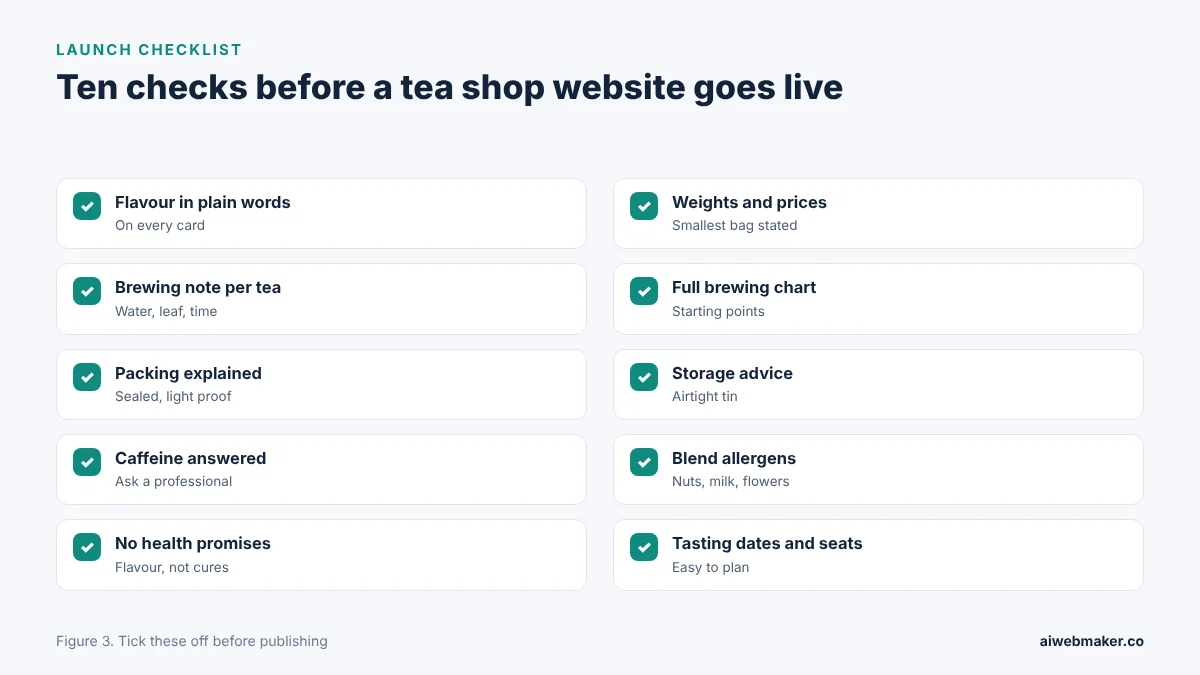
Browsers leave a tea merchant's site when the teas are listed by name alone, with no flavour, weight or brewing note. A page of forty unfamiliar names and no guidance for beginners feels like a test rather than an invitation. Missing caffeine notes put off people who are careful about it. No word on packing or freshness makes posted tea seem a gamble. Tastings without dates or seat numbers leave would be guests unsure whether to plan an evening. A checklist of ten items, drawn below, gives every one of those worries an answer.
Frequently asked questions
Does green leaf turn bitter because of hot water?
Bitter green tea is usually brewed with water that is too hot or left steeping too long. Most green teas prefer water well below boiling and a steep of a minute or two. Letting a boiled kettle rest for a few minutes, or adding a splash of cold water, brings the temperature down. Using the right amount of leaf also matters. A brewing note on every bag prevents the bitter cup that puts people off green tea.
How long does loose leaf stay at its best?
Most loose leaf teas taste best within a year when stored in an airtight tin away from light, heat and strong smells. Green teas fade faster and are best within months of opening. Some aged or heavily oxidised teas keep longer. Buying smaller bags more often is a simple way to drink tea at its best. The website can print a storage note on every order.
Can herbal blends promise health benefits?
Herbal blends should not promise health benefits unless the claim is permitted where the tea is sold, and many countries regulate such claims strictly. Describing the flavour, the ingredients and how the infusion is brewed is safer and still persuasive. Customers with health questions should be pointed to a professional. Allergens, such as daisy family flowers or nut pieces, must be listed clearly. Careful wording protects both the shop and its customers.
Can cafés buy their house blend wholesale?
Many tea merchants supply cafés and offices with tins, pouches or bags, sometimes blended for the customer, along with brewing cards for staff. Prices usually depend on the volume and the teas chosen. The website can describe the service and invite managers to say roughly how many cups they serve each week. Clear brewing cards help staff pour a good cup every time. A few steady trade accounts give a tea shop dependable income between gift seasons.
Bags of leaf and pots poured that repay the year
A few hundred grams of good leaf and a teapot sold to a gift buyer usually outweigh the $119 hosting bill a tea merchant faces each year. Monthly, each $19 is repaid by two bags of breakfast tea or a tasting flight and a scone. Every beginner who brews a good cup from the guide, and every café that signs up for a supply, is trade the pages helped to earn. Clear descriptions, honest brewing advice and careful notes on caffeine persuade buyers more than poetic labels. Merchants who announce each new harvest keep their regulars watching for the next one. Reorders for the same oolong, season after season, tell the owner the brewing guide has done its job.
Build your website in Minutes and get the AI Tools that work
Start Building Your Website →