Sushi Restaurant Website Cost, Counter Seats and Plain Allergen Notes
A sushi bar's year of hosting is a single $119, or twelve payments of $19, and a domain goes on top. Covered: diners, the menu page, omakase at the counter, booking requests, allergens, raw fish care, rice and fish, search and the hosting budget.
- No coding required
- Live in minutes
- Blog, SEO and chatbot tools included
A sushi bar's year of hosting with AI Web Maker is a single $119, or twelve payments of $19 if the counter prefers, and a domain goes on top. Setting out the nigiri prices, the allergen columns and the counter sittings, and reviewing them in the preview, takes place long before any invoice exists. Two guests at an omakase counter on one evening cover the hosting with plenty to spare. The harder part is that a sushi meal raises more questions than most dinners: what omakase involves, which pieces are raw, where soy and sesame hide, and whether a pregnant guest can eat anything at all. A site that answers these calmly fills the counter, while one that stays silent sends careful diners elsewhere. Covered here are the diners, the menu page, omakase and sittings, booking requests, allergens, raw fish care, rice and fish quality, search and the yearly sums.
This article is part of our complete guide: Food Business Website Builder.
Date nights, quick lunches and omakase devotees: who reserves a seat
A sushi restaurant serves several very different diners, and each arrives at the website with a specific need. Office workers want a lunch set served in about fifteen minutes and a table they can book that morning. Couples planning a special evening want the counter, the omakase and a seat where they can watch the chef. Sushi enthusiasts look for the day's fish, the chef's background and how far ahead counter seats go. Families need cooked options, smaller plates and a high chair. Guests with allergies or a pregnancy want to know what can be swapped before they even consider booking.
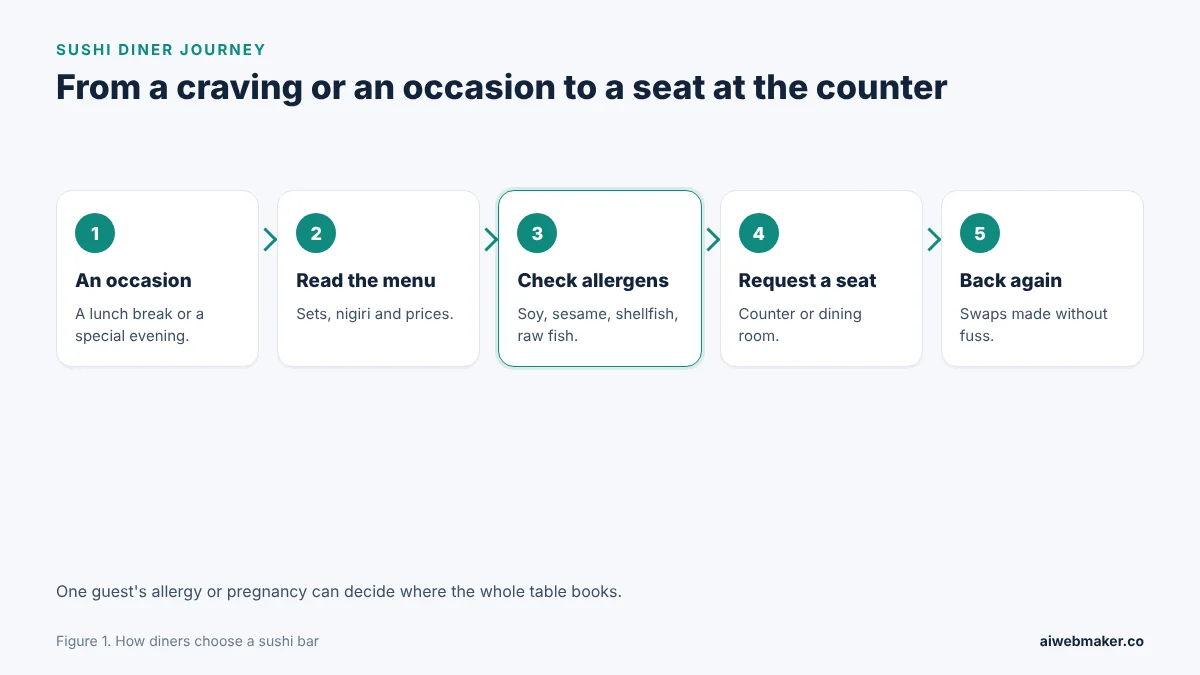
An occasion or a lunchtime craving begins the picture, and a return visit to a favourite seat ends it. Reading the menu comes first, with diners checking prices, sets and the kind of fish served. The highlighted step is checking allergens and raw fish, because a single guest with a shellfish allergy or a pregnancy can decide whether the whole table books. Choosing the counter or the dining room follows, then sending the request and receiving a reply. A meal where the chef asked about allergies twice and swapped pieces without fuss is what brings the table back. Each step deserves a clear answer on the page.
Sets, nigiri, rolls and the counter: how the page is ordered
A sushi bar's site should open with the ways to eat and then give the detail that careful diners need. The opening view needs the number of counter seats, the dining room and the days of service. Set menus come next, priced per person, followed by nigiri and rolls in tables with an allergen column. A section explaining the counter, a plain list of allergens and a note on raw fish follow. The booking request, the restaurant's hours and directions complete the page.
| Section | The diner's question | What it should answer |
|---|---|---|
| Opening view | What kind of place is this? | Counter seats, dining room, service days |
| Set menus | What is the easiest way to order? | Price per person, pieces included, swaps |
| Nigiri and rolls | What does each piece contain? | Price and allergens for every plate |
| The counter | Why sit at the bar? | Omakase, sittings, how pieces are served |
| Allergens and raw fish | Is it safe for my group? | Every allergen handled, who should avoid raw |
| Booking | How does reserving work? | Counter or table, time, group size, policies |
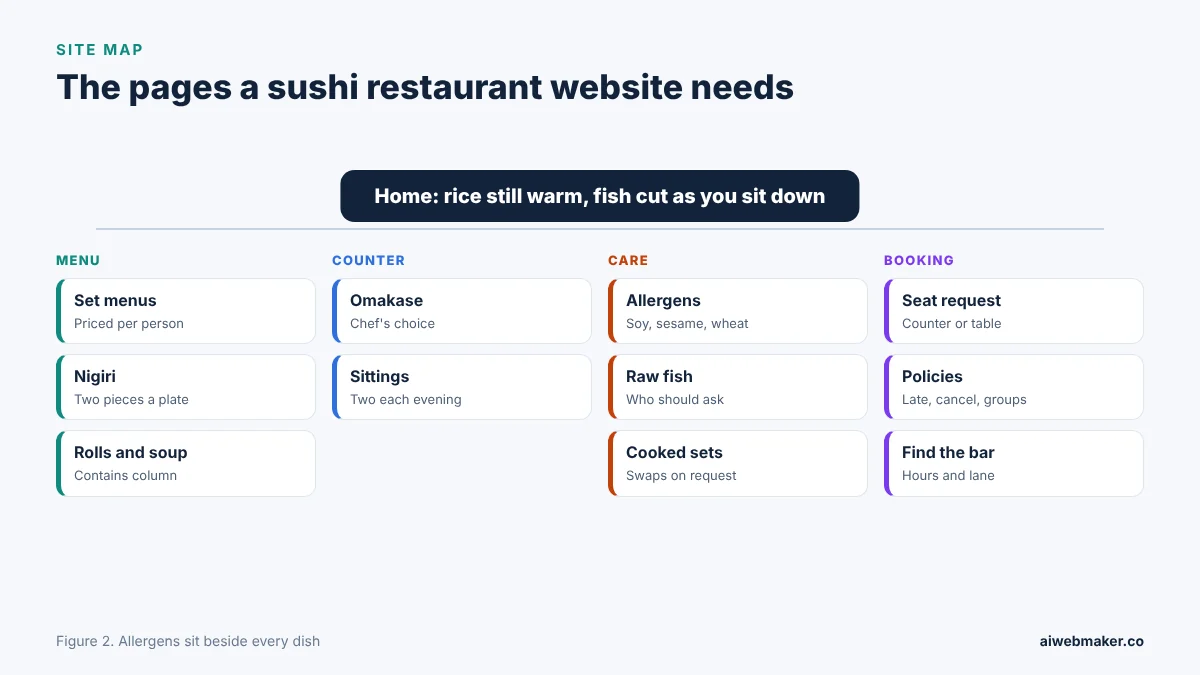
Grouped by what a diner decides, the sushi bar's site splits into the menu, the counter, the care notes and the booking. Menu pages carry sets, nigiri and rolls, and counter pages explain omakase and the sittings, while care pages hold allergens and raw fish advice. Our sample bar, Kaiseki Sushi Bar, offers three sets: a lunch set, a counter omakase and a nigiri and roll set, each priced per person. Tables of nigiri and of rolls, soup and small plates follow with a contains column, then a section on why the counter books up first, an allergen panel, a gallery, reviews and questions before booking. The sushi restaurant website example with counter seats and allergen tables closes with a request for a counter seat, a dining room table or a takeaway tray. Diners who read that sequence know exactly where to sit and what to ask for.
Twelve counter seats, two sittings and what omakase means
Omakase means leaving the choice to the chef, and many first time diners need that explained before they commit to a set price. At the counter each piece is pressed and handed across within seconds, while the rice is still warm and the fish still cold. That small temperature difference is much of what makes nigiri taste so good, and it fades within minutes on a plate. Fixed sittings, such as one early and one later in the evening, let the chef serve every guest at the same pace. The page should state how long the meal lasts, roughly how many pieces are served and how allergies are handled. A clear explanation turns an intimidating word into an experience diners look forward to.
| Way to eat | Where | How it works | Best for |
|---|---|---|---|
| Lunch set | Dining room | Nigiri, a half roll and soup, served quickly | A working lunch |
| Nigiri and roll set | Dining room | Nigiri and a full roll chosen from the menu | A relaxed meal |
| Counter omakase | Counter only | Pieces chosen and pressed one at a time | A special evening |
| Takeaway tray | Collected | Trays prepared to order | Meals at home |
Requests for the counter, the dining room or a takeaway tray
A sushi bar runs on a small number of precious seats, so the booking route must let the restaurant stay in control of the room. The diner chooses the counter or a table, the day, the time and the number of guests, adds any allergies, and sends the request. With the booking website builder for sushi bars with counter sittings, the restaurant then says yes, shifts the guest to an hour the room can manage, or declines when the counter is already full. Any payment, whether a deposit for a large group or the bill after the meal, is arranged by the restaurant directly with the guest, with not a cent of it passing to AI Web Maker. Clear policies on lateness, cancellation and group sizes sit beside the request so nobody is surprised. A tidy booking page saves the chef from answering the phone in the middle of service.
| Policy | What the page should state |
|---|---|
| Counter sittings | Start times, and that late arrivals join the course being served |
| Holding a table | How many minutes before it is released |
| Cancellations | How much notice the restaurant asks for |
| Large groups | Largest table, notice needed, any deposit terms |
| Walk ins | Whether seats are kept back for guests without a booking |
| Children | Cooked options, smaller plates, high chairs |
Soy, sesame, shellfish and wheat hidden in the sauce
Sushi carries more hidden allergens than most diners realise, so the menu should list them beside every dish rather than in a footnote. Fish and shellfish are obvious, but soy appears in soy sauce, glazes and miso, and sesame is pressed onto the outside of many rolls. Gluten hides in ordinary soy sauce, which is usually brewed with wheat, as well as in tempura batter and some glazes, and a tamari made without wheat can be offered instead. Egg appears in rolled omelette and spicy mayonnaise, and miso soup is often made with fish stock. A small kitchen handles all of these together, so traces can reach any dish, and a diner with a severe allergy needs a word with the chef before ordering. Labelling law for allergens is not the same everywhere, which leaves each owner to confirm the local rule.
Raw fish, parasites and guests who should choose cooked pieces
Raw and lightly cured fish can carry bacteria or parasites, which is why serious sushi kitchens follow strict handling rules. In the European Union, for example, fish intended to be eaten raw must generally be deep frozen first to kill parasites, with some exceptions, and United States food safety guidance follows similar lines. Other countries set their own requirements, and owners should follow their local food safety authority. The risk matters more for some people, including pregnant guests, young children, older diners and anyone with a weakened immune system. The website should not give medical advice, but it can invite these guests to ask their doctor or midwife and explain that any set can be made with cooked prawn, omelette, glazed eel and vegetable rolls. A kitchen that offers a cooked version without fuss earns the loyalty of whole families.
Warm rice, cold fish and a board that changes daily
Diners who know sushi judge a restaurant by its rice as much as its fish, and the website can show that the kitchen cares about both. Rice seasoned with vinegar, sugar and salt and kept close to body warmth gives nigiri its proper texture. Cooking it in small batches through each service avoids the hard, cold rice of a chilled display. Fish delivered most mornings and broken down before lunch means the board changes with what the market offers. Crossing sold out pieces off by hand tells diners the menu is real rather than permanent. These details, written briefly, persuade enthusiasts that the counter is worth booking a week ahead.
Searches like omakase near me and nigiri for lunch
Diners search for sushi by style, occasion and place, typing phrases such as sushi near me, omakase counter, sushi lunch set, sushi takeaway or sushi restaurant for a birthday. Headings that repeat those phrases on the sets, counter and takeaway sections help search engines match them. The map listing should show service days, a picture of the chef at work and the restaurant's location, especially if it sits on a quiet lane. Reviews mentioning warm rice, careful allergy questions and cooked swaps for pregnant guests reassure cautious diners. Articles explaining omakase, how to eat nigiri or which pieces are cooked bring in readers before they book. Calm, informed writing makes the restaurant the first name diners think of for a special meal.
Seats against server costs: twelve months for the bar
A sushi bar's web bill has two repeating lines, hosting and the domain, and a dozen omakase articles bought with AI credits undercut one plate of nigiri. A restaurant with steady covers will usually clear the year with $119. A new bar may choose $19 monthly while it fills its counter. New sets, changed prices and daily fish notes add nothing to the total. Both payment routes are tabled below, and the $189 plan appears so the scale is clear.
| Item | Yearly | Monthly |
|---|---|---|
| Hosting the sushi restaurant pages | $119 | $228 over twelve months |
| Domain | Depends on the ending | Depends on the ending |
| Higher plan, for comparison | $189 a year | Not needed |
| Twelve omakase and seasonal fish articles at about $0.65 | About $7.80 | About $7.80 |
| Set, price and menu updates | No charge | No charge |
| Year before the domain | About $126.80 | About $235.80 |
Reasons a diner books another counter
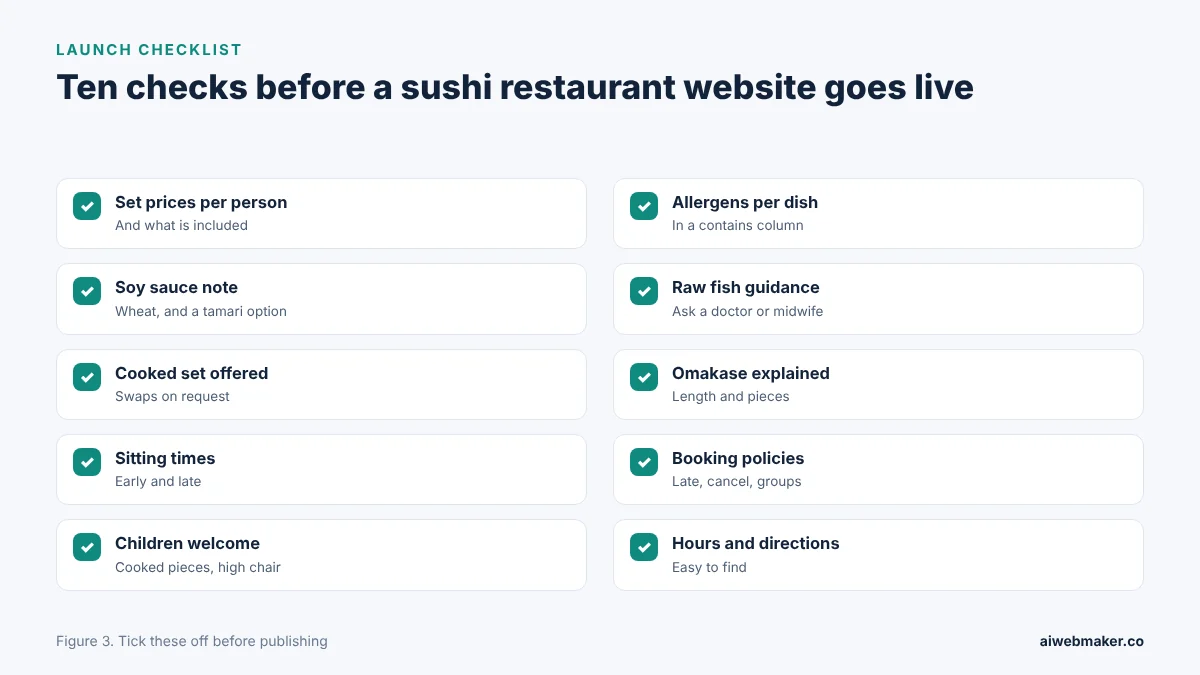
Diners move on when a sushi site shows beautiful photos but no prices for sets or nigiri. A menu without allergens worries anyone with a shellfish, soy or sesame allergy, and they rarely call to ask. Silence about raw fish leaves pregnant guests and their companions unsure whether to book at all. No explanation of omakase makes the counter feel exclusive rather than welcoming. A booking route that hides the policies on lateness and cancellation creates awkward moments later. The following picture pairs every gap with one of ten fixes.
Frequently asked questions
Can the chef make the whole set without raw fish?
Many sushi kitchens can make a set entirely from cooked or vegetable pieces, such as cooked prawn, glazed eel, rolled omelette, shiitake and cucumber rolls. Guests who are pregnant, unwell or simply prefer cooked food should mention it when they book. The kitchen can then plan the pieces rather than improvising during service. The website should say clearly that this option exists. A relaxed cooked option often decides whether a mixed group books at all.
How early do Friday counter seats go?
Counter seats for weekend evenings often go about a week ahead in busy sushi bars, while lunch tables can usually be booked the same day. Some restaurants keep a few seats back for walk ins at each service. The website should give a realistic idea of how far ahead to book. Diners who know the pattern plan accordingly and arrive less stressed. Honest guidance prevents disappointment and wasted phone calls.
What happens when a guest arrives late for omakase?
Omakase sittings usually start together, so a late guest often joins at the course being served rather than starting from the beginning. Tables in the dining room may be held for a set number of minutes before release. The website should state both policies plainly. A phone call ahead often buys a little extra time. Clear rules protect the chef's rhythm and the other guests' evening.
Does gluten hide in a sushi meal?
Gluten appears in more of a sushi meal than many diners expect, mainly through ordinary soy sauce brewed with wheat. Tempura batter, some glazes and imitation crab can also contain it. A tamari made without wheat is a common alternative, and the restaurant should say whether it keeps one. Guests with coeliac disease should mention it when booking and again at the table. Honest allergen notes make careful diners feel welcome.
Omakase evenings that clear the hosting bill
Two seats at the omakase counter on a single evening usually bring in more than the full $119 a sushi bar spends on a year of hosting. Paid monthly, each $19 is outweighed by one lunch set. Every booking request that arrives with allergies already listed, and every family that books because a cooked set was offered, is custom the site helped to win. Plain allergen tables, a calm explanation of omakase and honest notes on raw fish persuade diners more than polished photos alone. Restaurants that keep the board and the sittings current fill their counters week after week. Requests that ask for a counter seat by name show the page has done its explaining.
Build your website in Minutes and get the AI Tools that work
Start Building Your Website →