Karaoke Bar Website Cost: Room Prices, Song Lists, Drinks Packages
A karaoke bar is billed $119 for twelve months of hosting or $19 for one, and picks a domain on top. Covered: who books, room pricing, drinks and ages, songs and licensing, hygiene, requests, parties, search and yearly costs.
- No coding required
- Live in minutes
- Blog, SEO and chatbot tools included
Hosting a karaoke bar's website through AI Web Maker means a $119 bill each year or a $19 bill each month, and the domain is picked and paid for on top. Room cards, drinks packages and the song list can be written, sung through and rewritten in the preview, and no invoice follows. Four hours in the sample's smallest booth already pay for the year. The real test is selling a private room to groups who worry about the price per head, the drinks, the age rules and whether shy singers will be dragged to the microphone. Prices set by the room rather than by the singer confuse many visitors, and that confusion quietly costs bookings. Taken in turn here are who books, the pages, room pricing, drinks and ages, songs and licensing, hygiene and soundproofing, room requests, search, the yearly costs and the gaps that leave rooms empty.
This article is part of our complete guide: Food Business Website Builder.
Birthday crowds, after work rounds and duos: who books a karaoke room
Karaoke rooms are booked by groups whose members rarely agree on anything except wanting a good night. A birthday organiser checks the room size, the price for three hours and whether a cake can be brought. After work groups compare room prices against a per head budget and want drinks sorted before they arrive. Couples and pairs look for small booths at quieter times, often midweek. Fans of particular music, from K pop to musical theatre, check that the library covers their songs and their language. Every one of these groups wants the room price explained in a way that splits easily.
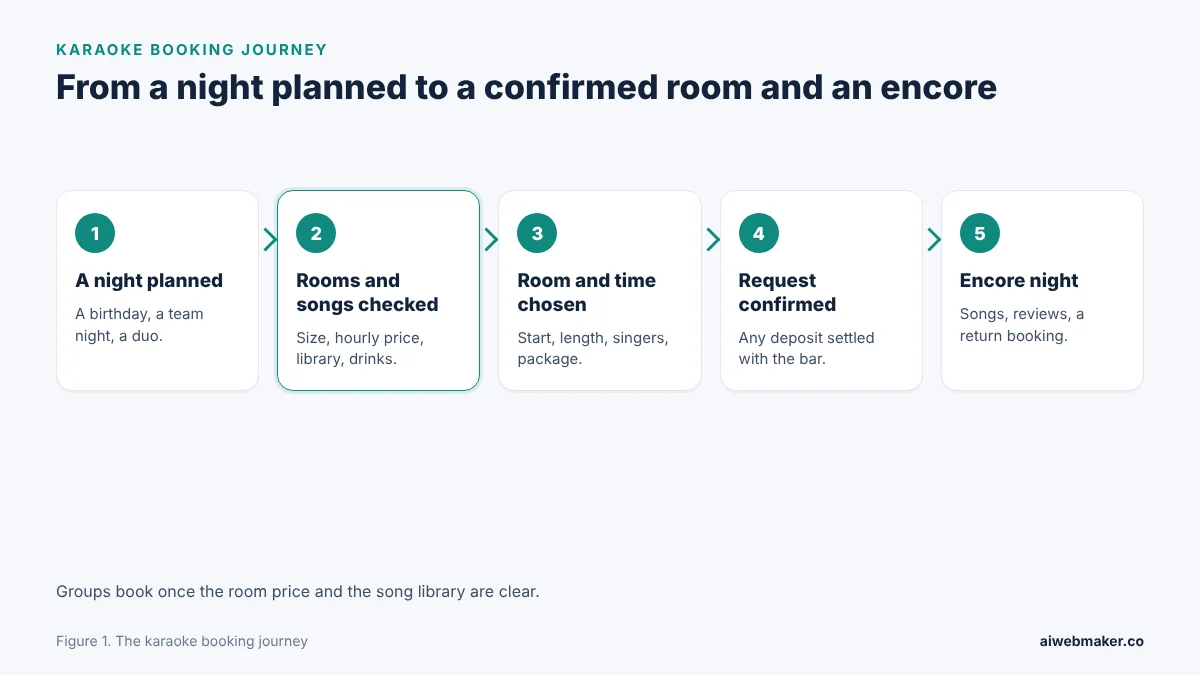
Checking the room and the song library is the bright step here, because a group that cannot find its size or its favourite songs simply picks another bar. The night starts as a plan, perhaps a birthday or a Friday team outing. The group then chooses a room and a start time, adding a drinks package if the price feels right. Confirmation from the venue, with any deposit settled directly, makes the room theirs. The night itself decides whether photos, reviews and next month's booking follow. Each page should help one organiser win the group's agreement quickly.
Room, drinks, song and party pages a karaoke bar needs
A karaoke bar's site is mostly about rooms, drinks and songs, and each deserves its own page. The rooms page compares sizes, hourly prices and minimum bookings. A drinks page lists packages with prices and the drinking age rule. A songs page shows the library by era, genre and language, with a note on how the queue works. Party and hire pages cover birthdays, team nights and whole floor bookings, while a request page and directions complete the route.
| Page | Group's question | What it must show |
|---|---|---|
| Rooms | Which room fits us, and what does it cost | Sizes, hourly price, minimum hours |
| Drinks | Can we sort drinks in advance | Packages, prices, age rule, a zero alcohol choice |
| Songs | Will our songs be there | Eras, genres, languages, new additions |
| Parties and hire | Can we celebrate here | Birthdays, team nights, whole floor |
| Room request | How do we hold a room | Room, day, start, length, singers |
| Visit | How do we get there | Address, lift, hours, transport |
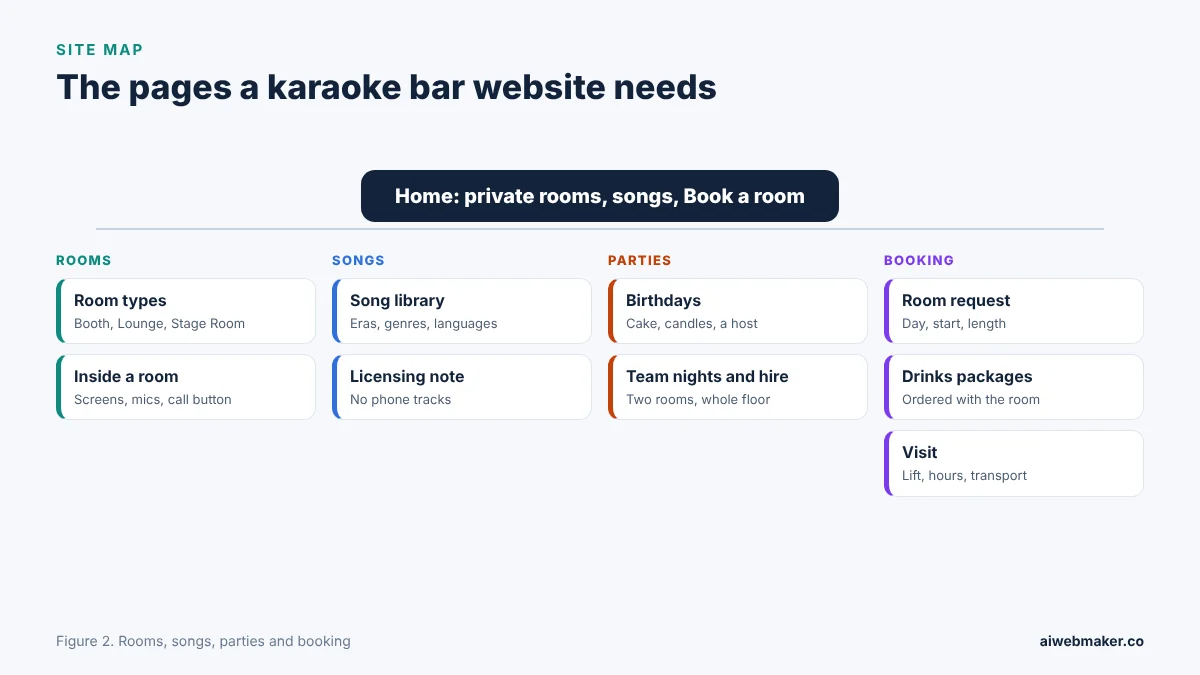
This karaoke plan divides the site into rooms, songs, parties and booking, with the drinks rule sitting close to the rooms. Our sample venue, Encore Karaoke Rooms, prices three room types by the hour: the Booth, the Lounge and the Stage Room. A table lists four drinks packages, a set of song shelves shows the library by era and genre, and a note explains that song licensing is handled by the venue. Party options follow for birthdays, team nights and whole floor hire. The karaoke bar website example with private rooms, drinks packages and a song list finishes with a booking request that asks which room, which day, what start time, how many hours and how many singers. A real bar can keep that order, since it settles price and songs before it asks for a booking.
Booths, lounges and stage rooms priced by the hour
Most private karaoke rooms are priced per room per hour, which surprises visitors used to paying per person. The page should show each room's capacity, its hourly price and any minimum booking on busy nights, with a rough cost per head for a typical group. Peak and off peak prices, such as cheaper afternoons and dearer weekend evenings, should be stated rather than discovered on the bill. Each room's features, such as screens, a raised stage or space for food, help groups choose between sizes. A note on joining rooms for bigger groups saves an organiser from booking two rooms that sit apart. Clear room pricing lets the organiser split the bill in their head before asking anyone to commit.
| Room size | Typical group | What to state |
|---|---|---|
| Small booth | Two to six singers, dates, duos | Hourly price, screen, seating |
| Mid size room | Birthdays and after work groups | Hourly price, screens, space for food |
| Large or stage room | Big parties | Stage, lights, buffet space, joining rooms |
| Whole floor | Company nights, celebrations | Starting price, capacity, bar screens |
Drinks packages, drinking ages and a zero alcohol choice
Drinks packages simplify a karaoke night because they arrive with the group and avoid a pile of separate orders. Each package should list exactly what arrives in the room and its price, with at least one zero alcohol option for drivers and younger guests. Drinking ages differ from country to country, so the page should give the local figure and say that identification is checked. Family sessions, where a venue runs them, need their own hours and a clear statement that alcohol rules still apply. Call buttons or ordering from the room can be described so groups know how to order more. A tidy drinks page lifts spending while keeping the venue within its licence.
| Package element | What to state |
|---|---|
| Contents | Bottles, jugs or snacks that arrive in the room |
| Price | One figure per package |
| Zero alcohol choice | A package with no alcohol at all |
| Age rule | The local drinking age and identification checks |
| Ordering more | How extra drinks reach the room |
The song library, licensing and why phone tracks stay off the system
The song library is the reason people choose one karaoke bar over another, so it deserves more than a line boasting of thousands of songs. Groups want to see eras, genres and languages, from soul and disco to K pop, Bollywood, Latin pop and Afrobeats, and to know how often new songs arrive. Searching by title, artist, decade or language on the room tablet can be explained in a sentence. Playing music in public usually needs licences, and the rules and collecting bodies differ by country, so the venue should confirm it holds whatever applies locally. That is also why many venues do not play tracks from guests' own phones, and saying so prevents arguments in the room. A rich, clearly described library turns a booking into a night planned around favourite songs.
Microphone hygiene, soundproofing and the warning before time runs out
Practical comforts matter in a small room, and the website is the place to settle them. Microphones wiped and given fresh covers between bookings answer a hygiene worry many guests have but rarely voice. Soundproofing that keeps neighbouring rooms out reassures shy singers that only their friends will hear them. Screens with large lyrics, a shared song queue and lighting the group can control make the room easy to run without staff help. A notice before the end of the session, and a way to extend if the room is not booked afterwards, prevents the music cutting out mid chorus. Small comforts described in advance often tip a group towards booking.
Room requests, deposits and birthday nights
A room request needs the room, the day, a start time, how many hours and how many singers, plus an optional drinks package. Through the booking website builder for karaoke rooms and party nights, a group sends that request and the venue answers it. The bar can confirm the room, propose the nearest open time or decline when every room is taken. Any deposit, such as the sample's one hour of room price, passes from the group to the bar alone, with no percentage of the room price going to AI Web Maker. Birthday, team night and whole floor packages can sit on the same page with their own starting prices and lengths. A request route this simple keeps organisers moving from idea to booked room in one sitting.
What singers type before they book a room
Karaoke searches name the format and the occasion, such as karaoke near me, private karaoke room, karaoke birthday party, karaoke bar open late or K pop karaoke. Each room and party page can use one of those phrases in its heading, along with the district. The map listing should show late opening hours accurately, since many searches happen on the evening itself. Reviews mentioning clean microphones, a good library and helpful staff persuade groups more than general praise. Articles on the best duet songs, tips for shy singers or how to plan a karaoke birthday give people reasons to share the site. Shared articles bring new groups to rooms that might otherwise sit empty midweek.
Hosting, domain and credits behind the song list
A karaoke bar's yearly website spending is short to list: hosting, a domain and article credits. Paying once a year keeps the hosting at $119, whereas the $19 monthly route reaches $228 after twelve payments. Domains vary in price with the ending, and there are about 400 to pick from. Song guides and party tips, twelve of them, need roughly $7.80 in credits. Printed beside them for comparison is the $189 tier, and changing room prices, drinks packages or the song list costs nothing extra.
| Item | Yearly | Monthly |
|---|---|---|
| Hosting the karaoke pages | $119 | $228 over twelve months |
| Domain | Depends on the ending | Depends on the ending |
| Higher plan, for comparison | $189 a year | Not needed |
| Twelve song and party articles at about $0.65 | About $7.80 | About $7.80 |
| Room, drinks and song list updates | No charge | No charge |
| Year before the domain | About $126.80 | About $235.80 |
Unclear prices and thin song lists that empty the rooms
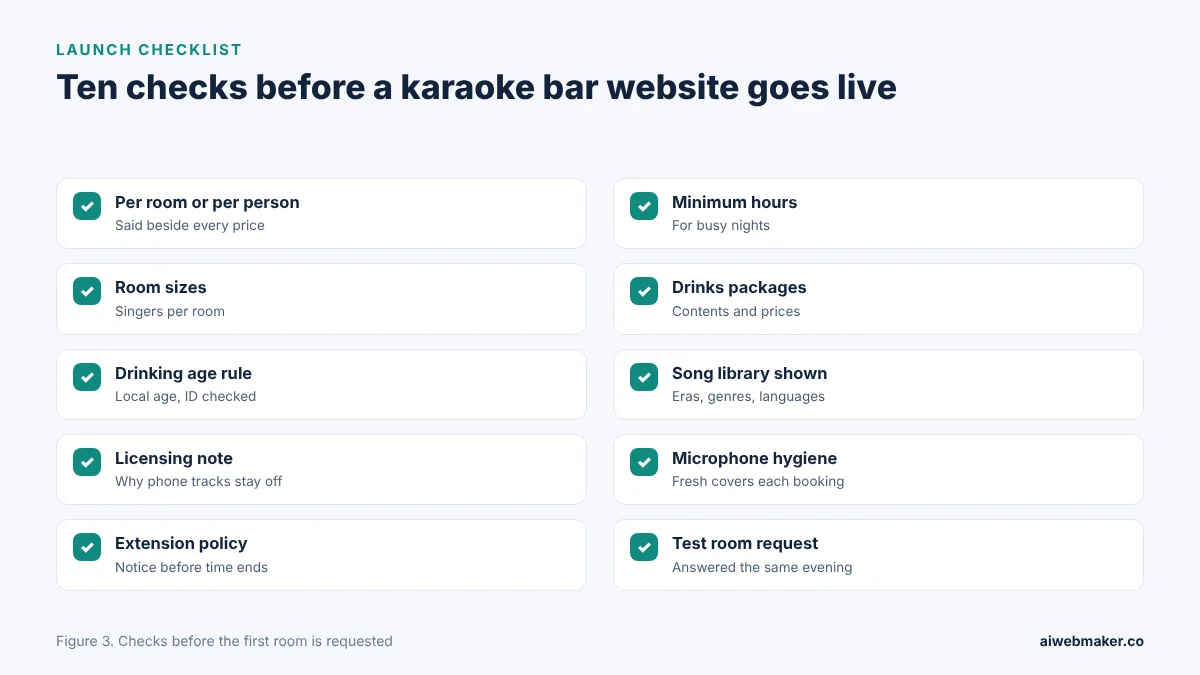
Groups leave a karaoke bar's website when room prices appear without saying whether they are per room or per person. A song library described only as thousands of hits gives fans of particular genres no reason to trust it. Groups mixing teenagers and adults give up when no drinking age rule is printed. No word on minimum hours at weekends causes unpleasant surprises at the request stage. Photos of an empty bar instead of the rooms make the private room idea hard to picture. Ten tiles in the figure match these gaps with their repairs.
Frequently asked questions
Is the room price per person or per room?
Most private karaoke rooms are priced per room per hour, but some venues charge per person, so the website must say which applies. A short example, such as the cost of a three hour booking for a typical group, helps organisers work out a per head figure. Minimum hours on busy nights should appear beside the price. Clear pricing prevents disputes when the bill arrives. It also makes splitting the cost easier for the group.
Can under eighteens join a karaoke night?
Rules for younger guests depend on the venue's licence and on local law, which varies by country. Many karaoke bars restrict evening sessions to adults because alcohol is served, and some run family sessions during the day. The website should state the hours and ages for each session and that identification may be checked. Zero alcohol packages help family groups feel catered for. Clear rules prevent a group being turned away at the door.
Can guests sing songs from their own phones?
Many venues do not play tracks from guests' phones, because their licences and the room system are set up for the venue's own library. The website should explain this politely and describe how the library can be searched. New songs added regularly reduce the pressure for outside tracks. Groups with special requests can be invited to ask before they arrive. Honest explanations avoid frustration in the room.
What happens when the booked time runs out?
Most venues show a notice on the screen shortly before the session ends. If the room is not booked afterwards, many allow the group to extend by a set amount, charged at the hourly rate. The website should explain both the notice and the extension rule. A clear policy avoids the music stopping without warning in the middle of a song. Guests who know the rules end the night happy.
Four booth hours and the hosting bill
Four hours in the sample's smallest booth already cover the $119 that hosts a karaoke bar's pages for a year. One hour in that same booth clears a $19 month with money left for a drink. Birthdays, team nights and whole floor hire then bring income on a scale the hosting never approaches. Clear room prices, an honest drinks policy and a library that shows its range win groups that would otherwise drift to the next bar. Venues that keep songs, prices and party packages current fill midweek rooms as well as Saturdays. Every room singing on a Tuesday is the payoff those pages are built for.
Build your website in Minutes and get the AI Tools that work
Start Building Your Website →