Honey Farm Website Cost: Raw Honey Shop, Hive Visits and Courses
A honey farm's shop and pages cost $119 to host for twelve months, or $19 monthly, with a domain added. Covered: buyers, the pages, the shop, harvests, labels, hive visits and safety, courses, search and the budget.
- No coding required
- Live in minutes
- Blog, SEO and chatbot tools included
For a beekeeper selling online, hosting with AI Web Maker is one $119 yearly payment or a $19 monthly one, while the domain is bought on its own terms. Product cards, harvest notes and the visit pages can be drafted, swapped around and tested in preview while nothing is invoiced. A few orders of jars, comb and candles cover twelve months of hosting, so the real decisions lie elsewhere. The hard part is that honey varies from harvest to harvest, sells out without warning and carries rules on labelling and claims that differ by country, while hive visits involve stings and children. Buyers want to know where a jar came from and how it tastes, and visitors want to know they will be safe at the hives. Ahead come the buyers, the page list, the shop, harvest notes, labels and claims, hive visits and safety, courses, search and the yearly sums.
This article is part of our complete guide: Food Business Website Builder.
Gift buyers, regulars, cafés and would be beekeepers
People come to a honey farm's website for several reasons, and the shop is only one of them. Regular customers return for the honey they liked last year and want to know whether this year's harvest has been taken off. Gift buyers look for comb, candles and boxed sets, often close to a holiday or a wedding. Local shops and cafés ask about cases and trade prices, which usually begin as an enquiry rather than an order in a bag. Families look for a hive visit as a day out, and would be beekeepers look for courses and mentoring through a first season. A site that routes each reader to the right page quickly sells more jars and fills more visit dates.
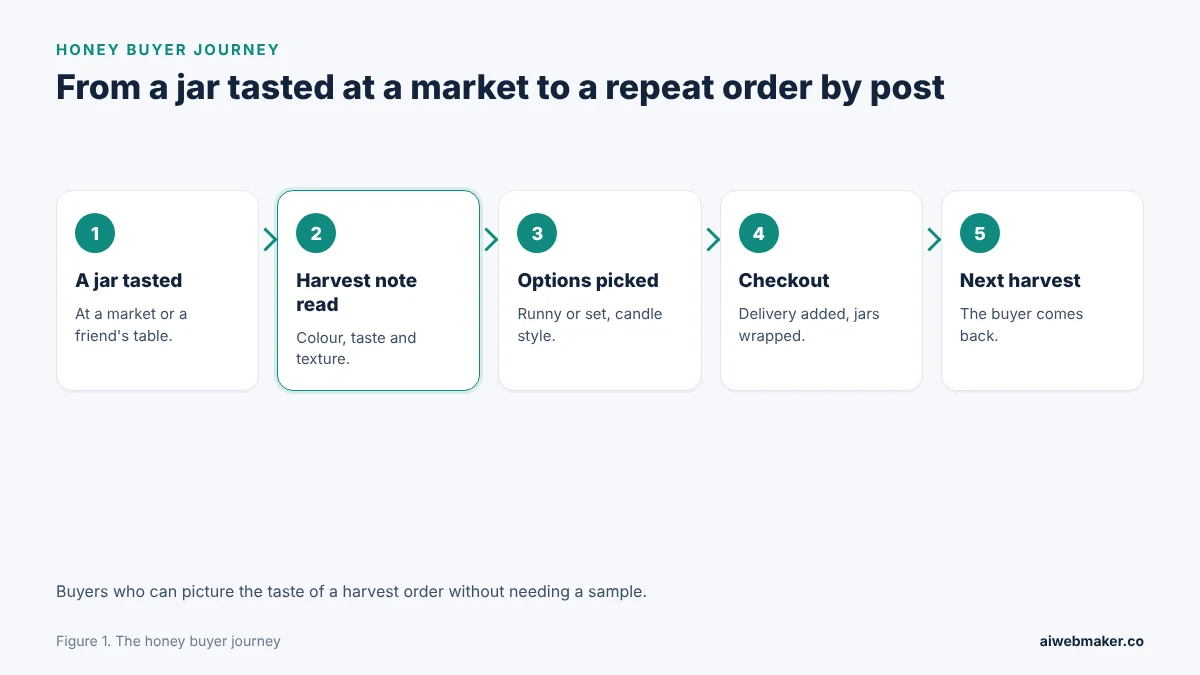
A jar tasted at a market stall starts the sequence, and a repeat order delivered to the door ends it. The step in colour is the harvest note, because buyers who know a honey's flavour, colour and texture choose with confidence. Picking options such as runny or soft set, or a style of candle, comes next. The checkout adds delivery and confirms the order, and careful packing decides whether the jar arrives whole. A good first jar is what brings the buyer back for the next harvest. Shop pages built around these steps turn a passing taste into a yearly habit.
Shop, harvests, hives and visits: the honey farm's page list
A honey farm website combines a shop with an explanation of how the honey is made, because the second sells the first. Product pages for each honey, comb and wax product carry the prices and options. A harvest page describes the honeys taken off each season and why they differ. A hives page explains where the colonies live and how they are cared for, and a visits page sells hive experiences and courses with safety rules attached. Pages for trade orders, gifts and a contact with shop hours complete the set. Linked together, these pages let a buyer move from story to bag without leaving the site.
| Page | What buyers want | What it should show |
|---|---|---|
| Honey shop | Price, size, taste | Jar weight, texture options, harvest, delivery note |
| Comb and wax | Gifts and treats | Cut comb weight, candle styles, wrap sets |
| Harvest notes | How each honey differs | Season, colour, taste, texture, setting |
| The hives | Where it comes from | Sites, forage, care through the year |
| Visits and courses | A day out or a new hobby | Length, group size, kit provided, safety rules |
| Gifts and trade | Favours, boxes, cases | An enquiry route for prices |
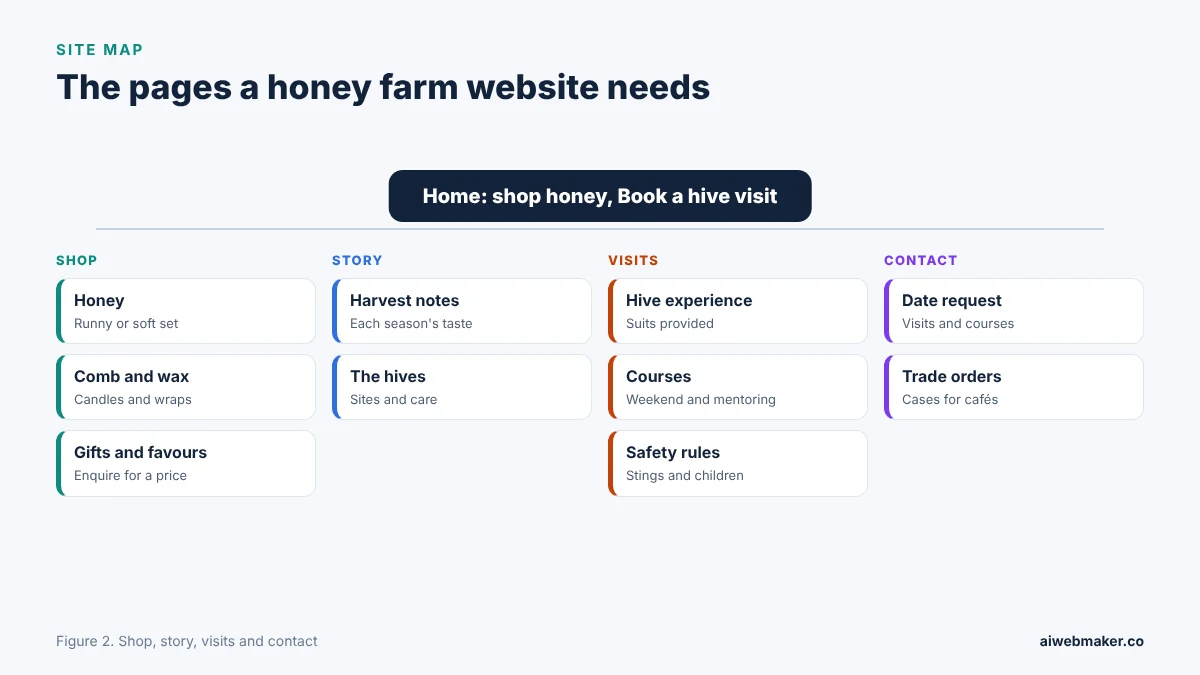
With the shop and a visit button on the home page, the honey farm's pages fall into shop, story, visits and contact. Our sample, Golden Comb Honey Farm, sells wildflower honey with a runny or soft set choice, late summer honey, cut comb, beeswax candles in three styles and beeswax food wraps, and shows an Enquire button for wedding favours and gift boxes. A harvest table follows, describing spring blossom, wildflower, late summer and cut comb by season, colour, taste and texture. After a section on sixty hives across four sites come three offers, the hive experience, a beginner's weekend and mentoring through your first season, then the safety rules for visitors. The honey farm website example with a jar shop and hive visit requests closes with photos, reviews, questions and a date request form. Most beekeepers who sell and teach can reuse that order with their own harvests.
Selling jars online: options, the bag and delivery
Each product card should state the jar weight, the price, the harvest and any option, such as runny or soft set honey, a candle style or a set of wraps. Glass jars need careful packing, and a short note on how orders are wrapped reassures buyers sending gifts. The online store builder for honey farms selling jars, comb and beeswax gives every jar or candle its own choices, lets shoppers drop them into a bag and totals the delivery fee for their address when they check out. Discount codes can thank regular buyers or launch a new harvest, and products without a fixed price, such as wedding favours or corporate gift boxes, can carry an Enquire button instead. When a harvest sells out, saying so plainly and naming when the next one is expected keeps buyers loyal. Clear cards and honest stock notes turn a tasting into an order.
| Product | Options worth offering | Details to state |
|---|---|---|
| Runny or set honey | Texture, jar size | Harvest, weight, a note on setting |
| Cut comb | Size of piece | Approximate weight, how to eat it |
| Beeswax candles | Pillar, dinner pair, tea lights | Wick type, burn time if tested |
| Food wraps | Set of sizes, single bread wrap | Care and washing |
| Gift boxes and favours | Contents, quantities | Enquire for a price |
Harvest notes: why each jar tastes of its season
Honey changes with the flowers the bees forage, so a harvest page explains why this year's jar may differ from last year's. Spring honeys from blossom are often pale and quick to set, midsummer wildflower honeys tend to be golden and floral, and late summer honeys from woodland edges are often darker and stronger. These are tendencies rather than rules, because weather, location and forage vary from year to year and place to place. A note that crystallised honey has not spoiled, and that warming the jar gently softens it, prevents worried emails. Naming the site and month a batch was taken off makes each jar feel specific and traceable. Harvest notes give buyers a reason to try more than one honey.
| Honey | Usually taken off | Colour and taste | Texture |
|---|---|---|---|
| Spring blossom | Early summer | Pale and mild | Often sets quickly |
| Wildflower | Midsummer | Golden and floral | Stays runny longer |
| Late summer | End of summer | Dark and strong | Sets slowly, coarser grain |
| Cut comb | When frames are capped | Whatever the season gives | Wax and honey together |
Labels, raw honey and the claims to avoid
Honey labelling law is set nationally, with regional twists in places, so a beekeeper should confirm what the local food authority expects before any product page goes live. Common requirements include the product name, the weight, a best before date, the producer's address and the country of origin, but the exact list depends on where the honey is sold. Words such as raw deserve a plain definition on the page, for example that the honey is spun, strained and jarred without heating. Health claims are another matter, because many authorities restrict what food sellers may say about health, so product pages should describe taste and origin rather than benefits. A clear line that honey should not be given to babies under twelve months, a widely published precaution, belongs on the shop and in the questions. Careful wording protects buyers and keeps the farm on the right side of the rules.
Hive visits, stings and children: the safety page
Hive visits make a lovely day out, but they involve live colonies, and the safety rules should be on the page before anyone books. Anyone who has had a severe reaction to a sting should speak to a doctor before joining, and the request should ask about this directly. Practical rules such as closed shoes, long trousers, no perfume and staying close to the beekeeper can be listed briefly, with suits, veils and gloves provided. A minimum age for children, with an adult beside them throughout, and notes on ponds or water troughs on the site complete the picture. The page should also say that in an emergency, such as someone struggling to breathe, visitors must call the local emergency number at once. Visits move with the weather, since colonies are opened only in calm, warm conditions, and saying so in advance avoids disappointment.
Courses and mentoring for first time beekeepers
Courses attract people planning their own hives, and the page should be honest about the commitment involved. A short taster, a weekend covering bee biology, equipment and the beekeeping year, and mentoring visits through a first season suit different levels of interest. A course card works best when it names the hours involved, the maximum number of students, the kit lent and any take home material such as inspection sheets. Rules on registering hives and reporting certain bee diseases vary by country, so courses should point new keepers to the authority responsible for bee health where they live. Admitting the hard parts, such as swarms, stings and losing a colony, builds more trust than glossy promises. Honest course pages bring students who stay with beekeeping.
Raw honey near me, comb, candles: how honey searches start
Honey buyers search for phrases such as raw honey near me, local honey, cut comb honey, beeswax candles or a hive experience, usually with a county or town. Product pages naming the honey, its flowers and the district in their titles answer those searches head on. Local buyers reach the farm gate through a map listing that shows the honey house, shop hours and photos of jars and hives. Reviews that mention careful packing, a distinctive taste or a calm hive visit persuade more than general praise. Seasonal articles on the harvest, setting honey or what beekeepers do in winter bring readers who later buy. Writing through the year keeps the farm in buyers' minds between harvests.
A beekeeper's yearly website arithmetic
Hosting the shop, the domain and a few articles make up a honey farm's whole website budget. Farms trading year round usually pay annually and save over the monthly route. A new beekeeper testing online sales for one harvest might start monthly instead. New products, harvest notes and visit dates can be added whenever stock changes, at no cost. Underneath, yearly and monthly costs are set out line by line, and the $189 tier sits there as a benchmark only.
| Item | Yearly | Monthly |
|---|---|---|
| Hosting the honey shop and pages | $119 | $228 over twelve months |
| Domain | Depends on the ending | Depends on the ending |
| Higher plan, for comparison | $189 a year | Not needed |
| Twelve harvest and hive articles at about $0.65 | About $7.80 | About $7.80 |
| New jars, harvest notes and visit dates | No charge | No charge |
| Year before the domain | About $126.80 | About $235.80 |
Why honey buyers abandon the bag
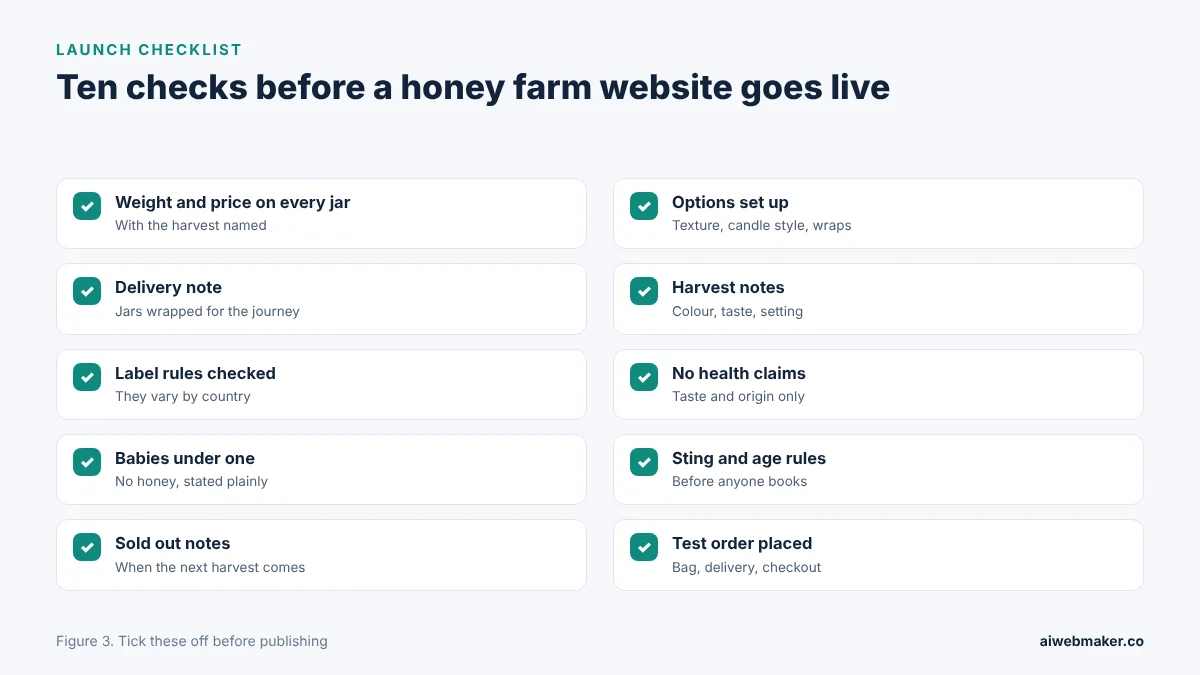
Buyers abandon a honey shop when jar sizes or weights are missing. No word on which harvest a jar comes from makes the honey feel anonymous. Delivery costs revealed only at the last moment surprise people sending gifts. Sold out honeys left on sale without a note frustrate regulars. Hive visit pages without sting or age rules worry parents. A ten point launch checklist follows, with one box per fault named above.
Frequently asked questions
Why has a jar of honey gone solid?
Most honey crystallises in time, which is natural and does not mean it has spoiled. Some honeys set within weeks, while others stay runny for months, depending on the flowers. Standing the jar in warm water softens it, though overheating can dull the flavour. Many people prefer set honey on toast. A note on the product page saves the farm many worried messages.
Can babies have honey?
Widely published health advice says honey should not be given to babies under twelve months old. A honey farm should repeat that advice on its product pages and in its questions. Parents with questions about feeding should speak to a health professional. The farm's role is to share the precaution, not to give medical advice. A clear, calm line protects the youngest customers.
Can children come on a hive visit?
Many farms accept children above a minimum age, provided an adult stays beside them throughout. Small suits, veils and gloves should be available in children's sizes. Rules about water, paths and staying close to the beekeeper should be explained before the visit. Parents should mention any known sting reactions when booking. Clear rules make the visit memorable for the right reasons.
Can cafés and shops order honey by the case?
Many honey farms supply local shops and cafés in cases, priced on request according to the harvest left. An enquiry route on the website collects the business name, quantities and delivery needs. Trade buyers may have their own labelling requirements, which differ by country. Supply depends on each season's harvest, so the farm should be honest about limits. A simple trade page turns occasional requests into regular orders.
Jars, comb and candles against twelve months of hosting
Five or six parcels of jars, comb and candles outweigh a honey farm's $119 hosting year. Paying monthly instead, one gift box order more than covers the $19. Every buyer who returns for the next harvest, and every visitor who books a hive experience after reading the safety rules, adds income beyond the farm gate. Honest harvest notes, careful labels and clear visit rules persuade buyers who cannot taste before they order. Farms that update their shop when each harvest comes off keep regulars watching for the next one. Parcels of honey leaving the honey house each week show the shop doing its share of the work.
Build your website in Minutes and get the AI Tools that work
Start Building Your Website →