Dairy Farm Website Cost: Milk Rounds, Cheese Orders and Farm Visits
Hosting a dairy's shop takes $119 for the year or $19 for each month, with a domain beside it. Then come customers, the pages, the shop, rounds, safe milk and labels, the herd, visits and hygiene, search and the budget.
- No coding required
- Live in minutes
- Blog, SEO and chatbot tools included
Doorstep milk and farmhouse cheese can be sold from pages AI Web Maker hosts, billed once yearly at $119 or monthly at $19, with the domain added. The dairy can lay out its products, rounds and visit pages and test the whole order path in the preview before paying a cent. A few weeks of bottles on one round, or one whole cheese for a wedding, covers the year's hosting. The harder problem is that milk is perishable, delivered on fixed mornings, returned in glass and governed by food safety rules that differ between countries, while the farm also welcomes children into a working yard. Customers need to know which morning the van comes, how the milk is made safe and what to do with the bottles, and visitors need the hygiene rules before they arrive. Covered next are the customers, the page list, the shop, the rounds, safe milk and labels, the herd, visits and hygiene, search and the yearly sums.
This article is part of our complete guide: Food Business Website Builder.
Doorstep households, cafés, cheese lovers and school groups
A dairy's website serves customers with very different rhythms. Households on a round want the cut off time for orders, the morning the van comes and how to pause deliveries while away. Cafés, schools and offices want weekly quantities, returnable crates and a price agreed in advance. Cheese lovers and gift buyers browse the hard and soft cheeses, often ordering a whole wheel or a board for a celebration. Families and teachers look for milking and calf visits, checking ages, safety rules and whether boots are needed. Pointing each of these readers to the right page from the home screen keeps the round full and the visit diary busy.
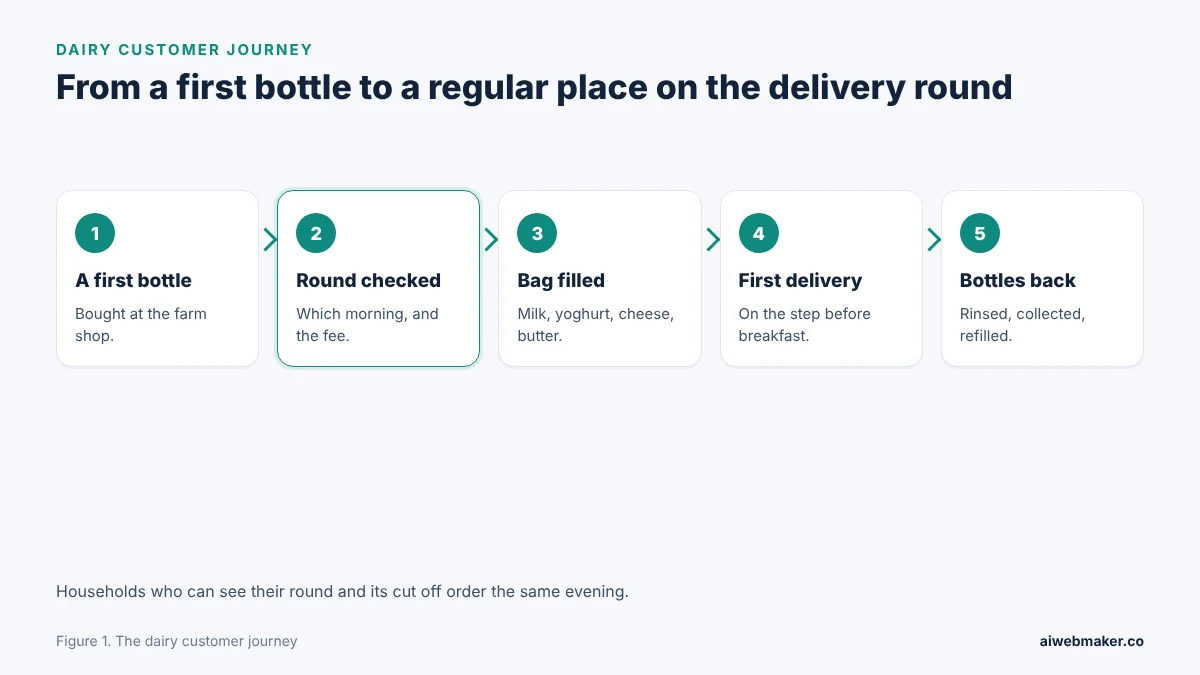
A first bottle, perhaps bought at the farm shop, sits at the start of the row, and a regular place on the round sits at the end. The highlighted box is the rounds table, because a household that cannot see which morning the van passes its street will not order. Choosing products and options follows, from whole milk with cream on top to the age of a cheese. Checkout adds the delivery fee, and the first delivery before breakfast sets the tone. Rinsed bottles going back on the next round complete the loop and bring the next order. A dairy's pages should make every box in that row easy to pass.
Shop, rounds, herd and visits: what a dairy's site holds
Dairy websites need a shop, a delivery page and a story, and the story matters more than it does for most food sellers. Shop pages list milk, yoghurt, butter and cheese with sizes, options and prices. A rounds page sets out which areas are served on which mornings, with the fee and the order cut off. Pages on the herd and on how milk travels from parlour to doorstep explain quality and safety. Visit pages sell milking and calf barn tours with rules attached, and a contact page covers the farm shop hours and directions. Together these pages let a household trust the dairy before the first bottle arrives.
| Page | Customer question | What it should show |
|---|---|---|
| Shop | What is on offer | Products, sizes, options, prices |
| Delivery rounds | When will it arrive | Areas, mornings, fees, order cut off |
| Parlour to doorstep | Is it safe and fresh | Milking, cooling, pasteurising, bottling |
| The herd | How the cows are kept | Breeds, grazing, housing, vet care |
| Farm visits | Can we come and see | Tours, ages, boots, hygiene rules |
| Larger orders | Whole cheeses, cafés | Enquiry route and what to include |
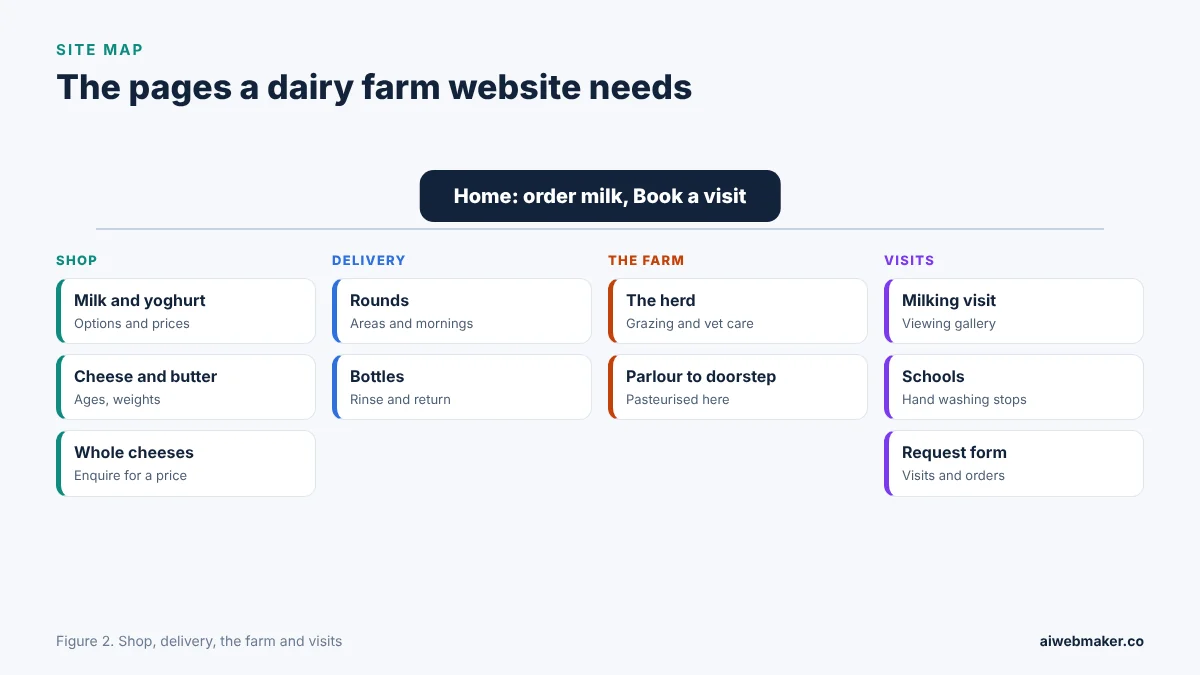
Starting from a home page with an order button and a visit button, the dairy's pages divide into shop, delivery, the farm and visits. Our sample, Meadowbank Dairy, sells milk in glass bottles as whole, semi skimmed or skimmed, set yoghurt in four flavours, farmhouse hard cheese at three ages, a little white soft cheese and farmhouse butter salted or unsalted, with an Enquire option for a whole cheese or a party board. A delivery rounds table follows, then sections on the ninety cow herd and the four steps from milking to bottling. Three visits come next, the afternoon milking, the calf barn and the dairy, and school and group visits, each with hygiene rules. The dairy farm website example with milk rounds and a cheese shop finishes with photos, reviews, questions and a request for visits or larger orders. Dairies that sell direct can borrow the whole sequence.
Milk, yoghurt and cheese in a bag: product options and checkout
Dairy products suit options well, because one product often comes in several forms. Milk can be offered as whole, semi skimmed or skimmed, yoghurt by flavour, cheese by age or ripeness and butter salted or unsalted. The online store builder for dairies selling milk, yoghurt and farmhouse cheese sets up those options on each product, holds a household's picks in a bag until checkout and then adds the delivery charge on top. Discount codes can welcome a new street onto a round or reward a café's first month, and items without a set price, such as a whole cheese for a wedding, can show an Enquire button. Bottle deposits, standing orders and pauses for holidays are arranged by the dairy with each household, so the page should explain how to ask. Clear options and honest notes on what happens after checkout make ordering milk online feel as simple as leaving a note on the step.
| Product | Options to offer | Notes for the page |
|---|---|---|
| Bottled milk | Whole, semi skimmed, skimmed | Bottle size, returnable glass |
| Yoghurt | Flavours, pot size | Set or stirred, use by guidance |
| Hard cheese | Age, piece weight | Rennet type, wrapping |
| Soft cheese | Young or ripe | Storage, best eaten by |
| Butter | Salted or unsalted | Block size |
| Whole cheese or board | Size, occasion | Enquire for a price |
Rounds, cut off times and returnable bottles
A delivery page should show, for each area, the mornings the van runs and the fee per delivery, in a simple table. An order cut off, such as the evening before the round, prevents disappointed customers on delivery mornings. Collection from the farm shop belongs in the same table as an option with no delivery fee. Glass bottles need a sentence on rinsing and leaving them out for the driver, and on how they are washed and sterilised before reuse. Instructions for pausing deliveries during holidays, and the deadline for doing so, save calls and wasted milk. A rounds page this clear turns a curious household into a regular on the first read.
| Round detail | What to publish |
|---|---|
| Area | Streets, villages or postal areas served |
| Mornings | The days the van runs in that area |
| Fee | Delivery charge per round, or collection |
| Cut off | The latest time to order for the next round |
| Bottles | How to rinse and return them |
| Pauses | How to stop and restart deliveries |
Pasteurising, raw milk rules and what labels must say
Food safety is the first thing a cautious customer checks, so the website should explain plainly how the milk is made safe. A short account of milking, rapid cooling, pasteurising and bottling, with the time from parlour to doorstep, answers most questions. Rules on selling raw milk vary widely between countries and regions, from outright bans to strict licensing, so a dairy should state clearly whether it sells raw milk and never imply it is allowed everywhere. Labels and product pages must follow local food law on use by dates, storage and allergens, and milk itself is a major allergen that must be identified. Cheese pages should say whether vegetarian or animal rennet is used, since that question arrives constantly. Accurate safety wording reassures customers and keeps the dairy within the rules.
The herd, the fields and the vet: telling the farm's story
Customers buying direct often care how the cows live, and an honest herd page answers that better than any slogan. Breeds, grazing seasons, winter housing and how often the cows are milked give a clear picture. Mentioning regular vet visits and a written herd health plan, where they exist, shows care without exaggeration. Welfare schemes and certifications vary by country, so only those the farm actually holds should be named. Photographs of the herd in the fields and the barns, taken through the year, carry the story further than words. A truthful herd page gives customers a reason to choose the farm over the supermarket shelf.
Milking visits, calf barns and hand washing
Farm visits bring families and schools into a working yard, so hygiene and safety rules belong on the page, not just on a sign at the gate. Washing hands at the sinks before eating, and after touching animals or rails, matters because farm animals can carry germs that make people ill, and young children are especially at risk. Boots or closed shoes, a boot dip at the gate and keeping children beside an adult near animals, slurry stores and ponds should be stated plainly. Pregnant visitors and people with weakened immunity may be advised by health services to take extra care around livestock, so the page can suggest they seek that advice before booking. Visits booked ahead, with small groups and a named guide, let the farm keep everyone together. Rules written calmly and early keep the day enjoyable and safe.
Milk delivery near me, farm cheese, farm visits: how dairy searches begin
People find dairies through searches such as milk delivery near me, glass bottle milk, farm shop cheese or a farm visit for children, usually with the town or village. A rounds page that names every area served lets local searches land on the right page. Its map listing ought to mark the farm shop, its hours and photos of the counter and the cows. Reviews about early deliveries, cream on top and a well run school visit give newcomers confidence. Articles on cheesemaking, the farming year or how bottles are washed and reused bring readers who later order. Regular writing keeps the dairy in mind between deliveries.
The dairy's website sums for a year
Three entries fill a dairy's website budget: shop hosting, the domain and a handful of articles. Farms delivering every week of the year usually pay annually, the cheaper route over twelve months. A farm testing a new round for a season might prefer monthly payments. Adding a flavour, a new round or a visit date costs nothing extra. Both billing routes are itemised next, and the $189 tier is entered once, as a yardstick for the dairy's own figures.
| Item | Yearly | Monthly |
|---|---|---|
| Hosting the dairy shop and pages | $119 | $228 over twelve months |
| Domain | Depends on the ending | Depends on the ending |
| Higher plan, for comparison | $189 a year | Not needed |
| Twelve cheese and farm articles at about $0.65 | About $7.80 | About $7.80 |
| New products, rounds and visit dates | No charge | No charge |
| Year before the domain | About $126.80 | About $235.80 |
Why a household closes the shop before ordering milk
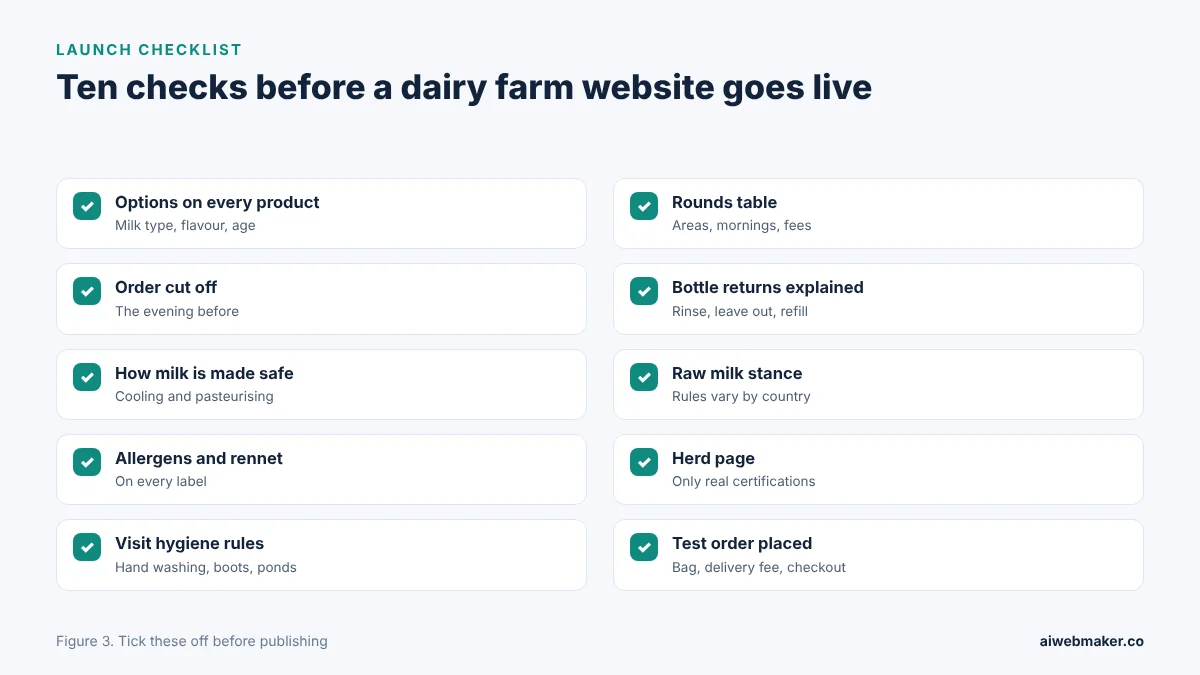
Households close the shop when they cannot see whether the van comes to their street. Without a published cut off, nobody knows whether tomorrow's milk is still possible. No explanation of pasteurising or bottle returns raises doubts about safety and hassle. Cheese without ages, weights or rennet details sends buyers elsewhere. Visit pages with no hygiene or age rules worry teachers planning a class trip. Ten matching checks fill the launch checklist that comes next.
Frequently asked questions
Is farm milk sold online always pasteurised?
Not everywhere, because rules on raw milk differ widely between countries and regions. Many dairies sell only pasteurised milk, while some places allow raw milk under strict conditions and others ban its sale. Each dairy should state clearly what it sells and follow its local law. Customers with questions about raw milk and health should seek advice from health services. Plain information lets buyers choose with confidence.
How long does bottled milk keep?
Milk should be kept in the fridge and used by the date on the cap or label. Once opened, most milk is best used within a few days, and the dairy should give its own guidance. Whole milk that is not homogenised separates, so a gentle turn of the bottle mixes the cream back in. Leaving bottles on a warm doorstep shortens their life, so early collection helps. Clear storage advice reduces waste and complaints.
What happens to the empty glass bottles?
Most dairies ask customers to rinse the empties and leave them out for collection on the next round. Returned bottles are washed and sterilised before refilling, under the dairy's hygiene procedures. Some dairies charge a small bottle deposit, which should be explained on the shop page. Chipped bottles are usually recycled rather than reused. Simple instructions keep the loop working.
Can a café or school arrange a weekly milk order?
Many dairies supply cafés, schools and offices on weekday rounds, often in returnable crates. An enquiry with the weekly quantities and delivery days lets the dairy quote a price. Arrangements for regular supply are agreed between the dairy and the business directly. Larger buyers may ask for documents on hygiene or traceability, which vary by country. A dedicated enquiry route turns these conversations into steady trade.
Bottles on one round against the year's hosting
A few weeks of orders from one street on the round earn a dairy more than its whole $119 hosting bill. Under monthly billing, one whole cheese ordered for a party more than covers the $19. Every household that joins a round after reading the rounds table, and every school that books a milking visit, adds income that does not depend on a wholesale price. Clear options, honest safety wording and a rounds page that answers when the van comes persuade customers to try a first order. Dairies that keep products and rounds current spare the farm office a stream of questions. Crates of rinsed bottles stacked by the door each morning show the site keeping the round full.
Build your website in Minutes and get the AI Tools that work
Start Building Your Website →