Cookie Business Website Cost and Gift Boxes That Arrive in One Piece
A cookie bakery's site is hosted by AI Web Maker at $119 annually, or in monthly instalments of $19, with the domain added. Topics: buyers, pages, boxes, custom batches, posting, labels, home kitchen rules, search and money.
- No coding required
- Live in minutes
- Blog, SEO and chatbot tools included
AI Web Maker hosts a cookie business for $119 across twelve months, or $19 on each monthly invoice for bakers who like to keep payments small, with the domain added. Every flavour photo, box description and checkout step can be tried in the preview with no bill attached. Comparing your draft with the cookie shop website sample is worthwhile, because it shows an invented bakery's gift boxes by the dozen, all made with AI Web Maker. A handful of gift boxes, or one batch of wedding favours, usually pays for the year. The harder part is that cookies are bought for three different reasons, as a treat, as a gift and as a custom batch for an event, and each reason needs its own route. Gifts must also survive a journey through the post and arrive tasting as good as they did on the cooling rack. What follows covers buyers, pages, boxes in the shop, custom batches, posting and shelf life, labels, home kitchen rules, search and the yearly sums.
This article is part of our complete guide: Food Business Website Builder.
Who buys cookies online, and what are they buying for?
Cookie buyers arrive with different occasions in mind, and each occasion shapes what they look for first. Treat buyers want a box of favourites this week, a clear price and a quick collection or delivery. Gift senders care about presentation, a note in the box and confidence that the cookies will reach another town intact. Couples and party planners look for decorated favours that match a colour scheme and a guest count. Companies want branded cookies for launches, conferences and client thank yous, usually in large numbers. Regulars who reorder the same box every month mostly want the process to be quick.
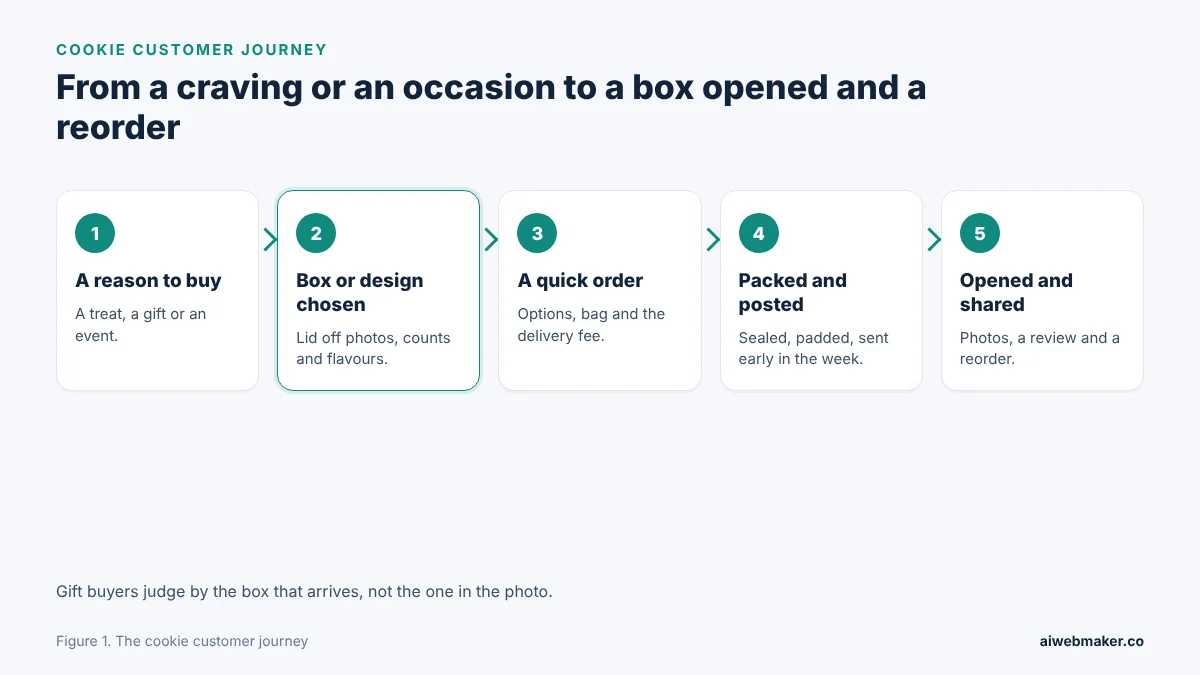
Five steps link a craving or an occasion to a box that is opened, photographed and reordered. The idea might be a birthday gift, a wedding favour or simply a Friday treat. Choosing the box, the mix or the custom design comes next, and clear photos with honest descriptions carry most of the persuasion. Ordering should take a minute, and nobody likes a delivery charge sprung on them at the last screen. Packing and posting are the hidden step where a business either delights or disappoints. A box that arrives whole, fresh and well presented leads to photos, reviews and a second order.
Which pages turn a cookie habit into steady orders?
A cookie website needs only a few pages, but they must handle quick treats and planned events side by side. The home page shows the bestselling box, the main occasions and a clear path to the shop. The shop lists boxes, mixes and gift options with prices. A custom orders page explains favours, branded batches and decorated sets, with notice periods. A delivery page covers posting, collection and shelf life, while the story page introduces the baker.
| Page | What the buyer wants | What to include |
|---|---|---|
| Home | A tempting first look | Bestselling box, occasions, Shop button |
| Shop | A box for this week | Sizes, flavour mixes, gift options, prices |
| Custom orders | Favours or branded batches | Minimums, notice, design details, how to request |
| Delivery and freshness | Confidence in the journey | Posting days, areas, packaging, shelf life |
| Our story | Who bakes the cookies | The baker, the recipes, the kitchen |
| Contact | Answers to odd questions | Collection address, hours, replies |
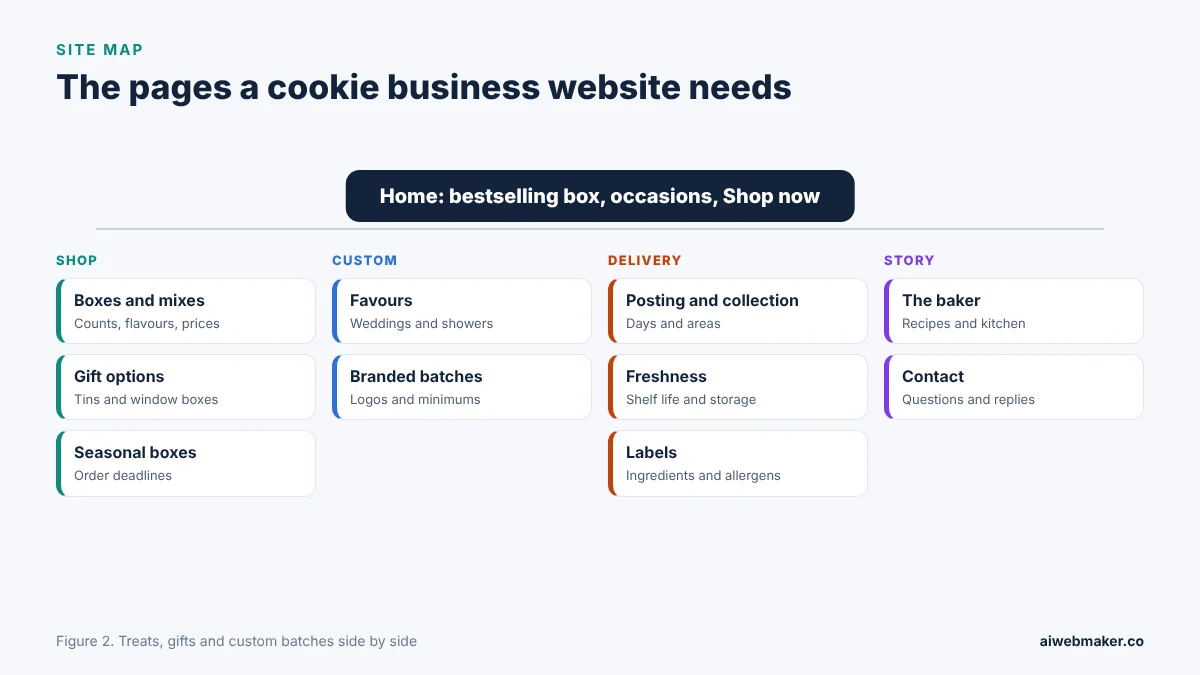
A cookie site splits into four branches below its home page, one for each reason to buy. The shop branch carries the boxes, the mixes and the seasonal specials. Custom pages hold favours, branded cookies and decorated sets, with the notice each one needs. Delivery pages explain posting, collection, packaging and how long the cookies keep, while the story branch introduces the baker. Our sample business, Crumbly Lane Cookies, offers five boxes and treats in its shop and gives custom orders their own page, explaining how they work, how much notice is needed and inviting customers to describe their event. The cookie business website example with gift boxes and custom orders rounds things off with the baker's story and a contact page, all built by AI Web Maker in 44 seconds.
Boxes, mixes and gift options in the shop
The shop should make choosing a box as easy as choosing a cookie at a counter. Each box needs a photo with the lid off, the number of cookies, the flavours inside and the price. Box size and flavour mix work well as options, so a buyer can switch from six to twelve or pick a chocolate only mix without hunting for another page. Through the online store builder for cookie businesses selling boxes and gifts, buyers set those options, gather boxes in a bag and watch the checkout add the delivery charge to the total. Discount codes suit a launch, a holiday or a thank you to regulars, while custom batches with no set price can show an Enquire button. A tidy shop turns a passing craving into an order in under a minute.
| Product | Options worth offering | What the listing should state |
|---|---|---|
| Classic box | Six or twelve, single or mixed flavours | Cookie count, flavours, price |
| Gift box | Ribbon, tin or window box | Presentation, posting suitability |
| Seasonal box | Holiday flavours and colours | Order deadline for the season |
| Sharing tin | Larger counts for offices | Serving count, collection or delivery |
| Decorated set | Theme and colours | Lead time, Enquire for custom designs |
Decorated favours and branded batches
Custom cookies take far longer than a tray of chocolate chip, and the page should explain why. Iced cookies are decorated in layers that must dry between colours, and many bakers leave them overnight before packing. Logos can be piped by hand or printed with edible ink, and each method suits different designs. Favours for weddings and baby showers are usually wrapped individually, which adds time and needs an ingredient label on each one. Minimum quantities, notice periods and how the design is agreed should all be written plainly. A clear custom page brings in the large orders that steady the month.
| Custom type | What shapes the lead time | What the request should include |
|---|---|---|
| Wedding favours | Wrapping, labels, colour matching | Date, guest count, colours, wrapping style |
| Branded corporate cookies | Logo work, quantity | Logo description, quantity, delivery address |
| Party sets | Theme detail, drying time | Theme, number of guests, collection date |
| Holiday batches | Seasonal demand | Quantity and final order date |
Posting cookies so they arrive whole and fresh
Posting is where a cookie business proves its care, because a box of crumbs is the fastest route to a poor review. Sturdy tins or rigid boxes, layers of paper and cookies sealed in bags keep them whole and fresh. Crisp cookies travel better than soft ones loaded with chocolate, and filled or iced cookies need extra padding. Heat is the hidden risk, since chocolate melts in summer vans, so many bakers post early in the week and avoid days when parcels sit in depots. Sending food across borders is often restricted, so the delivery page should name the countries or regions served. Clear advice on storage after arrival keeps the last cookie as good as the first.
| Posting detail | Why buyers care |
|---|---|
| Packaging | Whole cookies, a gift that looks right |
| Posting days | No weekend in a warm depot |
| Delivery area | Knowing whether a gift can reach a relative |
| Shelf life | Planning when to give or serve |
| Storage advice | An airtight tin, away from heat |
| Summer note | How chocolate and icing are protected |
Ingredient labels and allergens on every box
Many countries require packaged food to carry an ingredient list with the allergens highlighted, and cookies sold online are usually treated as packaged food. Wheat, eggs, milk, nuts, soya and sesame are common in cookie recipes, and the label should name every one used. A note on whether nuts are handled in the same kitchen helps parents judge the risk for a child. Vegan cookies or cookies made without wheat should be described accurately, with any chance of cross contact stated rather than hidden. Labelling law differs between countries, so the wording must follow the rules where the cookies are sold. Precise labels win the trust of the buyers who read them most closely.
Home kitchens, cottage food rules and registration
Many cookie businesses start in a home kitchen, and the rules for doing that vary a great deal. In some countries, for example the United States, cottage food laws differ from state to state and may limit where and how home baked goods can be sold. Some of those laws only allow sales within the same state, which matters once orders start arriving from further away. Elsewhere, home bakers usually register with a local authority and may face an inspection before selling. Insurance for product liability is worth considering, especially for corporate and wedding orders. One sentence on the story page about the kitchen's registration status settles the doubts of cautious buyers.
What cookie buyers type into a search bar
Cookie buyers searching online type phrases such as cookie delivery, cookie gift box, custom decorated cookies or wedding favour cookies, often with a town name. Corporate buyers search for branded cookies or logo cookies when an event is approaching. Headings on the shop and custom pages that match those phrases help each page reach the right buyer. People who want cookies today often decide from the map, so the listing needs collection hours, photos of open boxes and the web address. Reviews that mention cookies arriving intact and still soft carry real weight with gift buyers. Articles on keeping cookies fresh, choosing wedding favours or planning a corporate gift bring readers who order later.
Counting the yearly cost of a cookie website
The running cost of a cookie website is hosting and a domain, with optional articles drafted at roughly $0.65 each. Choosing the yearly route at $119 keeps the total lowest for a baker with regular orders. Someone just starting out can pay $19 a month while sales build, which comes to $228 over the year. New flavours, seasonal boxes and fresh photos are added at no charge. Each route appears below next to the $189 tier, which is shown only so the figures can be compared.
| Item | Yearly | Monthly |
|---|---|---|
| Hosting the cookie business pages | $119 | $228 over twelve months |
| Domain | Depends on the ending | Depends on the ending |
| Higher plan, for comparison | $189 a year | Not needed |
| Twelve gifting and freshness articles at about $0.65 | About $7.80 | About $7.80 |
| New flavours, boxes and photos | No charge | No charge |
| Year before the domain | About $126.80 | About $235.80 |
Why cookie buyers leave before checkout
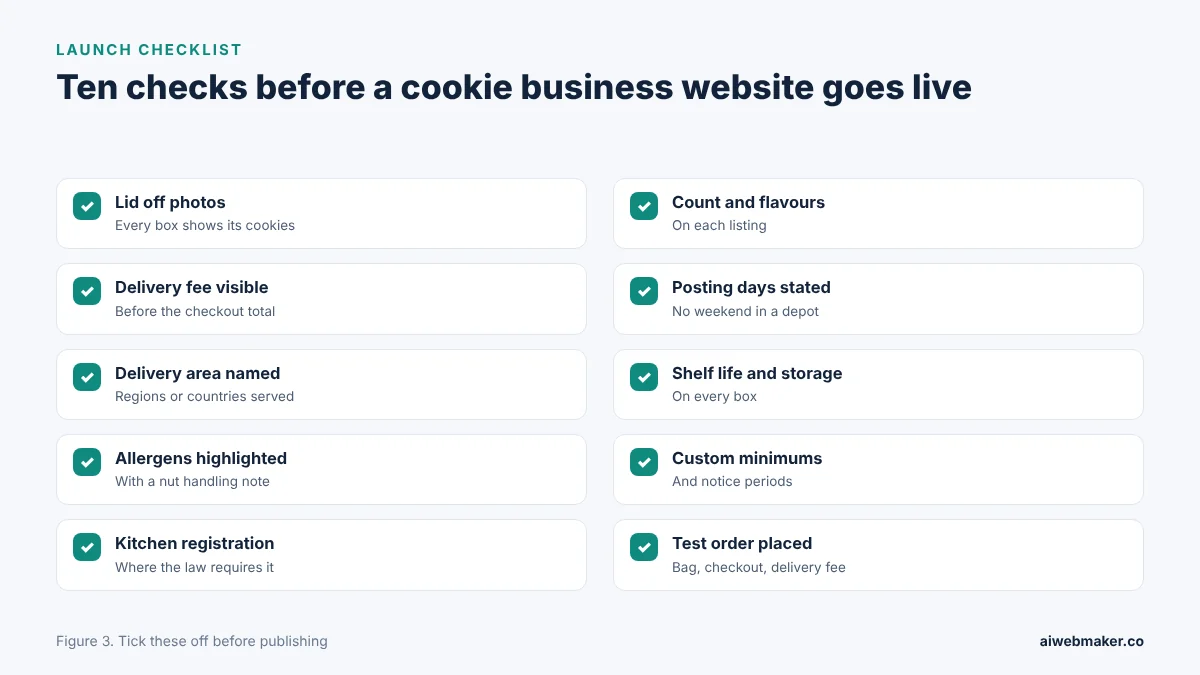
Cookie buyers leave before checkout when the delivery fee appears only at the very end with no warning. A box photographed with the lid on leaves them guessing what is inside. Missing posting days make gift senders worry that the cookies will arrive late or stale. Custom pages without minimums or notice periods produce requests the baker cannot accept. A shop with no allergen information loses parents straight away. The ten checks in the picture that follows close each of those gaps.
Frequently asked questions
How long do cookies stay fresh after they arrive?
Most baked cookies stay at their best for several days to around a week when kept in an airtight container, though the exact time depends on the recipe. Crisp cookies usually last longer than soft or filled ones. Cookies sealed in bags at the bakery keep their texture for longer in transit. Each box should carry a best before date and a short storage note. Honest shelf life information helps buyers plan when to give or serve them.
Can cookies be posted safely in hot weather?
Cookies can be posted in hot weather with extra care, though chocolate and icing are vulnerable to heat. Many bakers switch to sturdier recipes in summer or add insulated packaging. Posting early in the week keeps parcels out of warm depots over the weekend. The delivery page can explain any summer changes so buyers are not surprised. Thoughtful summer posting protects both the cookies and the reviews.
What is a sensible minimum for branded cookies?
A sensible minimum for branded cookies depends on how long each design takes, so each baker sets its own figure. Hand piped logos take longer than printed ones, which often means a higher minimum or a longer lead time. The custom page should state the minimum quantity and the notice needed for each method. Companies planning conferences appreciate knowing these limits early. Clear minimums keep custom work profitable for the baker.
Can a home baker sell cookies online?
Whether a home baker can sell cookies online depends on the food laws where the baker lives, and they vary widely. Some places allow home baking under cottage food rules, while others require registration and an inspected kitchen. Selling across regions or borders can bring extra restrictions. Checking with the local food authority before launching the shop avoids problems later. A legal footing from the start lets the business grow with confidence.
Will a few gift boxes settle the cookie site's year?
A few gift boxes sold in a good week usually outweigh a cookie website's entire $119 year. Paying monthly instead, the $19 is gone after one box of six, with change left over. Each wedding favour order or branded batch after that is income on top of a cost already met. Honest photos, careful posting and clear labels win the trust that turns one gift into a habit. Bakers who add each new flavour to the shop give regulars a reason to look again. A steady stream of reorders from the same names shows the shop has found its customers.
Build your website in Minutes and get the AI Tools that work
Start Building Your Website →