Bubble Tea Shop Website Cost, Sugar in Grams and Pearls Made Fresh
Pearl tea bars clear their hosting with one flat $119 each year, or in $19 monthly slices, before adding a domain. Inside: the customers, the menu page, the four choices, sugar in grams, fresh pearls, safety and allergens, group orders, search and the yearly sums.
- No coding required
- Live in minutes
- Blog, SEO and chatbot tools included
Pearl tea bars hand AI Web Maker a flat $119 to stay hosted through the year, or $19 monthly slices, before adding a domain whose cost turns on its ending. Designing the drinks menu, the sugar chart and the topping table, and trying each screen in the preview, is never billed. One party carrier of twenty drinks for a student society pays for the year in a single afternoon. The trickier task is that a bubble tea order involves four separate choices, and customers who meet them for the first time at a crowded counter often hesitate and pick whatever the person ahead ordered. Regulars, meanwhile, want honest sugar figures, soft pearls and a quick way to order for a group. What follows covers the customers, the page, the four choices, sugar in grams, fresh pearls, safety and allergens, group orders, search and the yearly figures.
This article is part of our complete guide: Food Business Website Builder.
Students, office rounds and first time sippers: who orders a cup
Bubble tea draws a younger, phone first crowd, and most of them look at the menu online before walking in. Students between lectures want to know the opening hours, the price of a regular cup and whether the bar is open late on Fridays. Office workers organise rounds for a team and need a way to order ten or twenty drinks without queuing for half an hour. First time customers want to understand what pearls are, how sweet the drinks are and which flavour to start with. Parents check whether a drink suits a young child and which toppings to avoid. Pages that settle every one of those questions in a few taps make the next visit easy.
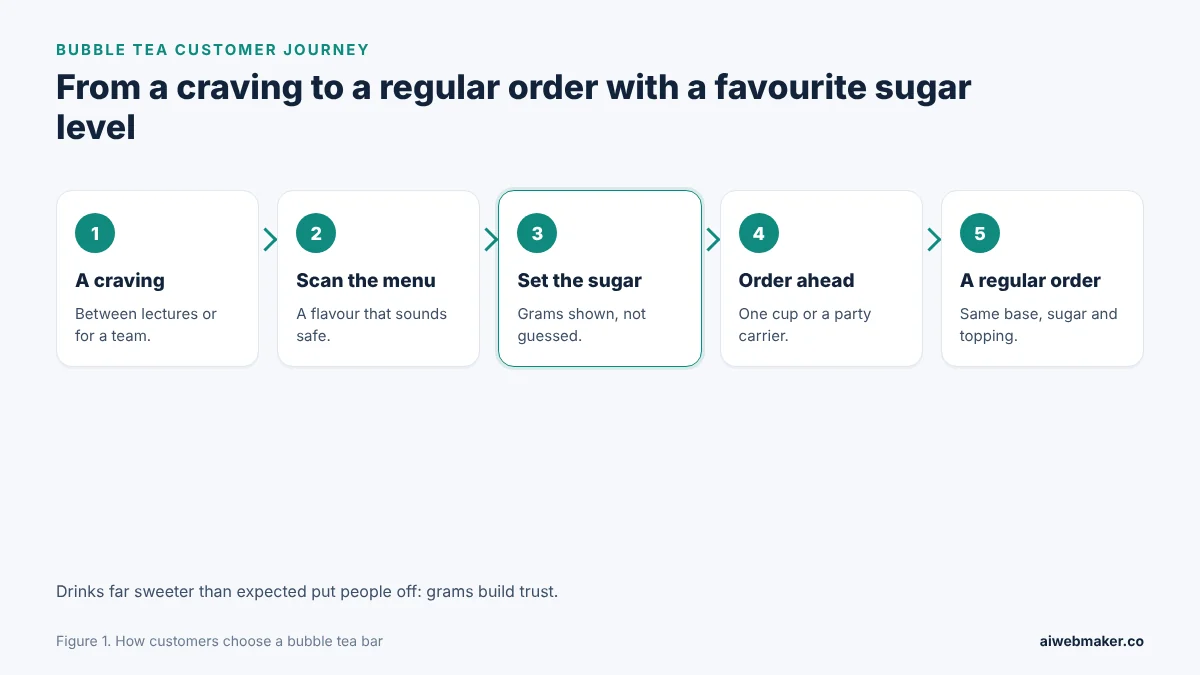
A craving starts the picture on the left, and a regular order with a favourite sugar level ends it on the right. In between, the customer first scans the menu for a flavour that sounds safe. The highlighted step is setting the sugar, because many drinkers have been put off by drinks far sweeter than they expected. Ordering ahead or for a group follows, then collection or delivery of a sealed cup. Once a customer finds the base, sugar level and topping they like, the same order repeats week after week. A menu page that guides each step makes that habit easier to form.
Menu, build steps, sugar chart and toppings: what the page holds
A bubble tea site is mostly a menu, but a menu that explains choices rather than listing names. The opening view should name the house speciality and how pearls are made. A list of drinks to order now comes next, followed by the build your own steps. A sugar table in grams and a topping table with allergens and warnings give the facts customers rarely see elsewhere. A note on allergens, caffeine and young children, a group order route and the bar's hours complete the page.
| Section | The customer's question | What it should answer |
|---|---|---|
| Opening view | What is special here? | Fresh pearls, sugar shown in grams |
| Drinks to order | What is on the menu now? | Flavours, cup size, price, sugar choice |
| Build your own | How does customising work? | Base, sugar, ice, topping in order |
| Sugar levels | How sweet is it really? | Grams of added sugar per level |
| Toppings | What are the extras? | Price, ingredients, choking warnings |
| Care notes and groups | Allergies, caffeine, big orders | Plain answers and a group route |
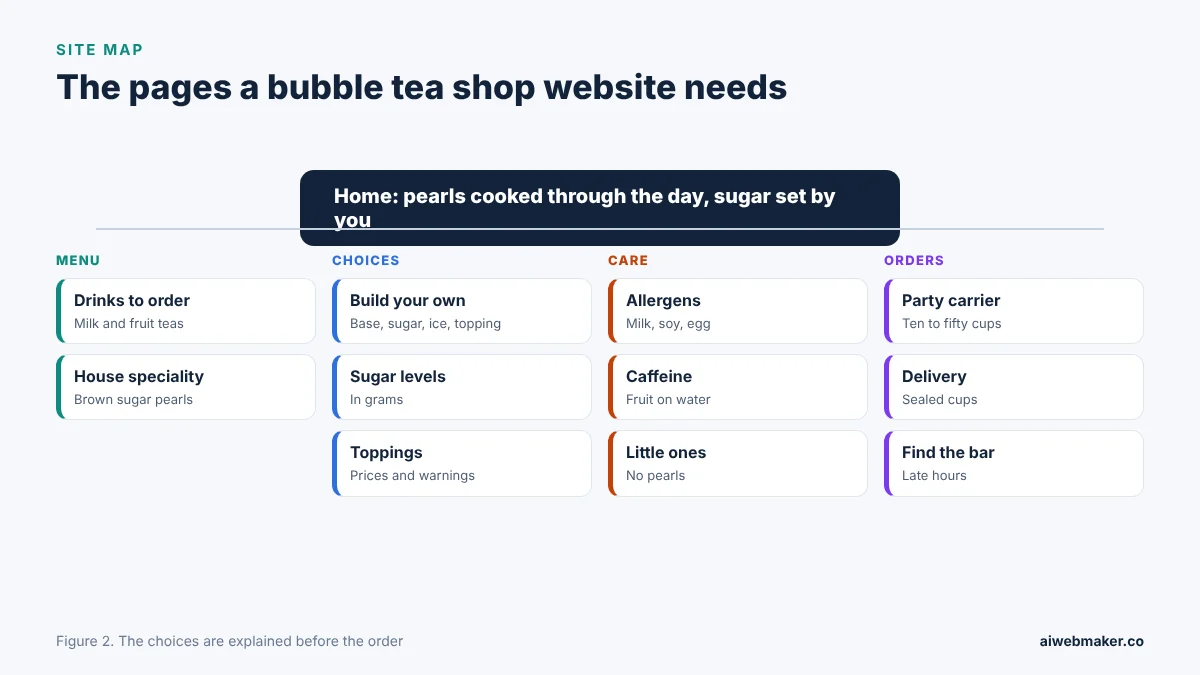
Organised around the cup, the boba bar's site forms four groups: the menu, the choices, the care notes and the orders. Menu pages list the drinks and the house speciality, while choice pages explain bases, sugar levels and toppings. Our sample bar, Pearl Drop Bubble Tea, offers a brown sugar milk tea, a classic black milk tea, a taro milk tea, a jasmine green milk tea, a passion fruit green tea and a party carrier for groups. Four build your own steps, a sugar table in grams and a topping table follow, then a section on tea and pearls, a panel on allergens, caffeine and little ones, a gallery, reviews and questions. The bubble tea shop website example with sugar levels in grams closes with a group collection request and directions to the bar. That sequence matches the order in which a newcomer's doubts appear.
Base, sweetness, ice and topping: the four choices in order
Every bubble tea is built from four decisions, and listing them in the order the counter asks them removes most of the confusion. The base comes first: black, green or oolong tea with milk or a plant milk, or a fruit tea with no milk at all. Sweetness comes second, usually in steps from standard down to no added syrup. Ice is third, and explaining that less ice means more drink in the cup answers a common question. Toppings come last, from chewy tapioca pearls to popping pearls, jellies, red bean, pudding or cheese foam. Customers who know these four steps before they reach the counter order faster and enjoy the drink more.
| Choice | Usual options | Worth explaining |
|---|---|---|
| Base | Black, green or oolong tea, milk or plant milk, fruit tea | Which bases contain caffeine or milk |
| Sugar | Standard, 75%, 50%, 25%, none | Grams of added sugar at each level |
| Ice | Regular, light, none | Less ice fills the cup higher |
| Topping | Pearls, popping pearls, jellies, pudding, foam | Ingredients, price, choking risk |
Sugar levels written in grams, not just percentages
Percentages tell customers almost nothing, because a 50% drink at one bar may be sweeter than a standard drink at another. Writing the added sugar in grams for each level, measured with the same pump every time, is a simple act of honesty that sets a bar apart. Many national health bodies recommend cutting back on sugar added to drinks and food, and some customers track it closely. The table should also mention other sources of sugar, such as brown sugar pearls, taro and fruit purées, milk and toppings. Figures from the bar's own recipes are estimates rather than laboratory results, and saying so is part of the honesty. Customers who trust the numbers often settle on a lower level and keep coming back.
| Level | Added sugar per regular cup in the sample | Note to add |
|---|---|---|
| Standard | About 36 g | Brown sugar pearls add more |
| 75% | About 27 g | Fruit and taro bring their own sugars |
| 50% | About 18 g | A popular middle ground |
| 25% | About 9 g | Milk adds natural sugar |
| No added syrup | 0 g | Toppings still contain sugar |
Pearls cooked every two hours and leaf brewed twice a day
Texture is everything in bubble tea, and a short section on how the bar keeps its pearls soft and its tea fresh pays off. Tapioca pearls are made from cassava starch and harden as they cool, so the best bars cook them in small batches and throw them away after a set time. Tea brewed from loose leaf each morning, and again later in the day, tastes cleaner than tea made from powder or left in an urn overnight. Shaking a milk tea with ice at the moment of ordering keeps it cold all the way through. Plant milks offered at the same price as dairy show respect for customers who avoid milk. These details, explained in a few lines, give a regular reason to choose one bar over its neighbours.
Choking risks, caffeine and the allergens behind the bar
Bubble tea carries a safety issue that many menus ignore, and a careful bar addresses it openly. Pearls, popping pearls and jellies travel up a wide straw quickly, which makes them a choking hazard for toddlers and young children. The website should suggest drinks without toppings for little ones and encourage older children to sip slowly. Every tea base contains caffeine, so a fruit tea made on water is a better choice for younger drinkers or anyone avoiding it. Allergens behind a typical bar include milk, soy in soy milk, gluten in some oat milks, egg in pudding and coconut in some jellies, and shared shakers mean traces can reach any cup. Allergen labelling rules differ between countries, so the bar should check local requirements and invite customers to state allergies before a drink is made.
Party carriers, delivery and a store builder for drink orders
Group orders are where a bubble tea bar earns its biggest single sales, so the website should make them easy. A party carrier of ten to fifty drinks needs each cup labelled with a name and a sugar level, packed in carriers and ready at an agreed time. Using the online store builder for bubble tea bars taking drink orders, each drink can offer its sugar level as a product option, cups gather in a bag, and checkout adds the delivery fee for nearby addresses. Discount codes can reward a society or an office that orders every week. The party carrier itself, priced by the mix of drinks, can show an Enquire button leading to the group request. Sealing every cup before it leaves, and saying so, reassures anyone ordering delivery.
Searches like boba near me, brown sugar milk tea and taro
Customers search with a mix of names: bubble tea near me, boba shop open late, brown sugar milk tea, taro milk tea or popping pearl fruit tea. Drink names and headings that use the same words help search engines send those searches to the right part of the menu. Late opening hours on the map listing, plus colourful drink photos and a correct street address, catch the after lecture crowd. Reviews that mention soft pearls, honest sugar levels and group orders that arrived on time persuade newcomers. Articles on how pearls are made, how to choose a sugar level or which drinks suit a first visit bring in curious readers. A playful but honest voice suits this trade, and it keeps the bar in mind for the next craving.
Cups versus hosting: the bar's annual figures
Only two lines recur on a boba bar's website bill, hosting and the web address, and twelve menu articles from AI credits cost about one large cup. A busy bar will usually pay the $119 once and forget about it. A bar in its first months can choose $19 a month instead. Seasonal drinks, new toppings and price changes never add a fee. The rows below compare both routes, keeping the $189 plan visible for contrast and nothing more.
| Item | Yearly | Monthly |
|---|---|---|
| Hosting the bubble tea pages | $119 | $228 over twelve months |
| Domain | Depends on the ending | Depends on the ending |
| Higher plan, for comparison | $189 a year | Not needed |
| Twelve drink and topping articles at about $0.65 | About $7.80 | About $7.80 |
| Menu, topping and price updates | No charge | No charge |
| Year before the domain | About $126.80 | About $235.80 |
What makes a thirsty student scroll to the next bar
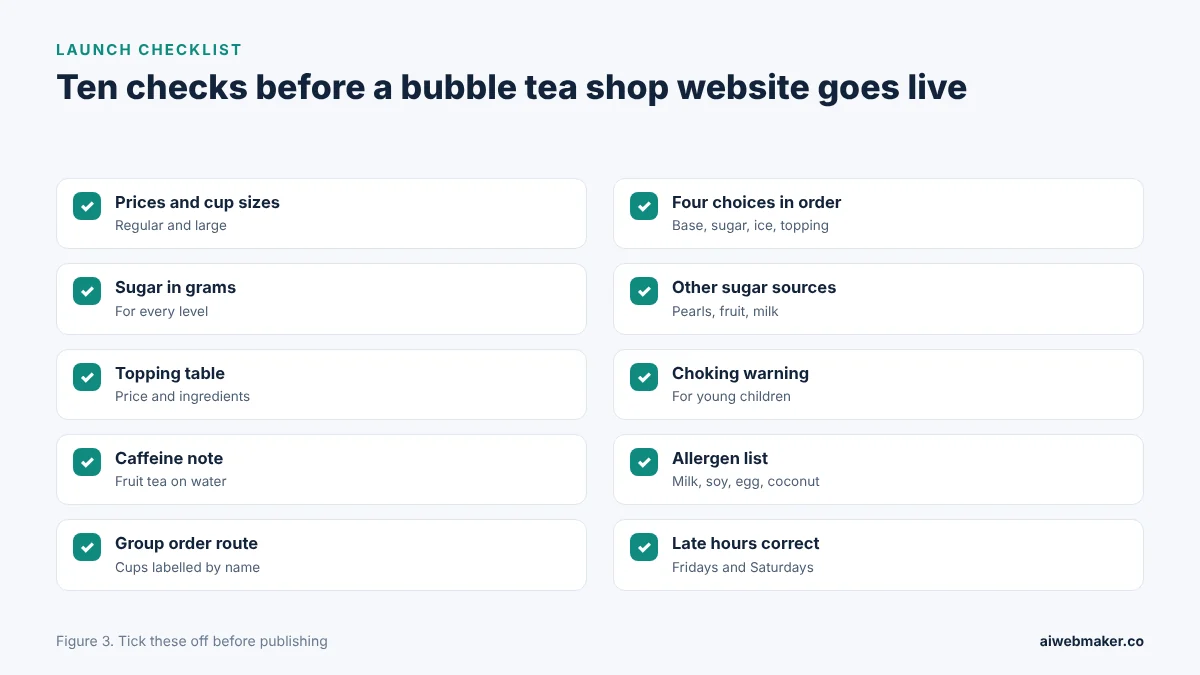
Thirsty students move on when a bubble tea site shows photos of drinks but no prices or cup sizes. Sugar levels given only as percentages leave health conscious customers guessing. No word on toppings or allergens worries anyone avoiding milk, egg or soy. A missing group order route sends society organisers to a bar that offers one. Hours that are wrong on a Friday night lose the late crowd entirely. Ten small fixes for these failures fill the image placed directly below.
Frequently asked questions
Can a drink come with no added syrup?
Most drinks can be made with no added syrup, though fruit, taro, milk and toppings still bring some sugar of their own. Drinks sweetened in the pearls themselves, such as brown sugar milk tea, may have a minimum level. The website should say which drinks allow no added syrup and which do not. Showing the grams for each level helps customers decide. Honest sugar information keeps health conscious customers loyal.
Why do pearls turn hard by evening?
Cooked tapioca pearls harden as they cool and sit, so pearls made in the morning become chalky by the evening. Bars that cook small batches through the day and discard old pearls serve a softer chew. This costs more in wasted pearls, but customers notice the difference immediately. The website can explain the bar's own routine in a sentence or two. Soft pearls are one of the strongest reasons people return to a favourite bar.
Is a fruit base possible without caffeine?
Many bars can make fruit teas on water instead of green or black tea, which leaves them without caffeine. Every true tea base contains caffeine, including green and oolong teas. Parents ordering for children, and anyone avoiding caffeine, should ask for the water base. The website should list which drinks can be made this way. Clear options make the bar welcoming to every age.
How should a society order thirty drinks at once?
A society or office ordering thirty drinks should send the full list at least a day ahead, with each drink, its sugar level, ice and topping, and any allergies. The bar can then label each cup with a name and pack the order in carriers. The website should explain the notice needed and how the total and collection time are confirmed. Payment terms for group orders are set by the bar itself and should be stated plainly. A smooth first group order often turns into a weekly standing order.
How many milk teas cover twelve months of pages
A single party carrier of twenty drinks clears the $119 annual hosting with change to spare. For bars paying monthly, three brown sugar milk teas on a Friday night match each $19. Every group order placed through the site, and every newcomer who arrives already knowing the four choices, is trade the pages helped to win. Honest sugar figures, fresh pearls and clear safety notes persuade customers more than any trendy slogan. Bars that keep their menus and hours current become the default stop after lectures. Customers who order 50% sugar with confidence on their first visit show the sugar chart has been read.
Build your website in Minutes and get the AI Tools that work
Start Building Your Website →