Ski School Website Cost, From Snowplough Levels to Helmet Rules
Snow schools spend $119 per hosting year, or $19 in any month they choose, and add a domain. Inside: who books, the pages, levels, lesson formats, children and helmets, kit hire, requests and weather, search and the budget.
- No coding required
- Live in minutes
- Blog, SEO and chatbot tools included
A snow school's website bill is modest beside its short season: hosting runs at $119 yearly, or $19 per month when that suits better, and the domain is its own small line. Lesson cards and the level table can be written, rearranged and tried in preview long before any AI Web Maker charge begins. One child's week of group mornings brings in more than that yearly figure, so the money settles itself early in the winter. The real work is reassuring parents who will hand a four year old to a stranger on a cold slope, and adults who fear looking foolish on their first morning. Both groups book months ahead, comparing schools from home, and they choose the one whose pages explain levels, group sizes, helmets and weather calls without jargon. Ahead are the families and first timers, the page list, levels, lesson formats, children's safety, kit hire, requests and weather, search and the yearly sums.
This article is part of our complete guide: Fitness Website Builder.
Parents, first timers and returners: who books ski lessons
Ski lessons are booked by a few distinct groups, and each reads the website for a different reason. Parents planning a family week look first at the youngest age taught, the group size and what happens at the midday handover. Adult beginners want proof that they will learn alongside other first timers rather than be pushed down a steep run. Returners who skied years ago look for a level that matches what they half remember, and often choose a private hour to rebuild confidence. Teenagers switching to snowboarding, and their parents, compare board lessons with ski groups. A school that answers each of these in plain words, close to the lesson prices, fills its groups weeks before the snow arrives.
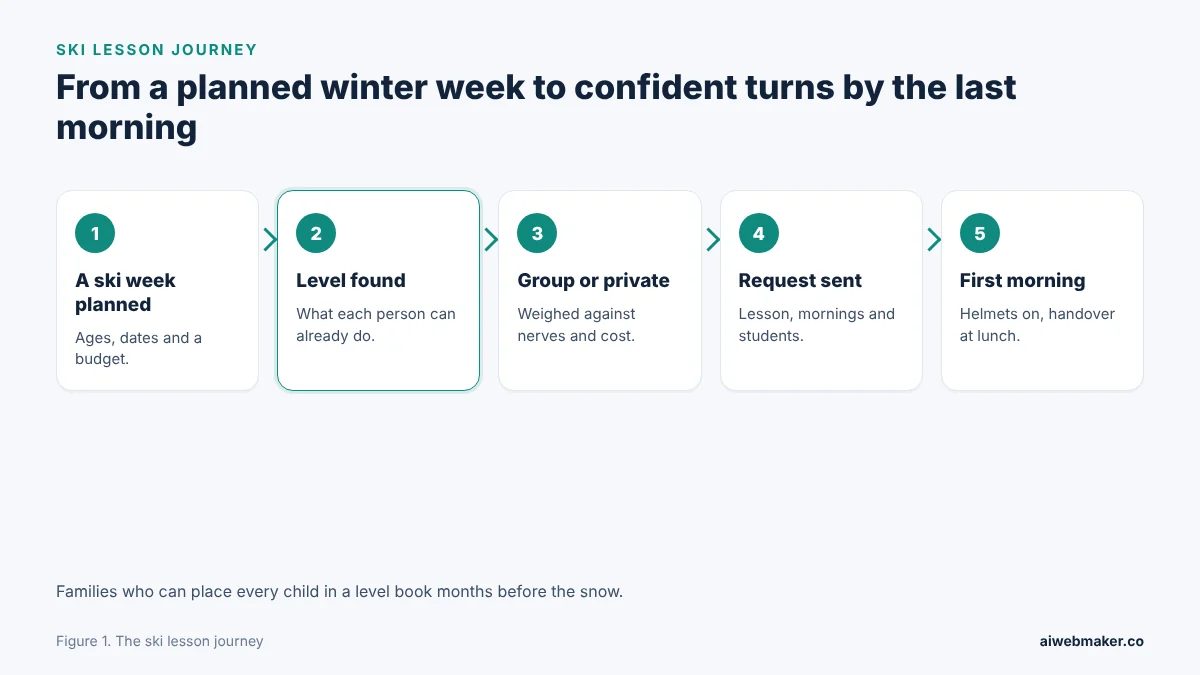
This five step journey starts at a kitchen table months before the trip and ends on a slope at the close of a lesson week. The step marked in colour is finding the right level, because a family unsure whether a child belongs in first steps or level one often delays booking. Comparing groups with private lessons comes next, weighed against budget, ages and nerves. The request fixes the mornings, and the first morning at the meeting point decides whether the week feels safe. Progress by the last day, and how the children were handed back each lunchtime, shapes the review and next winter's booking. Pages that follow this order spare the school dozens of emails before the season opens.
Lessons, levels, kit and weather: the page list for a snow school
Snow school sites work best with a short list of pages, each built around a worry that parents or adult beginners carry. The lessons page sets out group mornings and private hours with prices per person. A level page translates ability into plain sentences, and a safety page covers helmets, bibs and handovers. Kit hire and a weather page answer the practical questions that otherwise fill the inbox. A lesson request and a meeting point page finish the set. Six or seven pages handled well beat twenty pages that repeat the same promises.
| Page | The worry it answers | What belongs on it |
|---|---|---|
| Lessons | What fits our family and budget | Group mornings, private hours, ages, group sizes, prices |
| Levels | Which group we belong in | What each level can already do and will learn |
| Safety | Whether the children are looked after | Helmets, bibs, head counts, handover, first aid |
| Kit hire | What we need to bring | Skis, boards, boots, helmets, drying room, collection times |
| Weather | What happens if lifts close | Conditions, decisions, refunds or moves |
| Lesson request | How to book | Lesson, mornings, students, level, ages and notes |
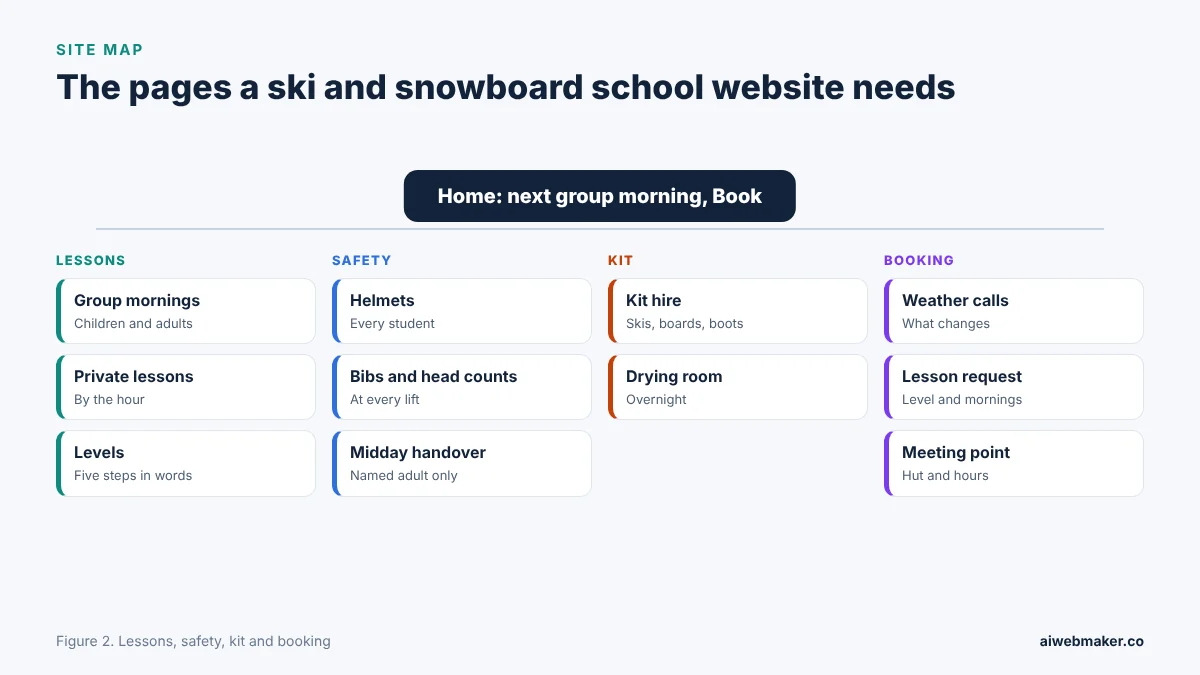
Under a home page that opens on the next group morning, the pages split into lessons, safety, kit and booking. Lessons hold the formats and the level table, safety holds helmets and the handover, kit holds hire and the drying room, and booking holds the weather calls and the request. The sample school, Snowline Ski School, lists Little skiers for ages 4 to 6, a Junior group for ages 7 to 14, an Adult group and a Private lesson, then describes five levels from first steps to level four. Its kit cards cover adult and children's ski kit, snowboard kit, a helmet only, an overnight drying room and a wax and edge service. The ski school website example with level tables and helmet rules adds a weather table, the steps of a first morning, reviews, questions and a lesson request asking for the level and the number of mornings. That sequence suits most snow schools, because it follows a family from choosing to arriving.
Describing levels in words instead of run colours
Levels written in plain words help families book correctly, because run colours and grading systems differ between countries and resorts. Each level should describe what a student can already do, what the lessons add and where on the mountain the group skis. An instructor check on the first morning, moving anyone into a better fitting group, removes the fear of booking wrongly. Snowboarders follow a similar ladder, from sideslipping on gentle ground to linked carved turns, and deserve their own line. Avoiding promises of parallel turns by Friday for every student keeps expectations honest, since progress depends on the person and the snow. A clear ladder of levels turns a nervous guess into a confident booking.
| Level | Students can already | Lessons focus on | Usual terrain |
|---|---|---|---|
| First steps | Nothing yet, or walk in boots | Gliding, stopping, getting up | Flat nursery area, moving carpet |
| Level 1 | Stop on a gentle slope | Snowplough turns, drag lifts | Gentlest marked runs |
| Level 2 | Link snowplough turns | Bringing skis parallel, chairlifts | Easy runs higher up |
| Level 3 | Turn parallel on easy runs | Pole plants, steeper pitches | Intermediate runs |
| Level 4 | Ski most marked runs | Short turns, bumps, soft snow | Steeper marked runs |
Group mornings against private hours
Most schools sell two formats, and the page should make the trade off between them obvious. Group mornings run for several days in a row, cost less per person and suit children, who often learn fastest among others their age. Private hours suit nervous starters, families who want to ski together and anyone working on one specific skill. Each format should show the group size limit, the meeting time, the length of the session and what the price covers. Whether the lift pass is included deserves a line on every card, because it is the extra families most often forget. Laid side by side with these details, the formats let a family settle its plan in a few minutes.
| Format | Suits | Details to show |
|---|---|---|
| Group for young children | Ages around 4 to 6 | Smaller group limit, snack break, handover time |
| Junior group | School age children | Grouping by level then age, ski or board |
| Adult group | Beginners and improvers | Level check, group limit, number of mornings |
| Private lesson | Nervous starters, families, single goals | Hourly price, how many people, best length |
| Week of mornings | Families on a ski week | Price for all mornings against a single one |
Helmets, bibs and the midday handover for children
Parents hand their children to strangers on a cold mountain, so child safety deserves its own clear section rather than a line in the terms. Helmet rules on the slopes vary by country, yet a school can state its own rule, such as a helmet for every student in every lesson, and check the fit at the meeting point. Numbered bibs, head counts at each lift and a handover only to the adult named on the booking show that nobody is lost in the crowd. Instructors trained in first aid, and teachers vetted as local law requires, are worth stating, though the checks and qualifications themselves differ between countries. The request should invite parents to mention allergies, nerves or past injuries, with a reminder that a serious fall means ringing the local emergency services before the school. A calm, specific safety section is often what tips a parent towards one school over another.
Boots fitted the evening before: kit hire beside the lessons
Kit hire belongs on the lesson site because a first morning that starts in a rental queue starts late. Cards for adult ski kit, children's kit, snowboard kit and a helmet on its own let families see the full cost of the week. Collection the evening before, with boots fitted by staff, means students arrive on the snow ready to start. Services such as an overnight drying room or wax and edge sharpening suit students who bring their own equipment. Any discount for a longer hire should sit on the same page as the daily prices. Pairing kit with lessons on one site saves families a second search and a second queue.
Lesson requests, weather calls and confirmed groups
A lesson request should capture the lesson type, ski or snowboard, the first morning, the number of mornings, the number of students and the level. A notes box for children's ages, allergies and nerves lets the school place each student before the week begins. With the booking website builder for ski schools that sort students by level, a family's request lands with the school, which can say yes, offer the closest morning that still has room, or say no. Payment is settled between the school and the family directly, and the platform takes no cut. Weather belongs beside the request, because wind, fog and closed lifts change plans, and a short table saying what happens to the booking in each case keeps decisions consistent. Families who know the rules before they book accept a moved lesson far more calmly.
Phrases families type before a ski week
Searches for lessons usually combine the sport, the audience and the resort. Typical phrases include ski school for kids, adult ski lessons, private snowboard lesson or beginner lessons beside a resort name. Lesson pages that use these phrases in their titles, alongside the resort and the meeting point, match what families type months before travelling. A map listing with the hut's position, season hours, phone number and photos of real groups helps visitors who arrive and search on the spot. Reviews from parents describing the handover, and from adults describing a patient first morning, answer the doubts new visitors carry. Articles on what to pack for a first ski week, how to choose a level or why boots are fitted the evening before attract planners early. Pages written this way keep bringing families back winter after winter.
Hosting a snow school through the season and beyond
Three lines make up a ski school's website spend: hosting, the domain and a little credit for articles. Yearly billing keeps the total lowest, and the pages keep working through summer while families plan the next winter. Schools trialling a new resort for one season might prefer monthly payments, which cost more over a full year. Twelve planning articles, at roughly sixty five cents each, come to under eight dollars. Changing prices, levels or kit cards between seasons carries no charge.
| Item | Yearly | Monthly |
|---|---|---|
| Hosting the ski school pages | $119 | $228 over twelve months |
| Domain | Depends on the ending | Depends on the ending |
| Higher plan, for comparison | $189 a year | Not needed |
| Twelve lesson planning articles at about $0.65 | About $7.80 | About $7.80 |
| New levels, prices and kit cards | No charge | No charge |
| Year before the domain | About $126.80 | About $235.80 |
Why parents leave a ski school site for another meeting point
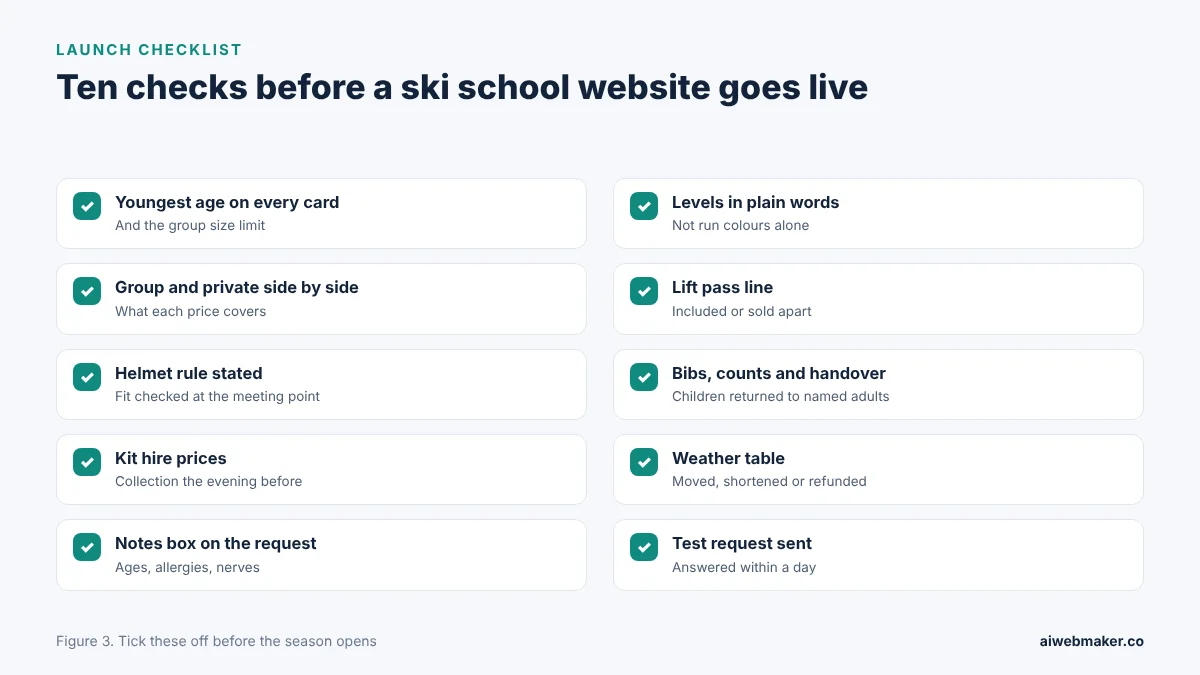
Parents leave when they cannot find the youngest age taught or the size of the group. Levels described only by run colour confuse visitors from countries that grade slopes differently. No mention of helmets, head counts or the handover leaves a nervous parent imagining the worst. Kit hire hidden on another site, or a lift pass that turns out to be extra, makes the price feel misleading. A request form with no space for allergies or nerves suggests nobody will read the details. The ten ticks that follow catch each of these before families start comparing.
Frequently asked questions
How young is too young for a group class on snow?
Many schools take children into groups from about four, and some offer private sessions for younger children with a parent nearby. Very young children often enjoy playing in the snow more than a structured lesson, which is worth saying honestly. The school's own lower age limit should appear on every children's card. Smaller group limits for the youngest classes reassure parents. Clear age rules spare families a disappointing first morning.
Is the lift pass part of the lesson price?
In many resorts the lift pass is sold separately by the lift company, so lesson prices cover the instructor only. Beginners on a moving carpet or nursery area may not need a full pass at first. The lessons page should say plainly what the price includes and where passes are bought. Families budget better when they know the full cost of a morning. A single honest line here prevents most complaints about hidden extras.
Can an adult beginner join a group with strangers?
Adult groups are usually arranged by level, so a beginner learns alongside other first timers rather than experienced skiers. A level check on the first morning moves anyone who has been placed wrongly. Nervous adults sometimes prefer a private hour first, then join a group once they can stop and turn. The website can describe this path so adults see that starting late is normal. Knowing they will not be the only beginner is often what persuades adults to book.
What happens to a lesson when the lifts close?
When lifts close or the weather makes teaching unsafe, schools usually move the lesson to another morning or refund it. Strong wind may keep groups on lower slopes, and fog may delay the start until visibility improves. Each school should publish its own rules and say when and how families will hear about changes. A short table of conditions and outcomes makes those decisions predictable. Families accept a change far more easily when the rule was visible before they booked.
One junior group week repays the hosting
A single child booked into five group mornings outweighs the school's yearly $119 of hosting. On monthly billing, one private hour more than covers the $19. Every family that books after reading the level table and the helmet rules is a family that did not take its children elsewhere. Plain levels, honest pricing, visible safety rules and a fair weather policy persuade parents long before they reach the mountain. Schools that refresh these pages each autumn give families a reason to book early. Full groups gathering at the meeting point on the first snowy morning are the plainest evidence the pages have done their job.
Build your website in Minutes and get the AI Tools that work
Start Building Your Website →