Wedding Photographer Website Cost and Albums That Outlive Hard Drives
A wedding photographer's date request pages need $119 of hosting per year of weddings, or $19 through each quiet winter month, the domain aside. Covered next: couples and planners, the pages, collections, the timeline and family groups, albums, booking fees, ceremony rules, search and the year in numbers.
- No coding required
- Live in minutes
- Blog, SEO and chatbot tools included
A wedding photographer's date request pages cost $119 to host for a year, while a studio spreading the bill across the quiet winter months pays $19 each month, domain extra. Drafting collections, album pages and full wedding stories, then rearranging them in the preview, leaves the studio's AI Web Maker account at zero. A single weekday elopement covers the hosting several times. The difficulty lies elsewhere, because a wedding photographer sells perhaps a few dozen Saturdays a year to couples who will never repeat the day. Couples compare collections that look alike until the hours, the second photographer and the album are spelled out, and parents quietly judge whether the family groups will be handled well. In turn below: who books, the pages, collections, the timeline and family groups, albums, booking fees and postponements, ceremony rules, search and the year in numbers.
This article is part of our complete guide: Website Builder for Creative Businesses.
Engaged couples, their parents and the planner who shortlists
Engaged couples book a wedding photographer soon after the venue, commonly twelve to eighteen months out, and they judge style from complete wedding stories rather than a highlight reel. A gallery of thirty frames from one real day shows how a photographer handles a dim church, a rainy confetti exit and a crowded dance floor. Parents often contribute to the budget and care most about the family groups and the grandparents. Planners and venue coordinators shortlist photographers who arrive on time, work quietly and keep the timeline moving. Each of these readers needs a different page, and the site that serves all of them earns the first enquiry.
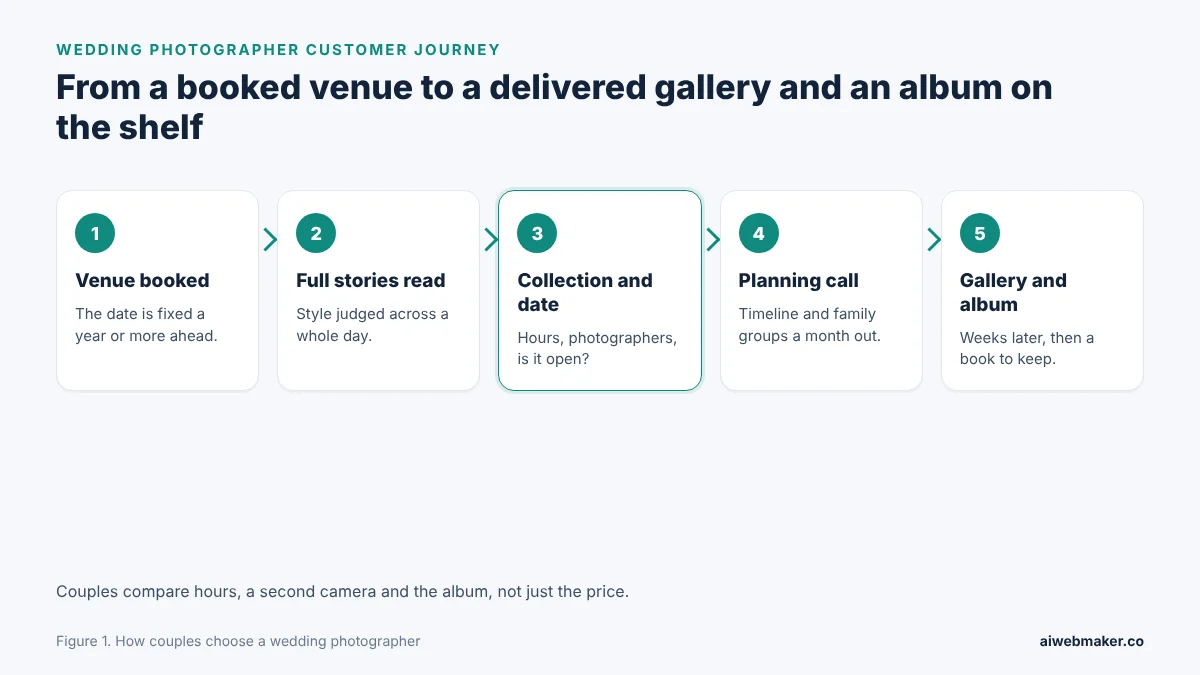
The venue comes first in this sequence, since couples rarely contact a photographer before the date is fixed. Reading full wedding stories follows, which is where style and consistency are judged. Step three carries the colour: the couple picks a collection and asks whether the date is still open. A planning call about a month before the wedding settles the timeline and the family group list. The gallery and, later, the album complete the journey, and a well designed album often brings the next couple through a recommendation.
Collections, stories and the date request: what the site carries
A wedding photographer's site has a narrow job, which is to show the day, price it clearly and capture the date before another studio does. An hour by hour page shows how the camera follows a wedding, from getting ready to the first dance. Collections need hours, the number of photographers, an approximate photo count and delivery times. Albums need their own page, since they are a large share of the takings and the part couples keep longest. Full stories, a moments list and a short set of questions then answer the doubts that remain.
| Page | What couples check | Detail that matters |
|---|---|---|
| The day, hour by hour | How the camera follows a wedding | Getting ready to first dance, with times |
| Collections | What each price buys | Hours, photographers, photo count, delivery |
| Albums | What they will hold in their hands | Spreads, covers, parent copies, timing |
| Wedding stories | Whether the style holds all day | Full galleries, venues named with permission |
| Moments list | Whether their requests will be caught | Card in the camera bag on the day |
| Questions | Illness, unedited files, ceremony rules | Plain answers in a few lines |
| Date request | Whether the Saturday is open | Date, ceremony time, venue, guests |
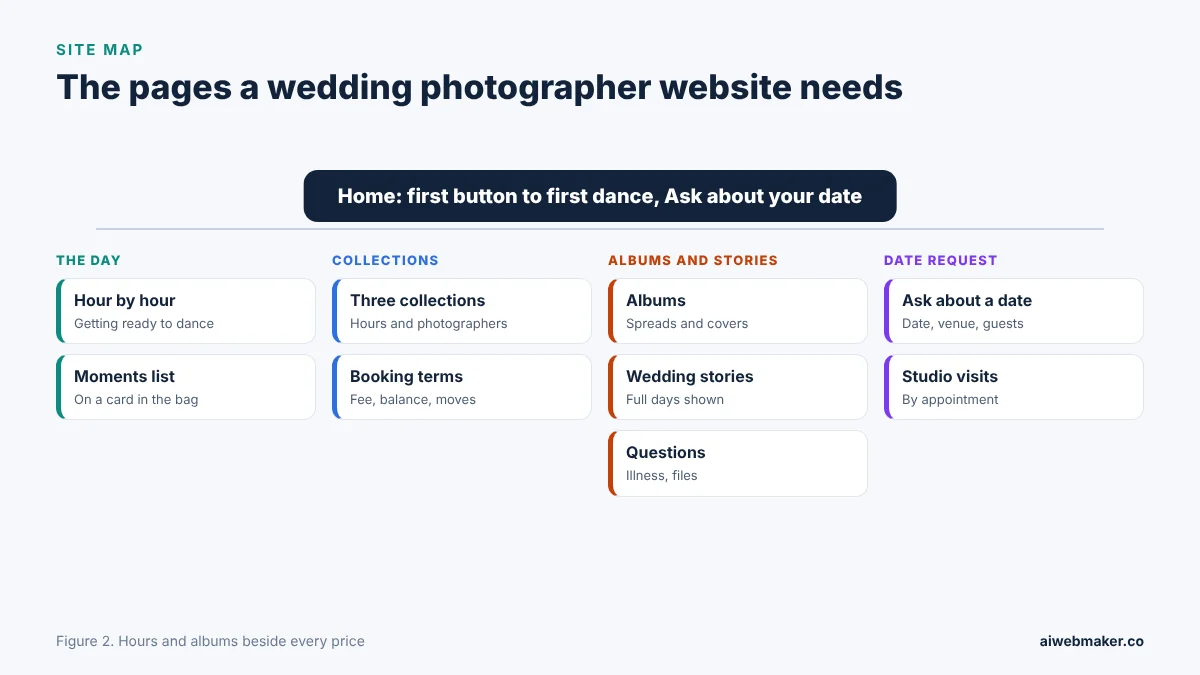
A studio's whole offer branches four ways in this plan: the day, the collections, the albums and stories, and the date request. Lantern Light Wedding Photography, the invented studio in the wedding photographer website example with collections and albums, opens with ten hours on the whole day collection, two photographers at every full day wedding and eight weeks to the finished gallery. An hour by hour table runs from getting ready at 10:30 to the first dance at 19:30. Three collections follow: Ceremony and portraits at $1,650, The whole day at $2,900 with a lay flat album of 30 spreads, and a Weekday elopement at $850, all covering weddings within 150 km. Below sit the album section, a list of twelve moments couples ask not to miss, recent stories, questions and the request headed "Ask about your wedding date".
Collections built on hours, a second camera and the album
Collections should be built on the hours covered and the number of photographers, because those two figures shape the whole day's coverage. A ceremony and portraits collection suits couples with a short day or a tight budget, while a full day collection follows the wedding from the first button to the first dance. A second photographer can cover the other getting ready room, the groom's side of the aisle and guest reactions during the speeches. Approximate photo counts help couples compare without turning the work into a number game. Delivery times belong beside each collection, since couples plan thank you cards and prints around them.
| Collection | Hours | Photographers | What arrives | Who it suits |
|---|---|---|---|---|
| Ceremony and portraits | About four | One | Around 300 edited photos | Short days, registry weddings |
| The whole day | About ten | Two | Around 700 photos and a lay flat album | Full days at one venue |
| Weekday elopement | About two | One | Around 150 photos | Small ceremonies with a few guests |
| Extra hours or travel | Quoted ahead | As agreed | Longer coverage | Late parties, distant venues |
The timeline and the family group list
A planning call about a month before the wedding saves more frames than any lens, because it turns a vague day into a timed plan. The couple and the photographer agree when getting ready starts, how long the confetti exit and family groups will take and when portraits fit around the meal. Family groups are the part parents care about most, and a written list with up to ten groups keeps them to about twenty minutes. A named relative who knows the family can gather people while the photographer works. Sunset times, ceremony rules and travel between locations all go into the same timeline, which travels on a card in the camera bag.
| Moment | Time to allow | What usually makes it run late |
|---|---|---|
| Getting ready details | An hour or more | Hair and makeup overrunning |
| Confetti exit | About ten minutes | Guests not yet holding confetti |
| Family groups | Around two minutes per group | Missing relatives, long lists |
| Couple portraits | Twenty to thirty minutes | Drinks reception pulling the couple back |
| Speeches | As planned by the venue | Extra speakers added on the day |
| First dance | A few minutes | Late running dinner service |
Albums: the upgrade that outlasts every hard drive
Albums are the part of a wedding collection that couples keep longest, and they often lift the value of a booking more than any extra hour. Files get lost on old phones and forgotten drives, while a book on the shelf comes down at every anniversary. Lay flat albums with thick pages let one photo run across a spread without a fold through the middle. Couples mark their favourites, the photographer designs the layout and every spread is approved before printing. Extra spreads, cover choices and smaller copies for parents each carry their own price, which turns the album page into a quiet but steady source of income.
Booking fees, balances and the wedding that moves
A wedding photographer can work only one wedding on most Saturdays, so the booking fee pays for a date that cannot be resold once other couples have been turned away. The site should state the fee, such as 25 percent to hold the date, and when the balance falls due, often a month before the wedding. Postponements need a written rule, for example moving the fee to a new date if one is open, because weddings move more often than couples expect. The booking website builder for wedding photographers taking date requests lets a couple ask for a collection and a date, and the studio can confirm it, suggest a different time such as a weekday, or decline. Fees and balances are paid to the photographer directly, with nothing taken by AI Web Maker. Plain terms on this page prevent the hardest conversations a photographer ever has.
Ceremony rules, flash and where the camera may stand
Religious and civil ceremonies often set strict rules on photography, and couples rarely know them until the photographer asks. Some places of worship ban flash, limit where a photographer may stand or allow photos only at certain moments. Civil registrars in some countries set their own conditions for the signing and the vows. A growing number of couples ask for an unplugged ceremony, where guests keep phones away so the aisle stays clear. Rules vary by country, by faith and by building, so the site should promise to ask the officiant in advance and work within whatever they decide.
Venue names, real stories and the searches couples make
Couples often search for a photographer with their venue's name attached, so real wedding stories that name the venue, with the couple's permission, meet those searches directly. Other common phrases include documentary wedding photographer near a named region, elopement photographer and wedding photographer for a small registry ceremony. The map listing should show studio hours by appointment, photos from real weddings and the website, since couples often check it after a venue visit. Reviews that mention calm family groups, quick galleries and beautiful albums say more than a row of stars ever could. Articles on building a family group list, timing portraits with sunset or choosing an album cover attract couples a year before the date.
Camera bodies cost more: the studio's web budget
The web budget for a wedding studio is small next to camera bodies and lenses: hosting, a domain and a little AI credit for articles. A studio with a full season ahead pays the least by settling the hosting each year. Someone new to weddings might pay month by month until the first full season is booked. Adding wedding stories, changing collection prices or updating album options is included in the hosting. Annual and monthly figures appear in the two columns below, next to one line for the $189 tier.
| Item | Yearly | Monthly |
|---|---|---|
| Hosting the wedding photography and date request pages | $119 | $228 over twelve months |
| Domain | Depends on the ending | Depends on the ending |
| Higher plan, for comparison | $189 a year | Not needed |
| Twelve venue and timeline articles at about $0.65 | About $7.80 | About $7.80 |
| Wedding stories, collections and album updates | No charge | No charge |
| Year before the domain | About $126.80 | About $235.80 |
Missing hours and hidden fees: why couples write to another studio
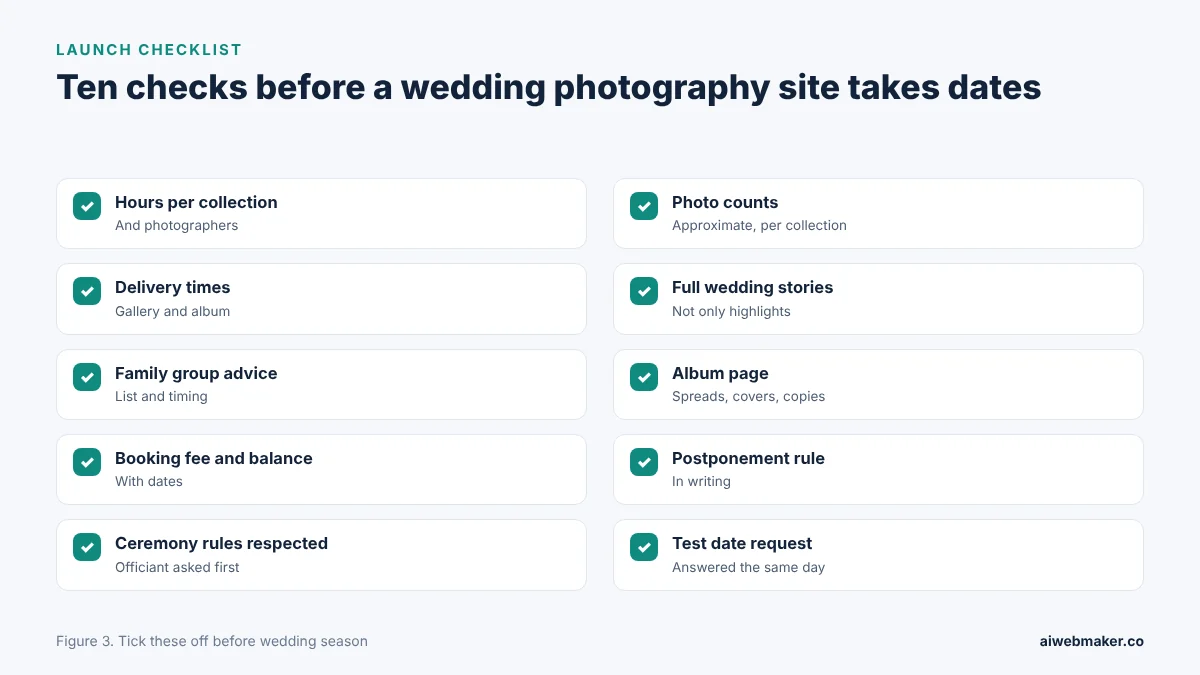
Couples close a photographer's site when collections show a price but no hours or second photographer, because they cannot compare like with like. Highlight reels without a single full wedding leave doubts about consistency in dim rooms. No word on the booking fee, the balance or postponements makes the date feel insecure. A missing album page hides the part many couples treasure most. A slow or complicated request loses the date to a studio that replies the same day, and the card below pairs each of those faults with a fix.
Frequently asked questions
How many photographs arrive after a whole day?
Counts vary with the length of the day and the number of guests, so most studios give an approximate figure for each collection. A ten hour day with two photographers often produces several hundred edited photos. A short ceremony and portraits collection produces fewer, and an elopement fewer again. Every good frame should be delivered rather than a fixed quota. Approximate counts help couples compare collections without obsessing over numbers.
Can the couple print and post the pictures anywhere?
Most wedding photographers keep the copyright and give the couple a personal licence to print, share and post their photos. Commercial uses, such as a venue's brochure, usually need separate permission from the photographer. Because copyright law is not the same in every country, the licence belongs in the written booking terms. The photographer should also ask the couple before using their photos in a portfolio. Clear licence wording avoids awkward questions after the gallery arrives.
What if the photographer is ill on the wedding day?
Most established studios keep a handful of trusted photographers with a similar eye on call for exactly this. Full day collections with two photographers already have one built in safeguard. The site should explain what happens in plain words, including who edits the photos afterwards. Couples worry about this far more than they say during the first call. A visible plan turns a frightening question into a reason to book.
Why are unedited files not part of the collection?
Unedited files do not show the work a couple booked, since colour, light and framing are finished during editing. Most studios deliver every good frame fully edited and leave out duplicates, blinks and test shots. A clear statement on the questions page prevents disappointment later. Couples who understand the editing usually stop asking for unedited files. That small explanation protects both the photographer's style and the couple's expectations.
One elopement, seven years of hosting
At the sample's prices, a single weekday elopement at $850 pays for about seven years of hosting, and a whole day collection pays for more than twenty. Paid monthly, the $19 barely registers beside a single booking fee. Each couple who books through the site also brings guests who see the photographer at work and remember the name. Full stories, honest collections and clear booking terms persuade couples who will only marry once. A diary of Saturdays filled a year ahead is the measure that matters.
Build your website in Minutes and get the AI Tools that work
Start Building Your Website →