Website Launch Examples: How Six Kinds of Business Go Live
A first website can go live with far less than most owners think, as long as it answers what customers ask before buying. Watch six very different businesses decide what to launch with, what can wait and what to improve once customers arrive. For a stalled site or an idle domain, the AI Website Launcher keeps the good parts and builds the rest.
- Keeps what you have
- Ready in minutes
- Your own domain
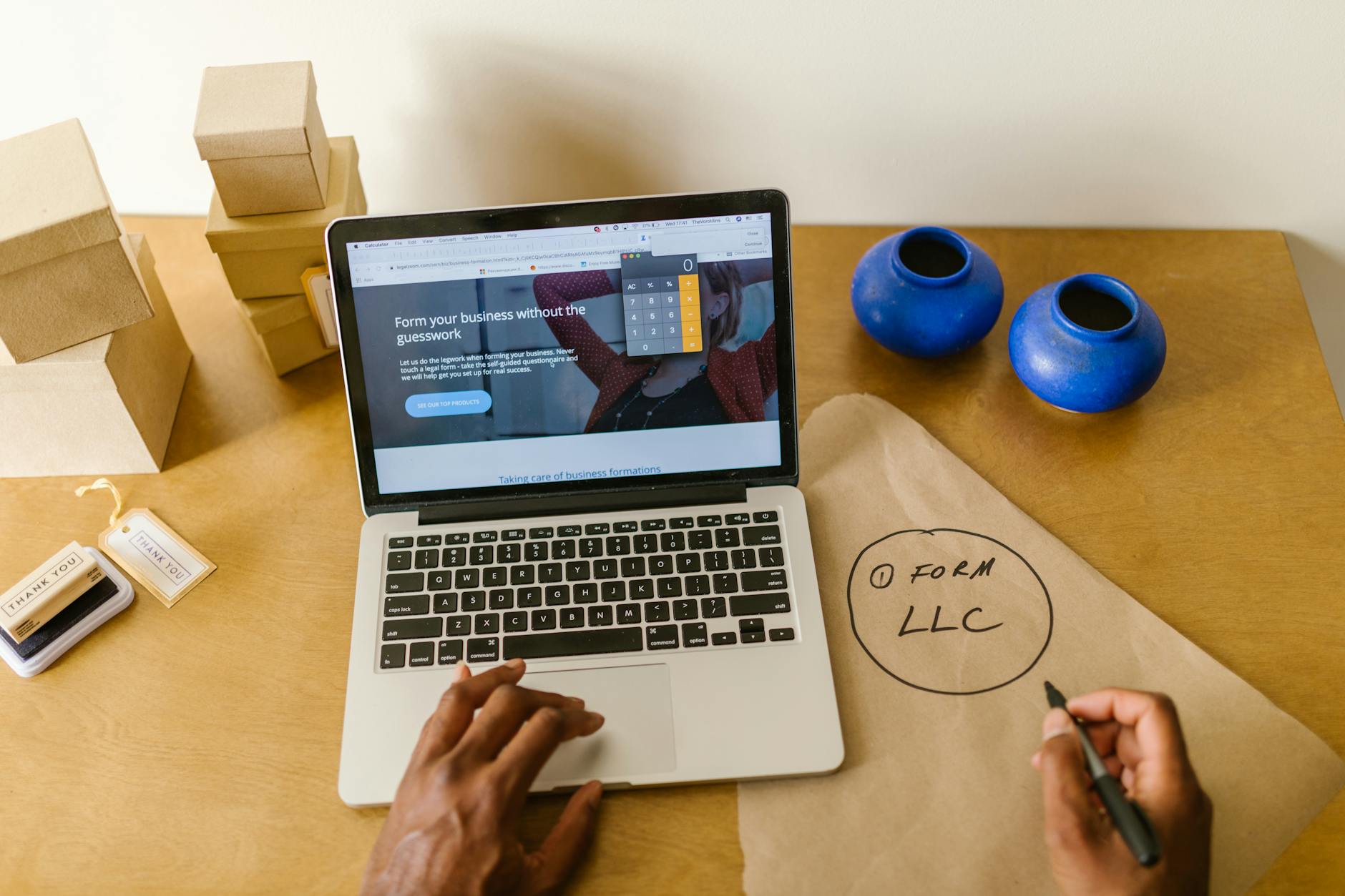
A mobile mechanic, a home baker, a yoga teacher, an accounting practice, a guesthouse and a joinery firm start from very different places, yet their first websites rest on the same few decisions. Traced from nothing online to a live site, they make practical website launch examples, showing what each business put up on day one, what it left for later and what it did in its first weeks. None of them is a named client; each is a composite of situations and choices that come up again and again for owners in different trades. Advice about launching is easier to trust when you can see it applied to a business that resembles your own. Somewhere among the six is probably a business close to yours, and possibly more than one. What ties them together matters as much as what sets them apart. Each launched with a small, specific site and improved it once customers started to use it.
In each case, the decisions matter more than the technical steps. If you want the steps themselves, from a finished draft to a public site, our guide on how to make a website live sets them out in order. The interesting part is what each business chose to put on its site on day one and why. That choice is where most owners go wrong, either by launching with too little to be useful or by waiting until they have far too much. All six take the middle path: a site that answers the questions customers actually ask, live quickly and improved over time. Notice how small most of these launch versions are. Notice too how specific they are about prices, places and next steps.
One of the six, the joinery firm, does not start from nothing at all. Like many businesses, it has a domain bought years ago and a half-built site that stalled after the home page. If that sounds familiar, you can finish your unfinished website with our launcher, which keeps the parts worth keeping, builds the pages that are missing and gets the whole site ready for launch. The other five start from a description of the business and a folder of photos. On AI Web Maker, building and previewing those sites costs nothing, and each one goes live for $119 a year of hosting, with the domain bought separately. That means each of these owners sees the finished site before spending anything. From there, every one of them takes a different route to launch.
Website launch examples from one-person businesses
Start with a mobile mechanic in Nairobi who works alone from a van and gets most of his jobs by phone. His launch version is a single long page: what he repairs, the neighbourhoods he covers, his call-out charge, his working hours and a large call button at the top. He adds a few photos of himself at work and three reviews from regular customers who were happy to be quoted. He leaves out a separate page for every type of repair, an about page and a blog, because none of them would change whether a stranded driver calls him. In his first week, he adds the site address to his Google Business Profile and the side of his van. When customers start mentioning that they saw his prices online, he adds a page about servicing, the job he wants more of. His lesson is that a small site with the right facts can do a big job.
A home baker in Lagos who sells celebration cakes has a different problem: everyone asks the same questions before ordering. Her launch version has a page of cake styles with photos of her own work, a clear note on how many days' notice she needs, the areas she delivers to and a button that opens a WhatsApp chat. She leaves out online payment for now, because her customers are used to confirming orders by message and paying on delivery. In her first weeks, she shares the site on Instagram and in the WhatsApp status updates her customers already watch. She notices that most new enquiries now arrive already knowing the size, flavour and date they want. That saves her hours of back-and-forth each week. Her lesson is that a site should answer the questions you are tired of answering.
A yoga teacher in Bristol who runs classes in two community halls needs her site to do one thing above all: show when and where classes happen and let people book. Her launch version has a timetable, a page for each venue with directions and parking, a short page about her teaching and a booking button for each class. She puts her prices and her policy on missed classes in plain sight, since those are what newcomers worry about. She leaves out a shop, video classes and a newsletter, all of which she may add later. In her first month, she asks regular students for reviews and sends the site to both halls so they can list it. When she adds a beginners' course, it becomes the most visited page on her site. Her lesson is that a site built around one clear action is easier to launch and easier to use.
Two launches with more to explain
An accounting practice in Pune with four staff faces a different challenge, because its clients are buying trust as much as a service. Its launch version has a page for each main service, such as bookkeeping, tax returns and company registration, in plain language with the documents clients need to bring. It adds a page about the team with real photos and qualifications, and a contact page with the office address, a map and a form. It leaves out a resources section and a blog, planning to add short articles on common tax questions once the site is settled. In the first weeks, the partners add the site to their email signatures and to the professional directories where they are listed. New clients begin arriving already clear on what the practice does, which shortens the first meeting. The lesson here is that specifics build trust faster than polished slogans.
A family guesthouse in Cebu needs its site to sell an experience before a guest has ever arrived. Its launch version has a page for each room type with honest photos taken in daylight, a page about the location with travel times to the beach and the airport, and a clear explanation of how to book and pay. It adds a short section on breakfast and the family who run the place, because that personal touch is what sets it apart from larger hotels. It leaves out a gallery of every corner of the property and an events page. In its first month, the owners link the site from their Google Business Profile and social media pages, and they ask recent guests for reviews. Direct enquiries begin to arrive from guests who found the site and preferred to book with the owners themselves. The lesson is that honest photos and practical details do more than elaborate design.
A launch rescued from a stalled project
The joinery firm in Johannesburg has a story many owners will recognise. Three years ago, the owner bought a domain and started a site with a designer, but the project stalled after the home page and the domain has pointed at a holding page ever since. When he finally returns to it, he finds a decent logo, a few good project photos and a paragraph about the business worth keeping, alongside empty service pages and a broken contact form. Rather than starting again, he keeps what works, fills the missing pages with his own descriptions of fitted kitchens, wardrobes and staircases, and adds photos of recent jobs. Within a day he has a complete site to review, and he launches it at the end of the week. His first enquiry comes from a customer who found his staircase page while searching for exactly that kind of work. His lesson is that an abandoned project is often closer to finished than it feels.
His story holds a few practical lessons for anyone in the same position. First, an old project almost always contains something worth keeping, whether that is a logo, a few good photos or a description of the business that still holds true. Second, the broken parts are usually the ones that matter most to customers, such as contact forms and service details, so they deserve attention first. Third, the domain itself has value, because it may already be printed on old business cards and vans. A firm in this position should check that the domain is registered in the owner's own name before doing anything else. It should also test every route a customer might use to get in touch. Once those basics are sound, the rest of the launch is no different from starting fresh.
What these launches have in common
Look across all six and a clear pattern appears. Every launch version is small, usually between one and six pages, and every one answers the questions customers ask most often before buying. Each puts the next step, whether a call button, a booking form or a WhatsApp chat, where it cannot be missed. Each uses real photos of real work rather than generic images, even when those photos were taken on a phone. Each leaves out features the owner thought they wanted, such as blogs, shops and galleries, until the site is live and the need is proven. And each owner spends the first weeks telling existing customers and connecting the site to profiles they already have. None of them waited for perfection, and none of them needed it.
It is just as useful to notice what none of these businesses did. None launched with a page that said coming soon, which tells visitors nothing and gives Google nothing to index. None filled their site with stock photos of smiling strangers in offices, which customers have learned to see straight through. None borrowed long paragraphs about mission and vision from larger companies, preferring plain statements about what they do and where. None spent months choosing between colour schemes or fonts while the site sat offline. And none treated launch day as the end of the work, since each had a short list of improvements ready for the weeks that followed. Avoiding those habits is half of what made their launches work.
The other shared habit is listening after launch. The mechanic noticed which page customers mentioned, the baker noticed which questions stopped arriving and the guesthouse noticed where its direct bookings came from. Each then made one improvement based on what it learned, rather than redesigning the whole site. That rhythm of launching small, watching closely and adding what customers need is what turns a basic site into a strong one over a few months. It also keeps costs and effort low, since every addition has a proven reason behind it. If you want help choosing what to add next, our AI SEO Tools can check your pages and show which searches deserve a page of their own. The owners who do best are rarely the ones with the most impressive launch day.
To apply the same thinking to your own business, start by writing down the five questions customers ask you most before they buy. Those questions decide your launch pages, because each one needs a clear answer somewhere on the site. Then choose the single action you most want a visitor to take and make sure it appears on every page. Gather your best real photos, even if there are only a handful, and decide which features can wait until after launch. A tutor in Accra, a florist in Leeds or a solar installer in Kisumu would each end up with a different site from this exercise, but every one would be ready to launch within days. That is the real lesson of all six launches. A good launch comes from clear choices rather than a long build.
Six businesses, six trades and six different sites, yet the same approach carried each of them from nothing to live. They decided what customers needed to know, put it on a small number of clear pages, added real photos and one obvious next step, and launched without waiting for perfection. Then they listened and improved, one change at a time. Whether your business sells cakes, accounts or overnight stays, the same choices will work for you. If you are starting from scratch, begin with your five questions and your folder of photos. If you are starting from a site that stalled years ago, begin with what is already there. Either way, the first version you launch is the beginning of your website, not the end of the job.
Type the domain you have: we keep what is good on it, fill in what is missing and build your website, ready to go live in minutes. Free to build and preview.
Finish your website with the AI Website Launcher →