Hindu Temple Website Cost, Aarti Times and a Welcome for First Visits
A temple committee budgets $119 yearly for hosting, or $19 for each month, along with a domain. Inside: devotees and visitors, the pages, aarti times, a first visit, ceremonies, classes, hall and visit requests, search and the budget.
- No coding required
- Live in minutes
- Blog, SEO and chatbot tools included
A temple committee sets aside $119 each year so its pages stay hosted by AI Web Maker, though a treasurer wanting smaller payments can choose $19 monthly, plus a domain. Volunteers can draft the aarti times, the visitor guidance and the puja pages, then review them in preview, without any charge from the platform. One family celebration in the hall, or a few months of class contributions, covers that sum comfortably. Harder by far is speaking to two audiences at once: devotees who need accurate times and festival dates, and guests of other faiths who are unsure whether they may come in at all. Tone matters as much as information, because the website is often the first impression a neighbour, a teacher or a new arrival forms of the community. This guide covers those audiences, the page list, aarti times, a first visit, family ceremonies, classes, hall and visit requests, search and the yearly sums.
This article is part of our complete guide: Professional Services Website Builder.
Devotees, families, schools and first time visitors at the mandir
Several groups look up a Hindu temple online, and each needs a different page. Regular devotees check the aarti times for the week and the date of the next festival, which moves every year with the calendar. Families planning a naming ceremony, a wedding or prayers after a death want to know who to call and how far ahead to arrange it. Teachers bringing classes that study world religions look for a guided visit with clear rules on dress and photographs. Neighbours and newcomers of other faiths, or of none, want reassurance that they are welcome and guidance on what to do. Parents look for children's classes, language lessons and dance, often before they have visited for worship. A site that serves each group without confusing the others earns trust across the whole community.
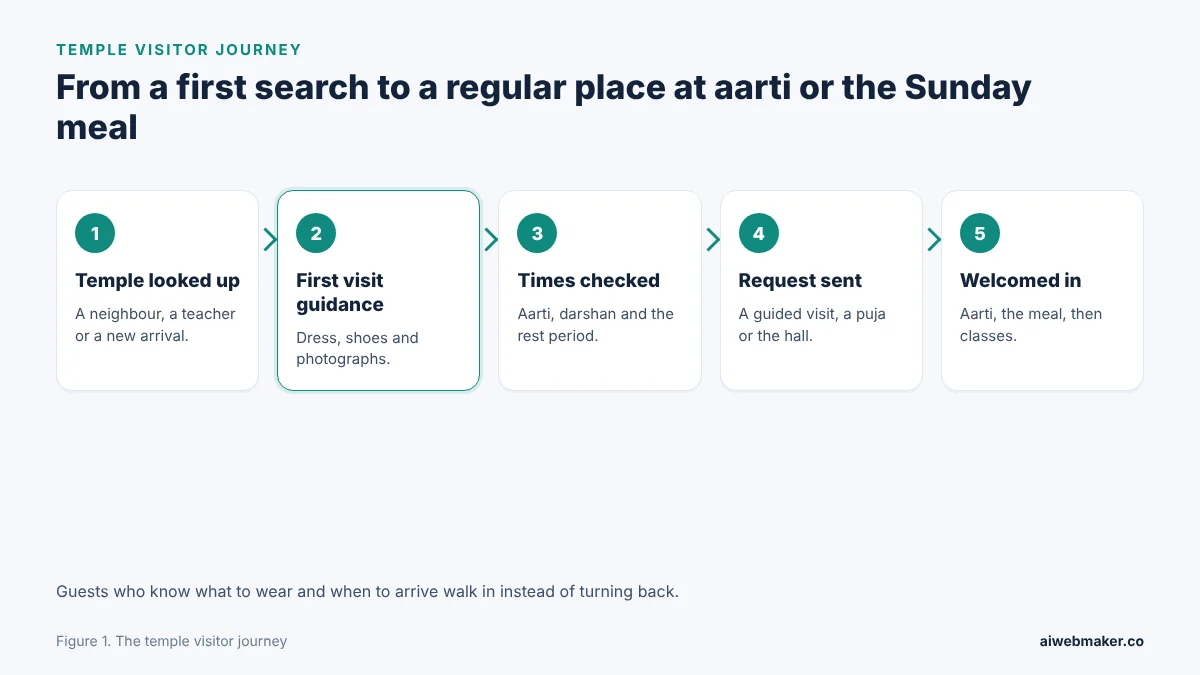
On the left sits a neighbour or a new arrival searching for the temple, and on the right the same person sharing the Sunday meal as a regular. The highlighted box is the first visit guidance, because uncertainty about dress, shoes and etiquette keeps many people outside. Checking times comes next, since arriving during the afternoon rest, when the shrines are closed, is a common disappointment. A request to the office, whether for a guided visit or a ceremony, turns interest into a date. A warm welcome at aarti or at the meal is what brings people back. Each page on the temple's site should carry a visitor one box further across this path.
Aarti times, visiting, pujas and classes: the temple's page list
A temple website needs pages for worship, for visitors, for family ceremonies and for learning, each kept short and accurate. An aarti times page, presented as an example day that points to the weekly sheet, answers the most common question. A visiting page covers dress, shoes, photography and how to behave during aarti. Puja and ceremony pages explain what the priests offer for the turning points of family life. Classes, hall hire, festivals and a quiet note on giving complete the list, with a request form for visits and ceremonies. Arranged this way, the site serves devotees and guests without either feeling it was written for someone else.
| Page | Main readers | What it should hold |
|---|---|---|
| Aarti and darshan times | Devotees, visitors | An example day, the rest period, a pointer to the weekly sheet |
| Visiting | Guests, schools | Dress, shoes, photography, food rules, accessibility |
| Pujas and ceremonies | Families | Naming, early milestones, weddings, home blessing, havan, after a death |
| Classes | Parents, adult learners | Days, times, ages, contributions |
| Hall hire | Families, community groups | Capacity, mandap, kitchen rules, festival exclusions |
| Festivals and giving | Everyone | A calendar note, the community meal, ways to donate |
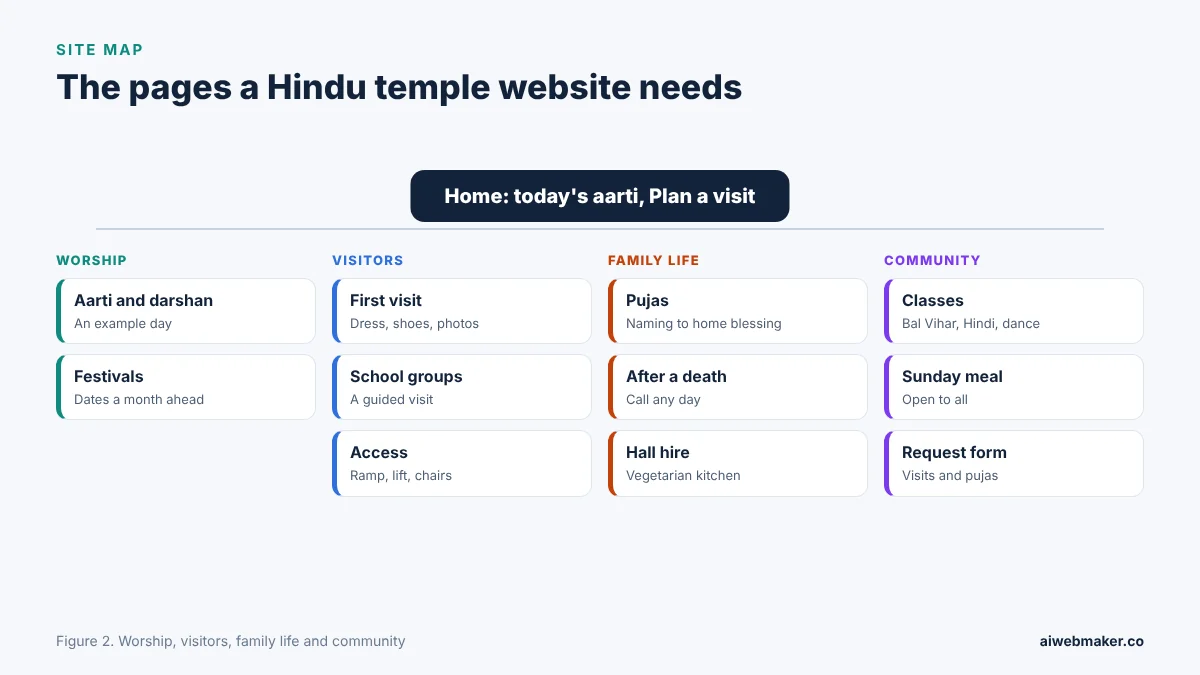
Under a home page showing today's aarti times and a visit button, the temple's pages fall into worship, visitors, family life and community. The sample, Shanti Mandir Hindu Temple, begins with an example day of aarti and darshan times that sends readers to the weekly sheet, then gives first visit advice on dress, shoes and the shoe room. Its family ceremonies run from a naming ceremony and the first rice and first haircut to weddings, blessing a new home, havan and support after a death. Classes include Bal Vihar, Hindi for beginners, a bhajan group and Bharatanatyam, followed by hall hire, festivals with a Sunday vegetarian meal, photos and reviews. The Hindu temple website example with aarti times and visitor guidance closes with questions and a request form for visits, ceremonies and the hall. Other mandirs can follow the same order, adjusting it to their own traditions and calendar.
Example days, the afternoon rest and the weekly sheet
Aarti times change with the seasons and stretch on festival days, so a temple should publish an example day rather than pretend one timetable fits the whole year. A simple table with weekday and weekend columns shows when the temple opens, when each aarti begins, when the shrines rest and when the doors close. A sentence explaining darshan, the chance to stand before the shrines whenever the curtains are open, helps visitors who come outside aarti. The page should say clearly where the current week's sheet is posted, whether on a notice board, in the shoe room or as a weekly update on the website itself. Festival changes, such as later evening aarti or extra pujas, deserve their own line. Honest wording about which times are examples prevents the frustration of a closed shrine after a long journey.
| Item on the times page | Why visitors need it |
|---|---|
| Opening and closing times | Avoids arriving at a locked gate |
| Each aarti of the day | The moments most people come for |
| The rest period | Shrines closed and the hall quiet |
| Festival changes | Later evenings and extra pujas |
| Where the weekly sheet is | The only reliable source for today |
A first visit: dress, shoes, photographs and food
First time visitors often hesitate at the gate because they fear doing something disrespectful, so a short visiting page removes the main barrier to coming in. Clothing that covers shoulders and knees, with scarves or wraps available to borrow, is the most common guidance, and the page can say whether covering the head is expected. Shoes come off before entering the prayer hall, so a note about the shoe room, racks and lockers helps people plan. Photography rules deserve care, because many temples welcome photos of the building but not of the shrines or of people at prayer. Food rules matter too, since many mandirs ask that no meat, fish, eggs or alcohol be brought onto the grounds. A friendly explanation of what happens during aarti, and that guests may join in or simply watch, turns anxiety into curiosity.
Family ceremonies, priests and suggested offerings
Families look to the temple at the turning points of life, and each ceremony page should explain who to contact, where it happens and how far ahead to arrange it. Some ceremonies are held in the temple, while others, such as blessing a new home, take place at the family's house. A first conversation with a priest, by phone or in person, usually shapes the details, so the page should invite that call rather than list every ritual. Offerings towards the priest's time and materials vary by temple and tradition, and a plain note that the office explains them, with nobody turned away, avoids awkwardness. Whether a temple wedding is also a legal marriage depends on the country, so couples should be told to confirm registration with the local authority. Clear, gentle pages make a family's first call to the office much easier.
| Ceremony | When families ask | What the page should explain |
|---|---|---|
| Naming ceremony | In the weeks after a birth | Temple or home, the first call to the office |
| First rice and first haircut | Early childhood | Small family ceremonies, notice needed |
| Wedding | Six months or more ahead | Meetings with a priest, legal registration varies |
| Blessing a new home | Before moving in | Held at the family's home |
| Havan | Birthdays and anniversaries | Usual days and the havan room |
| After a death | Any day | Who to call, help with rites and gatherings |
Bal Vihar, language and dance: classes that bring families in
Classes often bring families to the temple before worship does, so each one deserves its day, time, age range and contribution on the page. Sunday school for children, with stories of the festivals, simple prayers and crafts, answers a need many parents feel when raising children far from grandparents. Language classes in the script used at home, held in separate groups for children and adults, draw learners from beyond the regular congregation. Devotional singing, classical dance and study circles on scripture give adults a reason to come during the week. Teachers and volunteers who work with children should be vetted as the law where the temple operates requires, and the page can say so briefly. Listing contributions while stating that cost keeps no child out makes every class feel open.
Hall bookings, festival dates and visit requests
Hall hire pages should state capacities, what is included and the rules that follow from the temple's vegetarian kitchen, such as no meat, fish, eggs or alcohol on the grounds. Families need to know that the biggest festival days are kept for the temple's own events, so they can plan celebrations around them. Festival dates follow the Hindu calendar and move each year, so the page should give them a month or so ahead rather than promise fixed dates. The AI website builder that temples use for aarti times and visit requests drafts these pages once the committee describes the temple, its services and its hall in a few lines. Requests for a guided visit, a puja or the hall reach the office, which can confirm the date, offer another or explain that a festival already fills the day. Offerings and hire fees stay a private matter between temple and family, settled without any cut for AI Web Maker.
Mandir, aarti times, festival nights: the searches that lead to a temple
Searches for a temple usually pair the tradition with a place. Common examples are Hindu temple near me, mandir with a town name, aarti times today or a festival name with the area. Pages that name the temple, the deities honoured and the town in their headings match those searches more closely. The map listing should give the opening hours, the rest period, the address and a photo of the entrance rather than the shrines. Reviews from school groups, families who held ceremonies and first time guests reassure others who are unsure about visiting. Articles explaining a festival, the meaning of aarti or how to prepare for a naming ceremony attract readers well beyond the congregation. Thoughtful writing of this kind makes the temple a trusted guide for its whole neighbourhood.
A mandir's yearly website sums
A temple's website spending reduces to hosting, a domain and a small amount of credit for articles. Committees approving an annual budget usually choose yearly billing, which costs less across twelve months. A newly founded congregation still gathering donations may start monthly instead. Twelve festival and visitor articles cost under eight dollars of credits for the whole year. Updating aarti times, festival dates or hall prices carries no extra charge at all.
| Item | Yearly | Monthly |
|---|---|---|
| Hosting the Hindu temple pages | $119 | $228 over twelve months |
| Domain | Depends on the ending | Depends on the ending |
| Higher plan, for comparison | $189 a year | Not needed |
| Twelve festival and visitor articles at about $0.65 | About $7.80 | About $7.80 |
| Aarti times, festival dates and hall prices | No charge | No charge |
| Year before the domain | About $126.80 | About $235.80 |
What turns a curious visitor away from a temple's site
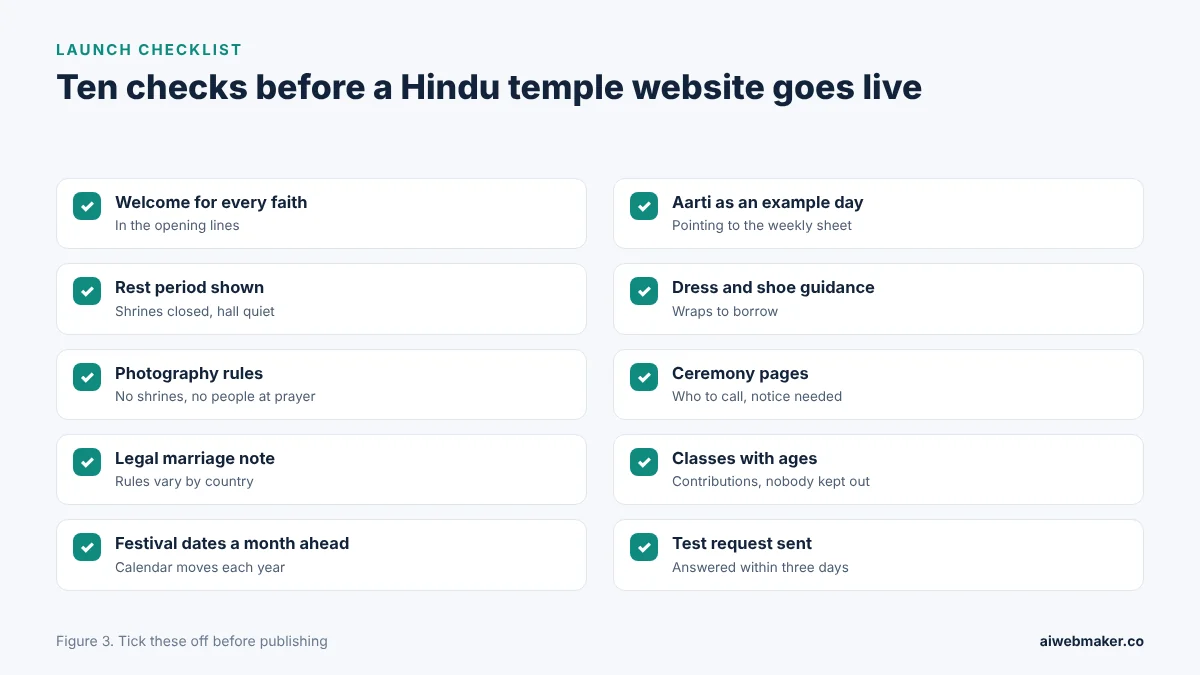
Curious visitors turn away when the site gives no hint that guests of other faiths are welcome. A single fixed timetable that ignores the afternoon rest sends people to closed shrines. Missing guidance on dress and shoes leaves newcomers afraid of giving offence. Ceremony pages without a contact or a sense of notice needed push families to ask relatives instead. A donation appeal placed above the welcome can make guests feel the visit has a price. Ten points in the checklist below guard against each of these mistakes.
Frequently asked questions
May visitors of other faiths attend aarti?
Most temples welcome visitors of any faith, or none, to watch aarti, look round and share community meals, a fact worth stating near the top of the home page. Guests may join in, passing their hands over the lamp when it is brought round, or simply stand and watch. Groups are usually asked to arrange their visit in advance so a volunteer can guide them. Dress and shoe guidance applies to everyone entering the hall. A clear welcome removes the doubt that keeps many neighbours outside.
Why do festival dates change every year?
Hindu festivals follow a calendar based on the moon, so each falls on a different date in the civil calendar from one year to the next. Some festivals also fall on slightly different days in different regions or traditions. The website should publish confirmed dates about a month ahead rather than a fixed list for years. Families planning celebrations can then avoid the busiest days. Explaining the reason helps visitors understand why the dates move.
How can giving be mentioned without pressure?
A short note near the end of the site, explaining that the temple is supported by donations and offerings, is usually enough. It can mention a donation box in the hall and invite people to ask the office about other ways to give. Stating that nobody is asked for money to visit, pray or eat at the community meal keeps the welcome sincere. Publishing a summary of yearly accounts, where the temple does so, adds openness. Gentle wording respects both regular donors and first time guests.
Is a temple wedding also a legal marriage?
The answer varies with national law, and sometimes with whether the temple or its priest is registered to conduct marriages. In some places couples hold a separate civil registration before or after the religious ceremony. The website should advise couples to check with the local registrar early in their planning. Priests can explain the religious ceremony, while legal requirements remain a matter for the authorities. Clear advice prevents disappointment close to the wedding date.
A single hall booking against the hosting year
A single family celebration in the temple hall outweighs a full year of hosting at $119. Committees paying monthly cover the $19 from a single small hall booking or a few class contributions. Every school group that visits after reading the guidance, and every family that arranges a ceremony through the office, strengthens the temple's place in its town. Accurate times, a sincere welcome and clear ceremony pages persuade newcomers more than any appeal could. Temples that refresh festival dates and the weekly sheet online keep devotees and guests arriving at the right moment. Neighbours of every background standing together at the evening aarti are the best measure of what the pages achieve.
Build your website in Minutes and get the AI Tools that work
Start Building Your Website →