Scaffolding Website Cost: Hire Weeks, Inspection Tags and Licences
Scaffold firms pay $119 a year to host their site, or $19 a month, and the domain is priced on its own. Covered: who orders scaffolds, the pages to build, hire weeks, inspections, licences, ties and security, search and the yearly sum.
- No coding required
- Live in minutes
- Blog, SEO and chatbot tools included
A scaffolding company on AI Web Maker settles its hosting with $119 for the year, or with $19 in each month it prefers to pay, and buys a domain on top. Drafts, reorders and preview checks are not billed, so the yard sees the finished site before it pays anything. One chimney scaffold standing for a few weeks brings in several times the yearly hosting. The real difficulty is that most people ordering a scaffold have never ordered one before, and they cannot judge a design, a hire period or a licence on their own. Roofers and painters often recommend a firm, but the homeowner still checks the website before agreeing to the price and the start date. The sections that follow cover who orders scaffolds, the pages to build, hire weeks, inspections, licences, ties and security, search and the yearly sum.
This article is part of our complete guide: Home Services Website Builder.
Who orders a scaffold, and who really decides?
Scaffolds are usually ordered by one person, paid for by another and used by a third, which makes the website's audience unusually mixed. Homeowners pay for scaffolds around roof repairs, chimney work, painting and loft conversions, yet many have never seen a scaffold design. Roofers, painters, renderers and builders arrange the scaffold for their own jobs and care most about start dates, boards at the right height and reliable inspections. Main contractors and property managers want clear records, insurance details and a firm that turns up on the agreed day. Storm damage brings urgent calls for make safe scaffolds around chimneys and roofs. A scaffold firm's site has to reassure the paying homeowner while proving to the trades that the firm is dependable.
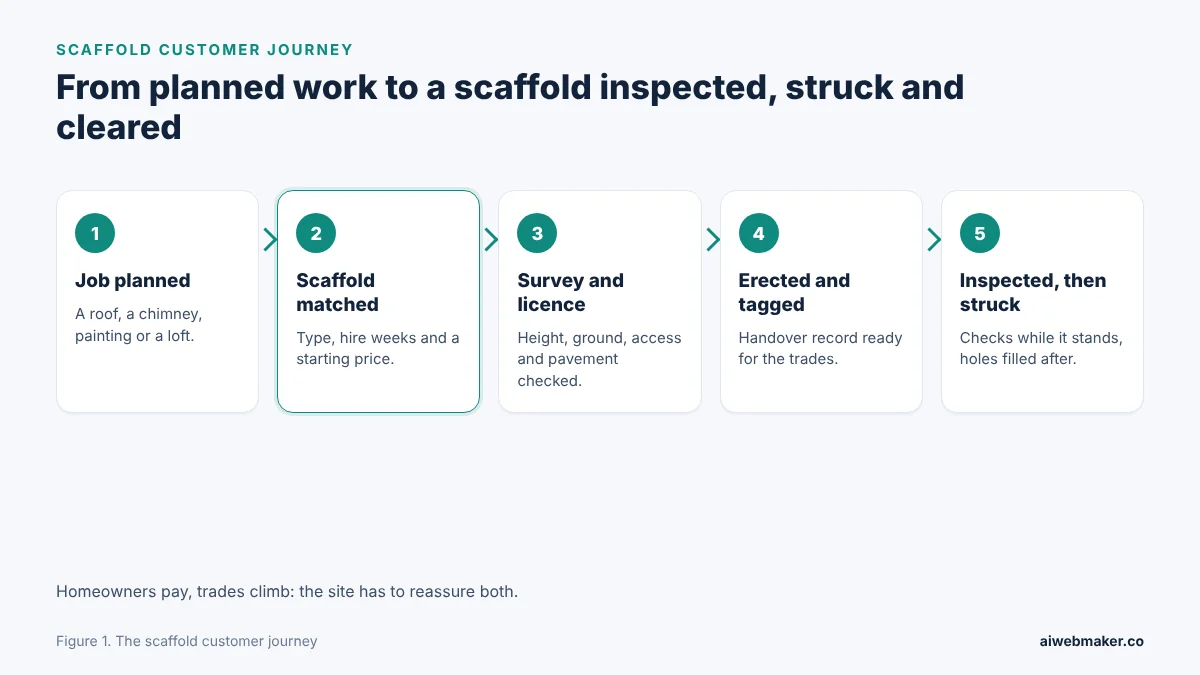
This journey opens with a planned job, such as a chimney rebuild or a repaint, and closes with the scaffold struck and the tie holes filled. The marked step is where the right scaffold is matched to the job, along with its hire weeks and a starting price. A survey follows, because height, ground and access change the design and the final figure. Erection and handover come with a tag and a written record, which the trades check before they climb. Inspections continue while the scaffold stands, and a tidy strike with every fitting collected decides whether the homeowner recommends the firm. Each step needs plain words on the website so that a first time customer never feels lost.
Chimneys, wraps and towers: pages a scaffold firm should build
A scaffold firm's website needs pages that turn tube and board into choices a homeowner can understand. The scaffold pages describe each common type, what it is used for and what the price includes. A job guide works in the other direction, starting from the work and ending at the scaffold. Safety and permission pages explain inspections and pavement licences, which decide when work can start. A gallery and reviews show real scaffolds on real houses, and a survey request starts the process. Together these pages let a homeowner pick a scaffold with the same confidence the trades already have.
| Page | What the visitor wants to know | What it should include |
|---|---|---|
| Scaffold types | What each scaffold is for | Chimney, house front, full wrap, mobile tower, starting prices |
| Which scaffold for which job | What suits the planned work | Roofs, painting, rendering, lofts, extensions, indoor work |
| Inspections | Whether it is safe to climb | Handover, intervals, storms, tags, rules that vary |
| Pavement licences | Whether it can stand on the street | Who applies, walkways, lights, notice periods |
| Recent scaffolds | Proof of tidy, safe work | Captioned photos by job |
| Survey request | How to start | Job, building, storeys, dates, pavement or not |
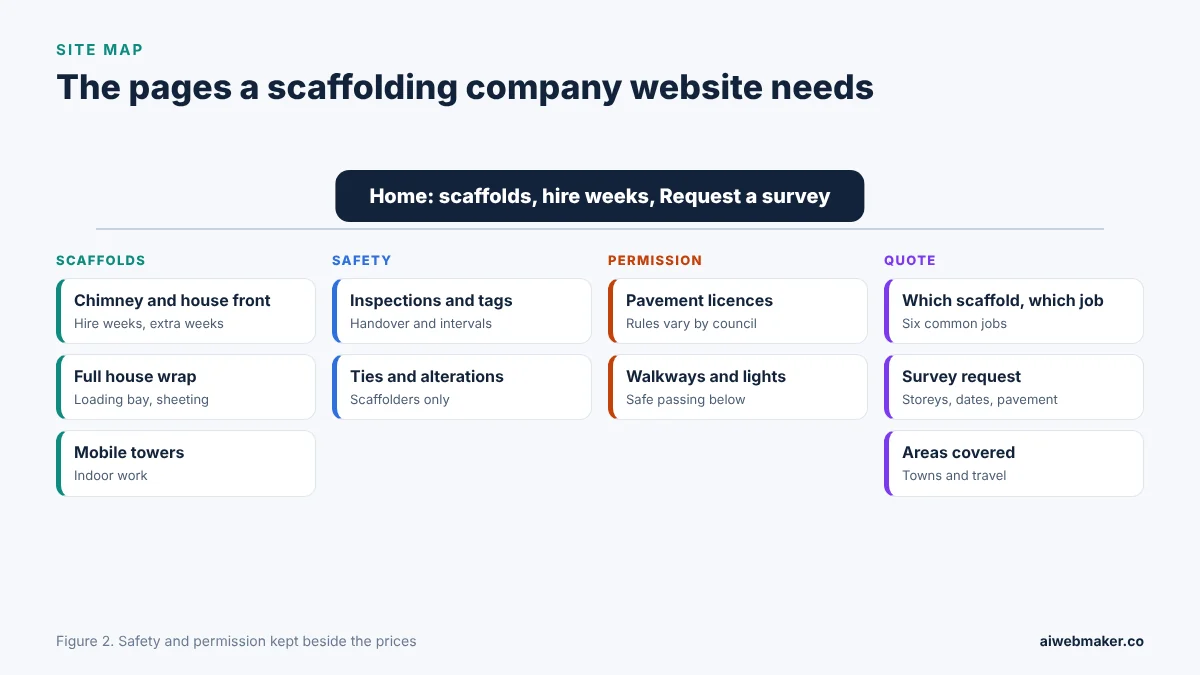
This site map sends four branches out from the home page, mirroring the questions a homeowner asks in order. Scaffold pages describe chimneys, house fronts, wraps and towers, safety pages cover inspections, tags and ties, permission pages cover pavement licences and walkways, and quote pages hold the job guide, the survey request and the areas served. Our sample firm, Upright Scaffolding, prices four scaffolds on its single page: a chimney scaffold, a house front, a full house wrap and a mobile tower, each with its hire period and the rate for extra weeks. A table then matches six everyday jobs to the scaffold that usually suits them, followed by sections on inspections and pavement licences. The scaffolding website example with hire weeks and inspection tags closes with five steps from survey to strike, recent scaffolds, reviews, questions and a quote request. Following that order keeps safety and permission close to the prices, where homeowners look for them.
What a scaffold price includes, and what costs extra
A scaffold price should state exactly what it covers, because homeowners compare quotes that may include very different things. A complete price usually includes the survey, erecting the scaffold, a handover inspection, a set hire period and taking it down at the end. Extra weeks, licence fees, design for unusual structures, temporary roofs, sheeting, loading bays and alterations are commonly charged on top. The final figure follows a survey, since height, access, ground conditions and neighbouring buildings all shape the design and therefore the price. Scaffold firms can lean on the AI website builder for scaffold hire and survey pages, which drafts the scaffold, safety and quote pages once the firm describes its scaffolds and the county it covers in a few lines. Clear lines between included and extra items prevent the most common disputes when a job runs over.
| Item | Usually included | Usually extra |
|---|---|---|
| Survey and quote | Yes | No |
| Erecting and handover inspection | Yes | No |
| Hire period | A set number of weeks | Each week beyond it |
| Pavement licence | Applying for it, on many quotes | The authority's fee |
| Temporary roof or sheeting | No | Quoted separately |
| Loading bay | Sometimes, on full wraps | Often on smaller scaffolds |
| Alterations during the job | No | Each return visit |
Inspections, handover tags and who may alter a scaffold
Inspections are the heart of scaffold safety, so the site should set them out in words a homeowner can follow. A competent person usually inspects the scaffold at handover, at regular intervals while it stands, after bad weather and after any change. How often, and who may inspect, depends on rules that are not the same in every country, and the page can describe the firm's own schedule while noting that any stricter local rule wins. Many firms hang a tag at the foot of each ladder showing when the scaffold was last inspected and whether the scaffold is safe to use. Other trades should never move boards, guard rails or ties, even briefly, and should call the scaffolders instead. Plain words on inspections reassure homeowners and remind every trade on site of the rules.
| Moment | What is checked | What the record shows |
|---|---|---|
| Handover | The whole structure against its design | Date, inspector, safe to use |
| Regular interval | Boards, rails, ties, base plates | Any defects and their repair |
| After bad weather | Movement, loose boards, sheeting | Checked before anyone climbs |
| After an alteration | The changed section and its ties | Who altered it and when |
Licences, walkways and scaffolds over the public pavement
Scaffolding that stands on a pavement or road normally needs consent from the council or highway authority, and the wait for it can decide the start date. Requirements, fees and notice periods differ between countries and councils, so the firm should offer to look up the local requirements for each job instead of quoting one rule. Pavement scaffolds commonly need a covered walkway, lights at night and padding at head height so that people can pass safely beneath. Debris netting or sheeting facing the street protects passers by from falling dust and tools. Neighbours may need a word in advance when the scaffold crosses a shared path or a boundary. A short, careful section on permission turns a confusing rule into one more task the firm handles.
Ties, loading bays, towers and security at night
Homeowners often worry about holes in their walls, weight on their roof and the risk of burglars climbing the scaffold, so the website should answer each concern. Most scaffolds are tied to the building for stability using anchors set in solid masonry, and a good firm fills the holes neatly when the scaffold comes down. Loading bays let roofers lift tiles and materials safely, while temporary roofs keep a house dry during a loft conversion or a full reroof. Mobile towers suit indoor ceilings and stairwells, but they should be built and moved only by trained people. Ladders can be removed or boarded at night, and some firms offer scaffold alarms, which reassures homeowners and their insurers. Answering these worries in advance removes a quiet reason many people delay booking.
How homeowners and trades search for scaffolders
Searchers type phrases such as scaffolding hire near me, chimney scaffold, scaffold for roof repair, mobile tower hire or scaffold licence, usually with a town or county. Scaffold pages that use these exact words, and name the areas served, reach both homeowners and trades. A map listing that shows where the yard is, when the office opens and tagged scaffolds on finished jobs helps searchers judge the firm quickly. Reviews from roofers, painters and homeowners that mention punctual erection and tidy strikes carry real weight. Articles on how long a scaffold usually stays up or what a pavement licence involves attract readers before they order. Practical writing of this kind brings in steady enquiries between the busy seasons.
Hosting, articles and the domain for a scaffold yard
The website bill for a scaffold yard is mainly hosting, and the domain adds a price that depends on its ending. Yards with steady work tend to pay for the year at once, while a new firm may prefer smaller monthly amounts during its first seasons. Twelve articles on inspections, licences and scaffold types cost about $7.80 of AI credits between them. Adding new scaffolds, changing hire rates or naming new towns costs nothing extra. The table sets out the yearly and monthly routes, with the $189 tier shown for comparison only.
| Item | Yearly | Monthly |
|---|---|---|
| Hosting the scaffolding pages | $119 | $228 over twelve months |
| Domain | Depends on the ending | Depends on the ending |
| Higher plan, for comparison | $189 a year | Not needed |
| Twelve scaffold safety articles at about $0.65 | About $7.80 | About $7.80 |
| New scaffolds, hire rates and towns | No charge | No charge |
| Year before the domain | About $126.80 | About $235.80 |
What makes a homeowner doubt a scaffold firm online?
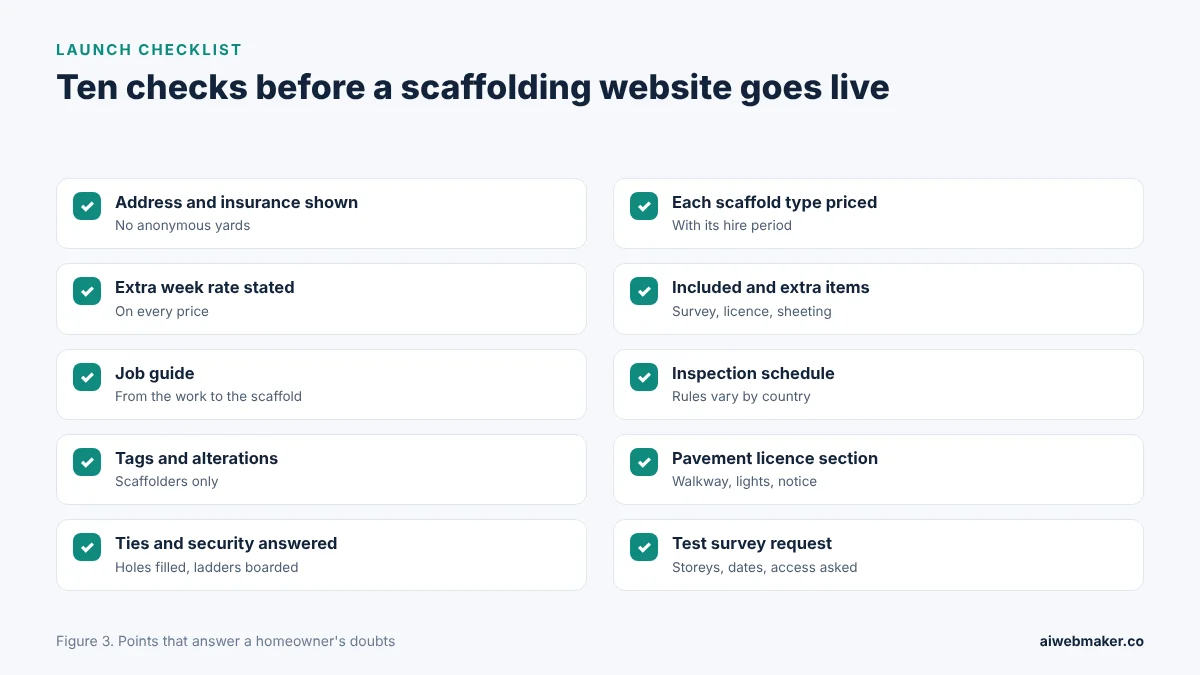
A homeowner doubts a scaffold firm when the website lists no address, no insurance details and no recent jobs. Prices with no hire period make the total impossible to judge. Silence on inspections suggests the firm leaves safety to chance. No word on pavement licences worries anyone living on a street without a front garden. A survey request that asks for nothing about storeys, dates or access looks careless. Ten points in the figure answer these doubts, and none of them takes long to fix.
Frequently asked questions
Can a roofer or painter move a scaffold board?
Only trained scaffolders should alter a scaffold, even for a few minutes. Removing a board, a guard rail or a tie can make the structure unsafe for everyone who climbs it afterwards. The right step is to call the scaffold firm, which makes the change and inspects the scaffold again before anyone uses it. Many firms note this rule on the handover record and on the tag. Stating it on the website makes the expectation clear before the job begins.
How long does a house scaffold take to put up?
A chimney scaffold can often go up in half a day, while a house front may take a day and a full wrap several days. Height, access, the ground and the number of lifts all change the time needed. Licences and design work for unusual structures can add days before erection even starts. The website should give typical timings and explain that the survey confirms them. Realistic timings help the trades plan their own start dates.
What happens when a job runs past the hire period?
The scaffold usually stays up and extra weeks are charged at the rate on the quote. Telling the firm early lets it plan the strike date and avoid surprises for both sides. Weather delays are common in roofing and rendering, so many homeowners need a week or two more than planned. A clear extra week rate on the website lets people budget for that possibility. Agreeing the strike date in writing avoids arguments at the end.
Is a scaffold a security risk for the house?
A scaffold can give easier access to upper windows, so sensible precautions are worth discussing at the survey. Ladders can be removed or boarded at night, and some firms fit alarms to the scaffold. Homeowners may also want to tell their insurer that a scaffold is in place. Keeping upper windows locked while the scaffold stands is a simple habit. A website that raises these points shows that the firm thinks about the household as well as the build.
A single chimney scaffold already covers the hosting
One chimney scaffold standing for its hire period usually earns a firm more than a year of hosting and the domain together. Paid monthly instead, the $19 is outweighed many times by a single week of extra hire on a house front. Every full wrap won after a homeowner reads the inspection and licence pages adds weeks of steady hire income. Clear prices, honest hire periods and calm words on safety persuade homeowners who would otherwise rely on whoever the roofer mentions. Trades who start asking for the firm by name are a good sign the website is pulling its share of the work.
Build your website in Minutes and get the AI Tools that work
Start Building Your Website →