High-Ticket Service Website: Elements That Justify a Big Quote
What a website for roofers, builders, renovators and other big-job trades needs to make a large quote feel safe: proof, credentials, people and a clear path to a quote.
- No coding required
- Live in minutes
- Blog, SEO and chatbot tools included
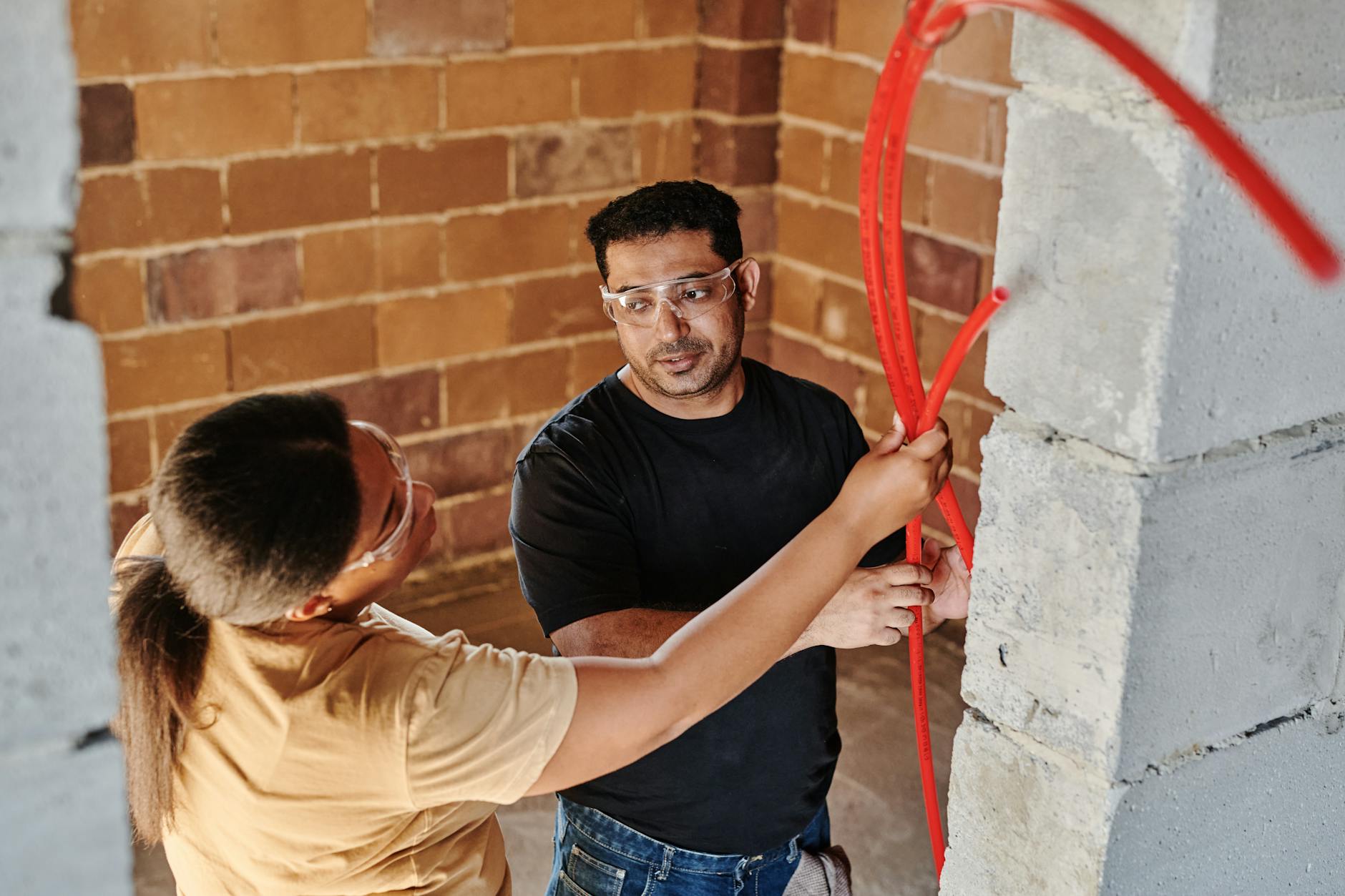
A high-ticket service website is a website for a business whose jobs are large enough that customers compare carefully before asking for a quote, such as roofing, renovation, rewiring or landscaping projects. It should include documented project proof, visible credentials, the real people who do the work, a clear explanation of how you quote, and an easy quote request.
- Google says local prominence depends partly on how many reviews a business has and how many websites link to it, 1 of 3 local ranking factors (Google Business Profile Help).
- Of the 4 aspects of experience, expertise, authoritativeness and trust, Google calls trust the most important (Google Search Central).
- The FTC's Endorsement Guides, revised in 2023, require advertisers to make clear what results people can generally expect when a testimonial shows exceptional results (Federal Trade Commission).
- LocalBusiness structured data needs 2 properties, name and address, and Google recommends review markup only on sites that review other businesses (Google Search Central).
What makes a high-ticket service website different?
A high-ticket service website has to make a large decision feel safe, not just make contact easy. Customers spend longer reading, compare several firms and look for evidence before they ask anyone to visit.
Someone booking an emergency drain clearance wants a number and a promise you will come today. Someone planning a new roof, a kitchen renovation or a full rewire is spending a significant sum and inviting a crew onto their property for days or weeks. They read project pages, check credentials, look up reviews elsewhere and often ask two or three firms to quote. The website's job is to get you onto that shortlist and to make your quote the one they trust.
That changes the balance of the site. Speed of contact still matters, but depth of proof matters more. A site full of stock photos and phrases such as "quality workmanship" reassures nobody, while real photos, real names and documented results move a careful buyer from reading to requesting a quote. These elements sit on top of the general local service business website essentials, which cover pages, contact paths and local search for every trade.
How does a high-ticket service website build authority and trust?
It builds authority with evidence a careful buyer can check: documented projects, named people, visible credentials and independent reviews. Every claim should be backed by something the visitor can see or verify.
Start with your own work. Photos of completed projects, labelled with the type of job and the area, show quality in a way no description can, and they double as local content for search. Before-and-after pairs are especially useful for renovation, landscaping and roofing, where the change is the whole point. A modest gallery of genuine projects does far more than a large set of polished library images.
Put credentials where decisions are made. Licences, registrations, trade association memberships, manufacturer accreditations and insurance details belong on the homepage and on each service page, not only in a footer. For trades such as electrical work, gas and structural building, some of these are legal requirements, and customers increasingly look for them before they call. Showing them plainly signals that hiring you carries less risk.
Introduce the people. Short bios with a photo, a role and how long each person has worked in the trade tell customers who will actually arrive at their home. Google's guidance on helpful content stresses first-hand experience and says trust is the most important of its quality aspects, and a named, experienced team is the clearest form of both. A line about where someone trained or which kinds of project they lead makes the team memorable.
What proof should project pages and case studies include?
A useful project page shows the starting problem, what you did, how long it took, what affected the cost, and the finished result in real photos. Add the customer's own words only with their permission.
Write each case study as a short story a prospective customer can picture. A typical outline covers the property, the brief, any surprises found on site, the solution and the outcome, followed by photos at each stage. Mentioning the town or neighbourhood, where the customer agrees, helps nearby buyers relate to the job and helps search engines connect your business to that area.
Keep testimonials honest and representative. The FTC's guidance says endorsements must reflect honest experience, and that when a testimonial describes unusually good results, the advertiser should make clear what customers can generally expect. Never invent or edit a review, never pay for a positive one, and do not ask only the customers you expect to be happy. Link to your Google Business Profile so visitors can read the full, unfiltered set.
Be careful with review stars in search results. Google's LocalBusiness documentation recommends review and rating markup only for sites that collect reviews of other businesses, so marking up your own testimonials will not reliably produce stars. Put the effort into the reviews themselves and the profile where they are collected.
How should a high-ticket service website explain price?
Explain how you price rather than hiding cost entirely: what drives the figure, how the quote is prepared and what it includes. That reassures buyers who fear surprise invoices and filters out poor fits early.
For large jobs, the honest answer to "how much?" depends on scope, materials, access, the condition of what is already there and the time the work takes. Saying so on each service page, with a short list of the factors that move the price, tells a visitor you will quote fairly. Describe the quoting process too: whether there is a site visit, how long the written quote takes and how long it remains valid.
If you are comfortable publishing typical figures, keep them accurate and dated, and update them when costs change. Many firms prefer to describe tiers instead, such as a basic, standard and premium specification, with what each includes. Either way, the visitor should leave the page knowing what to expect at the quote stage, which makes them more likely to ask for one.
Which pages does a high-ticket service website still need?
It still needs the standard local service pages: home, one page per main service, service areas, about with the team, reviews and contact.
On a high-ticket site, the service pages carry most of the weight. Each one should describe the situation the customer is in, explain how you handle it, show related projects and end with a clear quote request. A roofing firm, for instance, gains from separate pages for replacement, repair and guttering, because each buyer has different questions.
The service area page should list the towns you cover and any differences in response times or minimum job sizes by area. Keep your business name, address or service area, phone number and hours identical across the website, your Google Business Profile and directories. Google's local guidance notes that complete and accurate information makes a business more likely to appear in local results.
How do you turn a careful reader into a quote request?
Give each service page a specific request that matches the job, such as "Book a survey" or "Request a written quote", and make the form short. Answer the common objections on the same page.
Generic buttons such as "Learn more" create no momentum. A request phrased around the next real step, and repeated near the top and bottom of the page, catches both the quick decider and the reader who studies every project. On phones, keep a tap-to-call button visible as well, because some buyers want to talk before they commit to a visit.
A short set of questions and answers on each service page handles the doubts that stop people from getting in touch. Typical ones are whether you offer a warranty, whether you are insured, how long the work takes and whether the household can stay in place during it. Answering them openly often shortens the sales conversation and brings in better-prepared enquiries.
Track a few simple measures each quarter: calls from the site, quote requests and which service pages are read most. You can also run the site through the AI Website SEO Checker to catch missing titles, descriptions and broken links. Improve the pages that bring enquiries, and rework the ones that are read but never lead to contact.
Questions business owners ask about high-ticket service websites
Should a high-ticket service website publish prices?
Publish what drives the price and how you quote, and add typical figures only if you can keep them accurate. Buyers of large jobs mainly want to know they will not be surprised. A clear quoting process often reassures more than a single number.
How many project case studies does a site need?
There is no official number, so start with a few well-documented projects for each main service. Quality matters more than quantity, because one detailed case study answers more questions than ten unlabelled photos. Add new ones as you complete work you are proud of.
Can I use customer names and photos in testimonials?
Yes, with the customer's permission. A first name and town is often enough to make a testimonial believable. Keep a record of the permission, and remove the testimonial if the customer asks.
Do review stars from my website appear in Google results?
Usually not for your own testimonials. Google recommends review markup only for sites that review other businesses, so focus on collecting reviews on your Google Business Profile. Those reviews appear on Maps and in local results.
Is a video testimonial worth the effort?
A short video from a willing customer can be persuasive for large jobs, because it shows a real person describing a real project. Keep it brief and add a text summary for people who cannot play sound. Written testimonials with photos remain the core.
Building a high-ticket service site with AI Web Maker
AI Web Maker builds a business website from a short description, with service pages and contact paths in place for you to add your projects, credentials and team.
Building and previewing costs nothing, going live is $119 a year of hosting, and the domain is paid separately. AI edits, such as restructuring a service page, use credits at about $0.65 each. Whichever builder you use, the deciding factor for big jobs is the proof you add yourself, so plan time to photograph projects and gather genuine reviews.
Build your website in Minutes and get the AI Tools that work
Start Building Your Website →