Gutter Installer Website Cost and Quotes That Add Up by the Metre
Gutters are sold by the metre, and the website that sells them is priced as plainly: a hosting year at $119, single months at $19, and the domain on an invoice of its own. Then come callers, pages, materials, metre quotes, sizing, fascias and guards, search and the annual sums.
- No coding required
- Live in minutes
- Blog, SEO and chatbot tools included
Gutters are sold by the metre, and the website that sells them is priced just as plainly. A full year of hosting is billed at $119, a lone month at $19, and the domain sits on an invoice of its own. There is no charge for assembling the gutter pages or for looking them over in preview mode. One back wall of new gutter and a downpipe more than repays that annual sum. The harder task is explaining a product most homeowners only notice when it fails, and making a quote with dozens of small lines feel fair rather than padded. What follows covers the callers, the pages, materials, metre quotes, sizing, fascias, guards and guarantees, search and a yearly budget.
This article is part of our complete guide: Home Services Website Builder.
Overflowing corners and rotten fascias: who calls a gutter installer
Most gutter enquiries start on a wet day, when a homeowner watches water pour over a corner instead of down the pipe. Some see stains on the wall below the eaves or a run that sags in the middle and holds a pool of water. Others are replacing old plastic gutters that have cracked, faded or come loose at the joints. People buying or renovating a house often add gutters to a list of exterior jobs alongside roofing and painting. Owners of period houses look for steel or cast styles that match the street, while owners of new builds often want a colour that matches their window frames. All of them want a price they can understand and a date that does not slip.
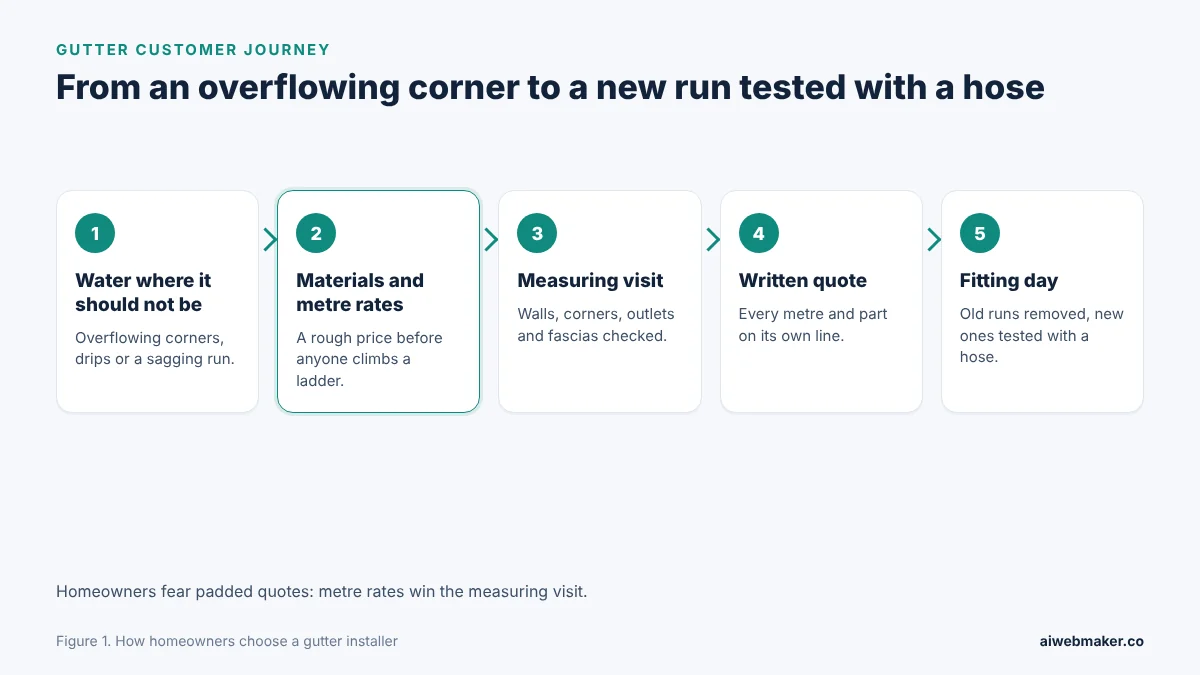
Rain sets the first card of this journey in motion, and a hose test closes it. Overflowing corners, dripping joints or a sagging run prompt the search. The highlighted card is the comparison of materials and metre rates, because homeowners want to know roughly what a new run costs before inviting anyone to climb a ladder. A measuring visit follows, where every wall is measured and the corners, outlets and fascia boards are checked. The written quote and the fitting day finish the journey, and a run that drains cleanly in the next storm is what earns a review.
Materials, metres and parts: the pages a gutter installer needs
A gutter installer's pages should mirror how the work is priced, starting with the material and ending with each counted part. One section explains the method, such as seamless gutters formed on site, because many homeowners have never heard of it. A price table by material and metre gives visitors a starting figure. Separate sections for downpipes, guards, fascia boards and rain heads cover the parts that are added or replaced. A colour range shown as visual chips beats any list of adjectives. The request route asks for the material, the type of building and rough run lengths, so the installer can plan the measuring visit.
| Page or section | What the homeowner asks | What it should state |
|---|---|---|
| Method | Why one piece instead of joints? | How seamless runs are formed and where joints remain |
| Prices by material | What does a metre cost, fitted? | Rate per metre and what it includes |
| Downpipes and outlets | How many pipes are needed? | Pipes, outlets and corners priced as their own lines |
| Colours | Will it match the house? | Coil and PVC colours with suitable houses |
| Guards, fascias and rain heads | What else might be needed? | Each part, its purpose and its price |
| Guarantee | How long will it last? | Workmanship and material warranties apart |
| Measured quote request | What happens next? | Material, building type, lengths and town |
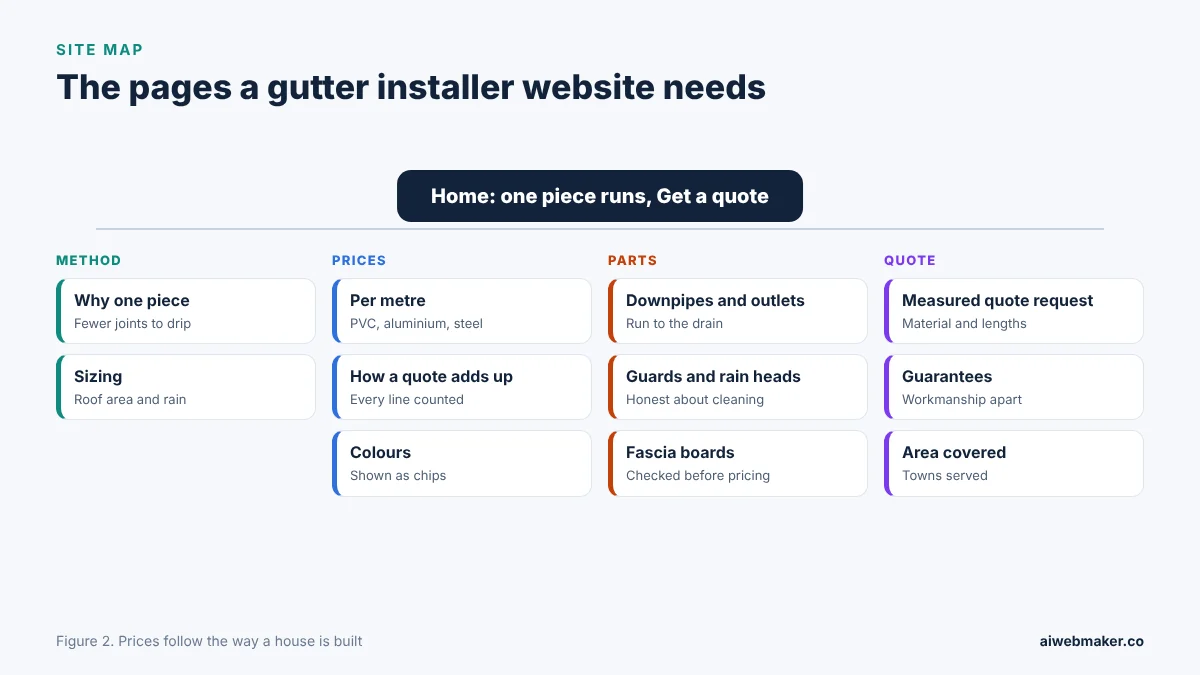
Split into four branches beneath the home page, a gutter installer's site covers method, prices, parts and the quote. Method pages explain one piece runs and how sizes are chosen, while price pages show the rate per metre and how a quote adds up. Rainline Gutters, the sample firm, opens with a section on why one piece beats ten, then a table of what each metre costs fitted and an explanation of how a quote by the metre adds up. It shows the coil colours it carries and a section on downpipes, guards and the parts that fail first, listing new downpipes, gutter guards, fascia boards, a sagging run reset, rain heads and old gutter removal. The gutter installer website example with quotes by the metre then shows runs fitted this autumn, reviews heard after the first big storm, a request for a measured quote and its questions.
Seamless, sectional, PVC or steel: comparing gutter materials honestly
Homeowners choose gutter materials once in decades, so a fair comparison earns more trust than a hard sell for the most expensive option. PVC is light and quick to fit, though colours can fade in strong sun and joints need care over time. Seamless aluminium is formed on site in one length per wall, which removes the joints where most drips begin, and it does not rust. Coated steel is heavier and stiffer, which suits long roofs and regions with heavy snow. Cast iron and copper still appear on heritage buildings, where local rules on conservation areas may affect what is allowed. Lifespans depend on climate, maintenance and installation, so the page should give ranges and reasons rather than promises.
| Material | Strengths | Points to weigh | Often suits |
|---|---|---|---|
| PVC sections | Light, quick, affordable | Joints and colour fade over time | Bungalows and simple roofs |
| Seamless aluminium | No joints on straight runs, does not rust | Needs a forming machine on site | Most houses with a drive for the machine |
| Coated steel | Heavy, stiff, handles snow loads | Higher price, heavier brackets | Long roofs, cold regions |
| Cast iron or copper | Traditional look, long life | Costly, specialist fitting | Period and listed buildings |
How a quote by the metre adds up
A gutter quote looks complicated because a house is complicated, and walking visitors through the lines turns suspicion into understanding. The rate per metre usually covers the gutter, brackets and fitting, while corners, outlets and downpipes are counted one by one. Fascia boards that are soft or split need replacing before brackets can hold, and a careful installer prices them before work starts. A minimum job charge protects small visits from losing money. Houses over two storeys or with glass roofs below the eaves may need a tower or scaffold, which deserves its own line. Publishing this structure lets a homeowner check a quote line by line rather than guessing.
| Quote line | How it is counted | Why it stands apart |
|---|---|---|
| Gutter run | Metres measured per wall | The main cost, varies by material |
| Corners | Each internal and external corner | Mitred and sealed, more labour |
| Outlets | Each drop point | Placed where pipes can run to a drain |
| Downpipes | Metres from outlet to drain | Clipped along the wall |
| Fascia boards | Metres replaced | Only when rotten, found on the visit |
| Old gutter removal | Per job | Taken away for recycling |
| Tower or scaffold | Per job | Needed for tall or awkward houses |
Sizing gutters and downpipes to the roof and the rain
Gutter size is an engineering choice, and a page that explains it shows the installer thinks beyond the catalogue. The area of roof draining into each run, its pitch and how hard rain falls in the region all decide the profile and the number of downpipes. A large, steep roof may need a deeper profile or an extra downpipe rather than a bigger gutter all round. Brackets must be spaced for the weight of water and, in colder places, snow. Many countries publish standards or guidance for sizing roof drainage, and local building rules vary, so the installer should say which apply where it works. Explaining the reasoning in plain words helps homeowners understand why two quotes for the same house can differ.
Fascias, guards and the guarantee behind each run
Rotten fascia boards are the most common hidden extra on a gutter job, so a careful page commits to checking them before any price is given. Gutter guards deserve honest wording, because mesh keeps leaves and moss out of the channel but never ends cleaning entirely. Fine grit still settles and the mesh itself needs brushing now and then, and saying so prevents complaints later. Guarantees should separate the installer's workmanship guarantee from the material warranties given by the makers of the coil and pipes. Payment terms, such as invoicing once the gutters are tested with a hose, reassure cautious buyers. The AI website builder that drafts gutter installer pages with metre prices writes the method, price and parts sections once the installer describes its materials and area in a short note, and each line can then be edited until it matches how the firm actually quotes.
Downpipe replacement, gutter guards and other searched phrases
Homeowners type phrases such as seamless gutter installation, new guttering, downpipe replacement or gutter guards, mostly followed by their town. In North America downspout replaces downpipe and some Canadians say eavestrough, so firms working there should put those terms in their headings. Each material, the colours and each part deserve a plain heading of their own. The map listing should show the radius served, office hours for measuring visits and photos of real runs on local houses. Reviews that mention storms passing with no drips and quotes that matched the final bill carry real weight. Articles on why gutters overflow or when guards are worth fitting attract homeowners well before they ring.
Hosting, domain and drainage articles: the installer's annual sums
Two items repeat every year on a gutter installer's website bill, the hosting and the domain, and twelve articles on drainage written with credits come in around $7.80. An installer with a full autumn diary keeps the figure lowest with one $119 payment. A firm just buying its first forming machine might prefer $19 at a time. Updating metre rates, colours or the area covered is never charged. The $189 line is printed for comparison and requires nothing.
| Item | Yearly | Monthly |
|---|---|---|
| Hosting the gutter pages | $119 | $228 over twelve months |
| Domain | Depends on the ending | Depends on the ending |
| Higher plan, for comparison | $189 a year | Not needed |
| Twelve roof drainage articles at about $0.65 | About $7.80 | About $7.80 |
| Rate, colour and area updates | No charge | No charge |
| Year before the domain | About $126.80 | About $235.80 |
Vague totals and hidden extras: why homeowners ring another installer
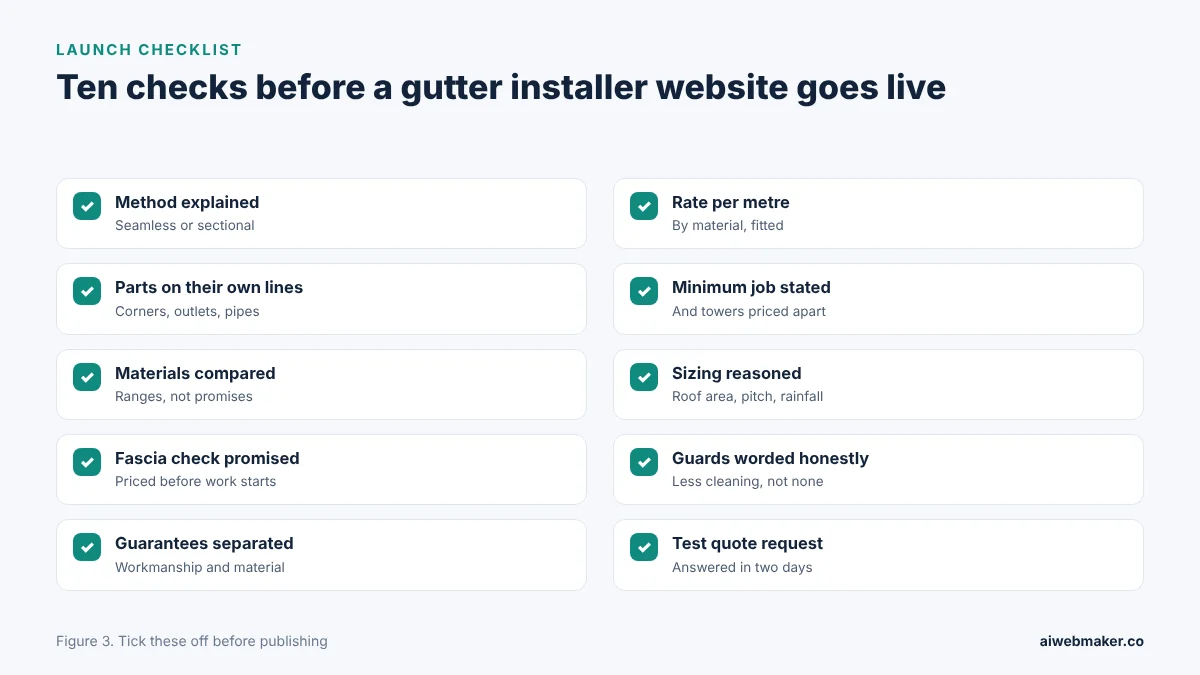
Homeowners ring another installer when a gutter site offers only a single total with no metres, corners or downpipes listed. A page that never mentions fascia boards leaves them fearing a surprise on fitting day. Guards sold as the end of cleaning make experienced homeowners doubt everything else on the page. No colour range forces them to imagine how the gutter will look against their windows. Missing details about towers and scaffolds suggest a tall house will cost far more than shown. Every one of these failings is matched by an item in the ten point list drawn here.
Frequently asked questions
Do gutter guards end the need for cleaning?
Gutter guards reduce cleaning but do not end it, and an honest installer says so. Mesh keeps leaves and moss out of the channel, which is where most blockages begin. Fine grit from roof tiles still settles inside, and the mesh itself can collect debris on top. Guards suit houses near trees best, where leaves fill gutters every autumn. Clear wording here prevents disappointment in the first winter.
Can new gutters be fitted to old fascia boards?
New gutters can go onto old fascia boards only when the timber is sound enough to hold the brackets. Soft or split boards should be replaced before the gutter goes up. A careful installer checks the fascias during the measuring visit and prices any replacement in the quote. Discovering rotten boards on fitting day is the surprise homeowners fear most. Stating this policy on the website builds trust before the visit.
How many downpipes does a house need?
The number of downpipes depends on the length of each run, the roof area draining into it and how heavy rain gets in the region. Long runs often need a pipe at each end or one in the middle. Placing outlets where pipes can reach a drain or a water butt matters as much as the count. Local guidance and building rules may set requirements, and they vary by country. An installer who explains the reasoning makes the quote easier to accept.
How long does a gutter fit take?
Most houses can be fitted in a day, including taking the old gutters down and testing the new ones with a hose. Long runs, steel profiles, fascia replacement or a scaffold can stretch the work to two days. Weather matters too, since fitting in heavy rain or high wind is unsafe. The website can give typical timings and explain what lengthens them. Knowing the likely length lets households arrange parking, pets and access in advance.
Thirty metres of new gutter against twelve months of pages
A medium length run of seamless gutter, fitted once, covers a gutter installer's $119 hosting year many times. Paying monthly, $19 is less than the price of a single corner on most quotes. Every enquiry that turns into a full house of gutters, pipes and fascias adds a day of work the pages helped secure. Honest material comparisons, quotes that list every metre and careful wording on guards persuade homeowners more effectively than any bargain headline. Installers who keep posting real runs on local houses show a busy, accountable firm. Requests that arrive with rough lengths already measured show visitors understood how the pricing works.
Build your website in Minutes and get the AI Tools that work
Start Building Your Website →