Glazier Website Cost, Boarding Up Lines and Safety Glass Pages
A glazier's site costs $119 to host for a year, or $19 monthly, and the domain is priced on its own. Inside: urgent and planned customers, boarding up, safety glass, misted units, starting prices, lead times, search and the yearly budget.
- No coding required
- Live in minutes
- Blog, SEO and chatbot tools included
For a glazier, AI Web Maker hosting is $119 over a whole year, or $19 in each month a firm chooses, and the web address is bought apart from hosting. Writing the job pages and checking them on a phone in the preview costs the glazier nothing, so the site can be polished before a single payment. One reglazed shop front, or two misted units swapped in a morning, pays for the year with room to spare. The real challenge is that glazing customers arrive in two very different moods, one standing over shards at midnight and the other calmly pricing a shower screen. A site that serves only one of them loses the other to a competitor, and a site that hides its phone number loses both. What follows covers both kinds of customer, the pages to build, boarding up, safety glass, misted units, pricing, search and the hosting bill.
This article is part of our complete guide: Home Services Website Builder.
Who needs a glazier, and in what state of mind?
Glazing customers fall into an urgent group and a planned group, and each one reads the website in a completely different way. The urgent group includes homeowners after a break in, a stray ball or a storm, and shop owners whose front window has been smashed overnight. They want a phone number, a promise that someone will come and advice on what to do while they wait. The planned group includes people with misted double glazing, bathroom renovators choosing a shower screen and anyone wanting a mirror cut for an alcove or a home gym. They compare prices, read about glass types and judge whether the firm seems careful. A glazier's site must settle the urgent visitor in seconds and inform the planner without hurrying them.
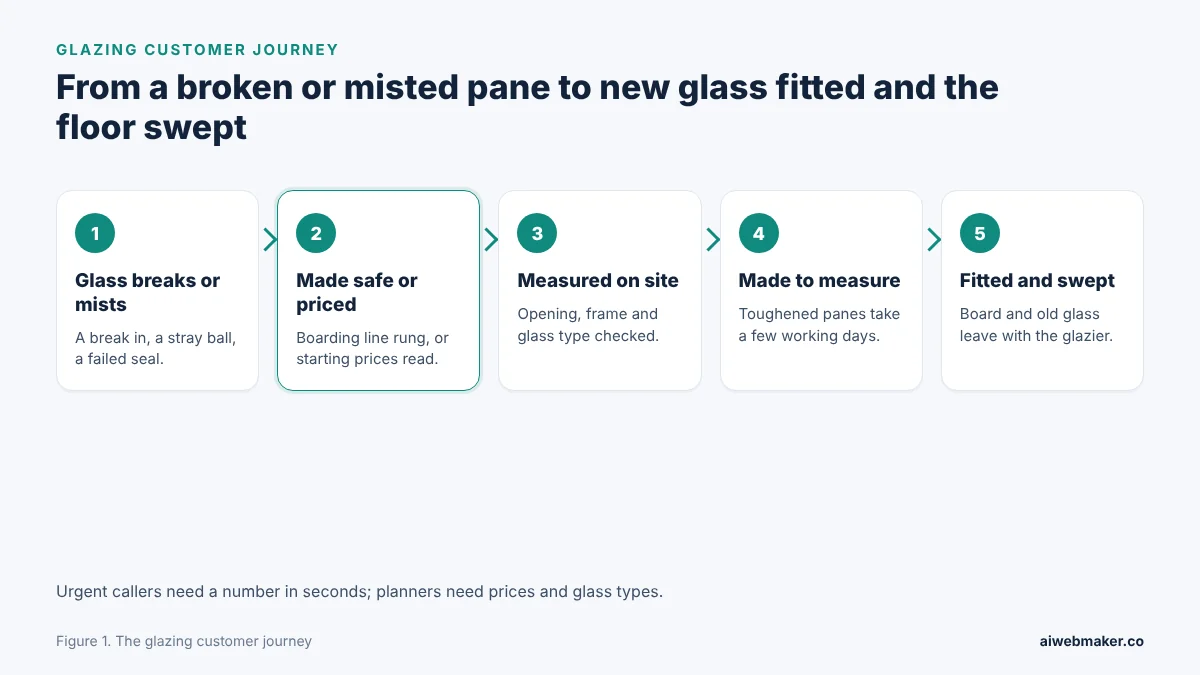
The five steps in this journey begin with glass that has broken or misted and end with a new pane fitted and the floor swept. The marked step splits the two kinds of customer, since the urgent caller rings the boarding up line while the planner reads the starting prices. Both then meet at the measuring visit, where a glazier checks the opening, the frame and the type of glass needed. Glass made to measure follows, and toughened panes take several working days because they cannot be cut once made. The final step, a clean fit with every shard cleared away, is what turns a stressful night into a five star review. Each step needs words on the website that set honest expectations.
Boarding up, units, mirrors: the pages a glazing firm needs
A glazing firm's website works best when every kind of glass job has its own page or section, alongside the safety knowledge that sets a careful glazier apart. The boarding up page sits at the top because it serves the most urgent visitors. Window glass and sealed units come next, since they are the most common planned jobs. Mirrors, shower screens and commercial glass each attract their own searches and their own buyers. A safety glass page and a quote request complete the structure. Laid out this way, the site lets each visitor find the right job in one tap.
| Page | What visitors check | What it should include |
|---|---|---|
| Emergency boarding up | Can someone come now | Phone in the first view, what to do while waiting, hours |
| Window glass and sealed units | Whether the frame can stay | Single panes, misted units, starting prices |
| Mirrors and shower screens | Made to fit this space | Edges, fixings, toughened thickness |
| Shop fronts and offices | Work outside opening hours | Laminated panes, partitions, timing |
| Safety glass | What glass goes where | Locations, standards that vary by country, the permanent mark |
| Quote request | How to start | Job, building, rough size in words, frame type |
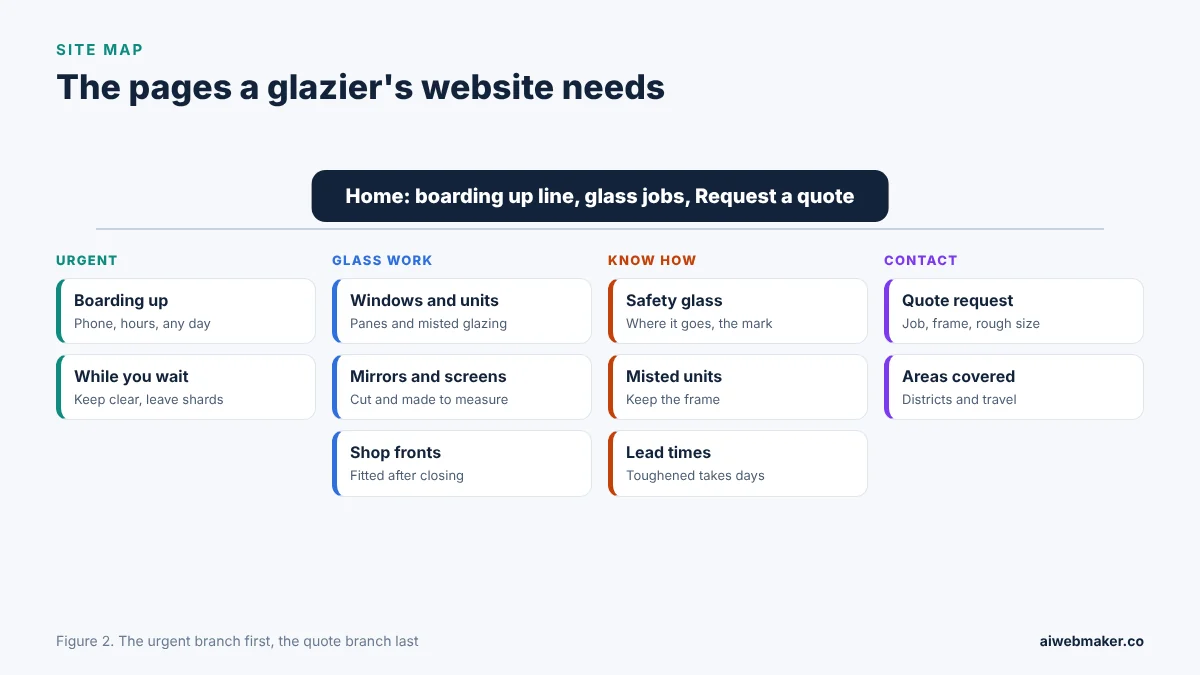
This site map hangs four groups off the home page, placing the urgent branch first and the quote branch last. Urgent pages hold boarding up and what to do while waiting, glass work pages hold windows, units, mirrors, screens and shop fronts, know how pages hold safety glass, misted units and lead times, and contact pages hold the quote request and areas covered. Our sample firm, Clearcut Glazing, lists six jobs on its single page: window glass, misted double glazing, mirrors cut to size, shower screens, shop fronts and offices, and emergency boarding up. A red warning strip near the top tells visitors to keep children and pets away from broken glass, and a table explains where safety glass belongs. The glazier website example with a boarding up line and safety glass table then covers misted units, four steps from call to fitted pane, recent jobs, reviews, questions and a quote request. That running order lets one page serve the frightened caller and the careful planner alike.
What should the boarding up section say at two in the morning?
The boarding up section should give the phone number, the hours it is answered and clear safety steps, all visible without scrolling. Visitors should be told to keep children and pets away, to leave large shards where they lie and to avoid pulling loose glass from the frame. A small crack in a pane that is still firm can often wait for a planned visit, while a hole or loose pieces need boarding the same night. The page should explain that boarding means clearing the glass and screwing exterior board over the opening, followed by proper glazing on a return visit. In many countries insurers ask for photos, an invoice and sometimes a police reference after a break in, so a gentle note helps. Calm, practical words at that hour are what make a frightened visitor ring this glazier rather than the next.
Safety glass by location, and the mark in the corner
Safety glass is required in many places where people could fall against a pane or walk into it, although the exact zones and standards vary by country. Toughened glass breaks into small, blunt pieces, while laminated glass holds together on a plastic interlayer and stays in the frame when cracked. Doors and the panels beside them, low windows, shower screens, balustrades and shop fronts are the usual locations. Each safety pane normally carries a permanent mark in one corner showing the standard it was made to, and homeowners can check it themselves. A glazier's page should explain the usual choice for each location and promise to check the local rules before ordering. That kind of plain teaching earns trust from homeowners and from the builders who send them.
| Where the glass goes | What is usually fitted | Why |
|---|---|---|
| Doors and side panels | Toughened or laminated | People push on them and walk into them |
| Low windows near the floor | Toughened or laminated | A trip can land a person against the pane |
| Shower screens | Toughened, often thick | Wet floors, bare feet and daily knocks |
| Shop fronts | Laminated | Stays in the frame when cracked, slows a break in |
| Balustrades and glass stairs | Laminated toughened | Must hold even when one layer breaks |
| Table tops and shelves | Toughened | Heat, weight and bumped edges |
Misted double glazing, condensation and what each one means
Misted double glazing is one of the most searched glass problems, and many homeowners assume it means buying a whole new window. The mist appears when the seal around a sealed unit fails and damp air creeps between the panes, where no cleaning can reach it. In most cases the frame is still sound and only the unit needs replacing, which costs far less than a new window. Condensation on the room side of the glass is a different matter, usually linked to humidity and ventilation rather than a faulty unit. Explaining these differences honestly sends the right jobs to the glazier and spares homeowners from paying for a window they never needed. A table of symptoms and causes makes the explanation easy to scan.
| What the homeowner sees | Usual cause | Usual answer |
|---|---|---|
| Mist between the two panes | The unit's seal has failed | Replace the sealed unit, keep the frame |
| Water on the room side of the glass | Humid air meeting a cool surface | Ventilation advice, not a glass fault |
| Dew on the outside on cold mornings | Efficient glass keeping heat inside | Usually a sign the unit works well |
| A crack spreading from the edge | Stress from heat, frame movement or impact | New pane or unit, check the frame |
| Draughts around the opening | Worn seals or hinges | Adjustment or new seals |
Pricing glass and explaining toughened glass lead times
Glass prices depend on size, thickness, the type of glass, the frame and the access, so a fair page shows starting prices and explains what moves them. A single pane in a ground floor timber frame costs far less than a large laminated shop front fitted after closing time. Toughened glass cannot be cut or drilled after it has been toughened, so every toughened piece is ordered to exact measurements and usually takes several working days. The sample's price list says a confirmed figure follows the measuring visit, which keeps starting prices honest. The AI website builder for glaziers with boarding up and quote pages drafts the job pages, the safety notes and the request page once the glazier describes its work and districts in a few lines. Clear starting prices with their reasons attached bring enquiries from people who are ready to go ahead.
| Factor | Why it changes the price |
|---|---|
| Size and thickness | More glass, heavier handling, sometimes two fitters |
| Toughened or laminated | Made to order, longer lead time |
| Frame type and condition | Timber, plastic and metal frames need different work |
| Height and access | Upper floors may need ladders, towers or a platform |
| Timing | Out of hours boarding up and shop front work |
The phrases people type when glass breaks or mists
People type phrases such as emergency glazier, broken window repair, misted double glazing, glass cut to size, shower screen fitter or shop front glass, usually with a district or town. Each job page should use the words customers actually say, so misted units and foggy windows can both appear naturally. A map listing that shows the boarding up hours truthfully, with photos of finished jobs and the workshop, helps urgent searchers choose fast. Reviews that mention response times, tidy clearing and accurate measuring carry more conviction than a bare star rating. Articles on condensation, safety glass marks or toughened versus laminated glass draw planners who are still comparing. Over time this writing makes the glazier the reference that neighbours pass around.
A glazier's year online, set out in one table
Hosting is the main cost of a glazier's website, with the domain bought on top at a price tied to its ending. Firms with a steady flow of work often settle the year in one payment, while a newer glazier may like smaller monthly amounts. Twelve articles on glass and condensation use about $7.80 of AI credits in total. Adding new jobs, changing starting prices or naming more districts costs nothing extra. Yearly and monthly payment sit in separate columns, with the $189 tier added beside them purely as a yardstick.
| Item | Yearly | Monthly |
|---|---|---|
| Hosting the glazing pages | $119 | $228 over twelve months |
| Domain | Depends on the ending | Depends on the ending |
| Higher plan, for comparison | $189 a year | Not needed |
| Twelve glass advice articles at about $0.65 | About $7.80 | About $7.80 |
| New jobs, prices and districts | No charge | No charge |
| Year before the domain | About $126.80 | About $235.80 |
Why do worried visitors leave a glazing site so quickly?
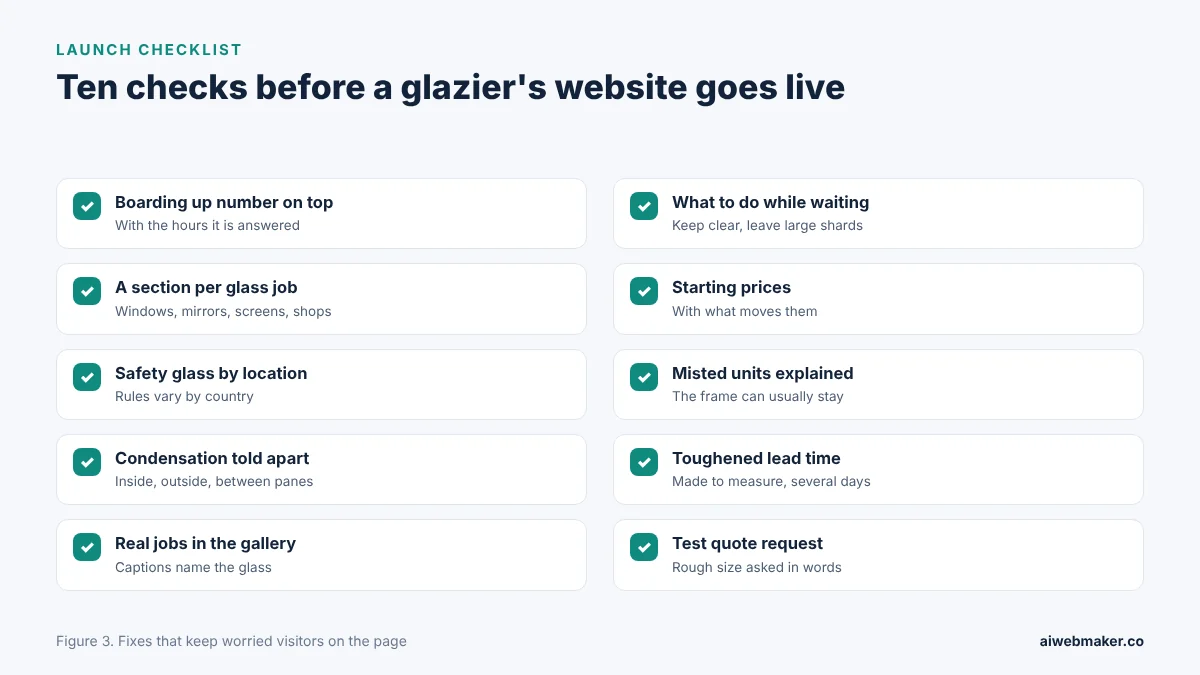
Worried visitors leave a glazing site when the phone number is buried below the services or the boarding up hours are unclear. Planners leave when there are no starting prices at all, because a blank page suggests the bill will be high. Missing words on safety glass make careful buyers doubt the firm's knowledge. A misted unit page that pushes new windows instead of new units feels like a sales trap. Stock photos of glass the firm never fitted undo trust that the words had built. The figure gathers ten fixes for these problems, and most take only minutes.
Frequently asked questions
Should a cracked pane be taped until the glazier arrives?
A small crack in a pane that is still firm in its frame can usually be taped across and left until a planned visit. People and pets should be kept away from the window, and the curtains drawn if the crack is near a child's room. A pane with loose pieces, a hole or a crack that keeps spreading should be boarded instead. Large shards should be left where they are for the glazier to remove safely. Clear advice like this on the website reduces panic and avoids injuries.
What is the difference between toughened and laminated glass?
Toughened glass is heat treated so that it breaks into small, blunt pieces rather than long sharp shards. Laminated glass has a plastic layer between two sheets, so it cracks but stays in place and keeps the opening closed. Toughened glass suits doors, shower screens and table tops, while laminated glass suits shop fronts, roofs and balustrades. Some uses call for glass that is both laminated and toughened. A short comparison on the website helps customers understand the quote.
Can glass be cut to size on the day?
Plain glass and mirror can often be cut in the workshop on the day or within the week. Toughened glass cannot be cut after it has been made, so it is ordered to exact sizes and usually takes several working days. Sealed units are also made to order once the glazier has measured the opening. The website should say which jobs are quick and which need a wait, so customers plan around them. Honest timing prevents frustrated calls about orders that cannot be rushed.
Will an insurer pay for emergency boarding up?
Many home and shop policies cover boarding up and replacement glass after a break in or accidental damage, but each policy is different. The customer should contact the insurer, keep the glazier's invoice and take photos before the glass is cleared, if that can be done without risk. Some insurers also ask for a police reference after a break in. A glazier can supply a clear invoice and a description of the work, but the claim remains between the customer and the insurer. A careful note on the website sets these expectations without promising anything.
A single misted unit against twelve months of hosting
Replacing one misted sealed unit usually earns a glazier more than the yearly hosting fee and the domain combined. Under monthly billing, one mirror cut for an alcove is worth several of the $19 payments. Every shop front reglazed after the owner found the boarding up number in the first view adds a job that pays for years of hosting. Plain safety advice, honest starting prices and real photos persuade more customers than any promise of speed. A phone that rings at night with callers who already know what to expect is good evidence the site is doing its job.
Build your website in Minutes and get the AI Tools that work
Start Building Your Website →