Car Wrapping Website Cost, Paint Checks, Film Choices and Fleet Vans
A wrap studio's quote and finish pages cost $119 to host across a year, or $19 monthly while the diary is thin, plus a domain. Topics: who asks for quotes, the pages, paint checks, wrap or film or respray, studio days and deposits, fleet livery, register and lease paperwork, search and the annual sums.
- No coding required
- Live in minutes
- Blog, SEO and chatbot tools included
A wrap studio's quote and finish pages cost $119 to host across a year, or $19 monthly while the diary is thin, plus a domain picked from hundreds of endings. Service cards, finish swatches and the wrap or film comparison can be drafted and polished in preview long before AI Web Maker raises any invoice. One front end of protection film pays for the year ten times over. The harder part of the trade is that film shows every flaw in the paint beneath it, so no honest studio can quote a firm price from a photo. Drivers also fear lifting edges, knife marks and paint pulled away on removal, while fleet managers worry about matching vans and days off the road. Ahead: who asks for quotes, the pages, paint checks, wrap or film or respray, studio days and deposits, fleet livery, paperwork, search and the annual sums.
This article is part of our complete guide: Home Services Website Builder.
Enthusiasts, lease drivers and fleet managers
A wrap studio serves several groups who want very different things from the same roll of film. Enthusiasts want a new colour or finish and compare swatches for weeks before deciding. Owners of new cars want clear protection film on the panels that take stone chips. Lease drivers like the idea of a colour that peels off before the car goes back. Businesses want their vans to carry a logo or a full livery, and fleet managers care most about consistency, downtime and a reliable schedule.
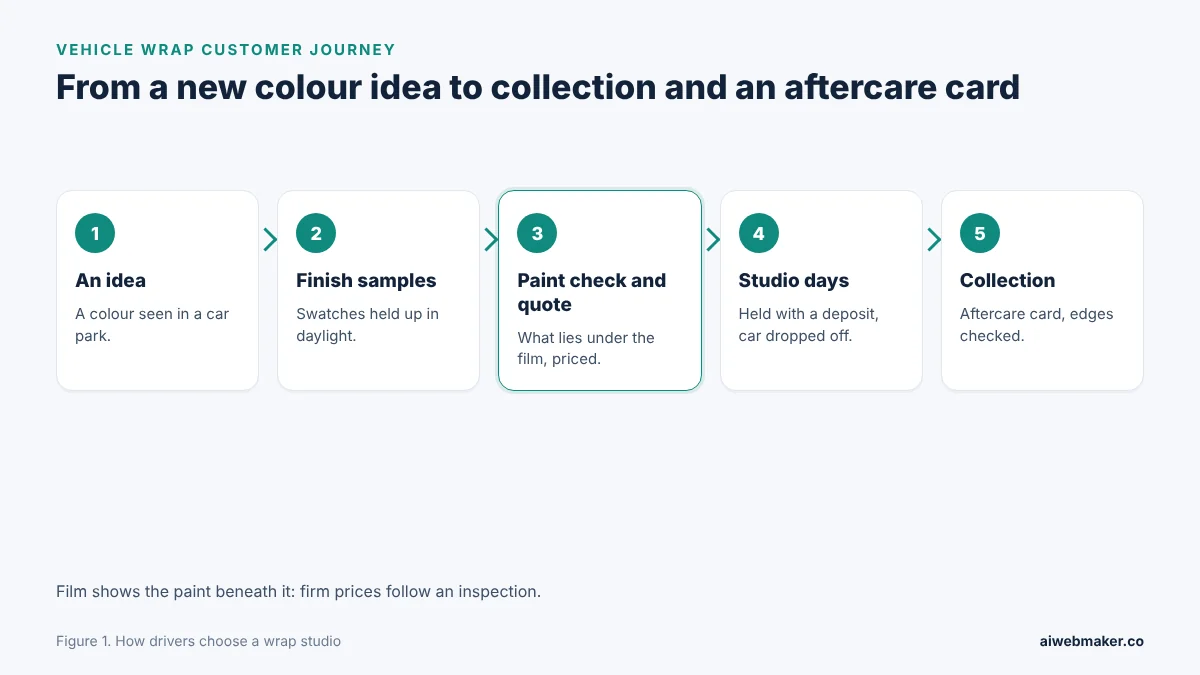
An idea, often sparked by a car seen in a car park, opens this path. Finish samples come second, because a colour looks different on a driveway than on a screen. The highlighted third step is the paint inspection and firm quote, where the studio sees what lies under the film and prices it honestly. Studio days are then held with a deposit and the car is dropped off. Collection with an aftercare card closes the journey, and the edges a year later decide whether the owner recommends the studio.
Services, finishes, comparisons and the quote request
A wrap studio's website should help drivers choose the right job before they ask for a price, since most enquiries begin with confusion between wraps, protection film and paint. Service pages describe each job with a starting price for a common vehicle size. A finishes page shows the gloss, satin, matte, metallic and colour shift options in real light. A comparison page sets wrap, film and respray side by side, while a process page explains why handles and lights come off. A quote request asks for the job, the vehicle and the finish, which is enough to arrange an inspection.
| Page | What drivers look for | Detail that matters |
|---|---|---|
| Services | Which job they need | Colour change, accents, livery, film, dechrome, removal |
| Finishes | How the colour will look | Swatches, sample book to borrow |
| Wrap, film or respray | Which route suits them | Life, reversibility, time off the road |
| Protection film | How much cover to buy | Front end, full front, whole car |
| Process | Whether the work is careful | Panels off, post heat, inspection |
| Paperwork | Whether a colour change is allowed | Register, insurer, lease rules |
| Quote request | A price range and an inspection | Job, vehicle, finish, number of vehicles |
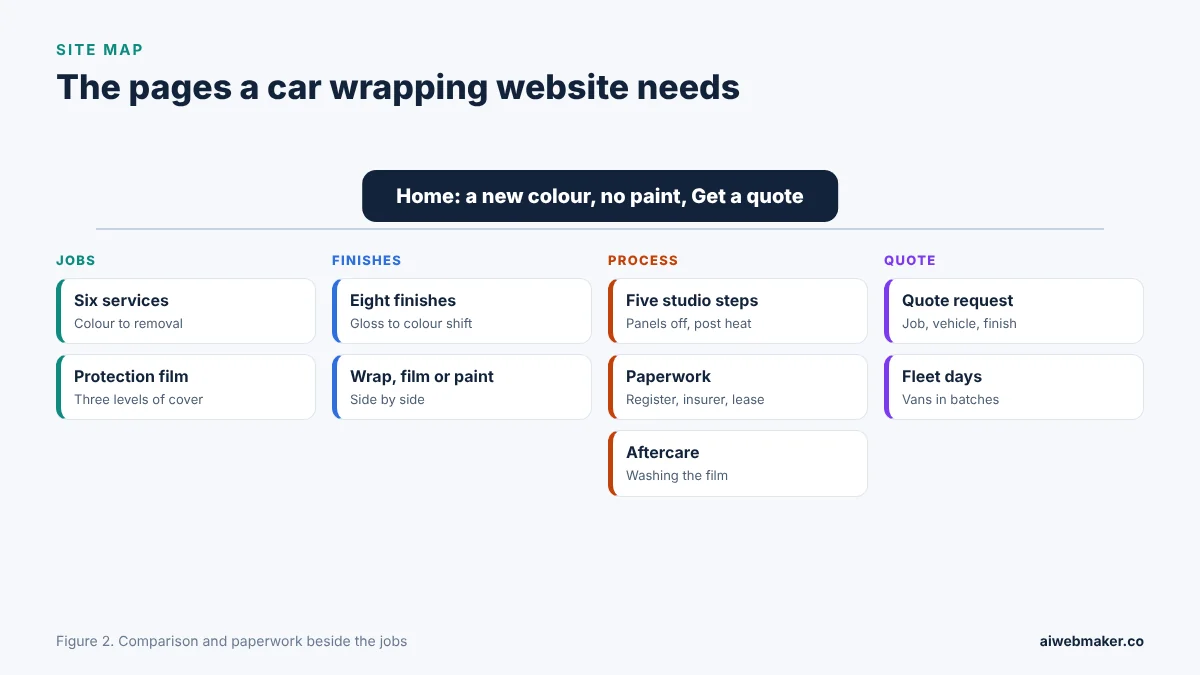
Jobs, finishes and comparisons, process and paperwork, and the quote make up the four lanes of this studio plan. Second Skin Vehicle Wraps, the invented studio in the car wrap website example with finishes and a wrap or film comparison, fits film in a heated studio and opens with five to seven days for a full colour change, panels taken off and the paint checked first. Six services follow: full colour change, partial wraps and accents, van and fleet livery, paint protection film, dechrome and wrap removal. A section on colour change paperwork, eight finishes from gloss black to colour shift and a comparison of a colour change wrap, protection film and a respray come next. Three levels of clear film are priced at $1,250 for the front end, $2,100 for the full front and $5,400 for the whole car, followed by five studio steps, questions and the quote request.
The paint underneath decides the quote
Film covers paint but does not hide it, so the condition of the paint underneath decides both the price and whether a wrap is wise at all. Sound factory paint takes film well and usually releases it cleanly within the film's life. Resprayed, flaking or poorly repaired paint can lift with the film when it is removed, which a careful studio explains before starting. Chips should be touched in first, and a badly chipped bonnet may need painting before protection goes on. Vehicle size, deep curves, door shuts and chrome trim all add hours, which is why a firm price follows an inspection rather than a photo.
| Factor | Why it changes the price |
|---|---|
| Paint condition | Repairs or touch ups before film, risk on removal |
| Vehicle size | More film and more hours |
| Curves and recesses | Slower work, more relief cuts |
| Door shuts | Extra panels and parts removed |
| Chrome trim and badges | Dechrome work or removal and refitting |
| Finish chosen | Colour shift and specialist films cost more |
Colour change, protection film or a respray
Drivers often ask for the wrong job, so a plain comparison of the three routes saves calls and sets fair expectations. A colour change wrap alters the colour or finish and can be removed with heat, typically lasting several years outdoors depending on sun, washing habits and where the car is parked. Clear protection film guards paint from chips and scuffs and often lasts a little longer than a coloured wrap. A respray changes the colour for good but takes the car off the road much longer and cannot be undone. Studios that do not paint should say so and suggest asking a paint shop.
| Route | What it does | Can it be undone | Typical time off the road |
|---|---|---|---|
| Colour change wrap | Changes colour or finish | Yes, with heat | About a week for a full car |
| Protection film | Guards paint from chips and scuffs | Yes, with heat | A few days |
| Respray | Changes colour permanently | No | Often several weeks |
Studio days, deposits and the five steps inside
A wrap studio really sells studio days, since a full colour change can hold a bay for most of a week that cannot be resold. A deposit, such as 30 percent, holds those days and should be stated clearly on the site. The process page can show the steps that justify the time: a deep clean and clay bar, removing handles, badges and lights, laying each panel in one piece where possible, post heating every stretched edge and resting the car overnight before inspection. Tucking edges behind removed parts, rather than cutting film on the paint, marks out a careful studio more clearly than any photo. Drop off and collection times on the site help drivers plan the days without the car.
Fleet livery: proofs, matching vans and time off the road
Fleet livery is a different trade from colour change, because the buyer is a business that needs every van to match and none of them off the road for long. Designs are agreed as proofs before printing, with the layout checked against each van model, door handles and windows. Printed cast film with a laminate protects the colours, and printing a fleet in one batch helps keep them consistent. Scheduling vans one or two at a time keeps the business running, and removal can be booked before a lease ends. The AI website builder that vehicle wrap studios use for service and finish pages drafts the services, finishes, comparison and quote pages once the studio has listed its jobs and films in a short note, leaving fleet terms and prices to be set in the preview.
Registers, insurers and leases: the paperwork of a new colour
A full colour change can carry paperwork that drivers rarely think about, so the site should raise it before any film goes on. British drivers, for example, are expected to report a colour change because the national vehicle register records each car's colour, and other countries keep their own rules. Most insurers want to know about a colour change too, since it alters the car's description. Leased and financed cars often need the finance company's agreement, and the reply is worth keeping. Rules on film over lights, number plates and windows are strict in many places, so each studio should check what applies where the car is registered and say that local rules vary.
Satin black and clear film: what drivers type before they call
Drivers rarely search for a wrap studio by name, so the words they type have to appear in the page headings. Common searches include car wrap near a named town, satin black wrap, colour change wrap price, paint protection film for a new car, van livery and dechrome. A map listing with drop off times, photos of finished cars in daylight and the website answers the drivers who compare studios on a phone. Reviews that name the finish, the car and how the edges held up after a year are the ones that sell the next job. Articles on washing a matte wrap, choosing between gloss and satin or what happens at lease return keep bringing readers who are still deciding.
Film rolls and hosting: the wrap studio's year in figures
Beyond hosting and a domain, a wrap studio's site carries no fixed costs, and articles written with AI credits cost under a dollar each. A studio with a steady order book pays least on the yearly plan. A new studio may stay on monthly billing until fleet accounts arrive. Changing prices, adding a finish or updating the comparison table adds nothing to the bill. One grid lays the two routes side by side with one comparison row for the $189 tier.
| Item | Yearly | Monthly |
|---|---|---|
| Hosting the car wrapping service and quote pages | $119 | $228 over twelve months |
| Domain | Depends on the ending | Depends on the ending |
| Higher plan, for comparison | $189 a year | Not needed |
| Twelve film care and finish articles at about $0.65 | About $7.80 | About $7.80 |
| Prices, finishes and comparison updates | No charge | No charge |
| Year before the domain | About $126.80 | About $235.80 |
Edges, prices and paperwork: what sends a driver to another studio
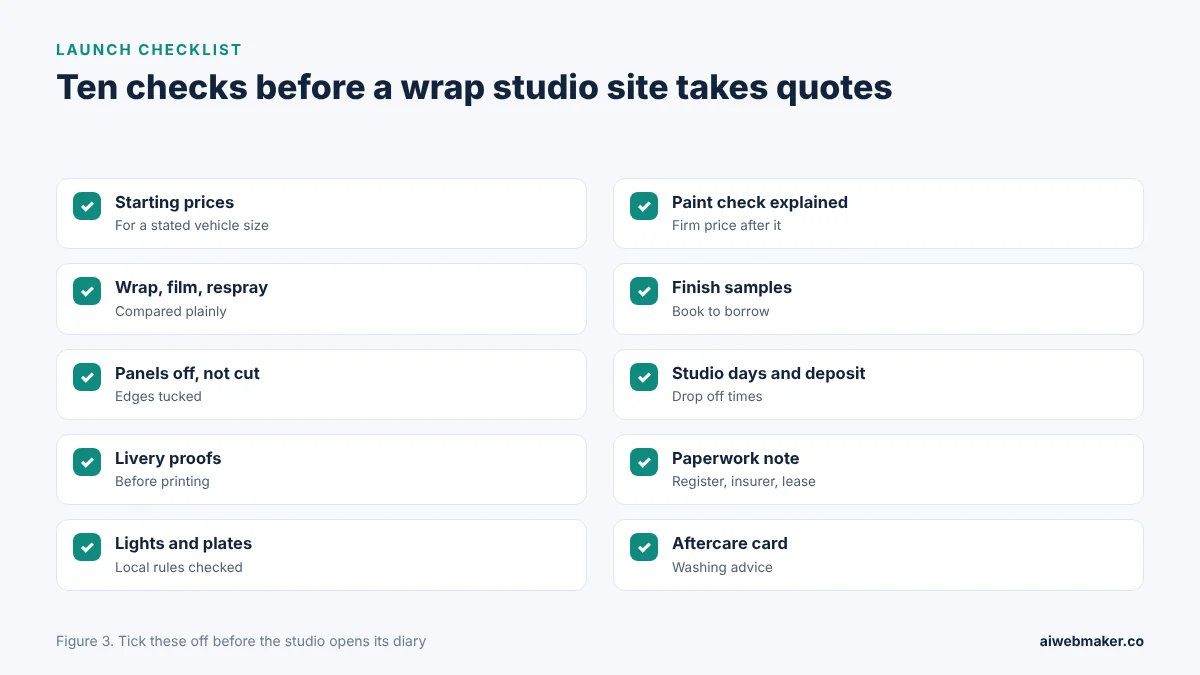
Drivers leave a wrap studio's site when it shows glossy photos but no starting prices, because they cannot tell whether the job is within reach. A missing explanation of paint checks makes a firm quote after inspection look like a trick. No word on removing handles and lights leaves drivers fearing knife marks on their paint. Silence on registers, insurers and leases worries the careful buyer who has read about colour change rules. Fleet managers move on when livery proofs and scheduling are not mentioned, so the ten points pictured next address each of those fears.
Frequently asked questions
Will removing the film damage the paint?
On sound factory paint, film removed within its life usually comes away cleanly with gentle heat. Resprayed or flaking paint can lift with the film, which is why studios inspect the paint before starting. Leaving film on far beyond its life can make removal harder. The website should explain this honestly so drivers understand the risk. A careful inspection protects both the paint and the studio's reputation.
How should a wrapped car be washed?
Hand washing with a gentle, pH neutral shampoo is usually safest, with any pressure washer kept well back from the edges. Matte and satin films need a shampoo made for them and no wax, which can leave shiny patches. Automatic brush washes can lift edges and scratch the film. An aftercare card handed over with the car keeps the advice close. Good washing habits add years to the film's life.
Can a leased car change colour?
Often it can, if the leasing or finance company agrees in writing. The driver should ask before booking and keep the reply with the car's papers. Removal should be booked before the car is returned, so the original paint is shown as expected. Insurers and, in some countries, the vehicle register may also need to know. Planning ahead avoids charges when the lease ends.
How long does a colour change keep its finish outdoors?
Life outdoors depends on the film, the climate, washing habits and where the car is parked. Cars kept in garages and washed by hand usually keep their finish longest. Strong sun and harsh winters shorten the life of any film. Studios can give a typical range for each film they use, without promising a fixed number of years. Honest ranges help drivers plan when to renew or remove the wrap.
A front end of film repays a decade of hosting
Using the sample's illustrative prices, the front end protection package at $1,250 covers more than ten years of hosting, and a full colour change starting at $2,900 covers over twenty. Paying month by month, the studio's $19 is a sliver of one deposit for studio days. Each satisfied driver parks a rolling advert outside the office or at the gym, where people ask about the colour. Starting prices, an honest paint check and a clear comparison of wrap, film and paint convince drivers who fear their paint will suffer. A quote request that already names the job, the vehicle and the finish tells the studio its pages are drawing the right enquiries.
Build your website in Minutes and get the AI Tools that work
Start Building Your Website →