Nursing Home Website Cost: Care Levels, Fees and Open Visiting
A nursing home's website sits on $119 of hosting for the whole year, or $19 every month instead, with its domain added. It then covers families, care levels, fees, inspection, rooms and visiting, moving in, search and the budget.
- No coding required
- Live in minutes
- Blog, SEO and chatbot tools included
A nursing home's website sits on $119 of hosting for the whole year, or $19 a month when the office would rather pay monthly, and its domain is bought alongside. The office can draft the care, room and fee pages and check them in the preview at its own pace, without any AI Web Maker bill. One respite week alone outweighs the hosting year several times. The real challenge is that families often arrive after a hospital discharge or a hard conversation, short of time and full of worry. They need plain answers about care levels, fees, inspection and visiting before they can even arrange a look round. The guide moves from who reads the pages and when, through the pages themselves, care levels, fees and funding, inspection and staffing, rooms and visiting and moving in, to search, the yearly budget and why families ring another home.
This article is part of our complete guide: Healthcare Website Builder.
Who reads a care home's pages, and at what moment?
Most care home websites are read by a son, daughter or spouse doing research on behalf of someone they love, often under pressure. A hospital discharge, a fall at home or a diagnosis of dementia can force a decision within days. Social workers and discharge coordinators also read the pages, looking for care levels and availability. Families planning a short break for a carer look specifically for respite stays. Sometimes the older person reads the site too, wanting to know whether their own routines and belongings will be respected. Every reader wants the same thing first, a calm and honest description of the care the home can give.
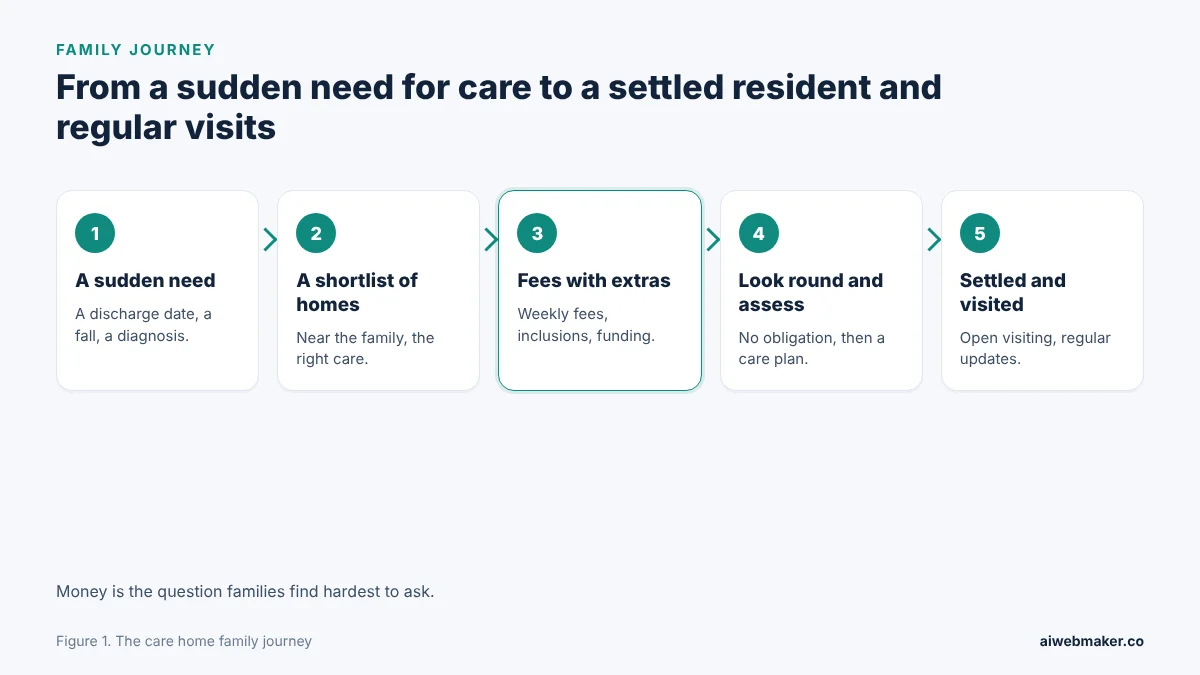
Fees with the extras named are the step this journey emphasises, because money is the question families find hardest to ask and most need answered. The path starts with a sudden need, such as a discharge date or a family carer reaching the end of their strength. A search for homes near the family's town produces a shortlist of two or three. Clear care levels and weekly fees then decide which home gets the call or the visit request. A look round, a care assessment and a contract follow, each with time for questions. Open visiting and regular updates turn a resident's first weeks into a settled routine the family can trust.
Pages for families comparing homes side by side
A care home website is usually read alongside two or three others, so each page should answer one question families compare. A care page explains residential, nursing and dementia care, respite stays and care at the end of life. A rooms page shows what every room includes, and a fees page lists weekly fees with what is covered and what is charged as used. Daily life and visiting deserve pages of their own, because they show what life in the home actually feels like. Moving in steps, questions and a visit request complete the set.
| Page | What families look for | What it should hold |
|---|---|---|
| Care | Whether needs can be met | Residential, nursing, dementia, respite, end of life |
| Rooms | Where their relative would live | Shower room, furniture from home, garden access |
| Fees | The weekly cost and extras | Fee by care level, inclusions, extras, funding note |
| Daily life | Meals and activities | A typical day, menus, outings |
| Visiting | How often they can come | Hours, mealtimes, children, pets, staying overnight |
| Arrange a visit | A first step | Next step, care needed, dates for respite |
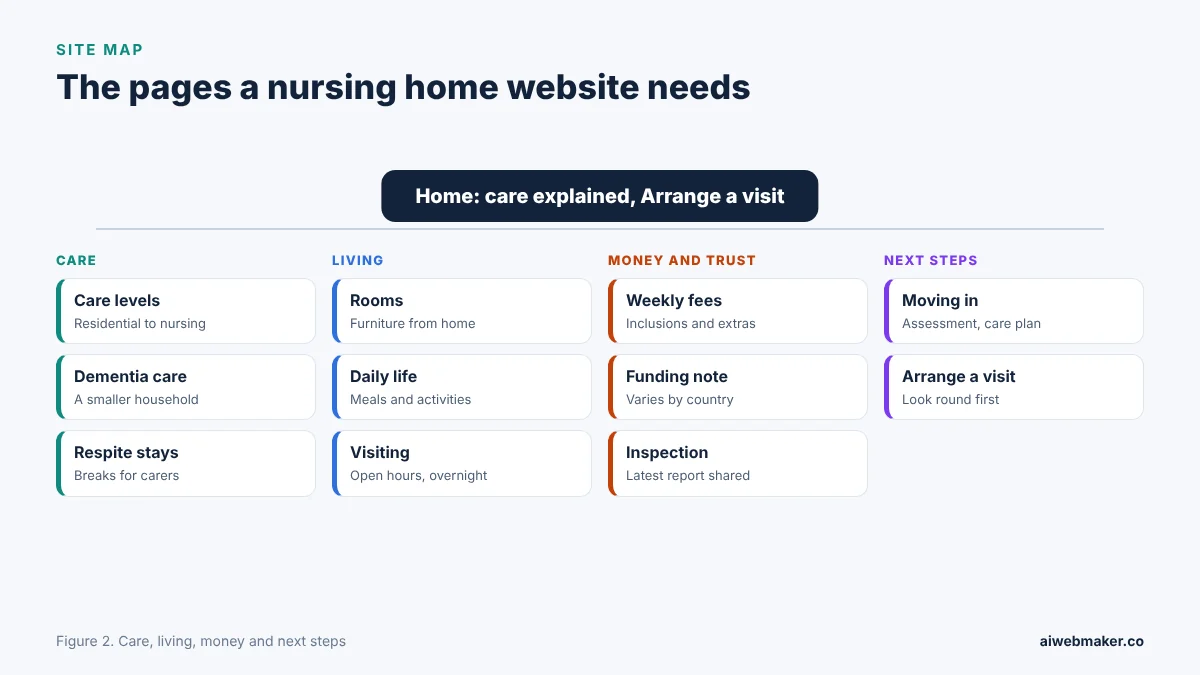
Beneath the front page of this care home plan sit four groups, arranged around the questions families ask in order. The care group explains each level of care and the assessment before moving in. The living group covers rooms, daily life and visiting. The money and trust group holds weekly fees, funding notes and inspection information, while the next steps group carries moving in and the visit request. Our sample home, Willowmere Care Home, offers residential care, nursing care, care for people living with dementia, respite stays, care at the end of life and an assessment before moving in, shows a garden room, a first floor room and an Orchard household room, describes open visiting, and adds weekly fees, a day in the home, moving in steps, questions and a form to arrange a visit; the nursing home website example with care levels, fees and visiting is written for the family member doing the research.
Residential, nursing or dementia care: explaining the difference
Most families have never had to tell residential care from nursing care, so the website should explain the difference before anything else. Residential care means help with washing, dressing, meals and medicines for people who cannot manage at home but do not need a nurse day to day. Nursing care adds registered nurses on duty around the clock for ongoing health needs such as wound care or recovery after a hospital stay. Dementia care works best in a smaller household with a familiar layout and a team trained for it. Saying plainly what the home does not provide, such as hospital treatment or specialist mental health care, saves families a wasted visit. Clear definitions let a family judge the fit before they pick up the phone.
| Care level | Who it suits | What the page should explain |
|---|---|---|
| Residential care | People needing daily help | Personal care, meals, medicines given by staff |
| Nursing care | People with ongoing health needs | Registered nurses day and night |
| Dementia care | People living with dementia | A smaller household, trained team, safe garden |
| Respite stays | Families needing a break | Length of stay, same care as residents |
| Care at the end of life | Residents and families | Staying in their own room, family welcome at any hour |
Weekly fees, extras and the funding question
Weekly fees are the first thing families compare, and a home that hides them often loses the comparison before a call is made. Each care level needs a starting figure and a plain inventory of inclusions, such as the room, meals, laundry, personal care and activities. Extras such as the hairdresser, chiropody, newspapers and outings with an entry fee belong in the same table, marked as charged when used. Public funding, insurance and local authority contributions work very differently in each country, so one line should explain that the office will go through what may apply. The page should also say how often fees are reviewed and how much notice is given of a change. Honest numbers set out this plainly lead to calmer conversations at the first visit.
| Fee detail | What the page should state |
|---|---|
| Weekly fee by care level | A starting figure for each |
| What is included | Room, meals, laundry, personal care, activities |
| Extras | Hairdresser, chiropody, outings, charged as used |
| Funding | Varies by country, explained by the office |
| Fee reviews | How often, and the notice given |
Inspection reports, nurses on duty and safeguarding
Families want to know who checks a care home, and that varies with the country, because inspection is run by different public bodies in different places. The website should name the body that inspects the home where it operates and offer the latest report at every visit. It should never invent stars, grades or claims about outcomes for residents. Staffing details, such as nurses on duty day and night and staff trained in dementia care, help families judge the quality of care. A short note on safeguarding and how concerns or complaints are handled shows the home takes protection seriously. Plain facts about inspection reassure far more than any badge a visitor cannot verify.
Rooms, meals and visiting without a timetable
A family deciding on a home is really deciding how often they will see someone they love, and in what setting. The rooms page should show what each room includes, such as a shower room, an adjustable bed and space for a favourite chair and pictures from home. A short account of an ordinary day, from a late breakfast to music in the afternoon, helps a family picture the routine. Visiting hours, protected mealtimes, children, pets and staying overnight when someone is very unwell all need straightforward answers. Photos of the dining room, a resident's room and the garden do the rest of that work. A page that describes life this ordinarily makes the home feel like a home rather than an institution.
From a first look round to a settled resident
Very few families choose a care home without seeing it, so the website should present a visit as the natural first step. The moving in page can set out the stages: a look round with no obligation, a care assessment at home or in hospital, a written contract and care plan, and a named key worker for the first weeks. A care plan review with the family after the first month shows the home keeps listening. If needs grow beyond what the home can offer, the page should say the home will tell the family honestly and help them find the right place. The AI website builder that drafts care, room, fee and visiting pages produces a first version of this structure from a few lines written by the manager, and the office then rewrites every section in its own words. Starting with a visit keeps the first contact gentle at a heavy moment.
Care homes near a parent's town: what families type
Families search for care near a relative's home, typing phrases such as care home near me, nursing home with dementia care or respite care for a week. Residential care home plus a district name is another common search. Pages written in that same everyday language, naming each kind of care and the towns covered, line up with those searches naturally. The map listing for a care home needs the right category, office and visiting hours and real photos of rooms, the garden and daily life. Reviews from families that mention kindness, clear fees and good communication carry great weight with other families. Articles on choosing a care home, preparing for a move or what respite care involves reach families before a crisis forces a decision. Helpful writing builds the trust that makes a home the first call when the moment comes.
The home's yearly website budget beside its weekly fees
Beside weekly care fees, a home's website budget is tiny: hosting, the domain and about $7.80 should the office commission twelve family guides through credits. A home expecting to stay online for years usually settles $119 at once. A newly registered home might choose the $19 monthly bill while its first residents settle in. Updating fees, adding a room or posting a new activity programme makes no difference to the bill. All three routes, the $189 tier among them, are laid side by side below.
| Item | Yearly | Monthly |
|---|---|---|
| Hosting the care home pages | $119 | $228 over twelve months |
| Domain | Depends on the ending | Depends on the ending |
| Higher plan, for comparison | $189 a year | Not needed |
| Twelve family guide articles at about $0.65 | About $7.80 | About $7.80 |
| Fee, room and activity updates | No charge | No charge |
| Year before the domain | About $126.80 | About $235.80 |
Hidden fees and stock photos: why families ring another home
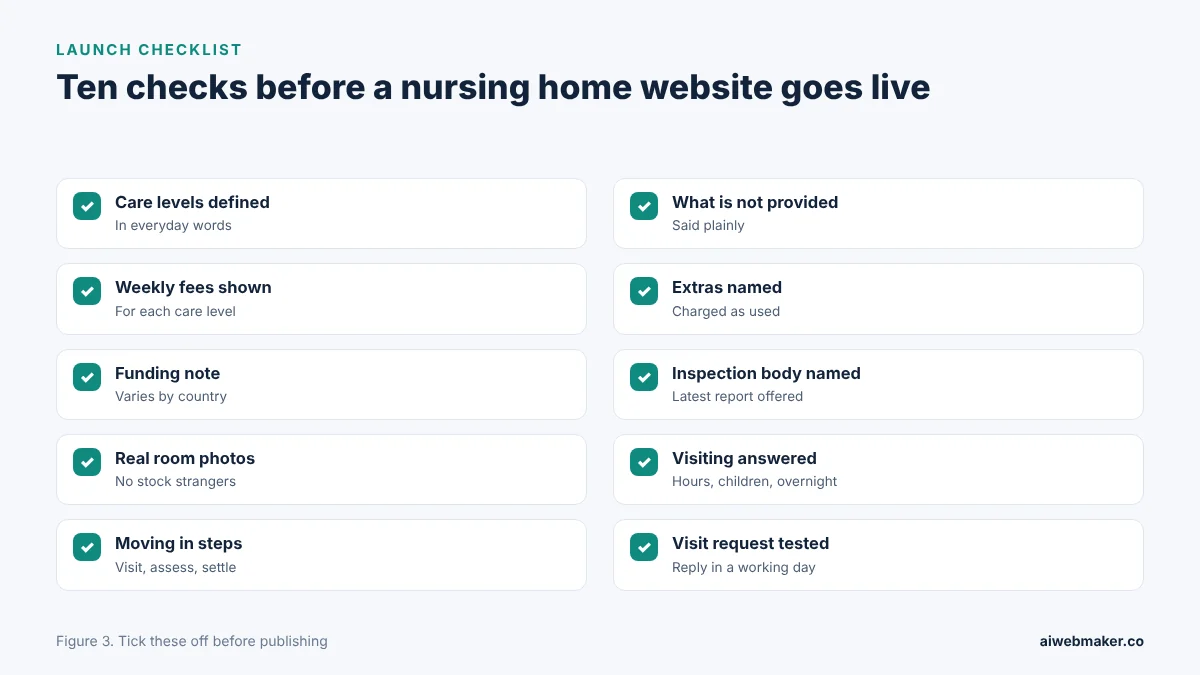
Families ring another home when a website shows no fees at all and asks them to call for a brochure. Stock photos of smiling strangers tell a worried daughter nothing about the real rooms or residents. Vague phrases about quality care, with no explanation of care levels, leave readers unsure whether needs can be met. No word on visiting suggests restrictions the family fears. Missing inspection information makes careful readers wonder what the home is hiding. The ten fixes pictured below are written for exactly these moments.
Frequently asked questions
How are care homes inspected?
In most countries care homes are registered with and inspected by a public body, but who does it and how reports are published differ from place to place. A home's website should name the inspecting body where it operates and explain how families can read the latest report. Sharing the report at every visit, and talking through what it says, shows confidence and openness. The page should never invent ratings or outcomes. Accurate information on inspection helps families compare homes fairly.
What happens when care needs change?
Care plans are usually reviewed with the resident and family at regular intervals, and more often when health changes. A resident who comes to need nursing care can often move to a nursing room within the same home, if one is offered. When needs go beyond what the home provides, a good home says so honestly and helps the family find the right place. The website should explain this process so families are not caught off guard later. Clear expectations make difficult transitions calmer for everyone.
Can couples live together in a care home?
Many homes can accommodate couples, sometimes in connecting rooms, including couples whose care needs differ. The website should say whether this is possible and how rooms are arranged. Families often worry about separating parents who have lived together for decades, so a clear answer matters. Fees for each partner usually depend on their own care level. A warm, specific answer on couples can make a home the obvious choice.
Can residents bring their own furniture?
Most homes welcome personal items such as a favourite chair, pictures, a small table and bedding, which help a room feel familiar. The website can explain what fits, any safety checks on electrical items and who hangs pictures. Familiar belongings often help residents, particularly those living with dementia, settle more easily. Photos of rooms personalised by residents show this better than words. Clear guidance helps families plan the move with less stress.
Would one respite week cover the hosting year?
A single respite week usually outweighs the $119 hosting year, and the monthly $19 is a small fraction of any week of care. Every family that understands the care levels, sees fees with extras named and reads about visiting arrives at the first visit with better questions. Those families are more likely to choose the home and to trust it once their relative moves in. Word of mouth from settled families then brings the next enquiries. Homes that keep their fees, rooms and visiting details current spend their phone calls on care rather than on repeating basics. A visit request from a family who already feels they know the home is the strongest sign the pages work.
Build your website in Minutes and get the AI Tools that work
Start Building Your Website →